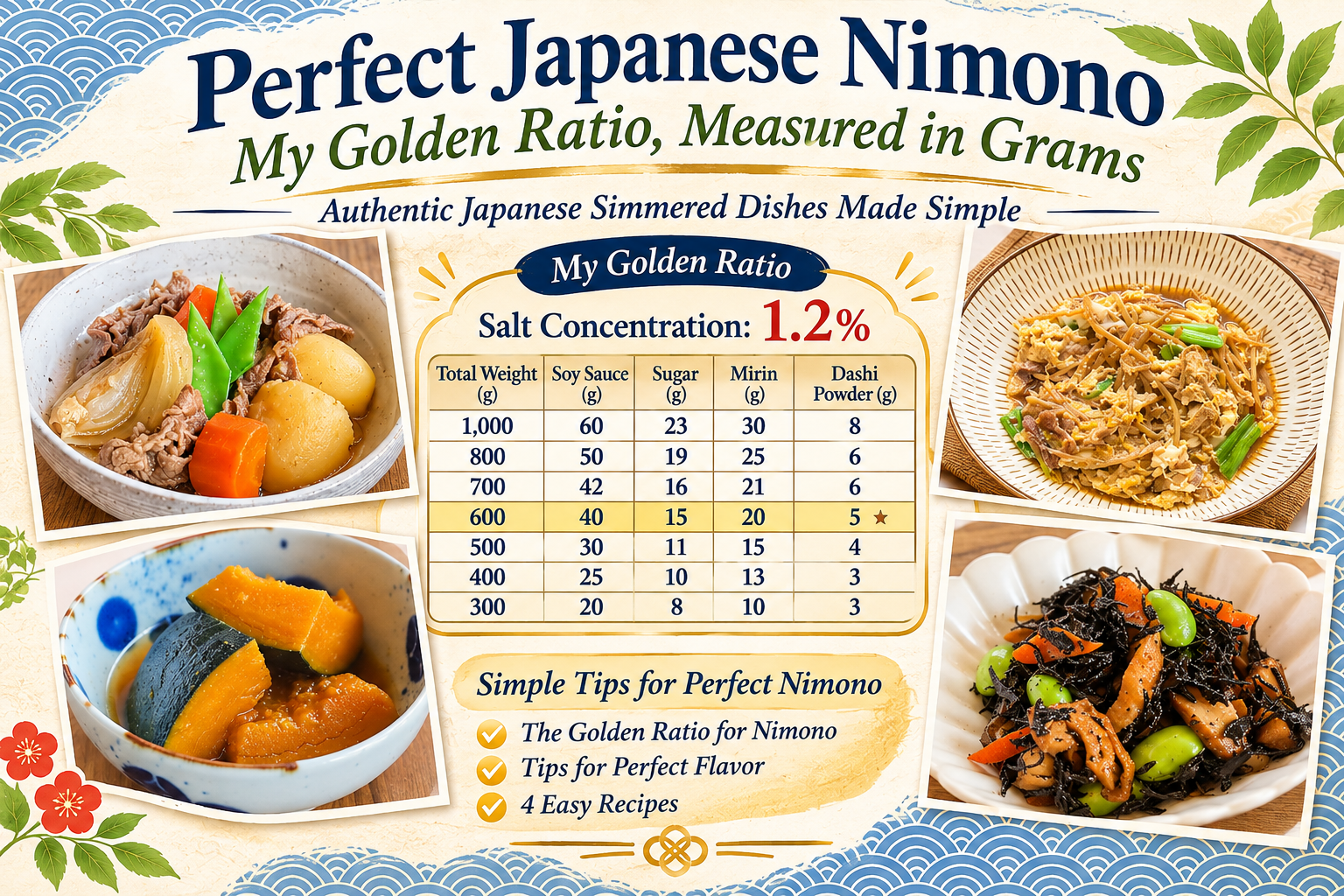
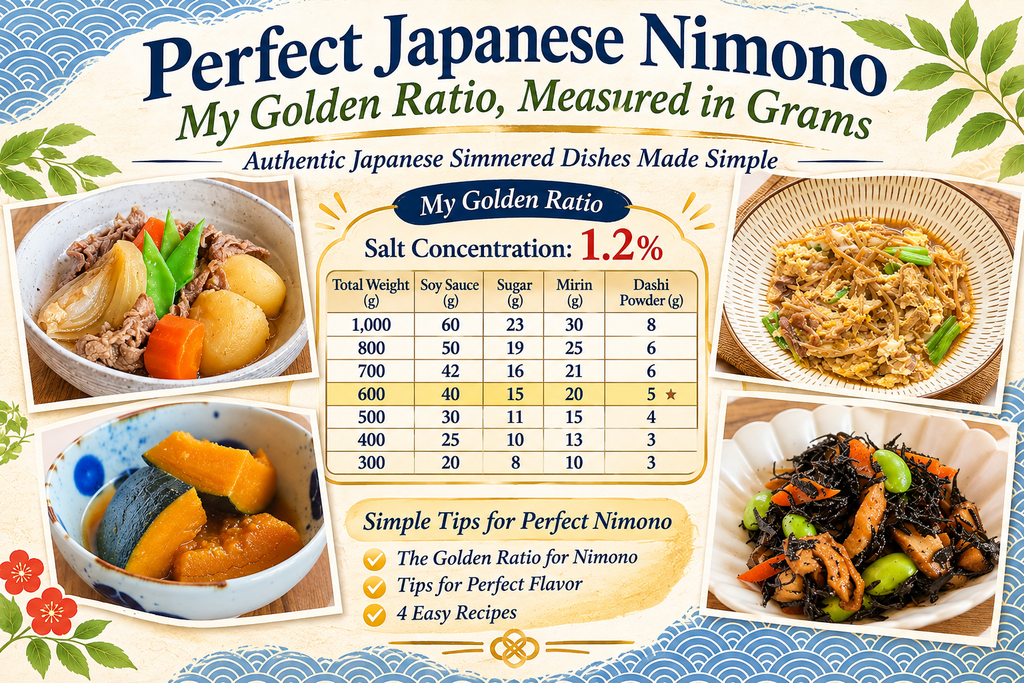
Perfect Japanese Nimono: My Golden Ratio Seasoning Measured in Grams
What is Nimono (Japanese Simmered Dishes)?
Nimono is a foundational Japanese cooking method in which ingredients are simmered in nijiru—a flavorful broth made from dashi (or water) seasoned with soy sauce, sugar, mirin, and sake—allowing the flavors to slowly infuse into the food. As one of the Goho (five traditional cooking methods of Japanese cuisine: raw, simmering, grilling, frying, and steaming), nimono is beloved across everything from everyday home cooking to festive New Year’s Osechi and formal Kaiseki multi-course meals.
3 Key Secrets to Delicious Nimono
- Flavor absorbs as it cools: When you turn off the heat and the temperature drops, the food’s cellular structure—which expanded during heating—contracts, drawing the surrounding broth deep inside. This is why simmered dishes always taste even better after resting and cooling down.
- The synergy of dashi and seasonings: Built on the rich umami of kelp and bonito dashi, the balanced combination of sweetness (sugar and mirin) and saltiness (soy sauce and salt) brings out the natural flavors of the ingredients.
- Using an Otoshibuta (drop lid): Placing a lightweight lid directly on top of the simmering ingredients circulates even a small amount of broth evenly over the top, ensuring thorough flavor absorption while preventing the food from breaking apart.
My Signature Approach: High Reproducibility Through Gram Measurements
While Western recipes typically rely on cups and tablespoons, measuring every seasoning precisely in grams on a kitchen scale guarantees consistent, foolproof results every single time.
By combining dark soy sauce, light soy sauce, sugar, mirin, and sake in a carefully balanced golden ratio, anyone can effortlessly recreate our family’s signature sweet, savory, and deeply comforting flavor.
To start, I will walk you through Nikujaga (Japanese meat and potato stew)—the ultimate classic of nimono—followed by several versatile recipes that put this golden seasoning ratio to work!
1. Example Recipe: Nikujaga (Japanese Beef & Potato Stew)
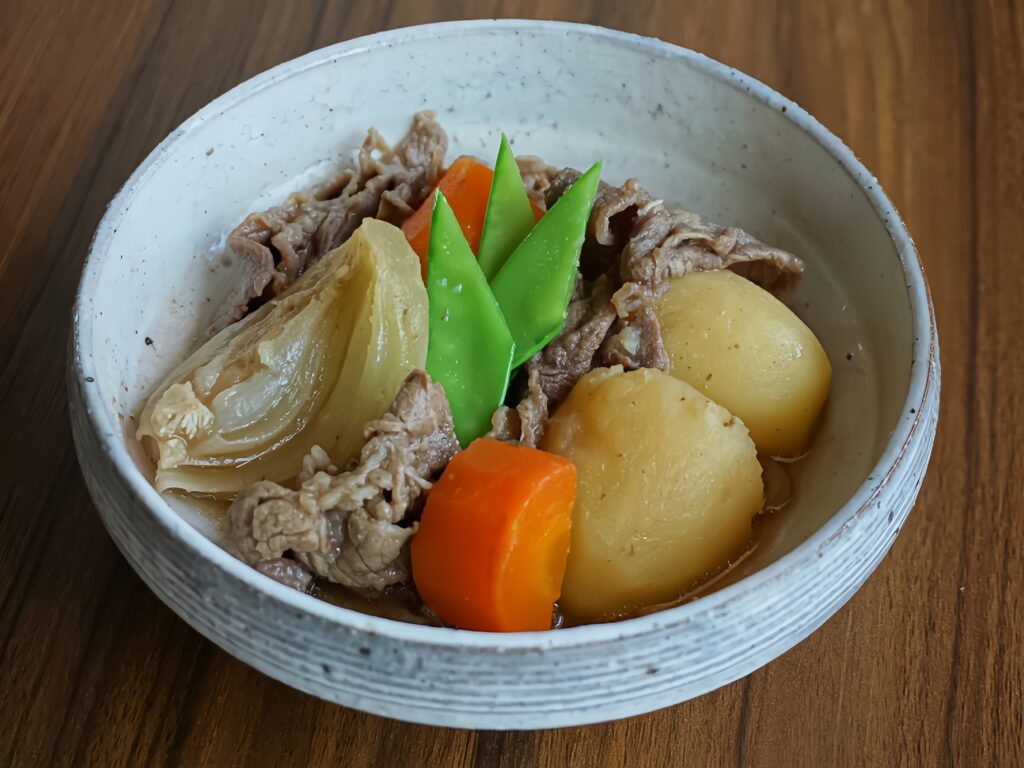
【Pressure Cooker Nikujaga (Japanese Beef & Potato Stew)】
Ingredients
- Beef Shoulder Loin: 150g (thinly sliced is recommended)
- Potatoes: 200g (approx. 2 medium potatoes; “Meikuin” potatoes are recommended as they do not easily crumble when simmered!)
- Onion: 150g (1 medium)
- Carrot: 100g (1 medium)
- Ito-konnyaku / Shirataki: 100g
Seasoning & Liquid
- Dark Soy Sauce (Koikuchi): 25g
- Light Soy Sauce (Usukuchi): 15g (If you don’t have light soy sauce, you can use all dark soy sauce)
- Sugar: 15g
- Mirin: 20g
- Sake: 20g
- Dashi Powder (Granulated): 5g (or 2 Kayanoya dashi packs if using Kayanoya)
- Water: 70g (for an electric pressure cooker) / 200g (for a gas pressure cooker)
Salt concentration
The seasonings are proportioned so that for a total ingredient weight of 700g, the salt concentration is roughly 1.2%.
- Total Salt Equivalent
- Dark Soy Sauce (25g): Approx. 3.63g
- Light Soy Sauce (15g): Approx. 2.40g
- Granulated Dashi Powder (5g): Approx. 2.60g
- Total Salt Equivalent: Approx. 8.63g
- Salt Concentration Relative to Total Ingredient Weight (700g)
- 8.63g = Approx. 1.2%
Salt Equivalent Breakdown of Seasonings
- Dark Soy Sauce (25g): Approx. 3.63g (calculated at ~14.5% salt concentration)
- Light Soy Sauce (15g): Approx. 2.40g (calculated at ~16% salt concentration — light soy sauce has a slightly higher salt content)
- Granulated Dashi Powder (5g): Approx. 2.60g (calculated at ~52% salt equivalent based on standard Japanese Dashi nutritional labels)
- Kayanoya Dashi Packs (2 packs): Approx. 2.84g (approx. 1.42g salt per 8g pack × 2)
Key Tips & Adjustments
- Flexibility: This establishes the baseline ratio. Minor round-ups or round-downs are completely fine—think of the quantities as a flexible base.
- Applicability: If your total ingredients weigh around 700g, this ratio can be applied to other dishes like Chikuzen-ni, Buta no Kakuni (pork belly simmer), or Kabocha squash nimono.
- Vegetable Shrinkage & Conversion (Supplementary Note): Leafy vegetables shrink significantly when cooked (weight changes to about 70%; e.g., 100g boiled becomes 70g). Potatoes barely change (only about 2%; 100g boiled remains 98g). If substituting 100g of potatoes with napa cabbage (Hakusai), use 1.4 times the amount (140g).
- About Sweetness: My preference leans slightly sweet, so feel free to adjust the sweetness to your taste. Mirin has about 1/3 the sweetness of sugar, but it helps create a nice gloss and shine. While some people use only sugar, I like a mix.
- About Dashi Powder: Whether to use dashi depends on the cook and the dish. I omit it when using dried shiitake mushrooms. You can also skip it when using kombu in the pot or iriko for miso soup. However, for simple dishes flavored only with soy sauce and mirin (like seasoned eggs or udon soup broth), adding a little dashi powder enhances the flavor. Note that authentic, homemade katsuobushi or kombu dashi has zero salt, but if your homemade dashi is rich and flavorful, your dish will taste delicious even without relying on salt content. Also, I don’t use dashi powder for high-sweetness root vegetables like kabocha squash or sweet potatoes.
2. Seasoning Ratios and Salt Concentration Reference Table
| Total Weight (g) | Soy Sauce (g) | Sugar (g) | Mirin (g) | Dashi Powder (g) | Salt Equivalent (g) | Salt Concentration (%) | Notes |
| 1000 | 60 | 23 | 30 | 8 | 12 | 1.2 | |
| 800 | 50 | 19 | 25 | 6 | 10 | 1.3 | |
| 700 | 42 | 16 | 21 | 6 | 8 | 1.2 | |
| 600 | 40 | 15 | 20 | 5 | 8 | 1.3 | ★ Base |
| 500 | 30 | 11 | 15 | 4 | 6 | 1.2 | |
| 400 | 25 | 10 | 13 | 3 | 5 | 1.3 | |
| 300 | 20 | 8 | 10 | 3 | 4 | 1.3 |
3. Recipes Using This Base Ratio
Kabocha Pumpkin Nimono
- Kabocha Pumpkin: 1/4 (approx. 370g)
- Seasoning Mix (☆):
- Dark Soy Sauce: 10g
- Light Soy Sauce: 10g (If unavailable, use dark soy sauce)
- Sugar: 8g
- Mirin: 10g
- Sake: 10g
- Note: Kabocha is delicious on its own, so dashi powder is not used.
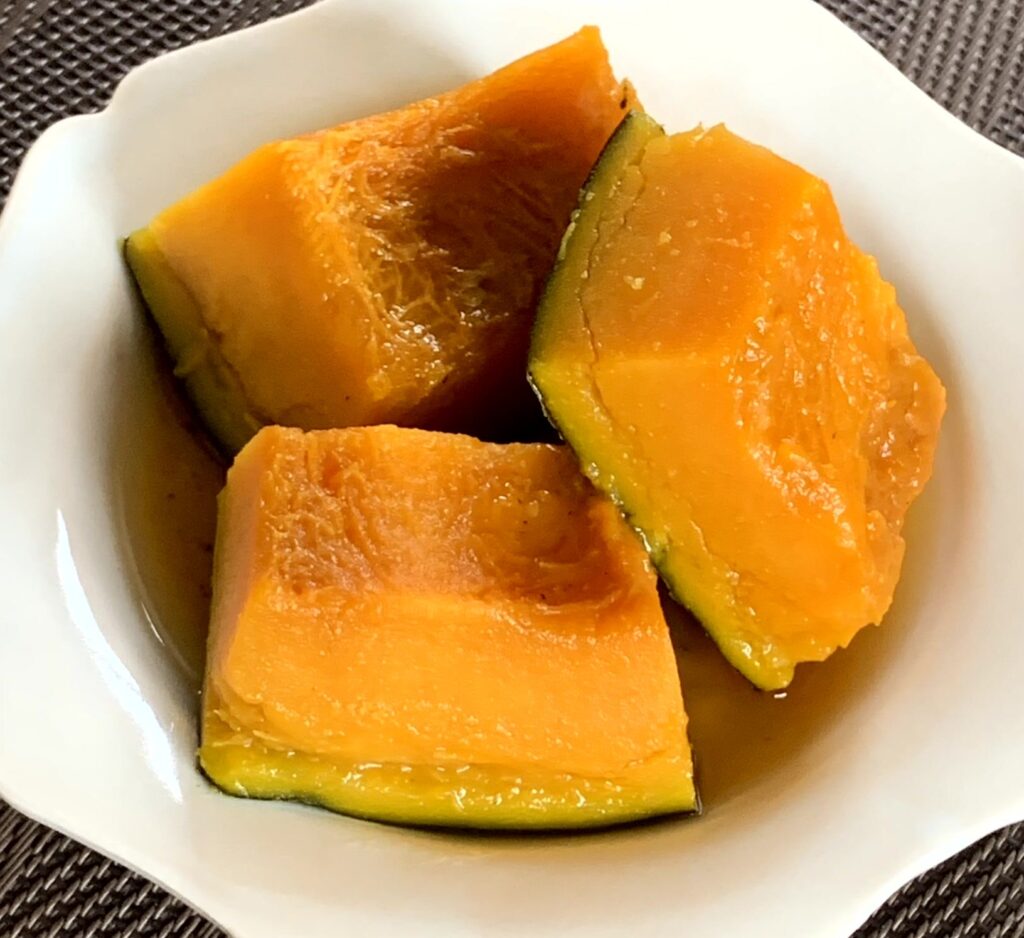
【Traditional Japanese Braised Pumpkin (Kabocha no Nimono)】
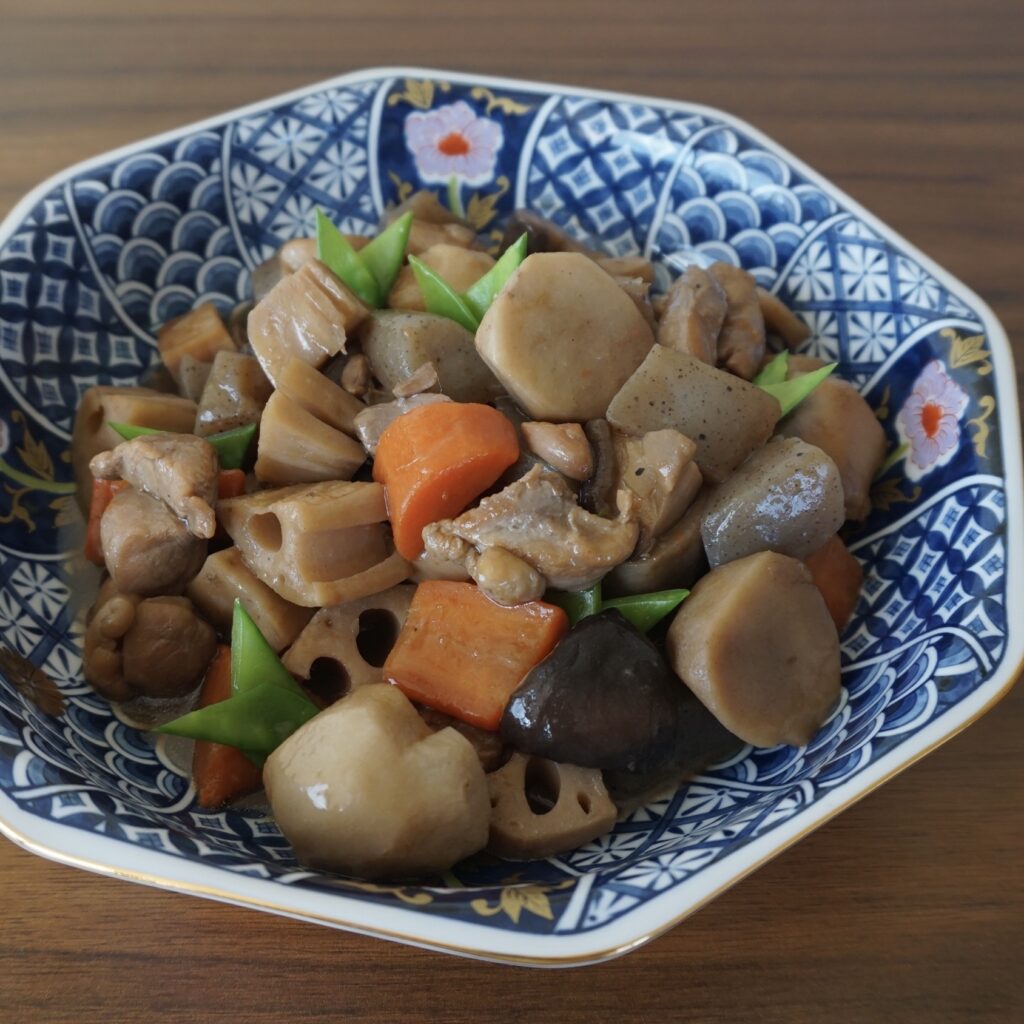
Chikuzen-ni (Simmered Chicken & Root Vegetables)
- Ingredients:
- Chicken Thigh: 300g
- Taro (Satoimo): 300g
- Lotus Root (Renkon): 200g
- Carrot: 150g
- Burdock Root (Gobo): 100g
- Shiitake Mushrooms: 80g
- Konnyaku: 100g
- Seasoning & Liquid (☆):
- Water: 400g
- Dark Soy Sauce: 40g
- Light Soy Sauce: 20g
- Sugar: 25g
- Mirin: 30g
- Sake: 30g
- Granulated Dashi Powder: 8g
- Note: If using dried shiitake mushrooms, you can reduce or omit the dashi powder.
【Why Chikuzenni is Japan’s Favorite Celebration Food | Recipe & Symbolism】
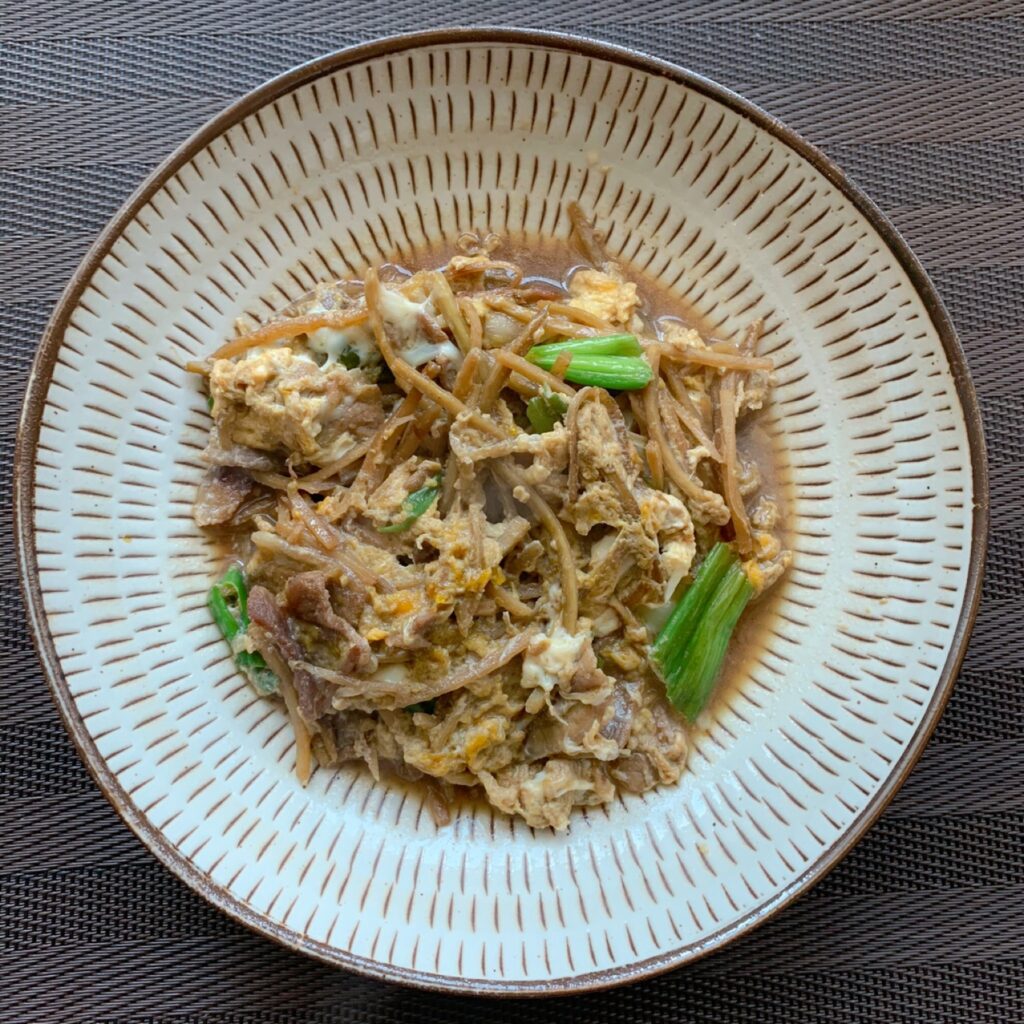
Yanagawa (Burdock & Pork Hot Pot)
- Ingredients:
- Burdock Root (Gobo): 200g
- Thinly Sliced Pork: 200g
- Ginger Slices: 4g
- Sesame Oil: 1 tsp
- Water: 500g
- Green Leek Tops: 90g
- Eggs: 5 eggs (approx. 250g)
- Seasoning (☆):
- Soy Sauce: 45g
- Sugar: 15g
- Mirin: 20g
- Cooking Sake: 20g
- Note: Dashi powder is omitted because the eggs absorb so much flavor and we want to fully enjoy the natural aroma of the burdock root.
【Pork and Burdock Yanagawa-Style (Simmered with Egg)】
Simmered Hijiki Seaweed
- Fresh hijiki: 150g (or 17g dried hijiki, rehydrated)
- Dried shiitake mushroom: 1 mushroom (approx. 4g), soaked in 150g (150ml) water until softened. (Using “Donko” shiitake is the best choice for rich flavor.)
- Carrot: 40g (julienned)
- Satsuma-age (fried fish cake): 25g (thinly sliced)(Aburaage/fried tofu, chikuwa/fish cake, or pork can also be used)
- Frozen edamame: 50g(Yellow soybeans or green peas work well as substitutes)
- Sesame oil: 5g (approx. 1 tsp)
- Cooking liquid: 400g (400ml) in total (Reserved shiitake soaking liquid + water)
- Dark soy sauce (Koikuchi): 40g
- Sugar: 15g
- Mirin: 20g
- Sake: 15g
(Note: If the shiitake mushroom flavor feels a bit light, add a small pinch of dashi powder/instant dashi).
【Quick Guide to Hijiki: Japanese Simmered Hijiki Seaweed Recipe】

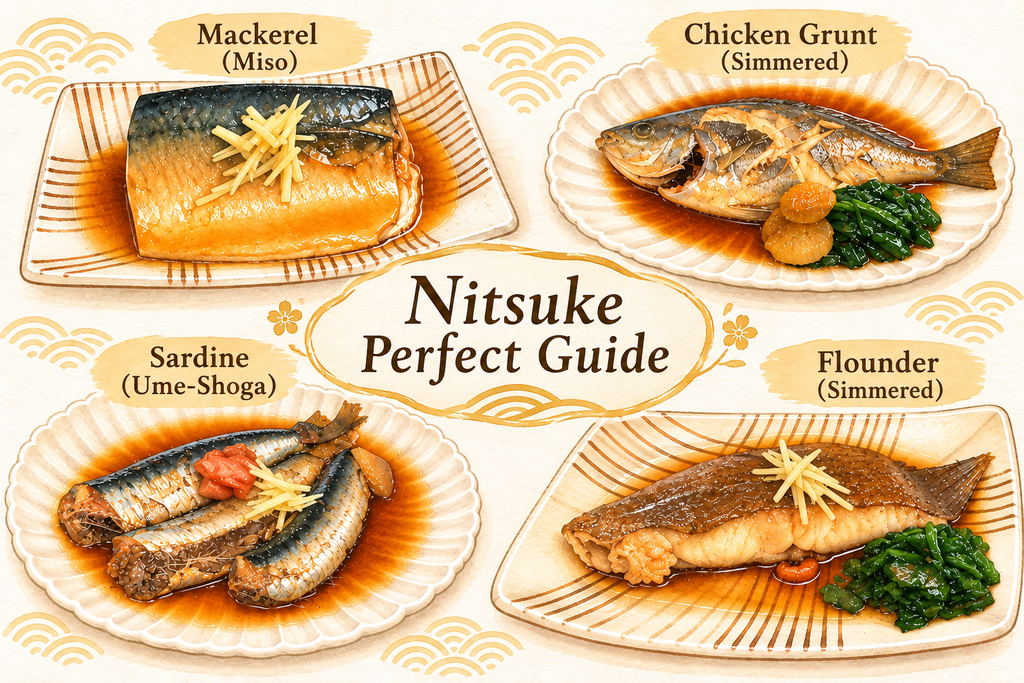
4. Simmered Fish (Nizakana)
For simmered fish, the golden ratio using tablespoons is widely known as 3 : 3 : 3 : 1 (Soy Sauce : Sake : Mirin : Sugar).
For 400g of fish, the easiest-to-remember exact gram proportions are:
- Japanese Sake: 25g
- Mirin: 30g
- Soy Sauce: 30g
- Sugar: 5g
Check out our feature on simmered fish here: [Japanese Simmered Fish (Nitsuke): Easy Sauce Ratio, Tips Recipes]
コメント