

Pork Yanagawa-Style Nabe (Simmered Burdock and Egg)
What is Yanagawa Nabe?
Yanagawa Nabe is a classic dish of simmered pork and burdock root, bound together with a layer of fluffy, beaten eggs.
The original “Yanagawa Nabe” was born in Tokyo during the Edo period. Traditionally, it consists of loach (dojo) and burdock simmered in a sweet-savory dashi. Since loach is less common in modern kitchens, using pork has become a popular alternative, often referred to as “Yanagawa-style” (Yanagawa-fu).
The combination of earthy burdock flavor and eggs soaked in sweet dashi is truly exquisite. By using the “Tamagotoji” technique, you can recreate that professional, silky texture that makes Japanese comfort food so beloved.

Sustainable & Versatile
- Zero Waste: This recipe uses the green parts of the white leeks (negi) that often go to waste—a great way to be eco-friendly!
- Flavor Tip: Fresh burdock offers the best aroma, but if you’re short on time, pre-boiled or “mizuni” burdock is a smart, convenient shortcut.
- Aromatic Boost: Using ginger and sesame oil enhances the umami of the pork while softening the earthy notes of the burdock.

Want to learn more about Burdock? Check out this article for a full explanation of its nutrients and more delicious recipes! [Recommended recipes using burdock roots]
INGREDIENTS (5 Servings)
- Burdock root: 210g
- Pork Komagire (sliced pork): 210g
- Sliced ginger: 4g
- Sesame oil: 1 tsp
- Water: 500g
- ☆ Soy sauce: 45g
- ☆ Sugar: 15g
- ☆ Sake (cooking sake): 20g
- ☆ Mirin (sweet rice wine): 30g
- Green part of Japanese Leek (Shiro negi): 90g
- Eggs: 5
INSTRUCTIONS
- Cut off and slice the green parts of the white leek.
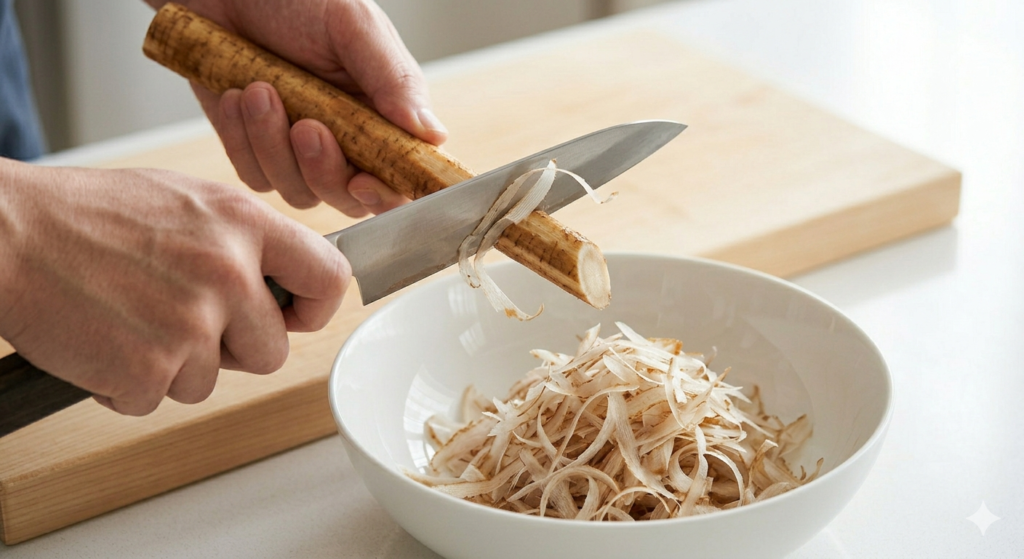
- Scrape off the burdock skin using the back of a knife. Use the “Sasa-gaki” (shaving) technique to create thin shavings. Soak them in water for a few minutes to remove harshness (aku) and prevent discoloration.
- Tip: Sasa-gaki increases the surface area, allowing the burdock to absorb the savory-sweet dashi faster.
- Heat the sesame oil in a pot and sauté the pork bites, burdock root, and sliced ginger.
- Add water and simmer until the burdock root becomes tender.
- Add the soy sauce, sugar, sake, and mirin, then simmer until the liquid is reduced to about one-third. Add the green onion.
- Pour the beaten eggs into the boiling pot.
- Gently shake the pot to spread the eggs evenly, then turn off the heat while they are still soft-boiled.


Tips for Best Results
- Add seasonings while the burdock root still has a slight bite. Retaining a subtle crunch enhances the natural flavor and texture of the burdock.
- Simmer thoroughly after adding the seasonings so the burdock fully absorbs the flavors before adding the eggs. If the burdock isn’t well-seasoned, the overall flavor of the dish will taste muted.
- Bring the broth to a rolling boil before adding the beaten eggs. This style of cooking—enveloping ingredients in egg and simmering broth—is called Tamagotoji (egg-bound dish). If the temperature is too low, the egg will not set properly, causing the broth to turn cloudy and losing its neat finish.
NUTRITION FACTS (Per Serving)
| Item | Total (5 Servings) | Per Serving (1/5) |
| Calories | 1,114 kcal | 223 kcal |
| Protein | 70.2 g | 14.0 g |
| Fat | 61.8 g | 12.4 g |
| Total Carbohydrates | 61.8 g | 12.4 g |
| (Net Carbs) | (56.1 g) | (11.2 g) |
| (Dietary Fiber) | (5.7 g) | (1.1 g) |
| Salt Equivalent | 7.1 g | 1.4 g |
Serve it as a “Yanagawa-don”!
For a hearty meal, pour the finished Pork Yanagawa over a bowl of hot steamed rice. It is absolutely delicious!
Read the Japanese version of this article here! [豚肉の柳川風鍋(ごぼうと卵のふわとろ煮)]
#ごぼう #きんぴらごぼう #和食ごはん #おうちごはん #食物繊維 #腸活レシピ #burdockroot #japanesecuisine #healthyfood


コメント