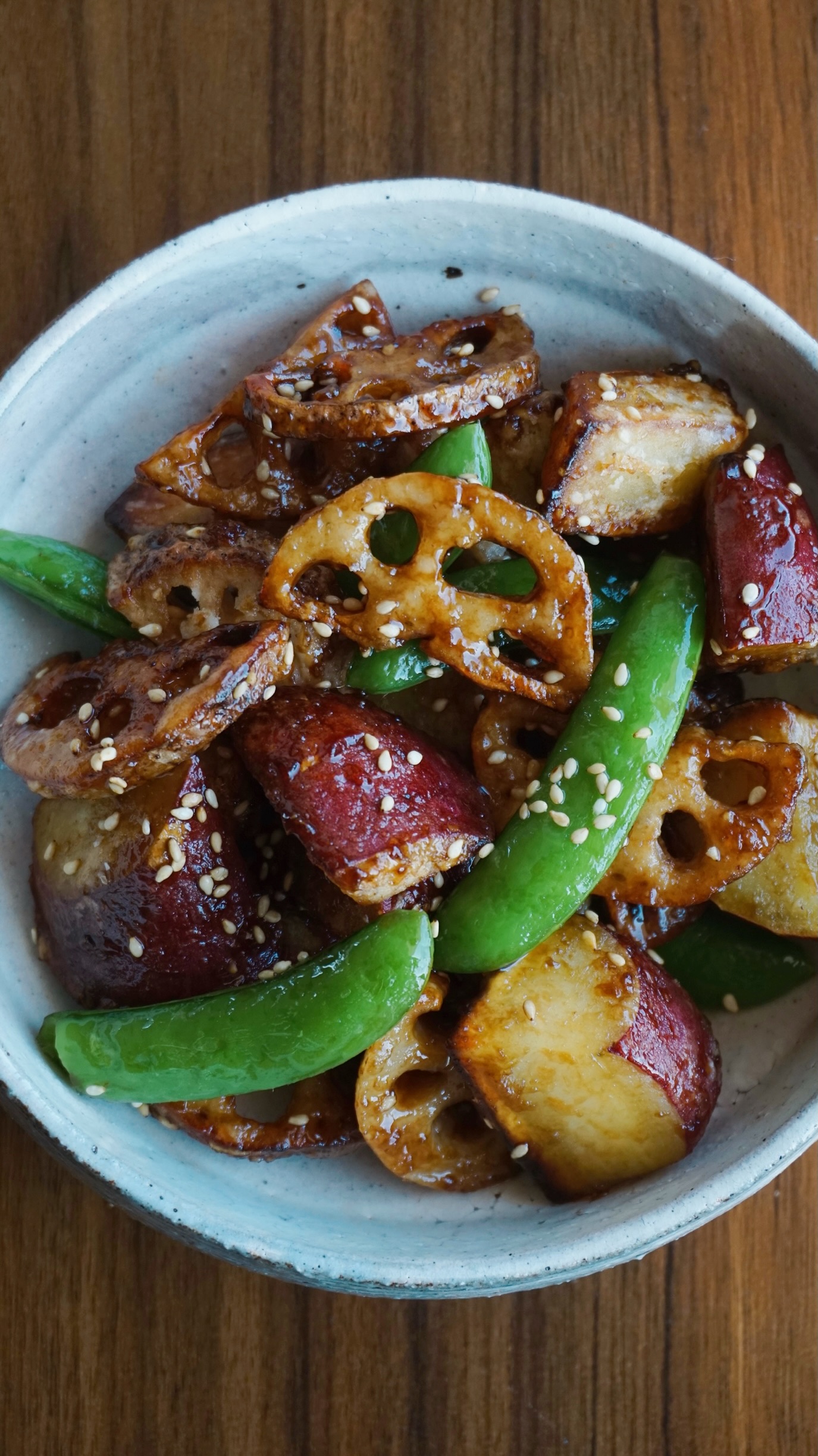
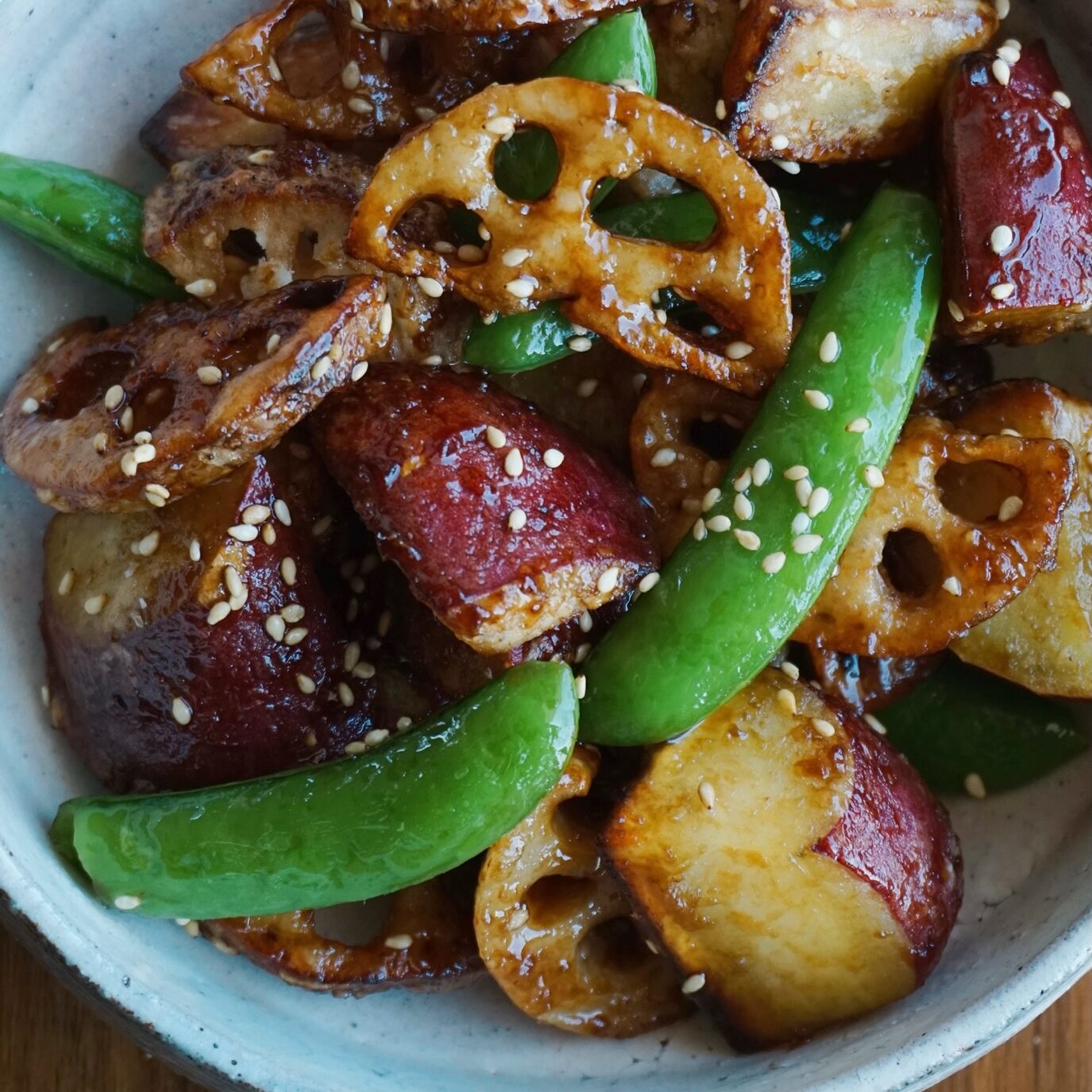
【Depachika Style】Black Vinegar Amazu Glazed Sweet Potato & Lotus Root
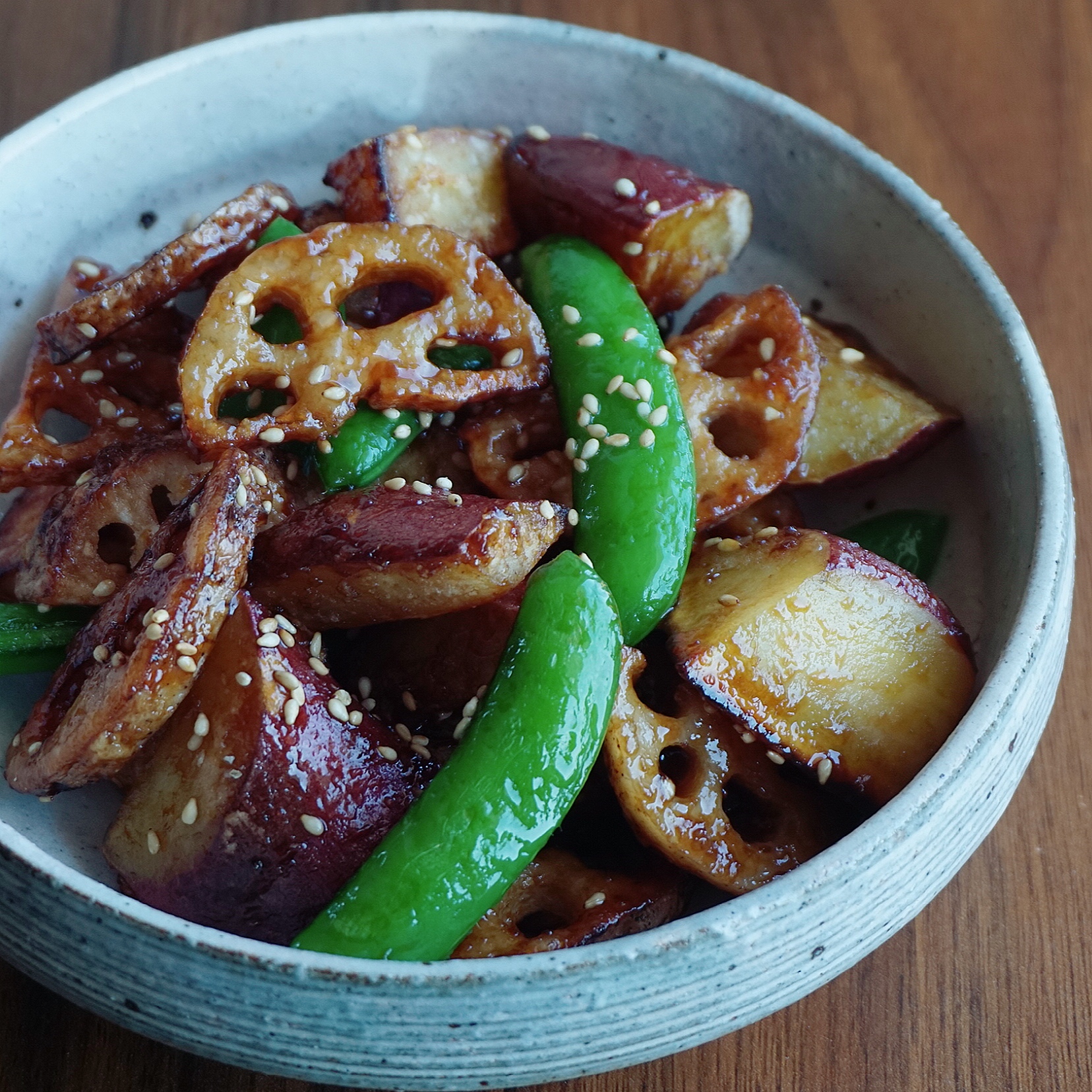
Recreate a popular department store basement deli favorite right at home with this Sweet and Sour Lotus Root and Sweet Potato recipe!
By coating thinly sliced sweet potatoes and lotus root with potato starch before frying, you get a delightfully crispy exterior. You’ll instantly fall in love with the incredible contrast between the satisfying crunch of the lotus root and the fluffy, naturally sweet sweet potato! Even while cooking, the savory aroma of the glaze fills the air, and every bite offers a delicious burst of sweet and tangy flavors. Snap peas (or your favorite green veggies) are added for a pop of vibrant color and an extra fresh crunch.
The secret to this dish’s amazing flavor is the smooth sweet and sour sauce made with black vinegar. Black vinegar provides a subtle, deep acidity and rich umami that coats every ingredient beautifully, giving it a glossy, mouthwatering finish. (If you don’t have black vinegar, standard rice vinegar works great for a classic taste, or try balsamic vinegar for a unique, western-inspired twist!)
Being 100% plant-based (vegan-friendly), this recipe is as healthy as it is satisfying. Give it a try and enjoy this perfect blend of textures and rich flavors!
Nutrition Facts
Note: Oil absorption rate is calculated at 15%.
[Total (Full Recipe)]
- Calories: 1354.8 kcal
- Protein: 10.9 g
- Fat: 75.5 g
- Carbohydrates: 153.6 g
- Sodium (Salt Equivalent): 4.35 g
【1人分あたりの栄養成分】
For 3 Servings (Per Serving)
- Calories: 451.6 kcal
- Protein: 3.6 g
- Fat: 25.2 g
- Carbohydrates: 51.2 g
- Sodium (Salt Equivalent): 1.45 g
For 4 Servings (Per Serving)
- Calories: 338.7 kcal
- Protein: 2.7 g
- Fat: 18.9 g
- Carbohydrates: 38.4 g
- Sodium (Salt Equivalent): 1.09 g
Ingredients (Serves 3-4)
- Sweet potato: 200g
- Lotus root: 200g
- Snap peas: 40g
- Potato starch: 40g (for coating)
- Oil: As needed for frying
- Ground white sesame seeds: 5g (for garnish)
【The Black Vinegar Amazu Sauce】
- Dark soy sauce: 30g
- Sugar: 18g
- Black vinegar: 15g
- Sake (Japanese rice wine): 15g
How to make Black Vinegar Amazu Glazed Sweet Potato & Lotus Root
- Prepare the Vegetables: Scrub the sweet potato well and cut into bite-sized chunks (rolling cut), keeping the skin on. Thoroughly wash the lotus root and slice into 3mm rounds, also with the skin on.
- Coat with Starch: Use paper towels to pat the vegetables completely dry. Toss them in potato starch until evenly coated. This step is crucial for achieving that signature “shatter-crisp” texture.
- Fry until Crispy: Heat oil in a wide pan—you’ll need enough to submerge about 1/3 of the vegetables. Fry them in two batches to prevent the oil temperature from dropping, being careful not to let the pieces overlap. Once golden and crispy, remove and place them in a tray to drain any excess oil.
- Prep the Snap Peas: Remove the strings from the snap peas. Boil them in a separate pot of water for 2 minutes, then drain.
- Prepare the Glaze: Carefully wipe away any remaining oil from the pan with a paper towel (watch out for the heat!). Combine the soy sauce, sugar, black vinegar, and sake in the pan. Heat over high heat until the sauce bubbles and starts to thicken.
- Toss and Serve: Add the fried vegetables and snap peas to the pan. Toss quickly to “caramelize” and coat everything in the glossy glaze. Turn off the heat, sprinkle with ground sesame seeds, and enjoy!
Naoko’s Point: Professional Tips for Success
- Don’t Peel the Lotus Root!
- I recommend leaving the skin on the lotus root. Not only does it add a beautiful rustic look to the dish, but much of the fiber and polyphenols are concentrated in and just under the skin. Just give it a good scrub before slicing!
- Don’t Over-Soak the Lotus Root! Lotus root is rich in Vitamin C and potassium, but these nutrients are water-soluble. To preserve its nutritional value, avoid soaking the sliced lotus root in water for too long. If you want to get the maximum health benefits, you can even skip the soaking process entirely and fry them immediately after slicing!
- Precision is Key
- For consistent results every time, I recommend weighing your ingredients in grams. This ensures the 15% oil absorption calculation stays accurate and the balance of the sweet and sour glaze is perfectly hit every single time.
Read the Japanese version of this article here! [さつまいもとレンコンの甘酢炒め]
れんこん #蓮根レシピ #おうちごはん #旬の野菜 #常備菜 #LotusRoot #JapaneseFood #HealthyRecipe #レンコン #さつまいも #さつまいもレシピ #おうちごはん #旬の野菜 #健康食 #SweetPotato #JapaneseSweetPotato #HealthyFood #Satsumaimo #HomeCooking

コメント