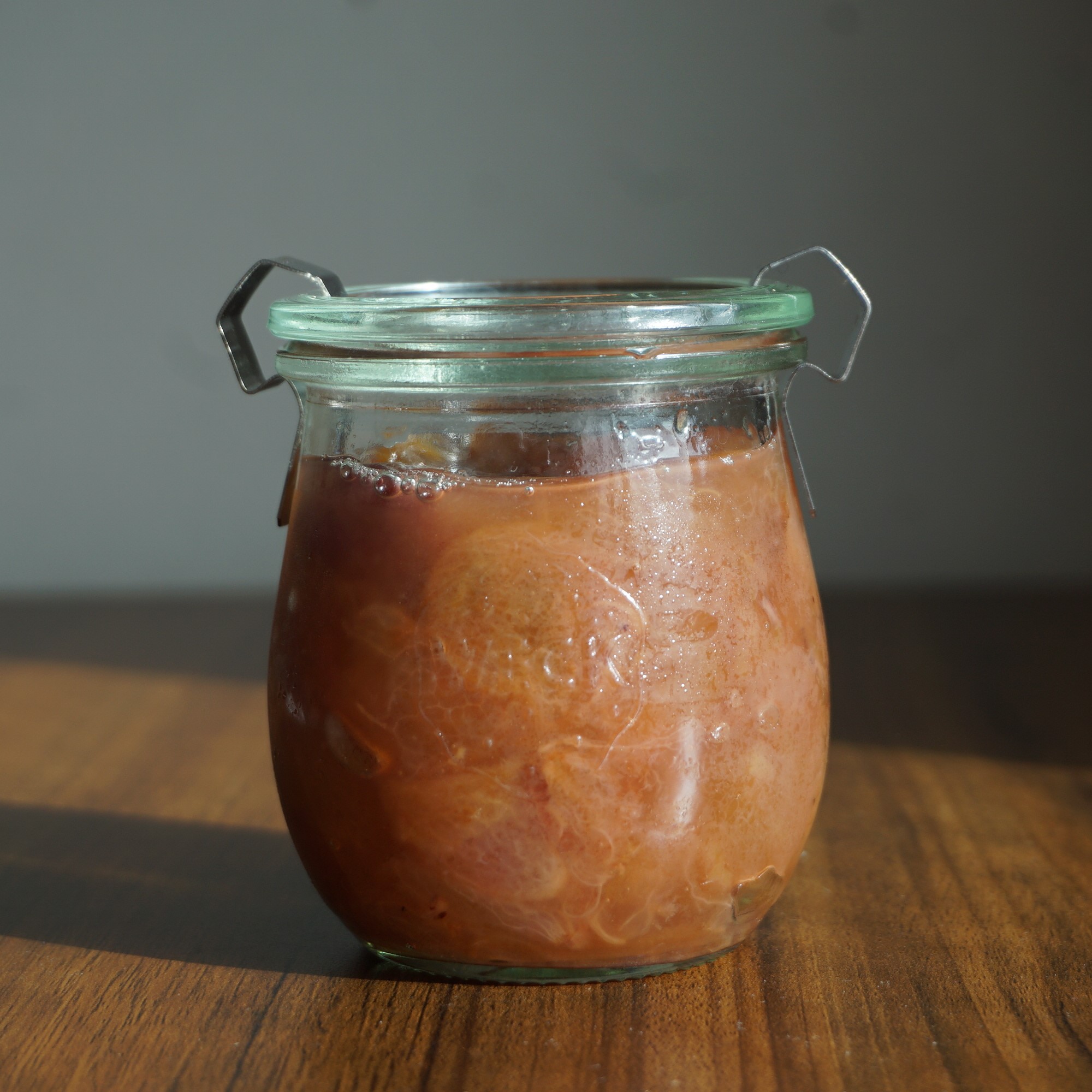
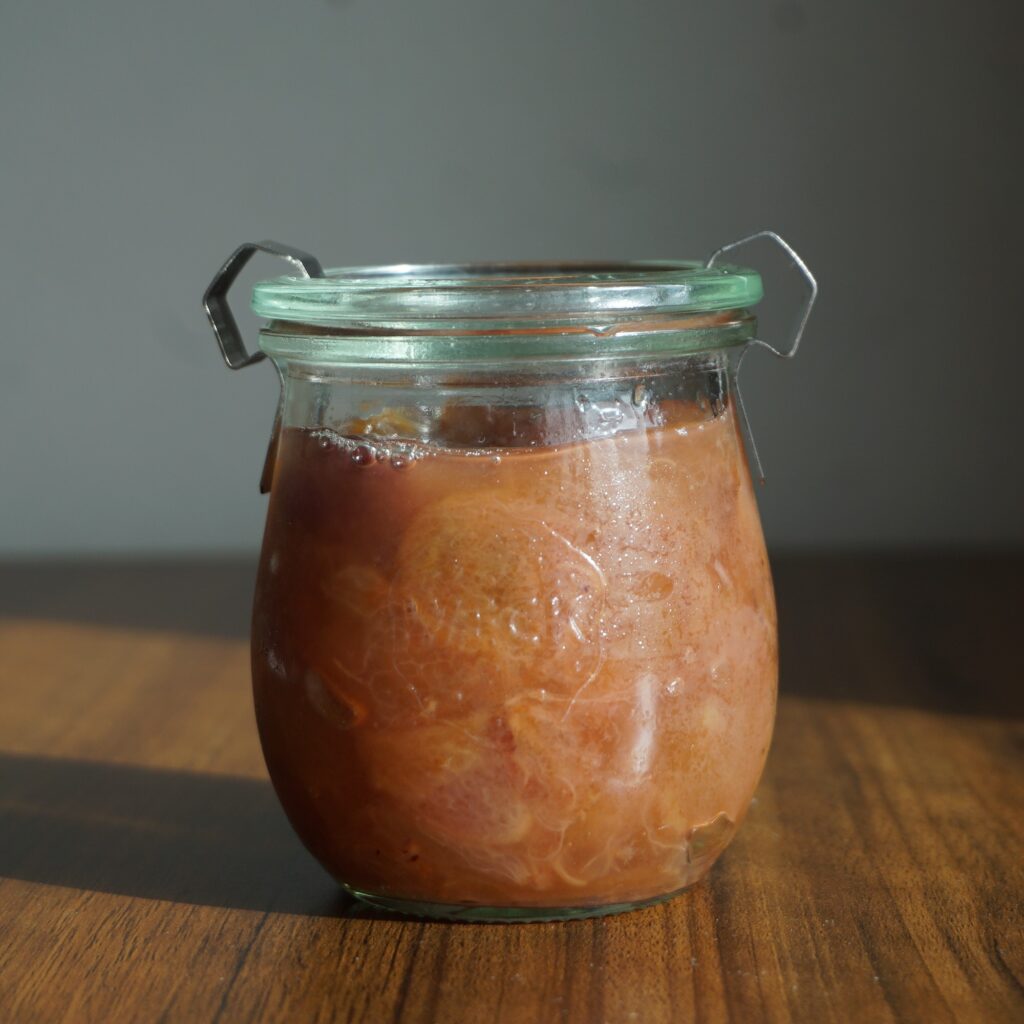
- Homemade Grape Jam Recipe | Concentrated Sweetness & Aroma! How to Make Luxurious, Ruby-Red Jam
- The World of Grapes: History and Jam-Making Science
- Featuring “Queen Nina” & The Appeal of Homemade Jam
- The Secret to Gelling: The Golden Ratio of Pectin, Sugar, and Acid
- Homemade Grape Jam Recipe (Yield: Approx. 1 kg)
- Serving Suggestions
- Nutritional Values for Homemade Grape Jam
Homemade Grape Jam Recipe | Concentrated Sweetness & Aroma! How to Make Luxurious, Ruby-Red Jam
Grapes are a beloved fruit with a history spanning back to ancient times. While enjoying them fresh and raw is wonderful, turning them into homemade jam through a little extra care unleashes a rich, concentrated sweetness and fills your kitchen with an intoxicating aroma.
Featuring a fresh, vibrant flavor you cannot get from store-bought varieties, alongside a deep ruby color extracted naturally from the skin, this guide presents a homemade grape jam recipe together with the scientific principles behind achieving the perfect set.
The World of Grapes: History and Jam-Making Science
A Fruit Cherished Since Ancient Times
Grapes are believed to have existed since around 5000 BC, making them one of the most widely cultivated fruits in the world. Originating in Central Asia, major producers today include France, Italy, and Spain.
Approximately 90% of global grape production is used for winemaking, while the remaining portion is processed into raisins, juice, canned goods, and jams.
In Japan, popular varieties available in markets include Delaware, Pione, Kyoho, Nagano Purple, Queen Nina, and Shine Muscat. Shine Muscat, in particular, has surged in popularity in recent years as a staple topping for parfaits, cakes, and soft-serve ice cream.
Featuring “Queen Nina” & The Appeal of Homemade Jam
For this batch of grape jam, we used “Queen Nina,” a large table grape variety.
These grapes were given to us directly by the grower, who shared: “They’re ‘Grade B’ with a slightly pale color—not quite ready for store shelves—but they’re perfectly sweet and ideal for processing.”
People often think fruit is best enjoyed chilled and raw, as heating can cause it to lose its vivid color, delicate aroma, and freshness (plus, cooling grapes brings out their sweet flavor even more).
However, fruit that falls outside market standards due to pale color or small size can become a true star in the world of food processing! It offers unique charms you can’t get from raw fruit, including a richer, more concentrated flavor and a longer shelf life.
Even if these fruits can’t make it to market or are sold at lower prices simply because of their appearance, their taste is undeniably top-tier. By transforming them into exquisite jam, we create new value for the crops farmers have poured their hearts into growing, while also helping reduce food loss.
Though these grapes were a bit pale, we simmered them with their skins on to fully extract their natural pigments. Adding a splash of lemon juice gives the jam a stunning, vibrant color with a beautiful luster.
Health and Beauty Benefits of Polyphenols
Grapes contain polyphenols—a group of flavonoid pigments with strong antioxidant properties—making this jam as beneficial for health and beauty as it is delicious.
Polyphenols are concentrated primarily in the skin and seeds. For this reason, the grapes are simmered with their skins on. As they cook, the skins slip off naturally, releasing their natural pigments to create a stunning, vibrant ruby color without any artificial food coloring.
(※ If you are concerned about astringency or residual pesticides, you may peel the grapes before cooking.)
The Secret to Gelling: The Golden Ratio of Pectin, Sugar, and Acid
Under JAS (Japanese Agricultural Standards), fruit spreads are classified into jams, marmalades (containing citrus peel), and jellies (often referred to broadly as preserves or confiture).
The gelling process occurs when pectin inherent to the fruit interacts with high sugar concentration and acid (such as lemon juice) under heat to form a gel network.
Calculating the Gel Point
- Pectin Content: Apples and oranges contain around 1.0% pectin, whereas grapes contain around 0.7%.
- Acidic Environment: Adding lemon juice adjusts the acidity, ensuring the pectin sets effectively.
- Sugar Concentration: Pectin requires a sugar concentration of 60% or higher to set properly into a smooth gel.
【Formula for This Recipe】
- JAS Standard: Fruit content of 30% or higher ➔ This recipe features 70% fruit content (2 kg grapes yielding 1 kg finished jam).
- Sugar Concentration Calculation: The sugar content per 100g of grapes is approximately 15.7g. (15.7g × 20) + 300g of sugar = 614g (total sugar content) 614g ÷ 1000g (finished amount) = 61.4%
Thanks to this precisely calculated ~61% sugar concentration, the pectin reacts ideally to produce a glossy, beautifully set jam.
Homemade Grape Jam Recipe (Yield: Approx. 1 kg)
Simmering the pot slowly over a couple of hours fills the room with a comforting, sweet aroma. It is a wonderful project for a relaxing day.
■ Ingredients
- Queen Nina Grapes: 2 kg
- Sugar: 300 g
- Lemon Juice: 50 cc
■ Instructions
- Wash the GrapesRinse the grapes thoroughly under water to remove any surface debris.
- Combine and HeatPlace the washed grapes and sugar into a large pot over medium heat.
- Simmer GentlyAs the grapes heat, they will release plenty of liquid. Simmer slowly, stirring occasionally with a wooden spatula to prevent scorching.
- Remove the SkinsAs the mixture simmers, the skins will naturally loosen and float to the surface. Skim them off with a mesh strainer as needed (the rich flavor and polyphenols will have already infused into the juice).
- Add Lemon JuiceOnce the mixture thickens, add the lemon juice to activate the gelling process between the pectin and fruit acids.
- Finish and BottleRemove from heat once the jam reaches your desired consistency. Ladle hot into clean, sterilized glass jars, seal tightly, and store.
Serving Suggestions
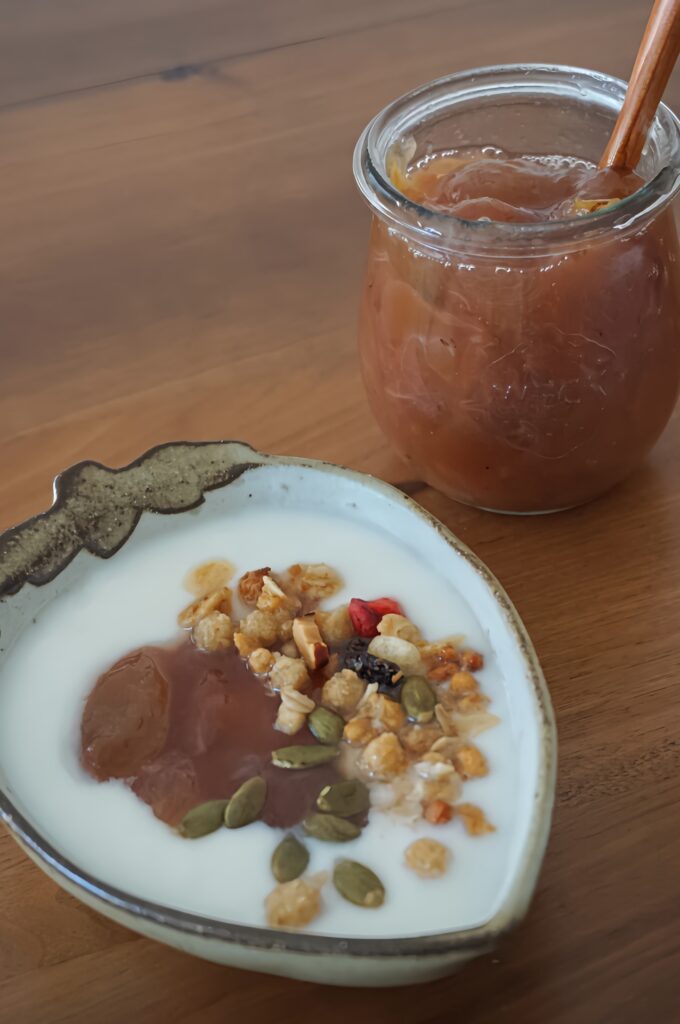
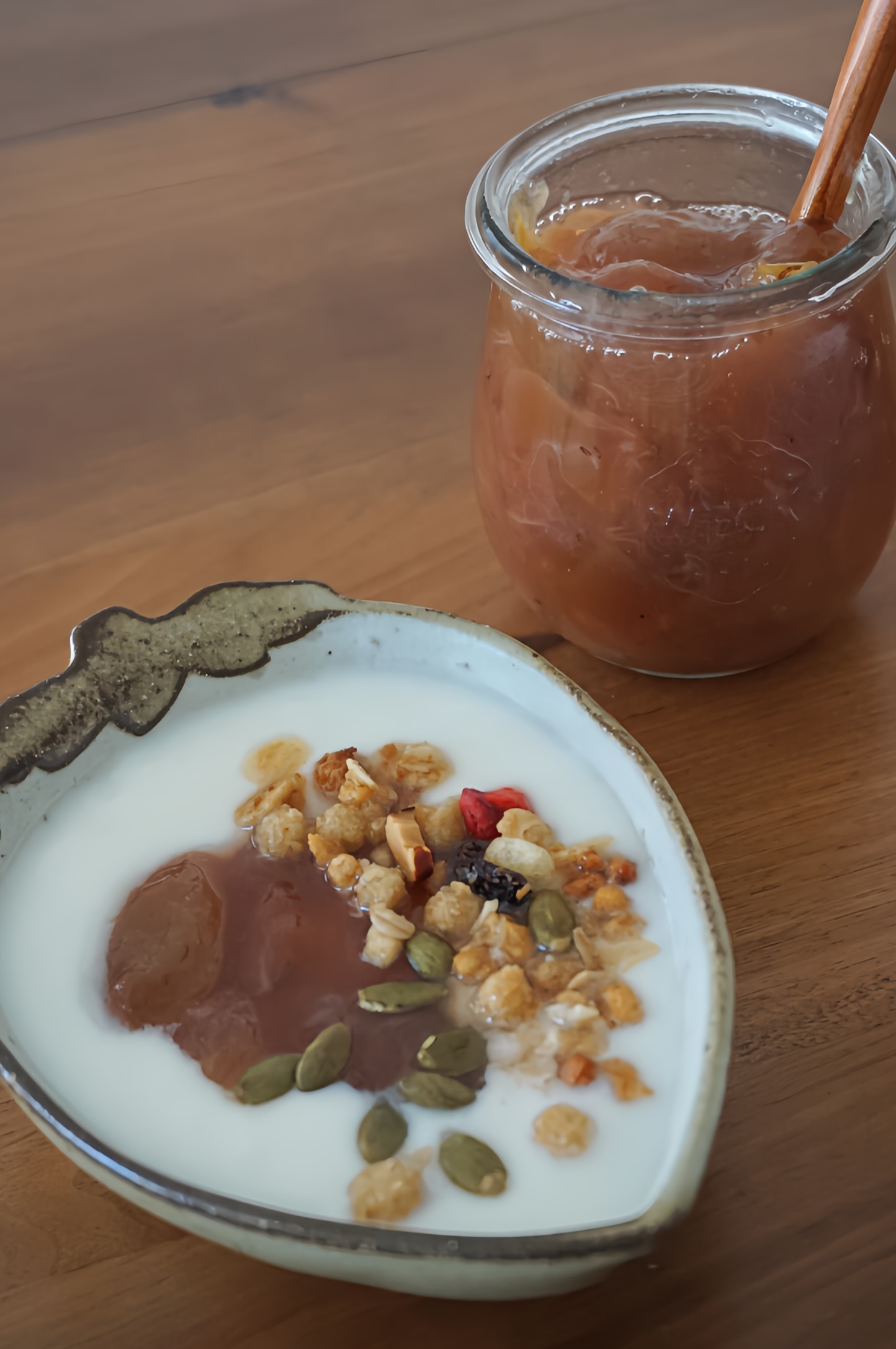
Enjoy your homemade grape jam generously spread on warm toast, or swirled into unsweetened plain yogurt or vanilla ice cream to highlight its subtle tartness. It also pairs wonderfully with cream cheese on crackers for a sophisticated appetizer.
Treat yourself to a little everyday luxury at breakfast or teatime with a jar of carefully crafted homemade jam!
Nutritional Values for Homemade Grape Jam
【Total Yield (1,000 g)】
- Energy: 2,363 kcal
- Protein: 10.2 g
- Fat: 2.1 g
- Carbohydrates: 616.3 g (Net Carbs: 597.8 g / Dietary Fiber: 18.5 g)
- Salt Equivalent: 0.0 g
【Per Tablespoon (Approx. 15 g)】
- Energy: 35 kcal
- Protein: 0.2 g
- Fat: 0.0 g
- Carbohydrates: 9.2 g (Net Carbs: 9.0 g / Dietary Fiber: 0.3 g)
- Salt Equivalent: 0.0 g

コメント