- Nametake: The 10-Minute Japanese Gut-Health Superfood
- 1. Exceptional Nutrition and Health Benefits of Nametake
- Is “Nametake is Bad for You” True? Common Concerns and Solutions
- [Solutions] Make It at Home and Optimize How You Eat It!
- A Versatile Kitchen Companion! Recommended Ways to Eat It
- Quick Trivia: Nametake vs. Nameko
- Get to Know Your Ingredients: Enoki Mushrooms
- Enoki Mushrooms Are Recommended for Freezing!
- Standard Edible Mushroom Guide
- 10-Minute Homemade Nametake Recipe
Nametake: The 10-Minute Japanese Gut-Health Superfood
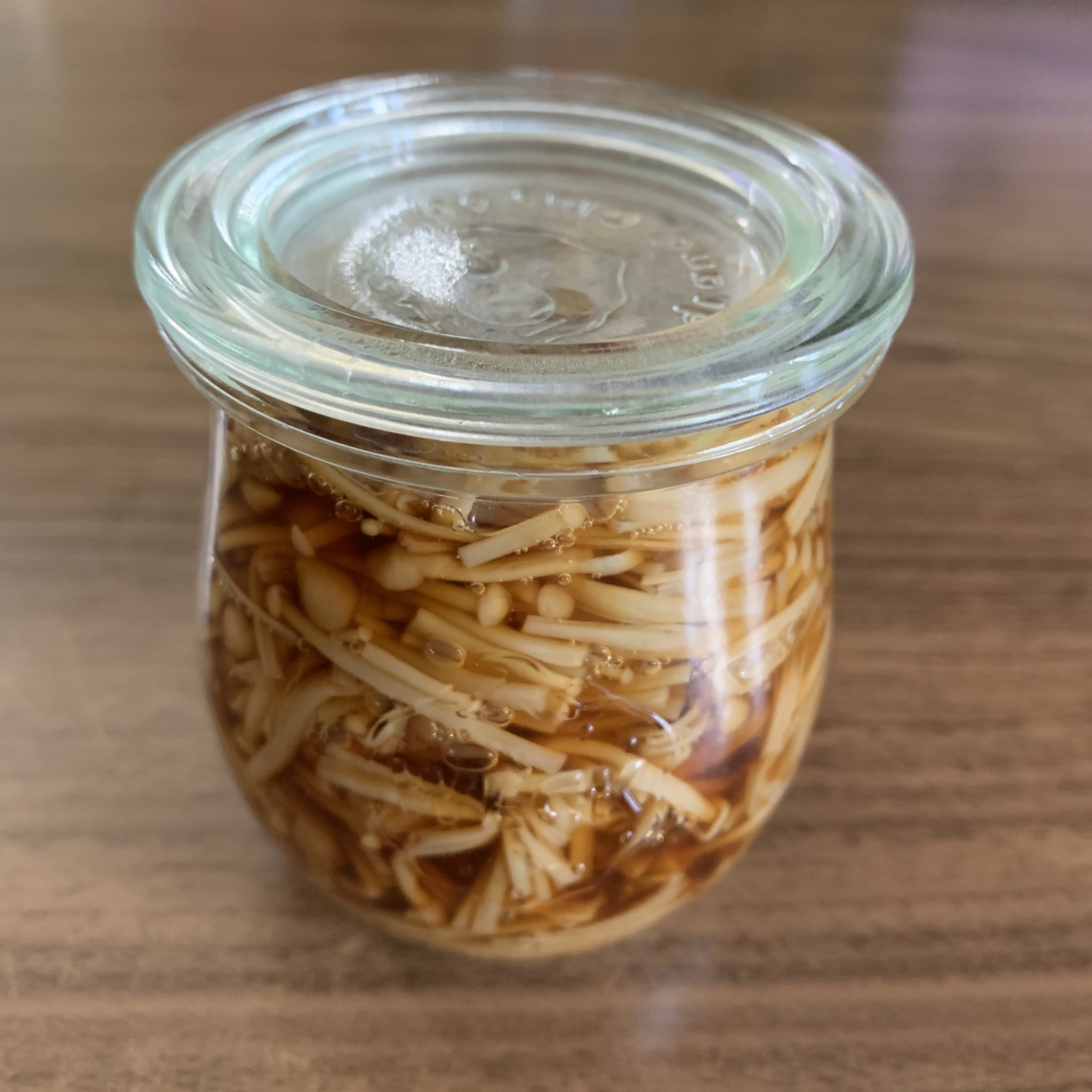
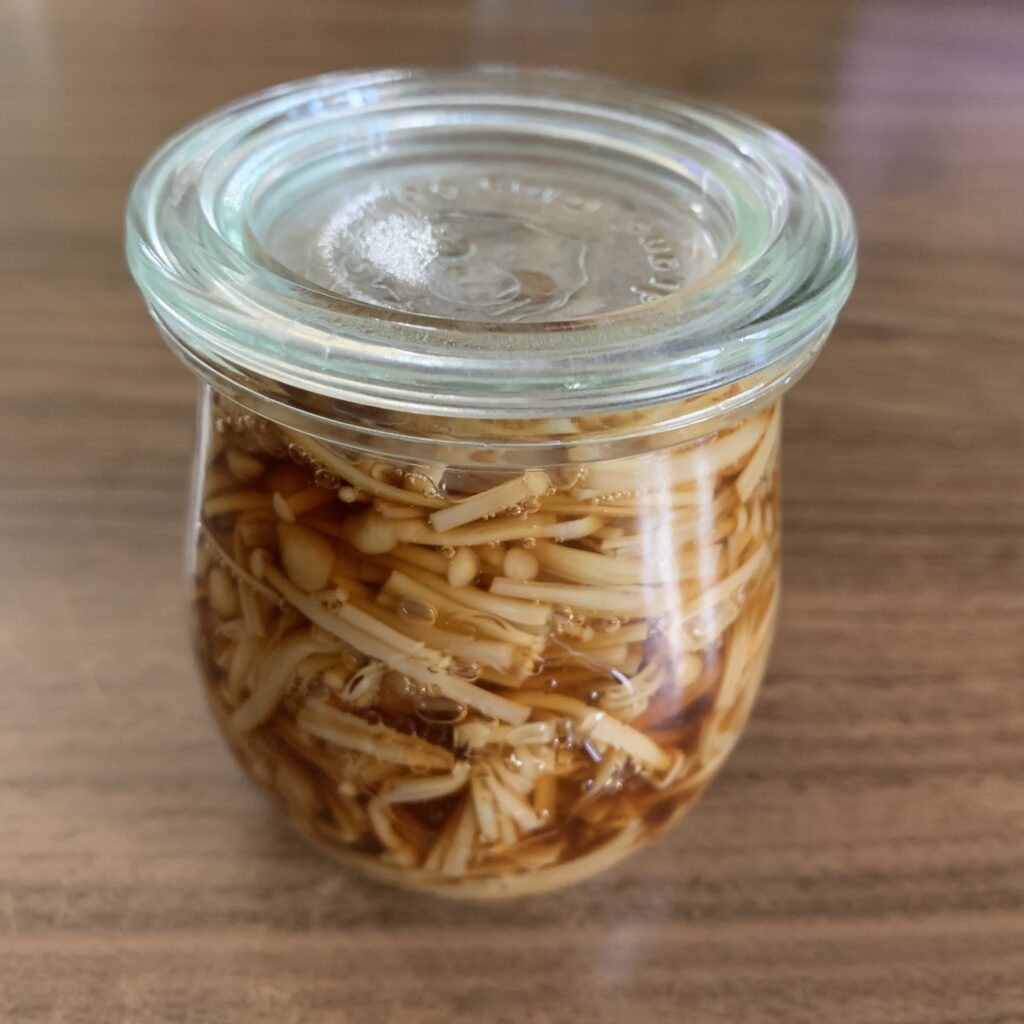
Nametake is a traditional Japanese savory preserve made by simmering enoki mushrooms, prized for their concentrated umami flavor, glossy sheen, and subtle sweetness. While store-bought versions are readily available at Asian grocery stores, making it at home is surprisingly easy, budget-friendly, and most importantly, much healthier.
Registered dietitians strongly recommend nametake due to its exceptional nutritional value and health benefits.
1. Exceptional Nutrition and Health Benefits of Nametake
- The Gut Health Hero (Dietary Fiber & Beta-Glucans): The characteristic slimy texture of enoki mushrooms comes from dietary fiber and beta-glucans, components essential for maintaining a healthy intestinal environment. They offer excellent benefits for relieving constipation and supporting immune function.
- Metabolism-Boosting B Vitamins: Abundant in vitamin B1 and niacin, which help metabolize carbohydrates and are essential for fatigue recovery and energy production.
- Edema Prevention via Potassium: Contains potassium, which helps the body excrete excess sodium (salt), playing a role in preventing lifestyle-related diseases.
Is “Nametake is Bad for You” True? Common Concerns and Solutions
You might occasionally see search terms like “nametake is unhealthy,” which mainly stems from two reasons: the high sodium content in commercial products and food additives.
- Excess Sodium: Store-bought bottled varieties are heavily seasoned with soy sauce and sugar to enhance preservation, sometimes containing around 3g of salt per 100g. Consuming large amounts directly can lead to excess sodium intake, potentially causing high blood pressure and water retention.
- Concerns Over Additives: Some commercial products contain preservatives, thickeners, and seasoning agents like amino acids. While managed safely within standard limits, this can be a concern for those who prefer a natural diet.
[Solutions] Make It at Home and Optimize How You Eat It!
These risks can be completely eliminated by “making it yourself” and being mindful of your “portion sizes and food combinations.”
- Control Salt and Sugar with Homemade Recipes: By making it at home, you can adjust the amounts of soy sauce and mirin, resulting in a safe, additive-free, and healthy batch of nametake in just 10 minutes.
- Portion Control and Food Pairing: If using store-bought bottled varieties, keep the daily guideline to about 30 to 50g. Pair it with potassium-rich raw vegetables (such as grated daikon radish, okra, or leafy greens) to help the body excrete excess sodium.
A Versatile Kitchen Companion! Recommended Ways to Eat It
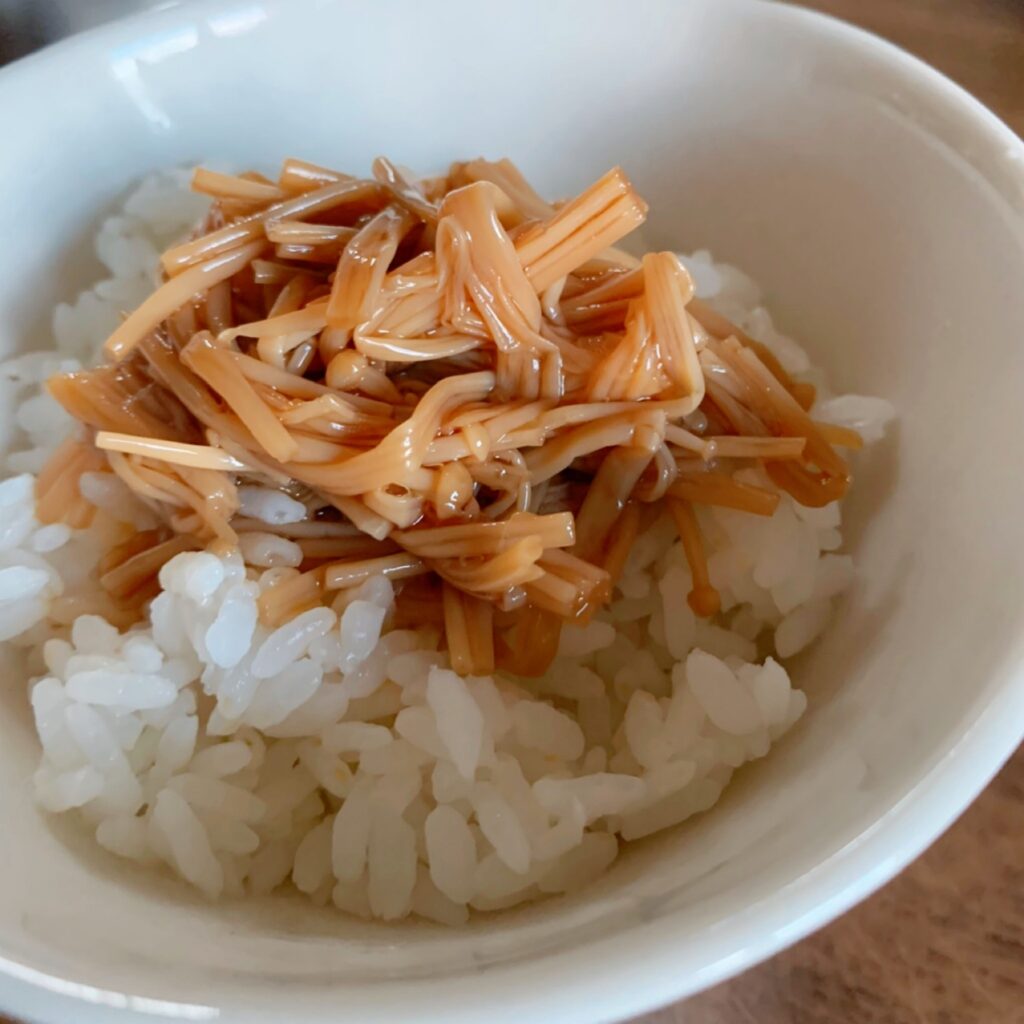
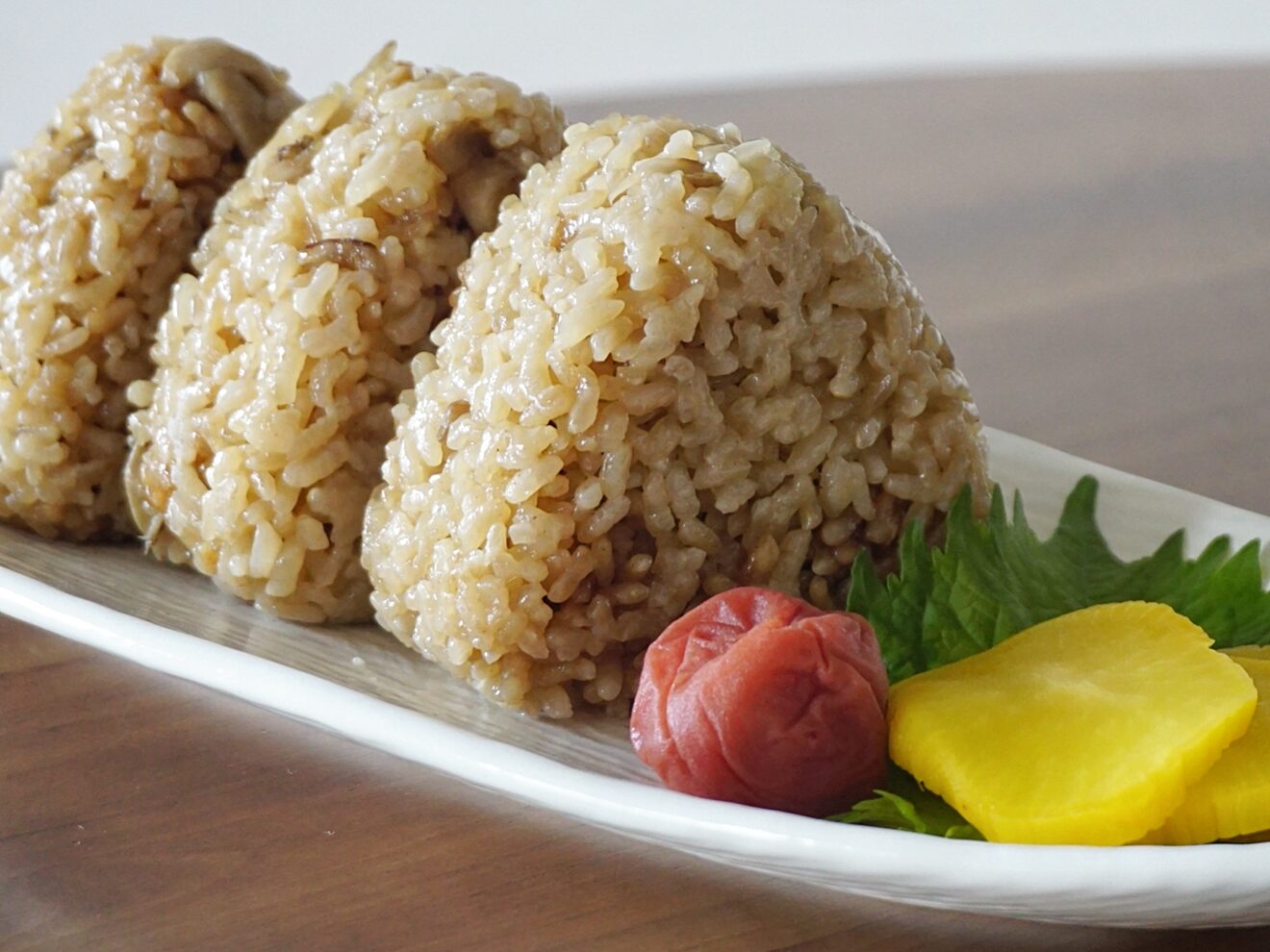
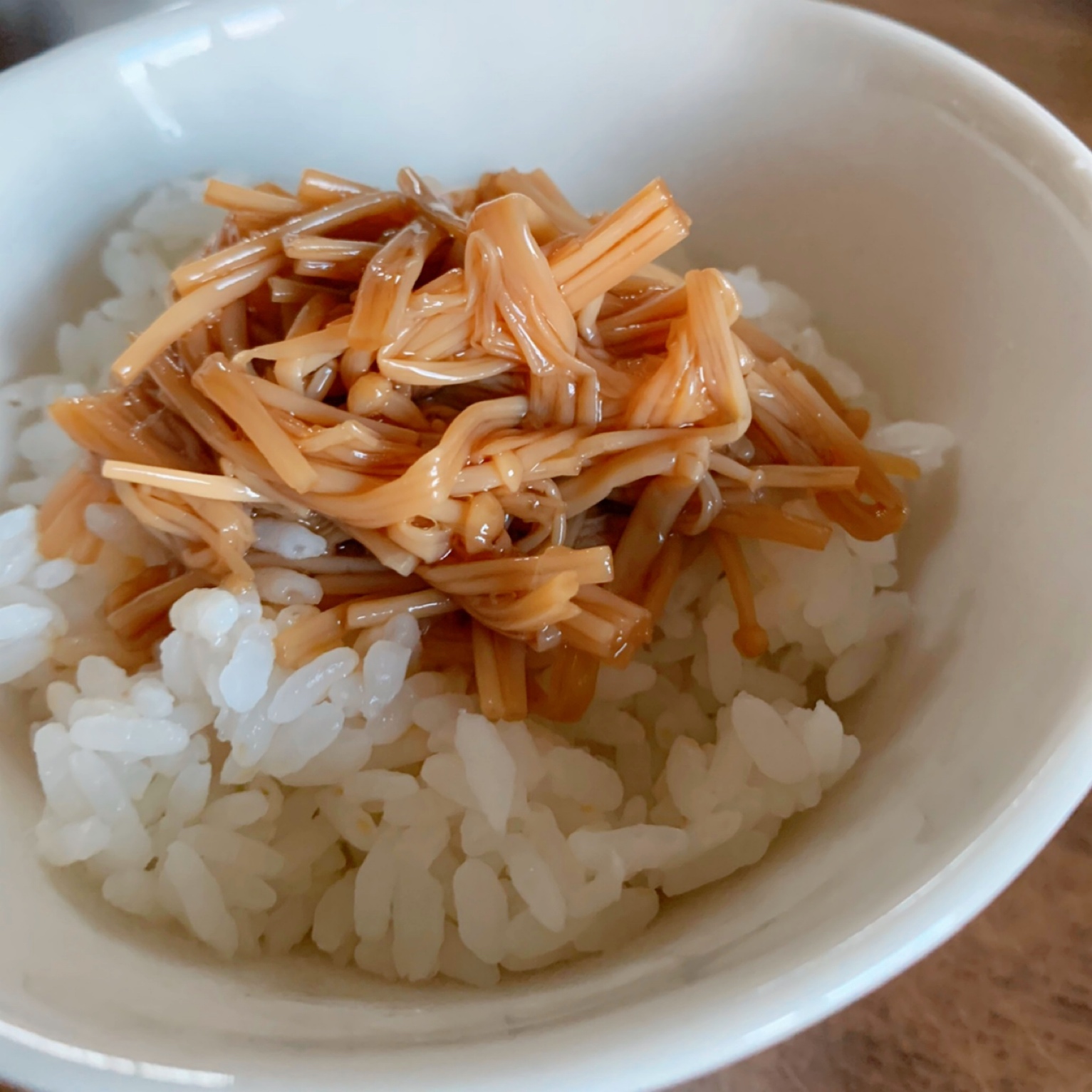
While it is delicious over freshly cooked white rice, the possibilities expand infinitely with a little creativity.
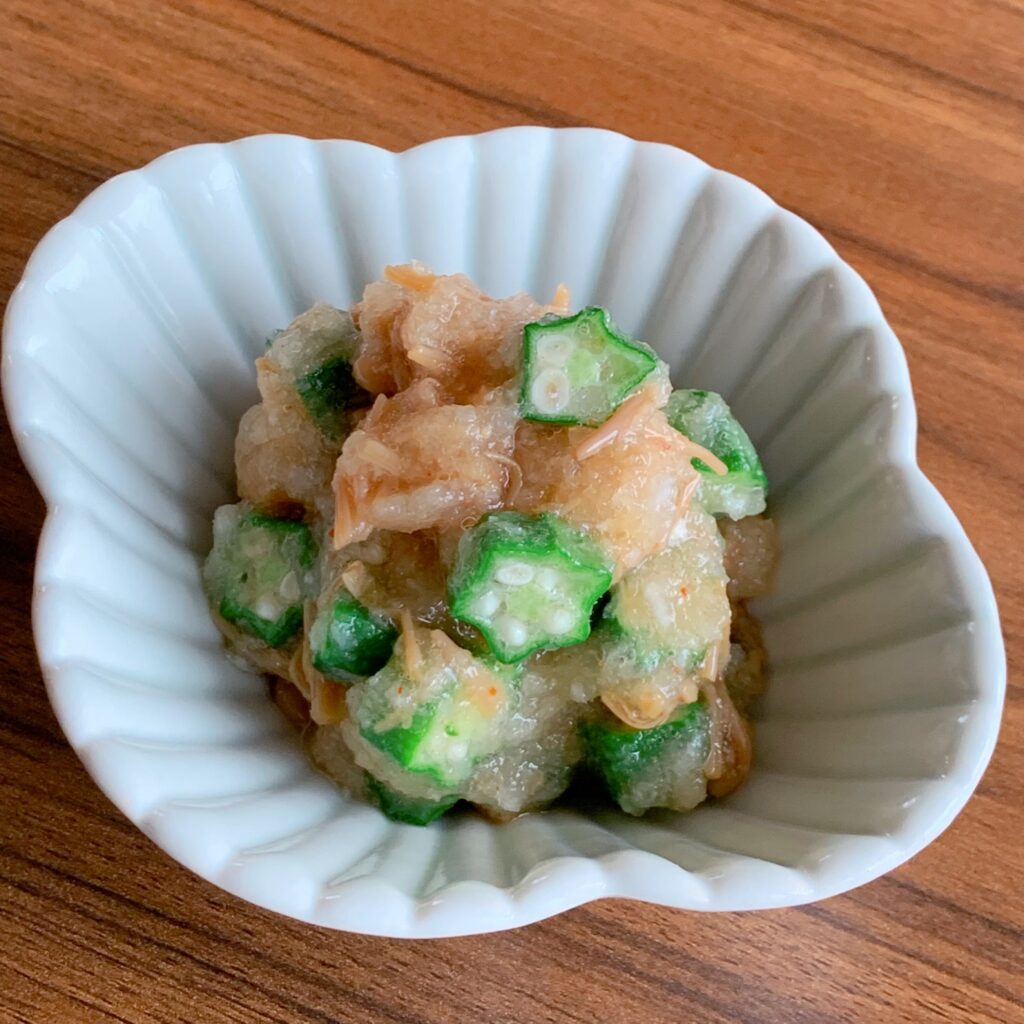
- Refreshing! Nametake and Okra Salad: A simple, refreshing dish made with nametake, okra, and grated daikon radish. It is best finished with a citrus-based soy sauce like ponzu. Adding a small amount of mentsuyu (noodle soup base) as a secret ingredient brings out an even deeper umami flavor.
- Other Creative Ideas: Use it as a topping for avocado toast, spoon it over chilled tofu (hiyayakko), or turn it into an umami-rich pasta sauce. When prepared with lower sodium, homemade nametake serves as a healthy flavor accent for various dishes.
Quick Trivia: Nametake vs. Nameko
Though their names sound similar, they are actually completely different things!
- Nametake: The name of a “dish” made by seasoning and simmering enoki mushrooms.
- Nameko: The name of a “mushroom variety” that features a natural slipperiness (commonly used in miso soup).
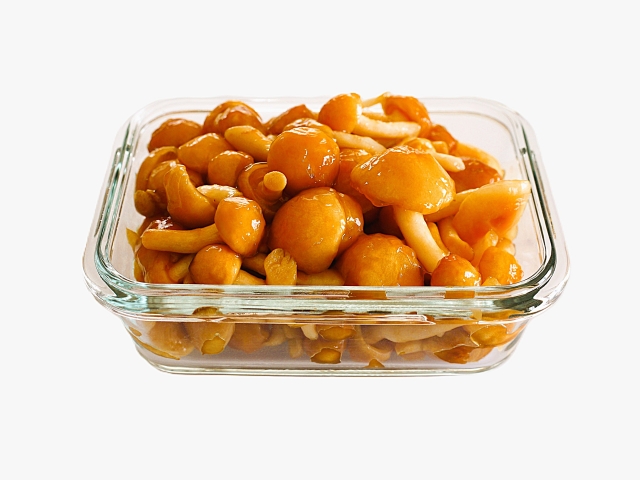
Get to Know Your Ingredients: Enoki Mushrooms
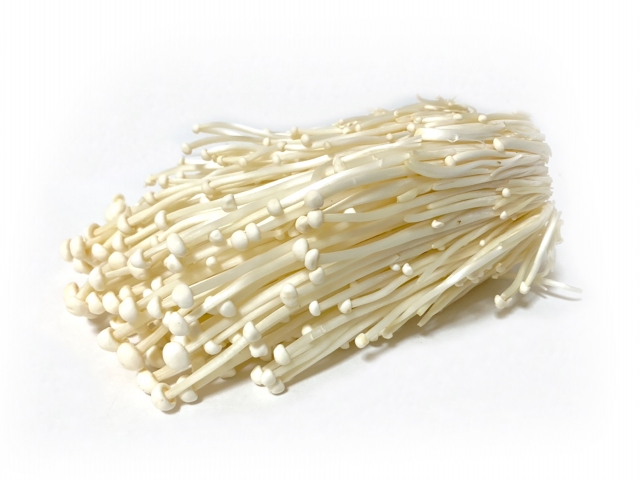
Did you know that the white enoki mushrooms you see in stores look completely different from wild enoki mushrooms?
- Wild Appearance: Wild enoki mushrooms produce melanin to protect themselves from UV rays, giving them a brown appearance. Because they grow vigorously in the cold winter, they are also known as “Yukinoshita” (under the snow).
- Cultivation: The thin, milky-white enoki mushrooms we commonly see are cultivated year-round in temperature-controlled environments shielded from light.
Enoki Mushrooms Are Recommended for Freezing!
As a registered dietitian, the ultimate secret to efficiently absorbing the nutrients in mushrooms is “freezing enoki mushrooms.”
- Boosted Umami: Enoki mushrooms contain an enzyme called “nuclease” that produces guanylic acid, an umami component. This enzyme is activated when cell walls are broken down through freezing or heating.
- Health Benefits: Freezing makes “mushroom chitosan”—a component currently being researched for its diet (anti-obesity) effects—easier for the body to absorb.
Standard Edible Mushroom Guide
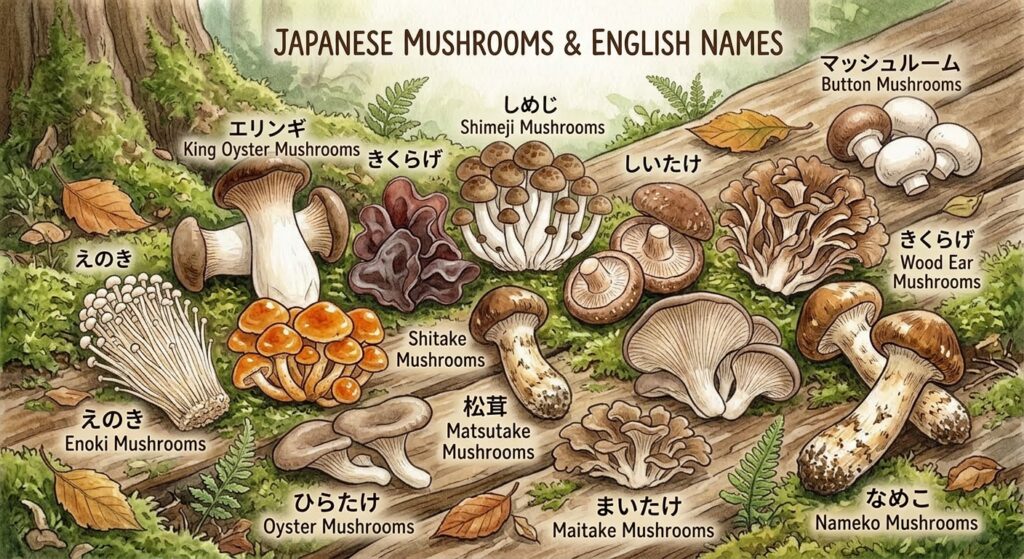
Discover the main mushrooms used in Japanese home cooking and around the world:
- Enoki: Long and white with a crisp, crunchy texture.
- Eringi (King Oyster): Thick, fleshy stems, ideal for grilling.
- Nameko: Small amber caps with natural gloss and sliminess.
- Kikurage (Wood Ear): A crunchy texture frequently found in ramen.
- Shimeji: Distinctive flavor, versatile for Japanese, Western, and Chinese dishes.
- Mushroom (Button): A versatile player essential in Western cuisine.
- Shiitake: Characterized by a deep, rich umami flavor.
- Maitake: Highly aromatic with a ruffled, unique shape.
- Hiratake (Oyster Mushroom): Delicate, petal-like caps.
- Matsutake: A luxury autumn delicacy with a spicy, rich aroma.
Why Should You Add Mushrooms to Your Meals?
Mushrooms are not only delicious but also a treasure trove of nutrients!
- Immune Support: Beta-glucans found in all mushrooms help enhance immune function and are said to possess cancer-suppressive effects.
- Diet Companion: Low in calories yet rich in dietary fiber, making them optimal for weight management.
- Budget-Friendly: Most mushrooms are cultivated year-round, keeping prices low and stable regardless of the season.
Dietitian’s Tip: Because mushrooms are affordable and highly nutritious, try incorporating a variety of them into your weekly meals to support long-term health!
10-Minute Homemade Nametake Recipe
Nutrition Information (Total and Per Serving)
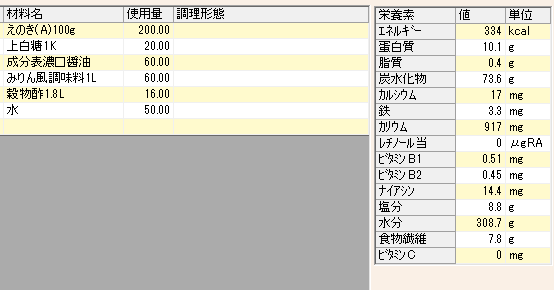
- Total (approx. 430g / 5 servings): Calories: 334 kcal | Protein: 10.1 g | Fat: 0.4 g | Carbohydrates: 73.6 g | Salt Equivalent: 8.8 g
- Per Serving (approx. 85g): Calories: 67 kcal | Protein: 2.0 g | Fat: 0.1 g | Carbohydrates: 14.7 g | Salt Equivalent: 1.8 g
Ingredients (5 servings)
- Enoki Mushrooms: 200g to 400g (using 500g of raw mushrooms yields about 430g finished)
- ☆ Sugar: 20g
- ☆ Soy Sauce: 60g
- ☆ Mirin: 60g
- ☆ Grain Vinegar: 16g
- ☆ Water: 50g
Instructions
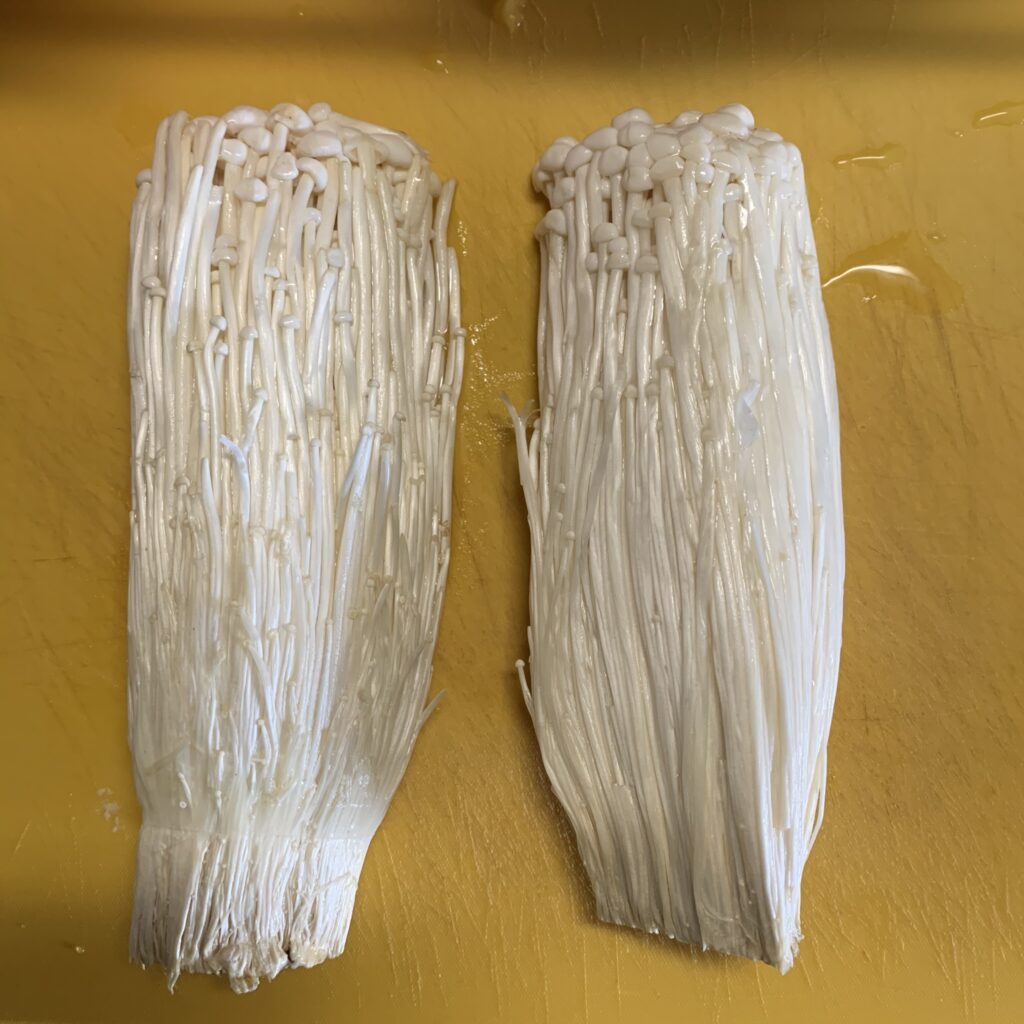
- Prep: Cut off the base (root ends) of the enoki mushrooms with a knife. If they are too long, cut them into easy-to-eat lengths.
- Convenience Tip: Mushrooms are sensitive to moisture, so there is no need to wash them before cooking. Simply cut off the roots, place them in a bag, and freeze them directly. They can be stored in the freezer for about 1 month, and you can just drop them straight into soups or hot pots while still frozen!
- Combine: Place the enoki mushrooms and all the ☆ seasonings (sugar, soy sauce, mirin, vinegar, and water) into a pot.
- Bring to a Boil: Heat over medium heat until it comes to a boil.
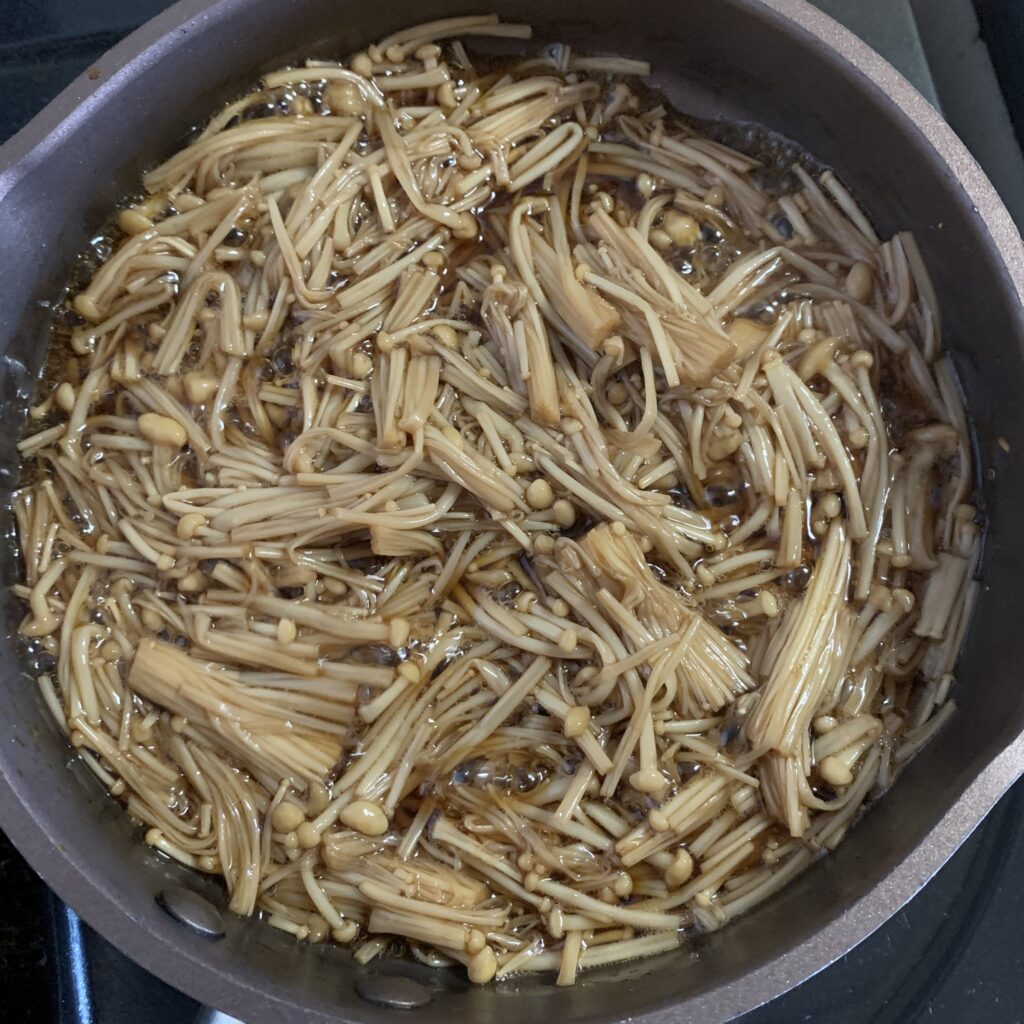
- Simmer: Once boiling, reduce the heat to low. Stir occasionally and simmer, taking care not to let it burn.
- Cool and Store: Turn off the heat once the simmering liquid thickens and the enoki mushrooms take on a beautiful gloss. Transfer to a clean airtight container, let cool, and store in the refrigerator.
Please see the Japanese version of this article here! [なめ茸の栄養と健康効果を解説!腸活にも効く「体にいい」理由と簡単レシピ]

コメント