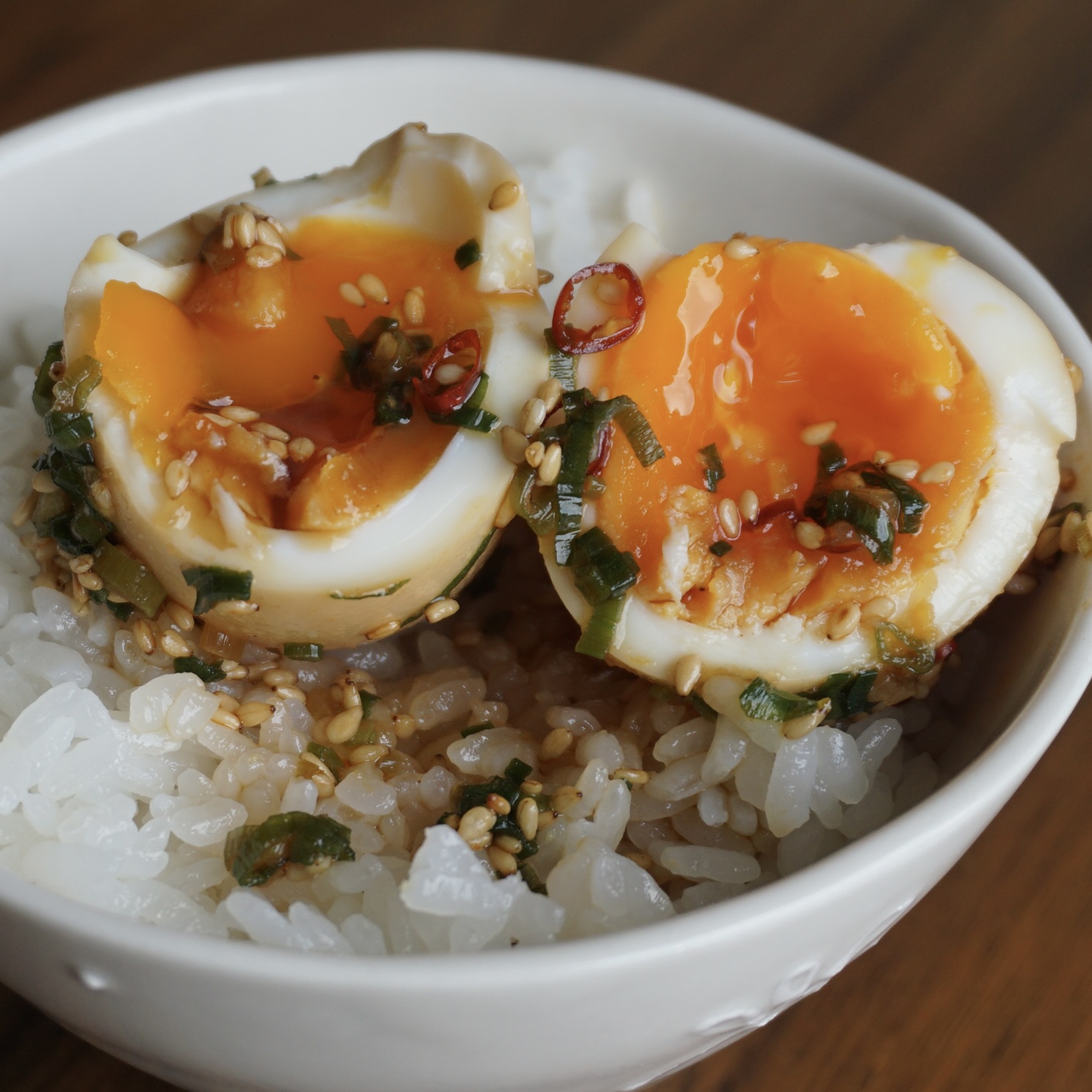
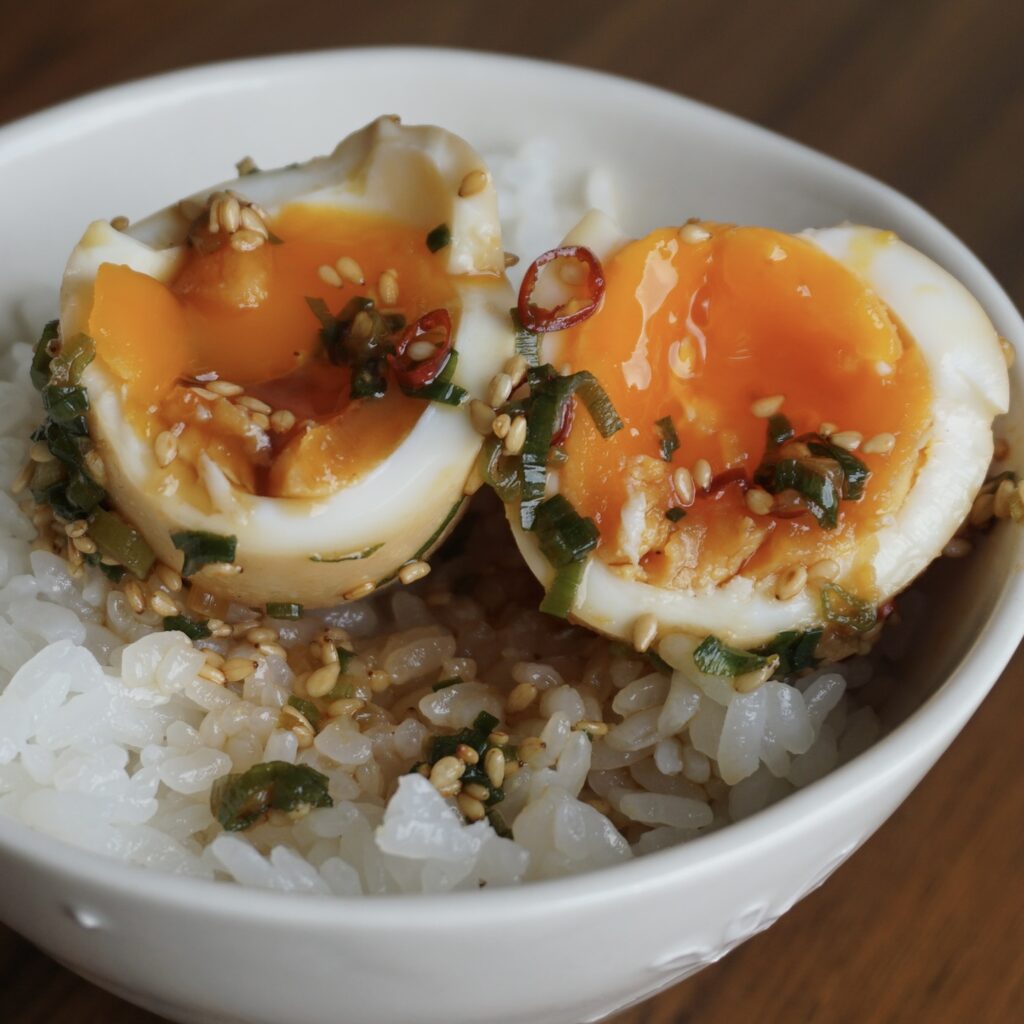
Ajitsuke tamago(味付け玉子)
🍳Ajitama meaning
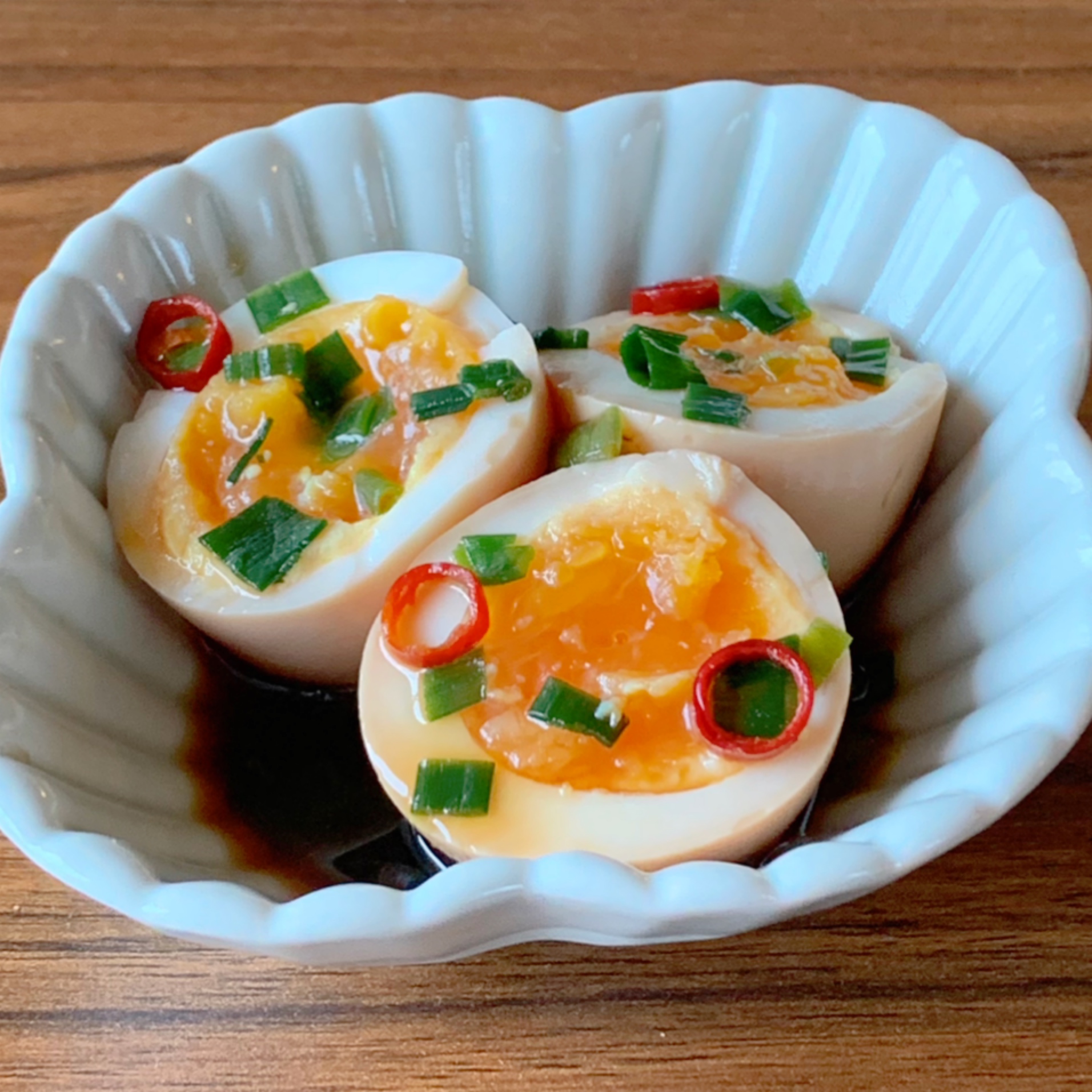
Ajituke Tamago (often called Ajitama or Nitamago) is a dish where boiled eggs are marinated in a flavorful mixture of soy sauce, mirin, sesame oil, and chili flakes.
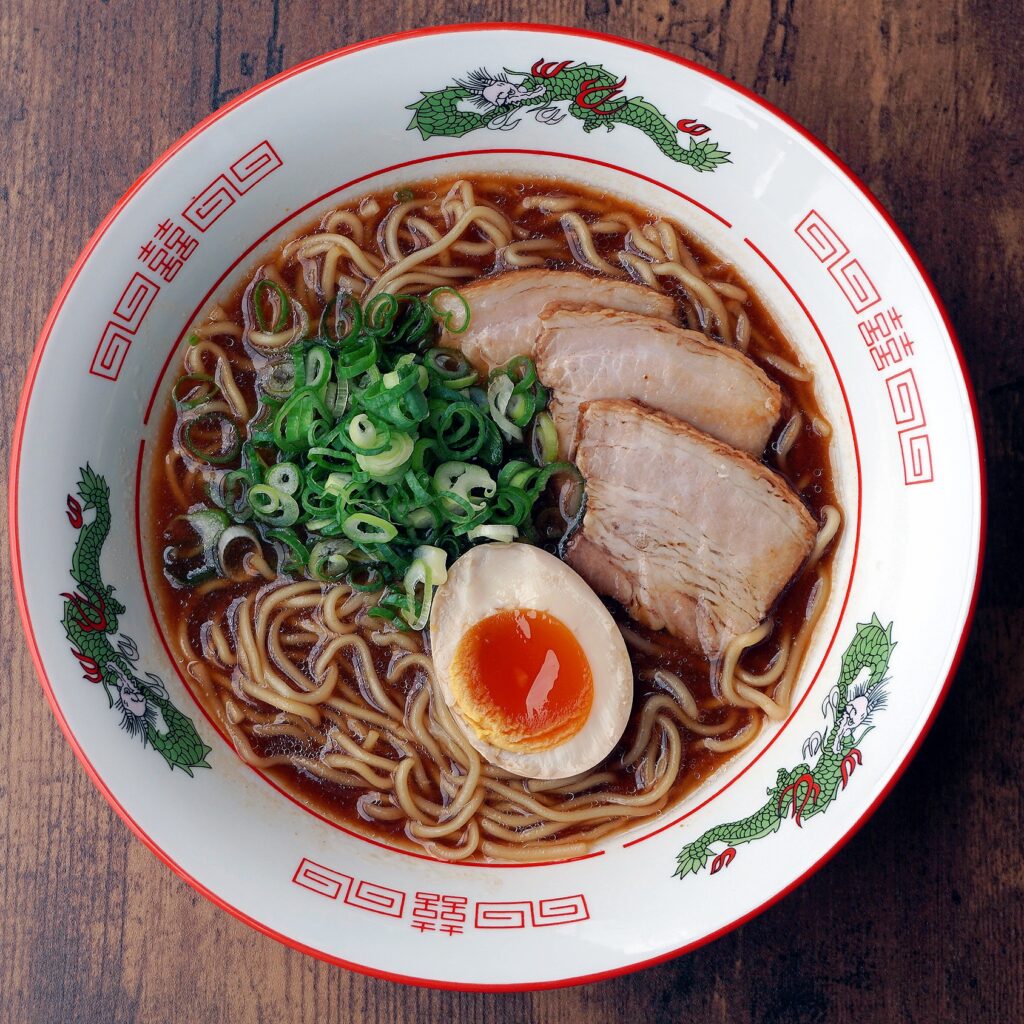
The process is incredibly simple: just boil the eggs and pop them into the marinade. Yet, the result is so delicious it’s hard to resist. If you’ve ever been to a Japanese ramen shop, you’ve likely found yourself instinctively hitting the “Ajitama” topping button. The visual power of a glossy, perfectly marinated egg sitting atop a bowl of ramen is truly undeniable.
The best part? That moment when you split the egg open and the creamy, gooey yolk flows out. That rich, velvety sweetness is pure bliss. When you make them at home, you have the ultimate freedom to customize the “doneness” and flavor exactly to your liking. Let’s find your own “Golden Ratio”!
The Secret Ingredient to Effortless Japanese Cooking
Having a batch of Ajitama ready is like having a “cheat code” for dinner. Check out these recipes to see how I incorporate them into my weekly meal plan:
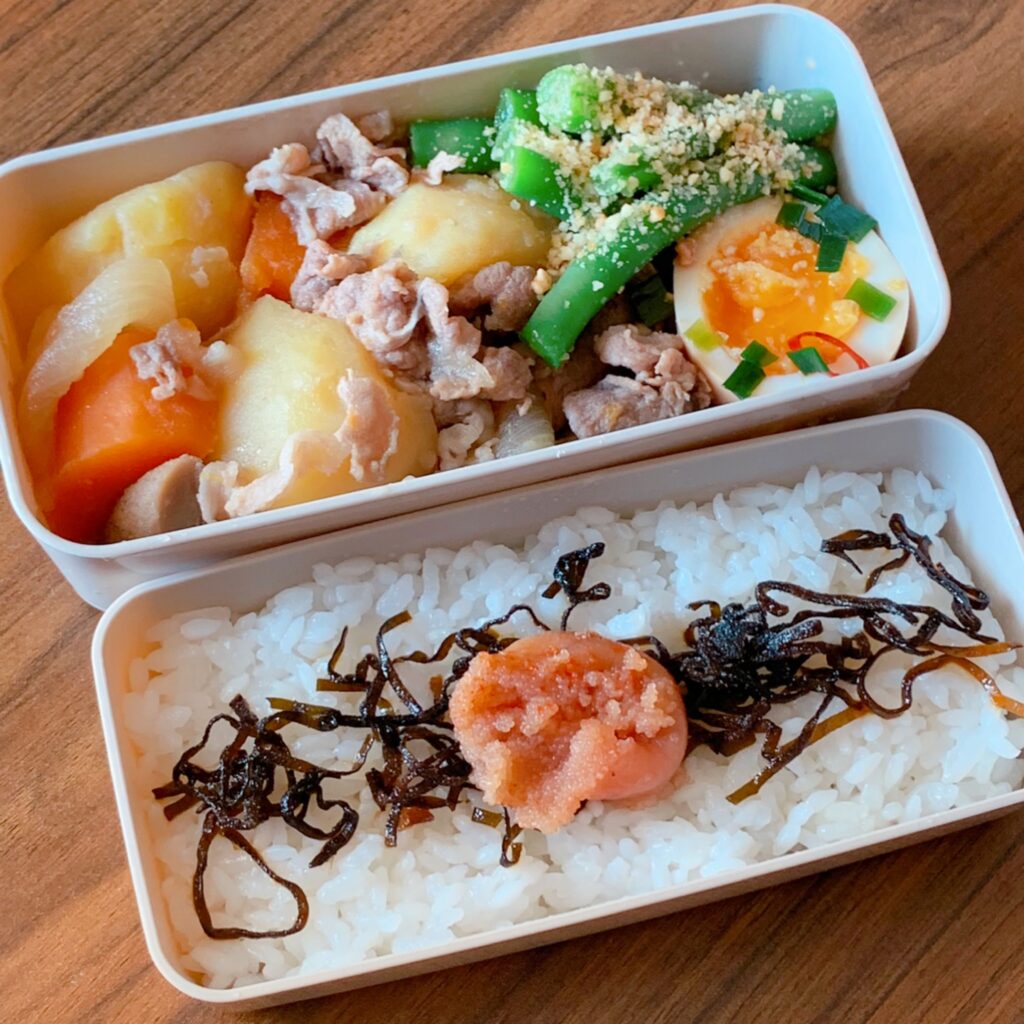
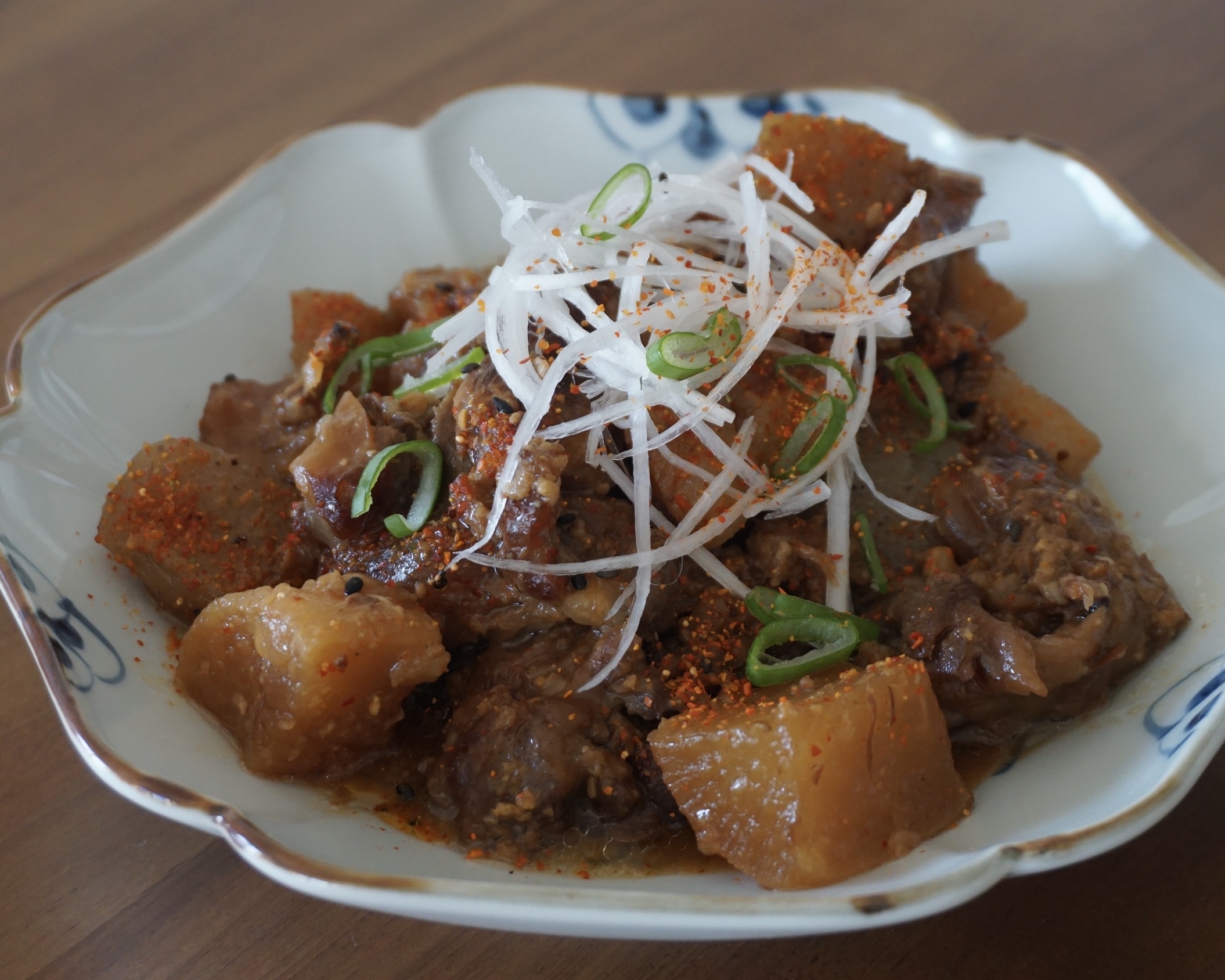
- Master the Bento: A nutritional powerhouse for your bento. 👉 Nikujaga (Beef and potatoes stew)
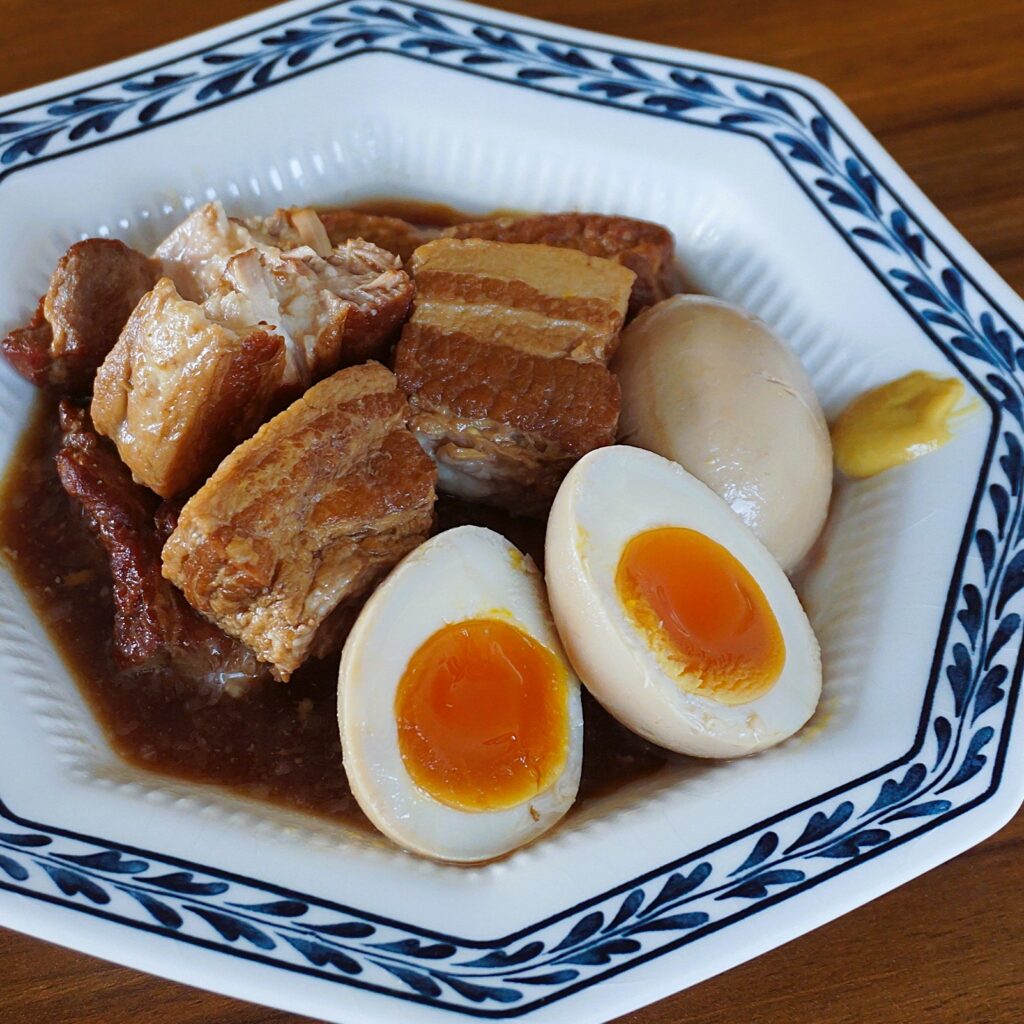
- The Ultimate Buta no Kakuni: Slow-cooked perfection with an egg on top. 👉 Buta no kakuni (Braised pork belly)
- Miso Ramen from Scratch: Because every great bowl needs a great egg. 👉 Home Made Miso Ramen Soup
📚Nutritionist’s Column: Why Eggs are an “Elite” Superfood
Eggs are known as a “Complete Nutritional Food.” They contain almost every nutrient your body needs, except for Vitamin C and fiber. Here’s why turning them into Ajitama is a smart choice:
- Efficient Power Charge: Egg protein has an “Amino Acid Score of 100,” meaning it contains all essential amino acids in perfect balance. Adding Ajitama to carb-heavy meals like ramen or rice bowls balances your nutritional intake perfectly.
- “Soft-Boiled” is the Golden State for Digestion: Did you know that the cooking method changes how well you absorb nutrients? Soft-boiled eggs are actually easier to digest than raw or hard-boiled eggs, allowing your body to absorb all that goodness efficiently without straining your stomach.
- Your Daily “Safety Net”: Keep a batch in the fridge, and you have a high-quality protein source ready to go. Even on busy nights when dinner is just rice and vegetables, adding one Ajitama saves the day nutritionally.
Why can Japanese people eat raw eggs safely? In Japan, eggs are produced under strict hygiene standards to eliminate the risk of Salmonella. This allows us to enjoy raw or soft-boiled eggs safely—a unique part of Japan’s food culture.

✨Crucial Tips for Success
The key to perfect Ajitama lies in precise timing and temperature control.
Boiling Times:
- 7 minutes: Runny yolk (extra soft).
- 8–9 minutes: Perfect jammy, custard-like yolk (Highly recommended!).
- 11 minutes: Soft-set yolk (ideal for bento boxes).
- 12+ minutes: Traditional hard-boiled.
The Cold-Start Method: Take your eggs straight from the refrigerator and gently lower them into boiling water. Keeping the starting temperature consistent is the secret to getting the same perfect result every single time. Also, remember to gently roll the eggs with chopsticks or a spoon during the first few minutes—this centers the yolk for a beautiful cross-section!
💡Important Notes
Choose “Older” Eggs for Easier Peeling: Japanese eggs are famous for their strict quality control and exceptional freshness. However, there is a catch: the fresher the egg, the harder it is to peel after boiling. For effortless peeling, I recommend using eggs that are closer to their expiration date rather than farm-fresh ones.
Storage and Shelf Life: Once prepared, these marinated eggs can be stored in the refrigerator for about one week. They are the perfect “make-ahead” dish to save you time during busy weekdays!
📉NUTRITION FACTS : Ajitama (Boiled egg in soy sauce)
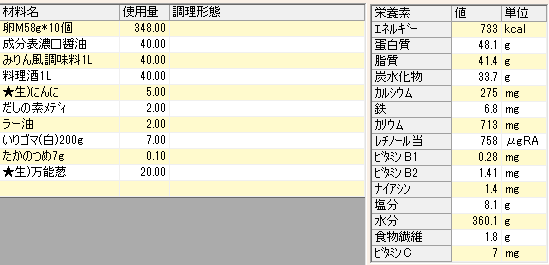
(Total for 6 marinated eggs)
- Total Calories: 733 kcal
- Protein: 48.1 g
- Total Fat: 41.4 g
- Total Carbohydrates: 33.7 g
- Sodium: 8.1 g
Per Serving (1 Egg)
- Calories: ~122 kcal
- Protein: 8.0 g
- Total Fat: 6.9 g
- Total Carbohydrates: 5.6 g
📝Note: These values include the entire marinade. Since you don’t drink the marinating liquid, the actual sodium and sugar intake per egg will be significantly lower!
🛒INGREDIENTS : Ajitama (Boiled egg in soy sauce)
Two Ways to Make Perfect Ajitama: Classic & “Devil’s” Style
In this post, I will introduce two types of marinades. The first is a Classic Style, and the second is a more punchy version often called “Devil’s Eggs” or “Mayaku (Drug) Eggs” because they are so addictive!
① Classic Ajitama (Mild & Traditional)
- 4 Eggs
- Dark soy sauce: 40g
- Mirin: 40g
- Sake: 40g
- Sesame oil: 2g
- Chili pepper: 1g
- Green onion (chopped): 20g
② “Devil’s Eggs” Style (Rich & Impactful)
- 6 Eggs
- Soy sauce: 40g
- Mirin: 40g
- Sake: 40g
- Garlic paste: 5g
- Dashi stock powder (Hondashi): 2g
- Chili oil (La-Yu): 2g
- White sesame seeds: 7g
- Chili pepper: A pinch
- Green onion (chopped): 20g
🔪How to make Ajitama (Boiled egg in soy sauce)
The following instructions use the ingredients from Recipe ②.
- Step 1: Prepare the Eggs
Take cold eggs directly from the refrigerator (approx. 10℃). Use a needle to poke a tiny hole in the bottom of each egg. Tip: You can find a dedicated “egg piercer” at 100-yen shops. Simply place the egg on the round base and press down; a built-in needle will pop out and make a perfect hole easily.
Step 2: Boiling
Place the eggs into a pot of boiling water and cook for exactly 8 minutes. It is crucial to use cold eggs (around 10℃) because the timing is adjusted for that specific temperature. Following this rule ensures that you get the same perfect result every single time—this is the key to reproducibility.
Step 3: Cooling
Once the 8 minutes are up, immediately transfer the eggs into cold water to stop the cooking process.
Step 4: Peeling Made Easy
Place the boiled egg in a water bottle (thermos) with 100cc of water and shake it well. Soft-boiled eggs can be difficult to peel, but shaking them creates many tiny cracks in the shell, allowing the skin to slip off easily. Since I discovered this method, making soft-boiled eggs has become so much more relaxing!
Step 5: Prepare the Marinade
Finely chop the green onions and grate the garlic (or use garlic paste). In a bowl, mix the sake, soy sauce, mirin, chili pepper, white sesame seeds, dashi stock, and chili oil.
Step 6: Marinating
Place the eggs, the mixed seasoning, green onions, and garlic into a container. Let them marinate in the refrigerator for anywhere from half a day to a few days. Note: Even when I only had 20 minutes to marinate them, they still tasted delicious!
💡 Pro Tips for Marinating
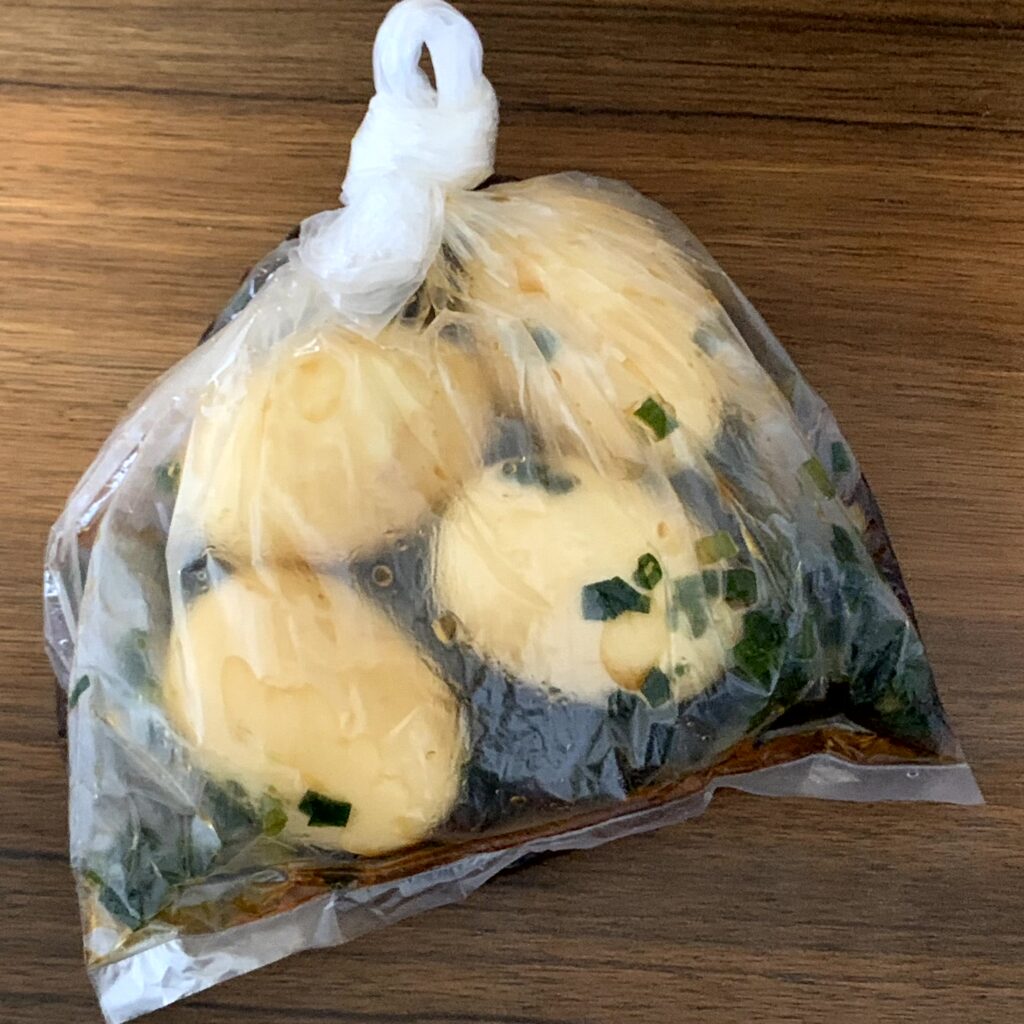
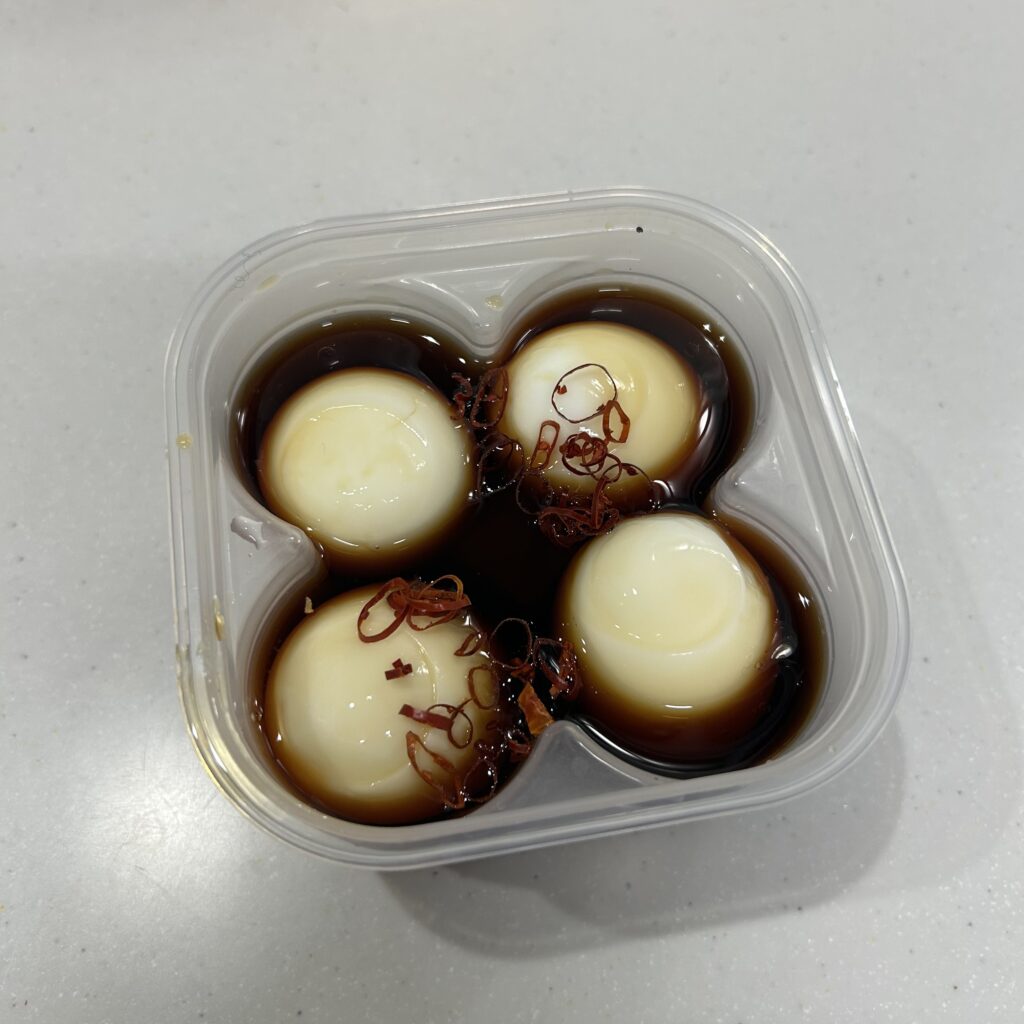
I highly recommend using a “dedicated Ajitama container” which can be found at 100-yen shops. These containers are designed to immerse the eggs completely in a very small amount of liquid, saving you seasonings. If you don’t have one, a simple plastic bag (Ziploc) works perfectly as well—just squeeze out the air before sealing!
📖Related Link: Read the Japanese version of this article here! [味玉の意味とレシピ:完璧なまやく玉子の作り方]

コメント