

The Charm of Ozouni, Japan’s Traditional New Year Dish, and Family Memories
What kind of dish is Ozouni?
Ozouni is a soup with mochi rice cakes that is eaten on New Year’s Day morning in Japan. Mochi is an essential centerpiece, but other ingredients used vary depending on the region and household, and may include daikon radish, carrots, taro, green onions, spinach, chicken, and kamaboko fish cake.
The meaning of “zouni” comes from “to stew miscellaneously” because various ingredients are boiled together, and it continues to be eaten throughout the New Year as a food that brings vitality to people.
History of Ozouni
The history of Ozouni is long, and it is said to have been written about in literature from the Heian period (794–1180).
For ancient Japanese people, mochi was a symbol of a good harvest. Therefore, mochi was offered to the gods on New Year’s Eve and eaten as Ozouni on New Year’s Day, a custom that is still passed down in Japan today. During the Muromachi period (1336–1573), Kyoto aristocrats began eating Ozouni even on celebratory occasions outside of the New Year, and at that time, round mochi and miso were commonly used.
During the Edo period (1603–1868), people from all over the country began to interact, and Ozouni spread nationwide as a New Year’s menu. However, although it became popular across social classes, rice—the raw material for mochi—was expensive, so common people used taro as a substitute. For this reason, taro is still frequently used as an ingredient in Ozouni today.
Regional Characteristics and Diversity
When Ozouni was first introduced from Kyoto, people in Edo also ate miso-seasoned Ozouni, but soy sauce-flavored Ozouni gradually became mainstream. However, regional differences remain significant, featuring unique varieties such as:
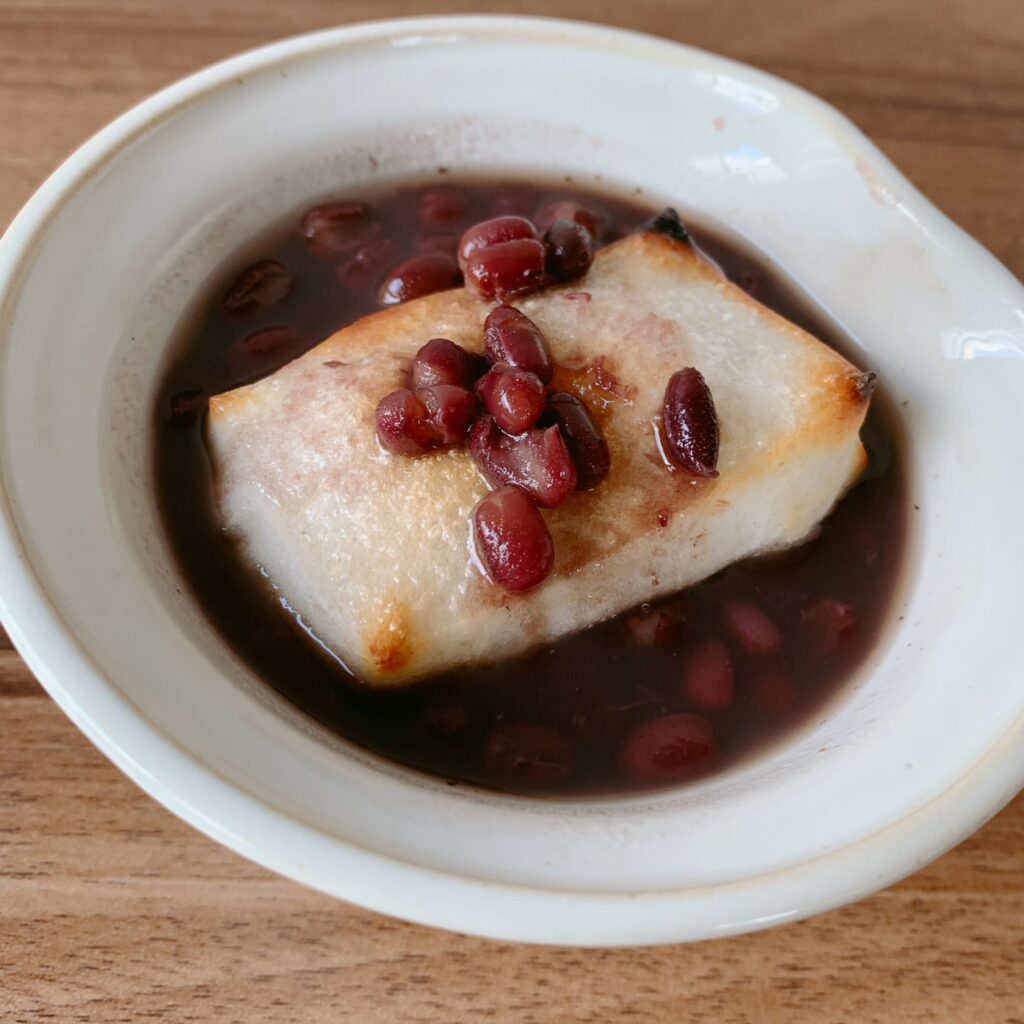
- Izumo Region: Ozouni that uses azuki beans, looking much like “zenzai” (sweet red bean soup).
- Iwate Prefecture: “Walnut Zouni,” served with a sauce made from ground walnuts, sugar, and soy sauce.
- East vs. West: Round mochi, symbolizing “harmony,” has long been mainstream in western Japan, while square mochi, which can be made in large quantities at once, became popular in eastern Japan.
My Family’s Memories and Preferences Regarding Ozouni
Everyone surely has a “taste of memories” unique to their own family and region. The author shares the following warm episodes and preferences:
Memories of Grandmother’s House
During the New Year, I used to return to my grandmother’s house located in a very rural area of Oita Prefecture. There, I ate my grandmother’s special Oshiruko and Ozouni, which featured a miso-based soup with handmade round mochi filled with sweet red bean paste (often mixed with mugwort). This remains the taste of memories etched in my heart.
Current Mochi-Making and Preferences
Since it is difficult to pound mochi by myself nowadays, I sometimes use purchased dried square mochi. However, ever since I got a bread machine, I have been able to make homemade mochi easily at home!
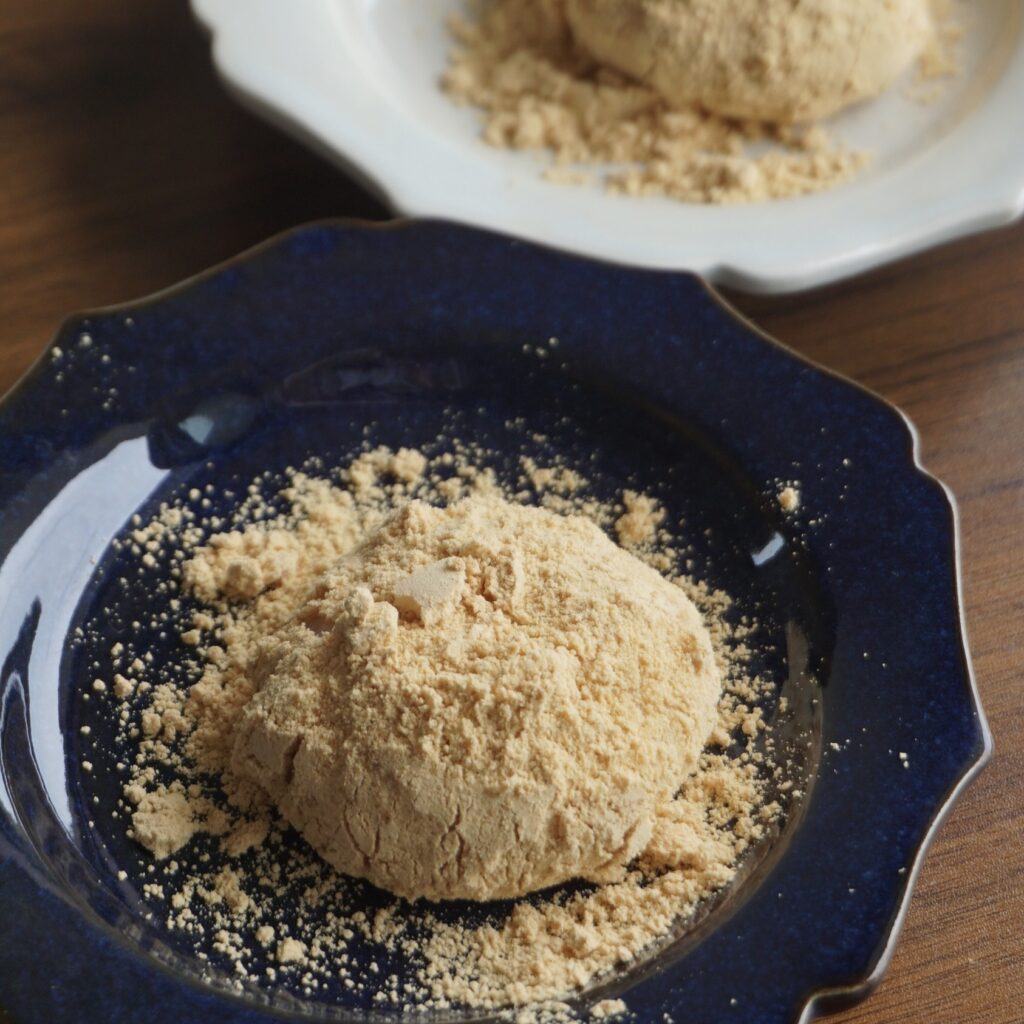
Also, while I usually use granulated dashi for everyday cooking, I make sure to properly extract the dashi from scratch just for Ozouni. I prefer to put in nicely toasted mochi, enjoying the texture of the mochi as it melts and softens slightly in the soup.
5. Basic Recipe (General Clear Broth / Sumashi-jiru Base)
This is the classic clear-broth style recipe introduced in this article.
■ Nutrition Facts (per serving)
- Calories: 159 kcal
- Protein: 4.2 g
- Fat: 0.4 g
- Carbohydrates: 32.3 g
- Salt Equivalent: 1.7 g
■ Ingredients
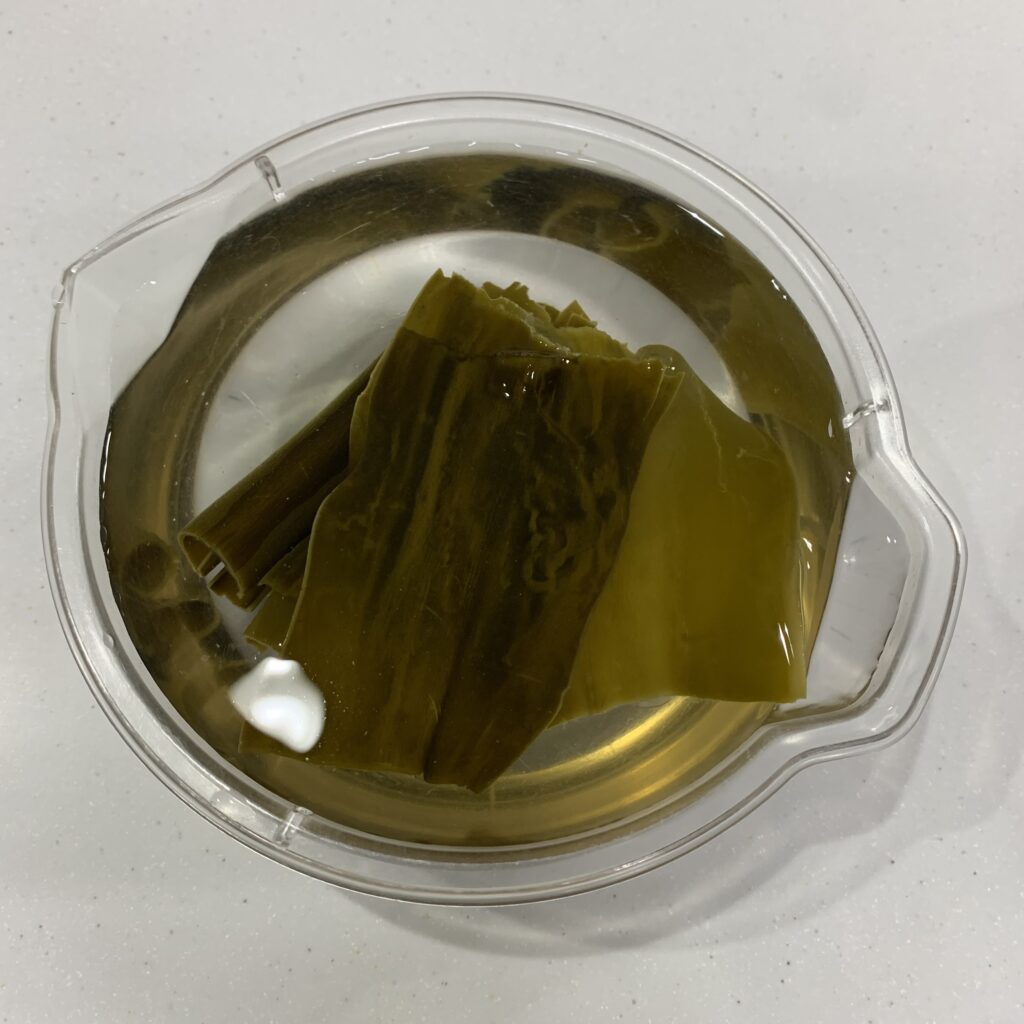
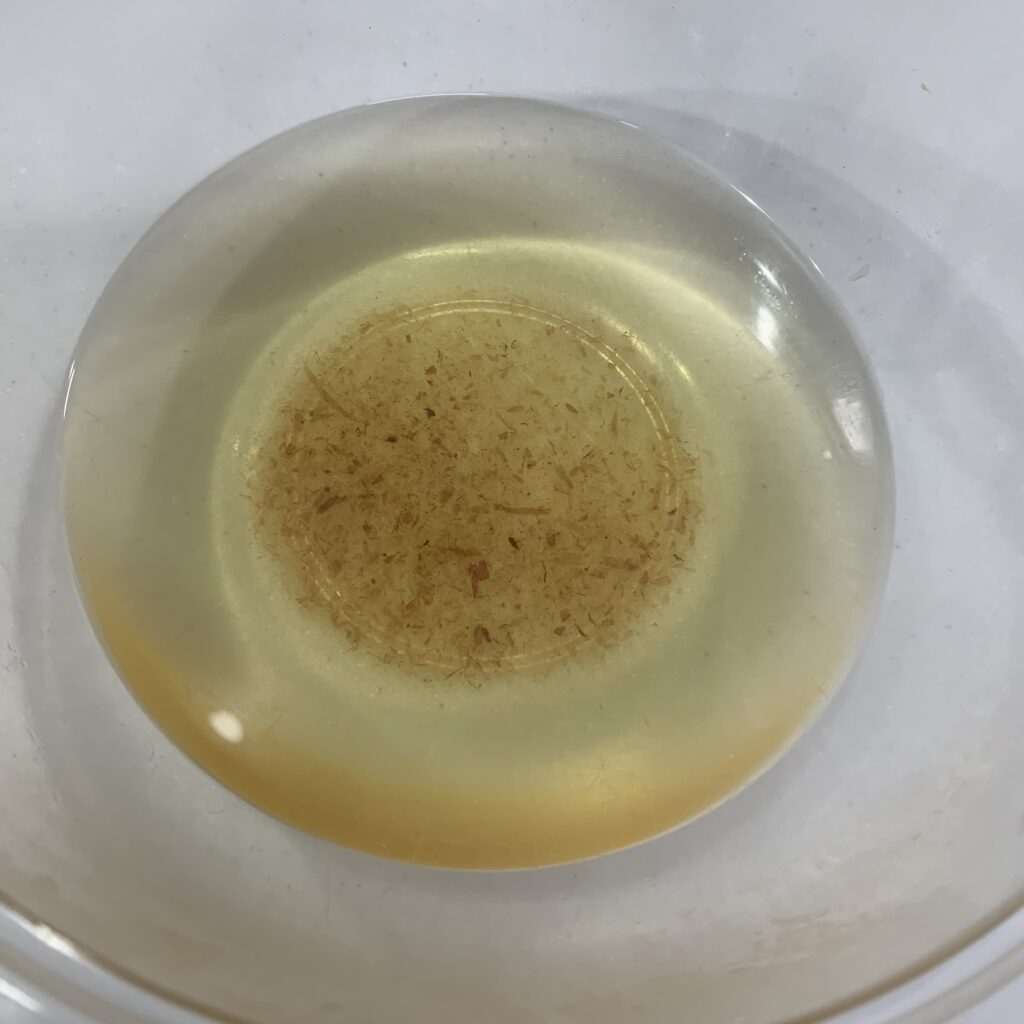
- Awase Dashi: Combine kombu dashi (made by soaking 10g of kombu in 1000g of water for 3 hours) and katsuo dashi (made by adding 20g of bonito flakes to 600g of hot water, turning off the heat immediately, and straining through a colander once sunken) to yield a total of 180g.
- Shiitake mushroom
- Carrot: 15g
- Soy sauce: 8g
- Mirin: 5g
- Sake: 5g
- Mochi (rice cake)
- Kamaboko (fish cake): 10g
- Kaiware daikon (radish sprouts): 5g
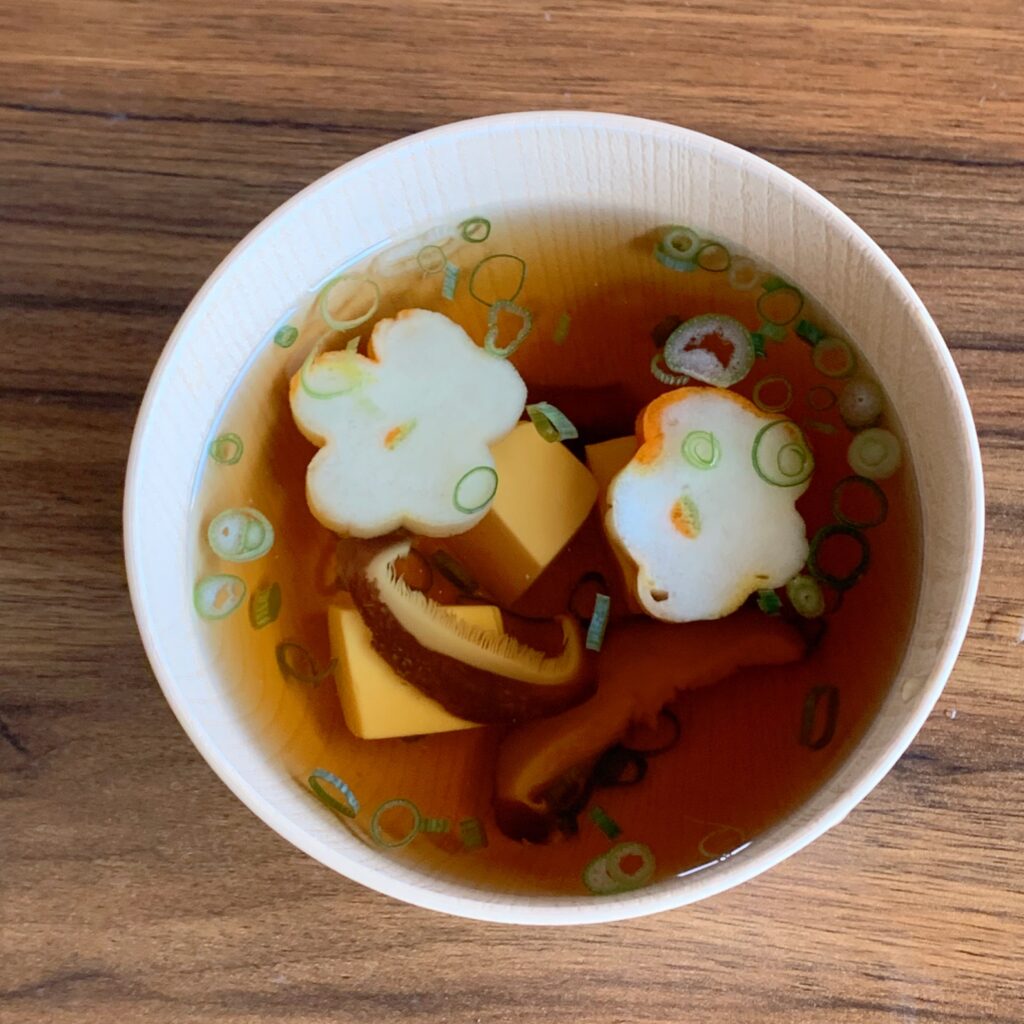
We provide detailed information here on the basics of dashi (Japanese soup stock)—the key to the flavor of Japanese cuisine—as well as tips for bringing out its umami! Click here for details on traditional Japanese dashi.
■ Cooking Instructions
- Soak the kelp in water for 3 hours to extract the dashi slowly (to avoid sliminess).
- Boil water, add bonito flakes, and immediately turn off the heat. Once the bonito flakes sink to the bottom of the pot, strain them to make “katsuo dashi.” Combine it with the kombu dashi to make “awase dashi.”
- Pour 180g of the awase dashi into a pot and heat it.
- Add the shiitake mushrooms and thinly sliced carrots to the stock and simmer until soft.
- Add the soy sauce, mirin, and sake.
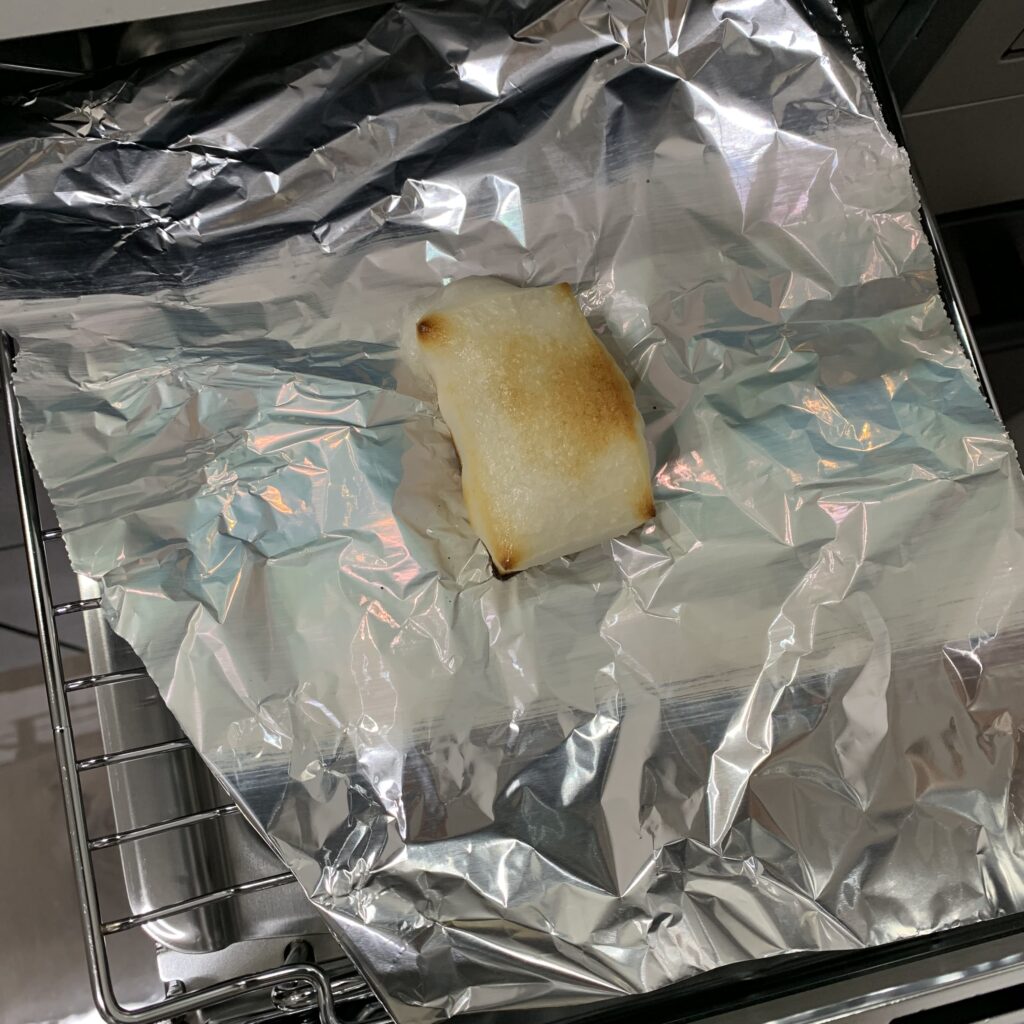
- Place the mochi on aluminum foil and bake for 3 minutes using a fish grill or toaster oven. (Tip: Apply a thin layer of oil to the aluminum foil to prevent the mochi from sticking!)
- Pour the soup into a bowl and top with the toasted mochi, kamaboko, kaiware sprouts, shiitake mushroom, and carrots.


コメント