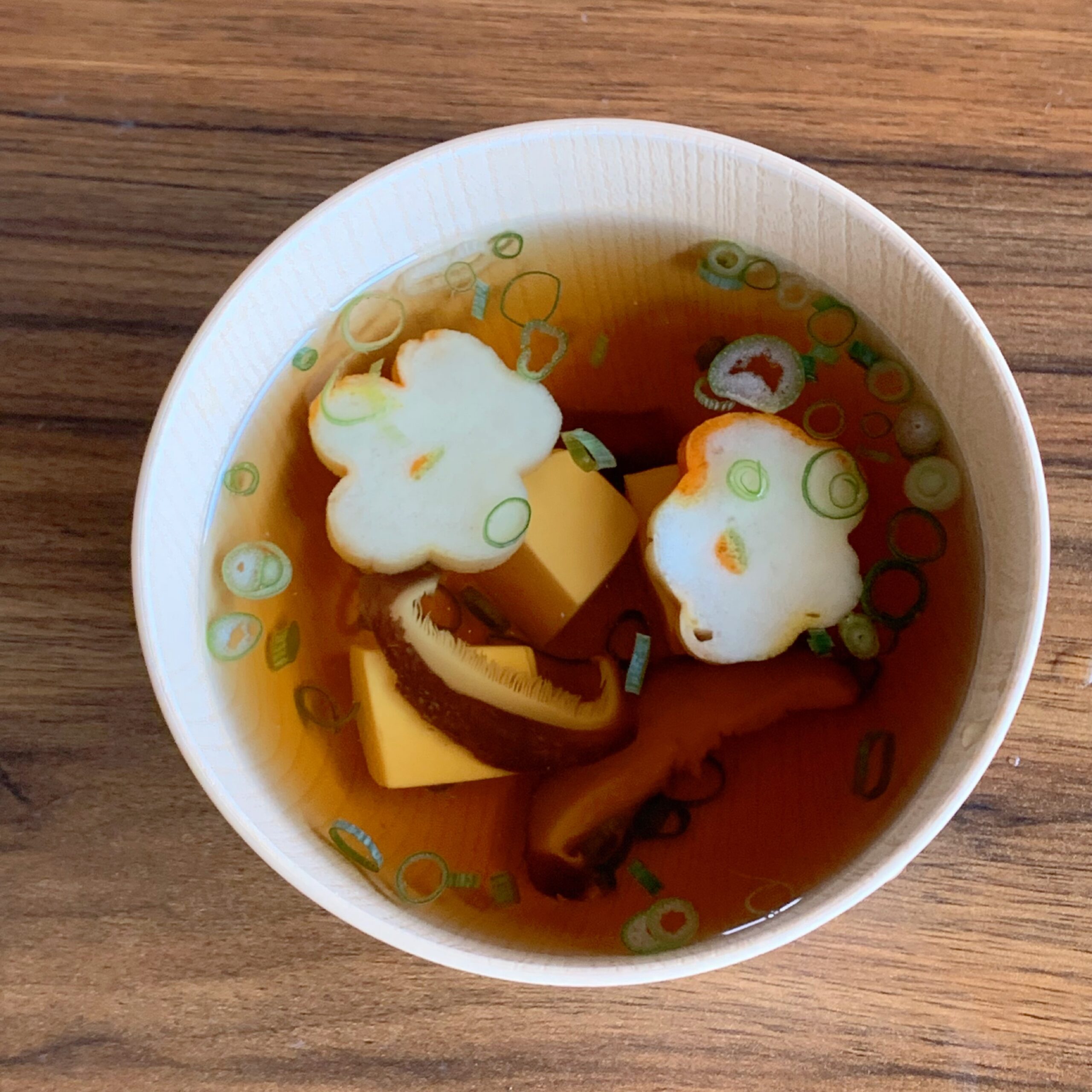
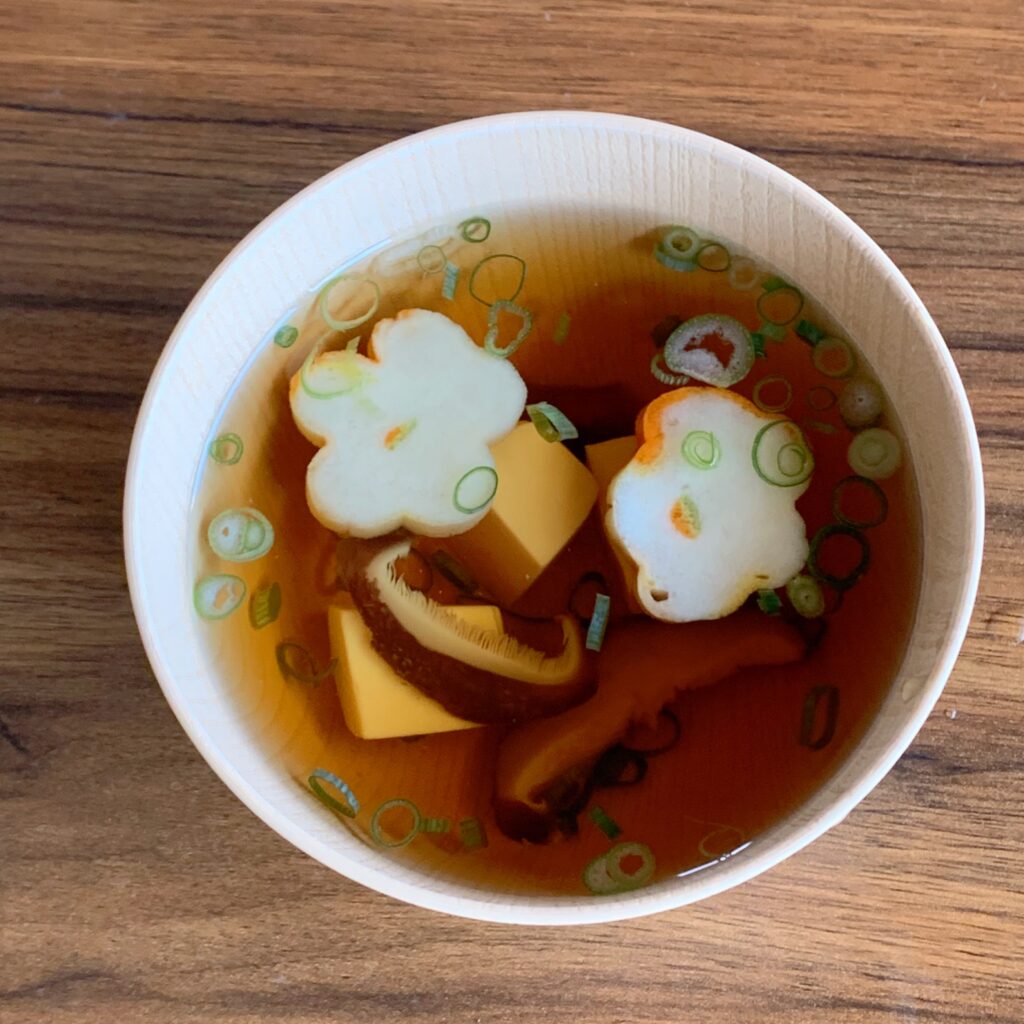
Tofu and Hanafu Sumashi Jiru (Clear Dashi Soup)
Tofu and Hanafu Sumashi Jiru is a delicate clear soup that highlights the very essence of Japanese cuisine: dashi. While it may look simple, it is a dish designed to celebrate the pure, savory depth of a well-made broth.
💡 Nutritionist’s Insight
By adding Tofu and Hanafu, this recipe boosts plant-based protein compared to plain dashi. Utilizing dried Shiitake mushrooms not only enhances Umami but also adds beneficial Vitamin D and dietary fiber, making it a truly gentle and healthy dish.
If you are watching your salt intake, try adding a fresh garnish like Yuzu peel or Mitsuba (Japanese parsley). The refreshing aroma allows you to reduce salt while maintaining a highly satisfying flavor.
What is Hanafu?
Hanafu (花麩) are charming, flower-shaped morsels of dried wheat gluten.
- Origin: Introduced from China in the early Muromachi period.
- Significance: It was a vital protein source in Shojin Ryori (traditional Buddhist vegetarian cuisine).
- Appeal: Besides being nutritious, their colorful, floral shapes add a touch of “kawaii” elegance to the bowl.
The Philosophy of Dashi and Umami
In Oriental medicine, there is a saying: 『三分治七分養』 (Sanbuchi Shichibuyou), which suggests that health is 30% medical treatment and 70% daily lifestyle and diet. This philosophy birthed the Japanese reliance on dashi and fermented foods.
Unlike many Western stocks that rely on heavy fats and meats, Japanese dashi uses ingredients like kombu (kelp) and shiitake. Even katsuobushi (bonito flakes), though animal-based, undergoes a fermentation process where koji mold breaks down the fats, making it incredibly gentle on the digestion.
The Magic of the “Umami Synergy”
Umami is the “fifth taste,” discovered by Japanese scientists about a century ago. It is created by three main amino acids:
- Glutamic Acid (found in Kombu)
- Inosinic Acid (found in Katsuobushi)
- Guanylic Acid (found in Shiitake)
When you combine Glutamic and Inosinic acids at a 1:1 ratio, they create a synergistic effect that boosts the flavor 7 to 8 times! To achieve this “golden ratio,” the ideal balance is 20g of kombu to 40g of katsuobushi.
Sumashi Jiru vs. Osuimono
What’s the difference? Simply put:
- Sumashi Jiru: The focus is on enjoying the soup (broth) itself.
- Osuimono: The focus is on enjoying the ingredients.
Both consist of three essential elements:
- Tane (種): The protein (Tofu, seafood, or meat).
- Tsuma (つま): The texture (Vegetables like spinach or mushrooms).
- Suikuchi (吸い口): The aroma (Garnish like mitsuba, yuzu, or ginger).
Nutritional Comparison: Basic Dashi vs. This Recipe (1 Serving)
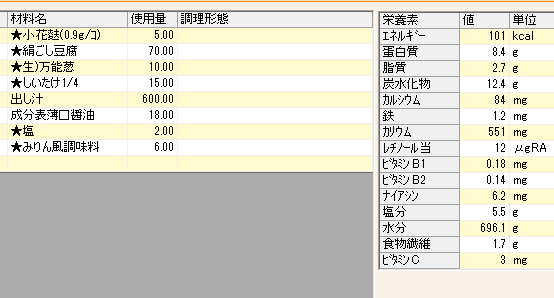
| Item | Basic Dashi(Bonito & Kelp, 100g) | This Recipe(Per Serving) |
| Calories | 2 kcal | 25 kcal |
| Protein | 0.3 g | 2.1 g |
| Fat | 0.0 g | 0.7 g |
| Carbohydrates | 0.3 g | 3.1 g |
| Salt Equivalent | 0.1 g | 1.4 g |
*Note: “Basic Dashi” data is based on the Standard Tables of Food Composition in Japan (8th Revised Edition) for 100g of Bonito & Kelp Dashi.
*This recipe’s nutritional values are calculated per serving (approx. 150ml), including Tofu, Hanafu, and seasonings.
Ingredients(4 Servings); Sumashi Jiru
- The Broth (approx. 600ml):
- 10g Kombu + 300g Water
- 20g Katsuobushi (Bonito flakes) + 300g Water
- Tane:
- 6 pieces Flower-shaped wheat gluten (Hanafu)
- 70g Kinugoshi (Silken) tofu
- Tsuma/Suikuchi:
- 10g Green onion15g Shiitake mushrooms
- Seasoning:
- 2g Salt
- 18g Light soy sauce (Usukuchi)
- 6g Mirin
Sumashi Jiru Instructions
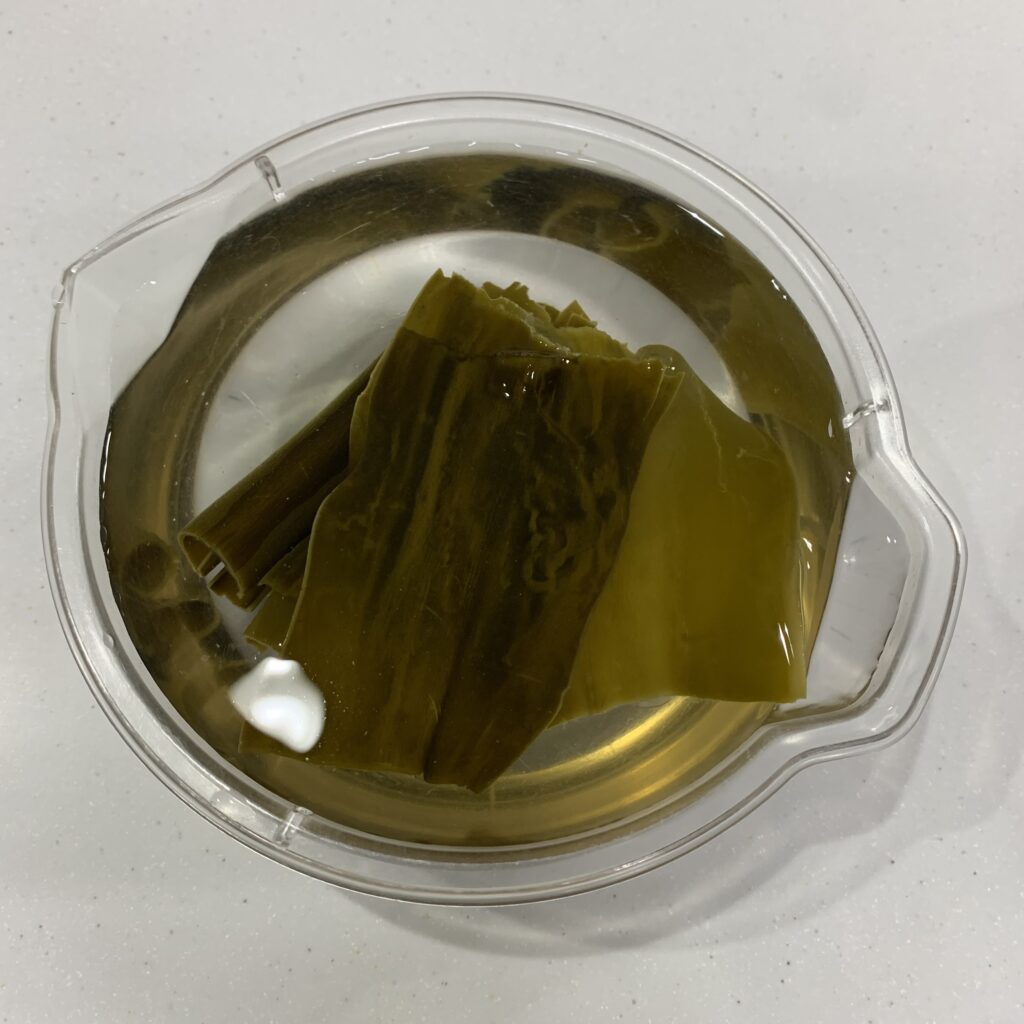
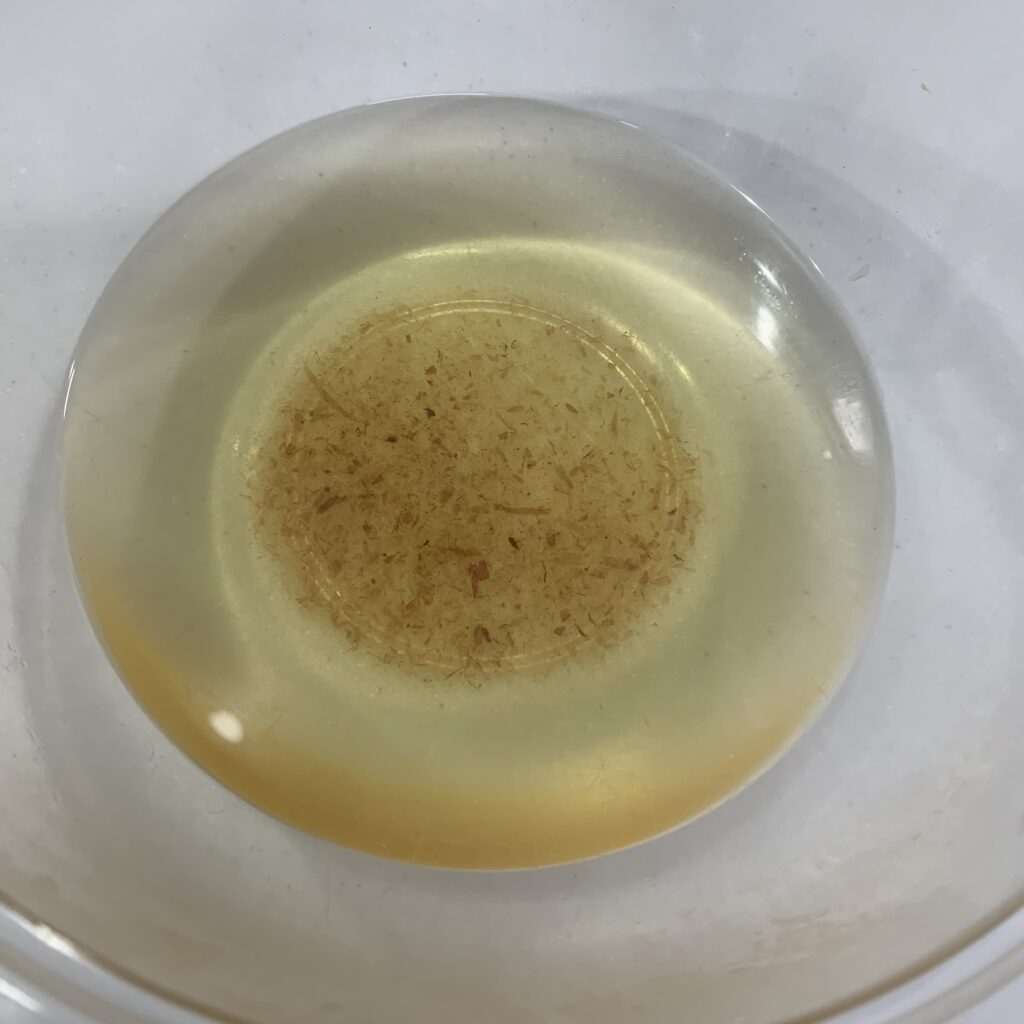
- Cold-Brew the Kombu: Soak kombu in 300g water for 3 hours. (This prevents the broth from becoming slimy). If you’re in a hurry, heat on low and remove the kombu just before it boils.
- Extract the Katsuobushi: Bring the other 300g of water to a boil, add the katsuobushi, and turn off the heat immediately. Strain through a fine colander.
- Combine: Mix your kombu and katsuo dashi together in a pot.
- Prep the Hanafu: Soak the hanafu in water for a few minutes until soft, then gently squeeze out the excess moisture.
- Prep the Rest: Dice the tofu, chop the green onions, and thinly slice the shiitake.
- The Finish: Add the tofu, shiitake, and seasonings to the dashi. Bring to a boil, add the hanafu and onions, and turn off the heat immediately to preserve the delicate aromas.
💡 A Quick Tip for Busy Days
While I’ve shared the traditional way to make dashi from scratch, I know that in our busy modern lives, making authentic broth every single day can be a challenge.
In fact, for most Japanese households today, using convenient “Dashi-no-moto” (instant dashi granules) is the mainstream choice. Modern dashi granules are of very high quality and allow you to create a delicious soup in no time.
The best way to stay healthy is to find a routine you can maintain without stress. Why not enjoy the deep process of making dashi from scratch on your days off or for special occasions, and rely on the convenience of dashi granules during the busy work week? Either way, I hope you enjoy the soul-soothing flavors of Japanese cuisine!
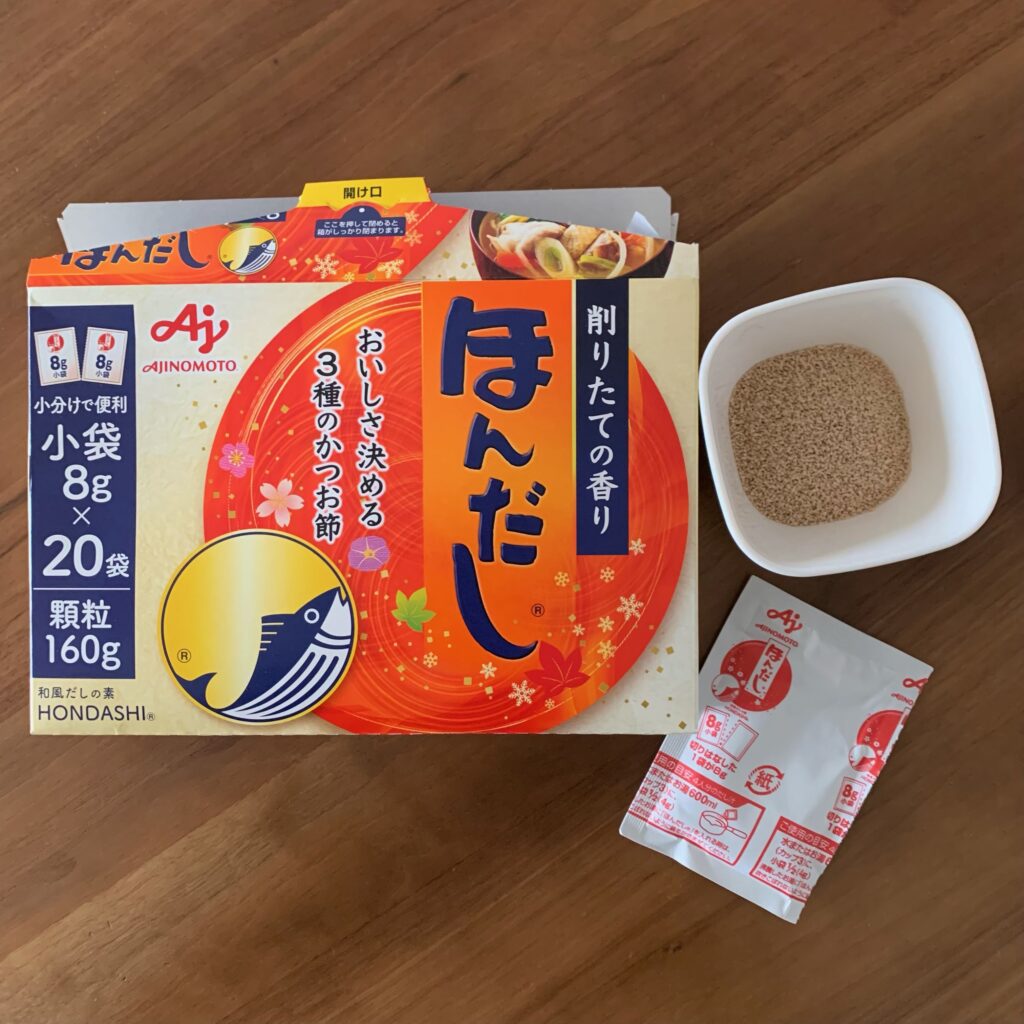
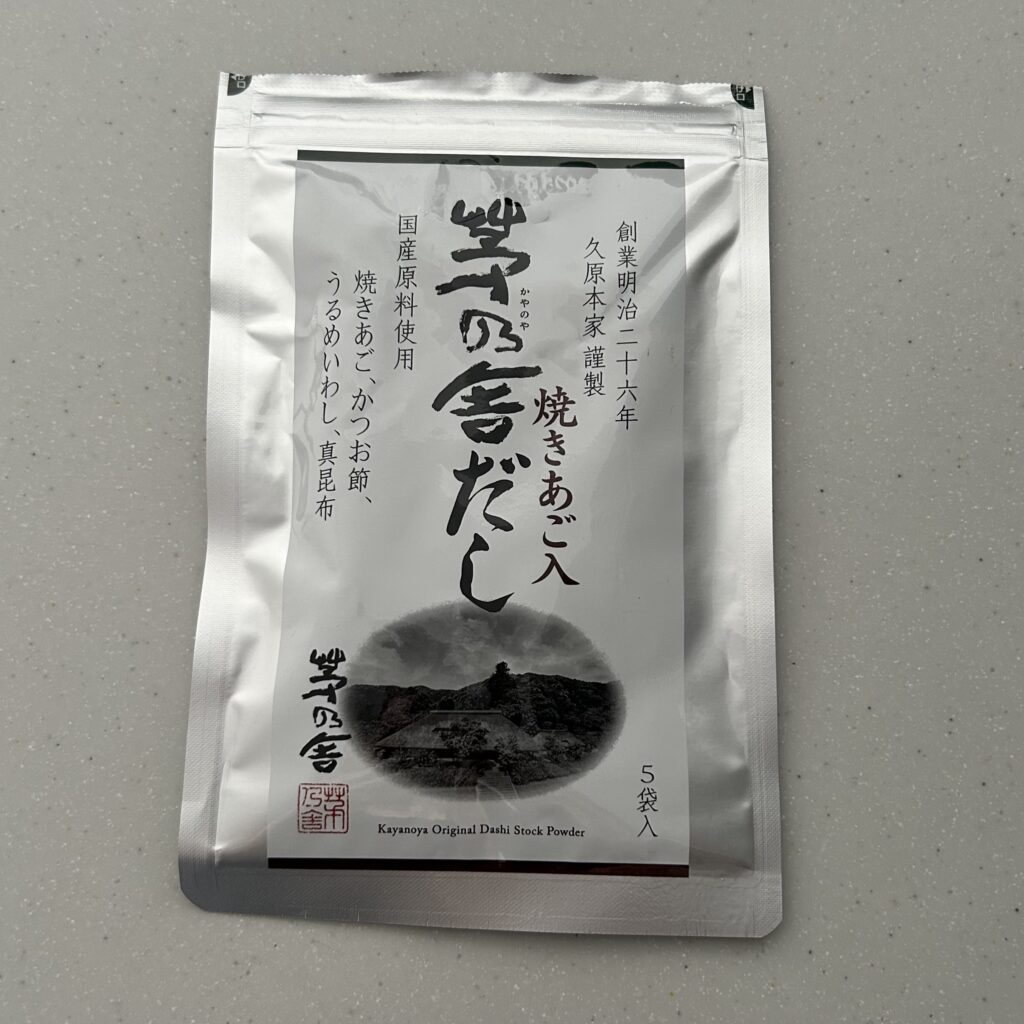
🥣 Comparison chart of different types of dashi (broth)
The ideal salt concentration for dashi broth to consistently recreate a professional-quality taste is 0.9% to 1.2%. Since the amount of salt varies depending on the type of dashi you use, be sure to taste and adjust the seasoning as needed.
| Dashi Type | Hondashi | Kayanoya | Homemade Dashi |
| Format & Ingredients | Granulated seasoning made from bonito, dried sardines, kelp, etc. | A tea bag containing powder made from crushed bonito flakes or other ingredients. It’s a slightly premium dashi. | It uses bonito flakes, shiitake mushrooms, and kelp (kombu). |
| Usage Guide | 5g in 700ml water | 16g (2 packs) in 700ml water | 20g kelp and 40g bonito flakes in 700ml water |
| Calories | 12 kcal | 50 kcal | 14 kcal |
| Protein | 1.35 g | 4.9 g | 2.1 g |
| Fat | 0 – 0.05 g | 0.46 g | 0 g |
| Carbohydrates | 1.5 g | 6.62 g | 2.1 g |
| Salt Equivalent | 2.0 g | 2.12 g | 0.7 g |
📖Related Link: Read the Japanese version of this article here! [黄金比で引き出す旨味の相乗効果。知っておきたい『すまし汁』の基本と本格レシピ]

コメント