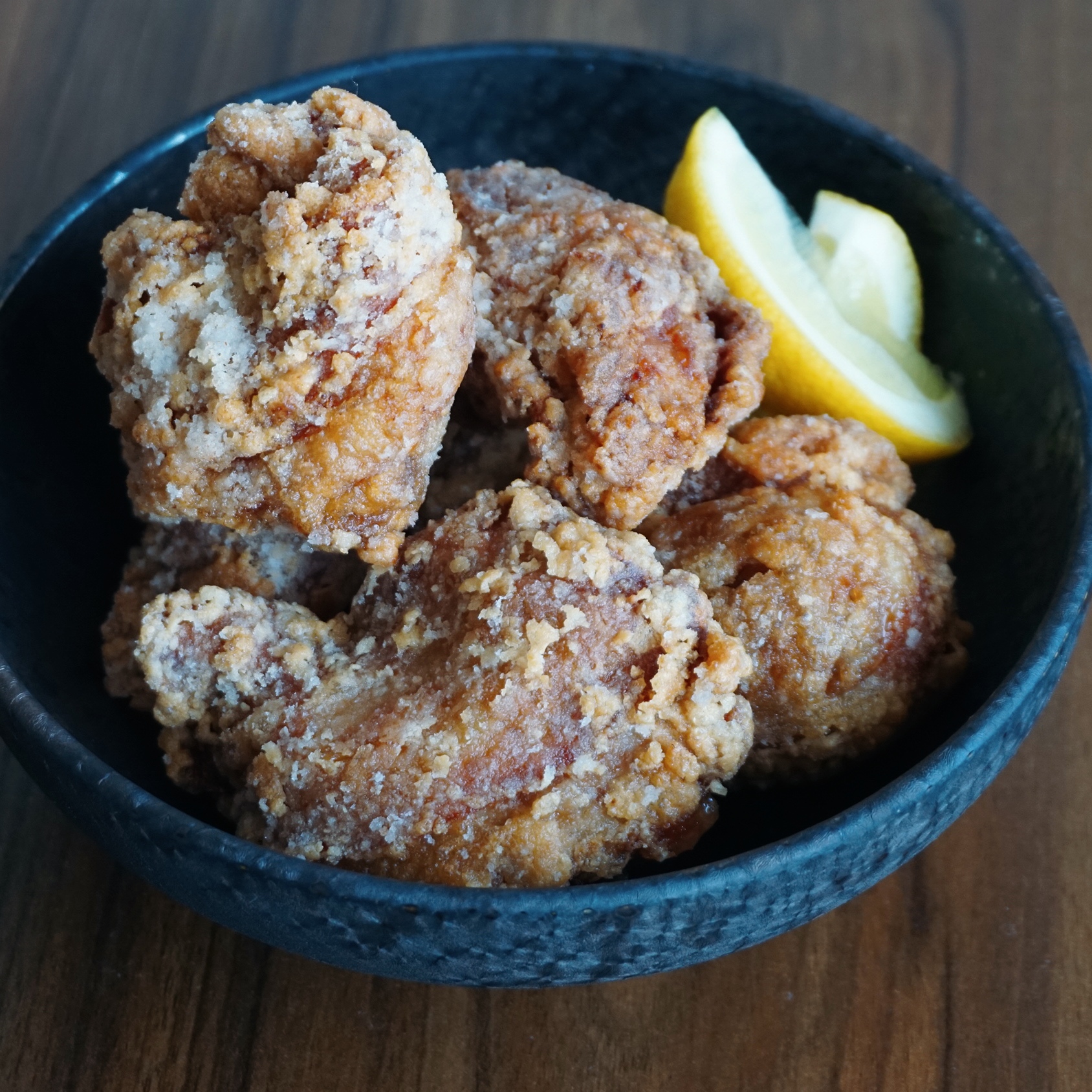
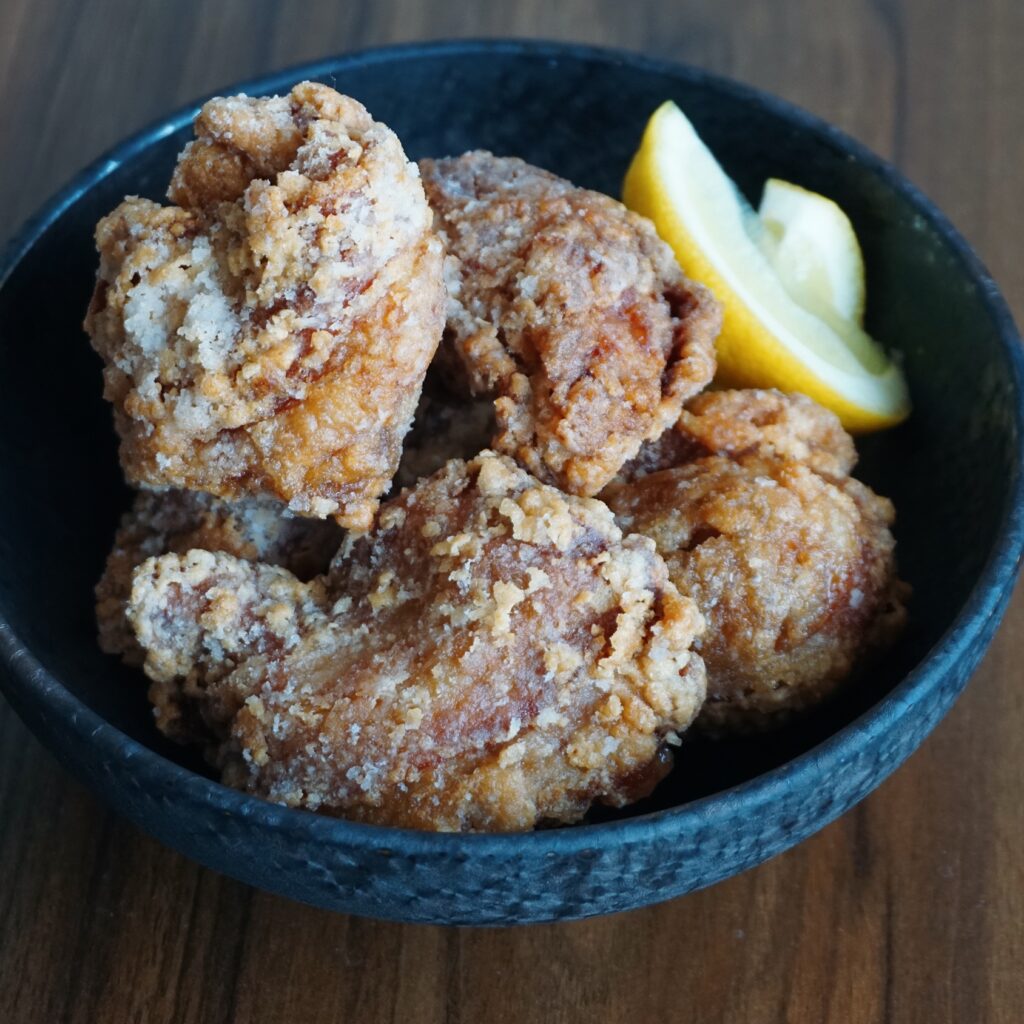
Authentic Nakatsu-Style Ultimate Fried Chicken: Recreating the Sacred Flavor with a Secret Marinade and Frying Tips
1. What Kind of Dish is Karaage?
Karaage refers to a traditional Japanese cooking technique—and the dish itself—where ingredients are lightly coated in flour or potato starch and deep-fried in oil. While “chicken karaage” is the most common variety today, the term actually applies to a wide range of ingredients, including seafood (such as pufferfish or seasonal fish) and vegetables (like lotus root).
2. A National Soul Food Loved by Everyone!
Karaage is a true Japanese “national comfort food” loved across all generations, from children to adults. Every household has its own secret recipe, and it is arguably the most popular side dish for bento boxes. Beyond daily home meals, it is also a staple at Izakaya (Japanese pubs) and specialty takeout shops.
3. Popularity as a Local Gourmet Specialty
Japan boasts a wide variety of famous chicken dishes across different regions.Oita Prefecture, in particular, has an exceptionally high consumption of chicken, leading to a unique local chicken food culture.
- Karaage: Highly popular as a local delicacy, with areas famous for fierce competition among specialized shops.
- Toriten: A tempura-style chicken dish originating in Oita, where chicken is dipped in batter and fried to a crispy finish.
- Chicken Namban: A dish originating in Miyazaki Prefecture, featuring fried chicken soaked in sweet-and-sour vinegar and topped with rich tartar sauce.
What is the Difference Between Karaage and Fried Chicken?
While both are popular fried chicken dishes, the main defining difference lies in “where the flavor comes from.”
- Karaage (Japanese Style) = Flavored at the “Meat (Marination)” level
- Characteristics: Before frying, the meat is thoroughly marinated in a special sauce made of soy sauce, ginger, garlic, and sesame oil.
- Coating: Lightly dusted with potato starch or flour. This coating acts as a “barrier” to seal in the juicy flavors and meat juices.
- Fried Chicken (Western Style) = Flavored at the “Coating (Spices)” level
- Characteristics: The flavor is mainly packed into the coating. Herbs and spices (such as oregano, paprika, and black pepper) are mixed directly into the flour.
- Meat: The meat itself is usually plain or soaked in milk or yogurt to make it tender.
It might look like regular fried chicken at first glance, but with one bite, the savory rich flavors of soy sauce and ginger infused deep into the meat burst into your mouth—that is Japanese Karaage. When you visit Japan, be sure to try authentic, juicy karaage!
The “Nakatsu” Secret
Moreover, Oita Prefecture is a regular champion in the Karaage Grand Prix, and Nakatsu has become nationally renowned as the sacred ground of karaage. The basic ingredients for karaage are chicken, garlic, ginger, soy sauce, sake, and salt. Famous Nakatsu karaage shops have distinct styles—such as Moriyama, renowned for its fruity salt-based marinade, and Torishin, known for its soy-sauce-based marinade. After looking at various recipes, I noticed that sesame oil and shichimi (or ichimi) chili pepper are included with high frequency.
Here is my own rendition of a Nakatsu karaage recipe. The marinade ratios and arrangements can be adjusted completely to your personal preference! You can use any cut of chicken—thighs, breasts, bone-in pieces, or wings—and it will turn out delicious. My personal top recommendation is bone-in chicken. Find the flavor that suits you best!
(An alternative salt-based, highly recommended recipe is introduced in a separate article here. Ultimate Japanese Fried Chicken: Moriyama-Style Nakatsu Shio Karaage)
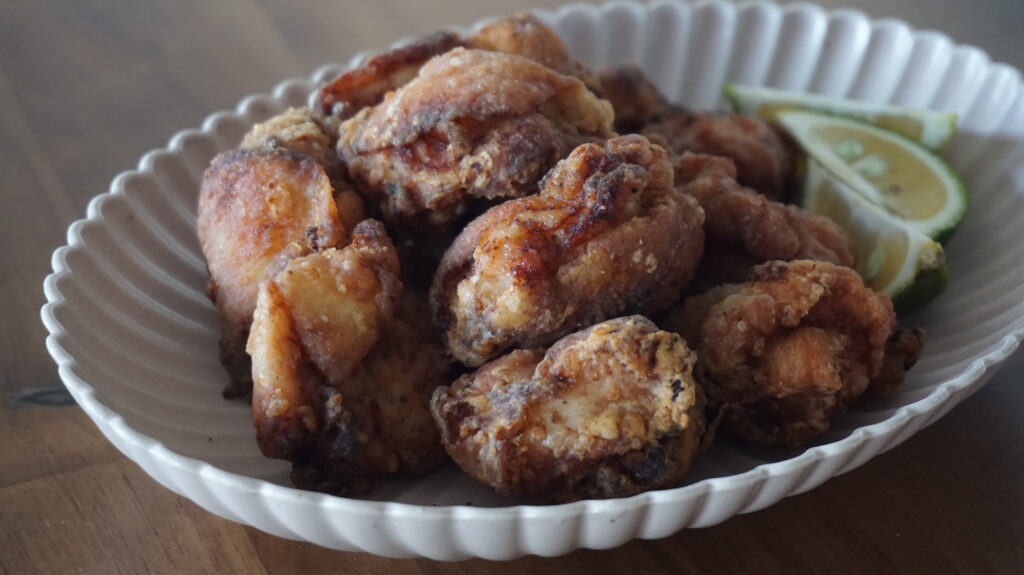
Ingredients (Serve 7); Nakatsu Karaage
- Chicken: 770g Chicken thighs (bone-in, chopped into bite-sized pieces)
- Pre-seasoning: 2g Salt
- Aromatics: 16g Garlic (grated), 9g Ginger (grated)
- The “Secret” Marinade (☆):
- 20ml Sake
- 40ml Soy sauce
- 10ml Sesame oil (The key to the aroma!)
- 1g Ichimi (Red chili pepper flakes)
- Coating & Frying: Potato starch (Katakuriko) and frying oil, as needed.
Nakatsu Karaage Cooking Instructions
- Prep the Meat: Pat the chicken dry with paper towels to ensure a crisp finish.
- Salt Rub: Rub the salt into the chicken and let it sit for a few minutes.
- Marinate: Add the grated garlic, ginger, and the ☆ marinade ingredients. Massage well into the meat.
- Rest: Let the flavors develop for about 1 hour.
- Coat: Lightly coat each piece with potato starch. Ensure an even, thin layer for that signature “Karaage” crunch.
- Fry: Deep fry at 170°C (340°F) for approximately 8 minutes until golden brown and cooked through.
The Science of Deliciousness: > When you fry this, the Maillard reaction occurs between the soy sauce amino acids and the heat, creating that irresistible “savory” scent. The thin starch coating turns the inside of the chicken into a miniature “steam chamber,” keeping it incredibly juicy!
Nutritional Information
| Item | Amount (Total / ~539g Edible Portion) |
| Calories | Approx. 1,380 kcal |
| Protein | Approx. 93.5 g |
| Fat | Approx. 92.0 g |
| Carbohydrates | Approx. 38.0 g |
| (Dietary Fiber) | (Approx. 1.2 g) |
| Sodium (Salt Equivalent) | Approx. 6.5 g |
- Bone-in Chicken Thighs (770g): Calculated based on an edible portion of approximately 539g, excluding bones (an estimated 30% waste rate). Being skin-on meat, it contains a balanced amount of fat and robust protein.
- Seasonings (Soy Sauce, Salt, etc.): Calculated under the assumption that all of the marinade is absorbed or adheres to the meat (if any marinade remains, the actual sodium and calorie counts will be slightly lower than listed).
- Coating & Frying Oil: Factored in the amount of potato starch lightly dusted on the surface and the calories absorbed from the frying oil during cooking (approx. 250–300 kcal equivalent).
Read the Japanese version of this article here! [【本場・中津直伝】究極のからあげレシピ|聖地の味を再現する「秘伝のタレ」と揚げ方のコツ]

コメント