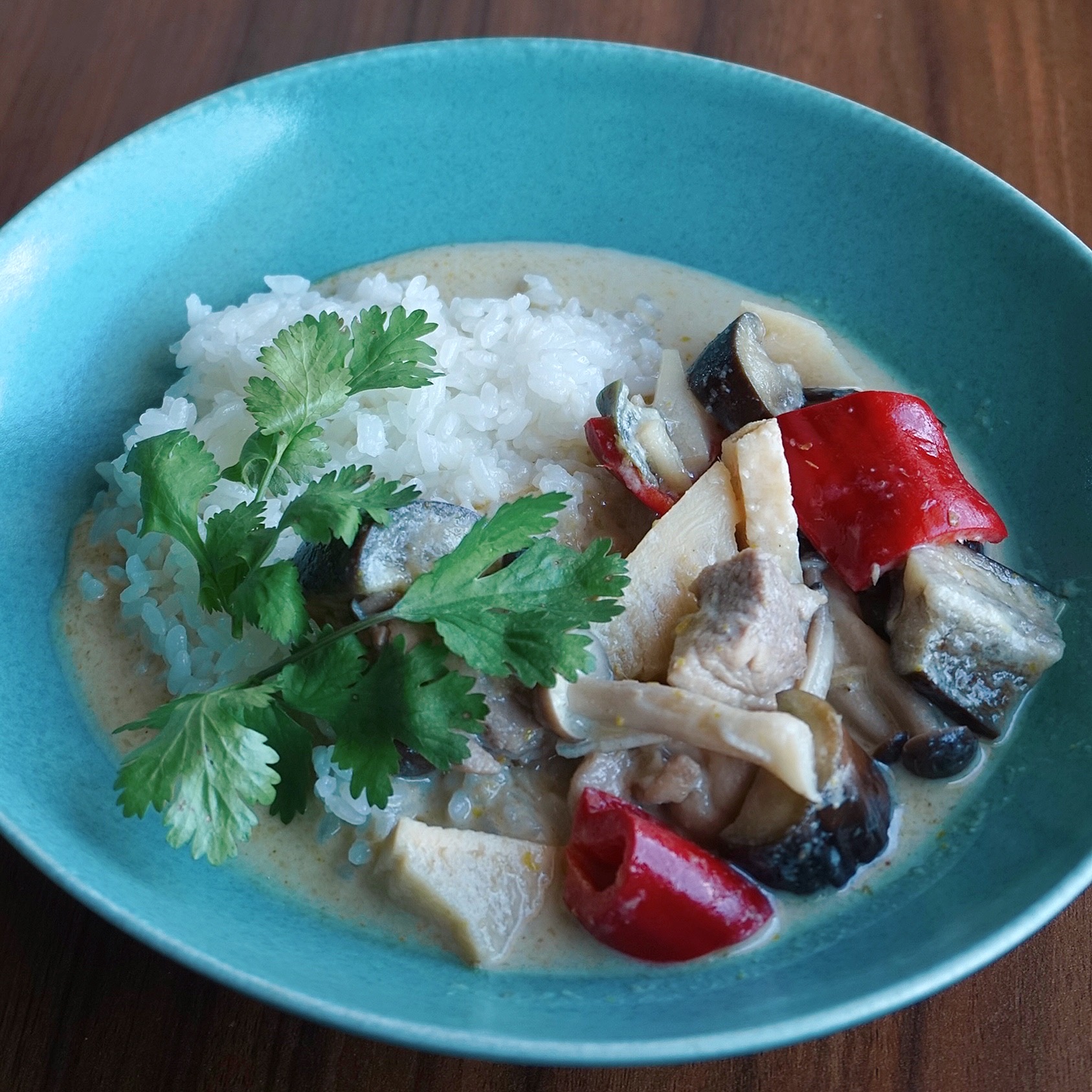
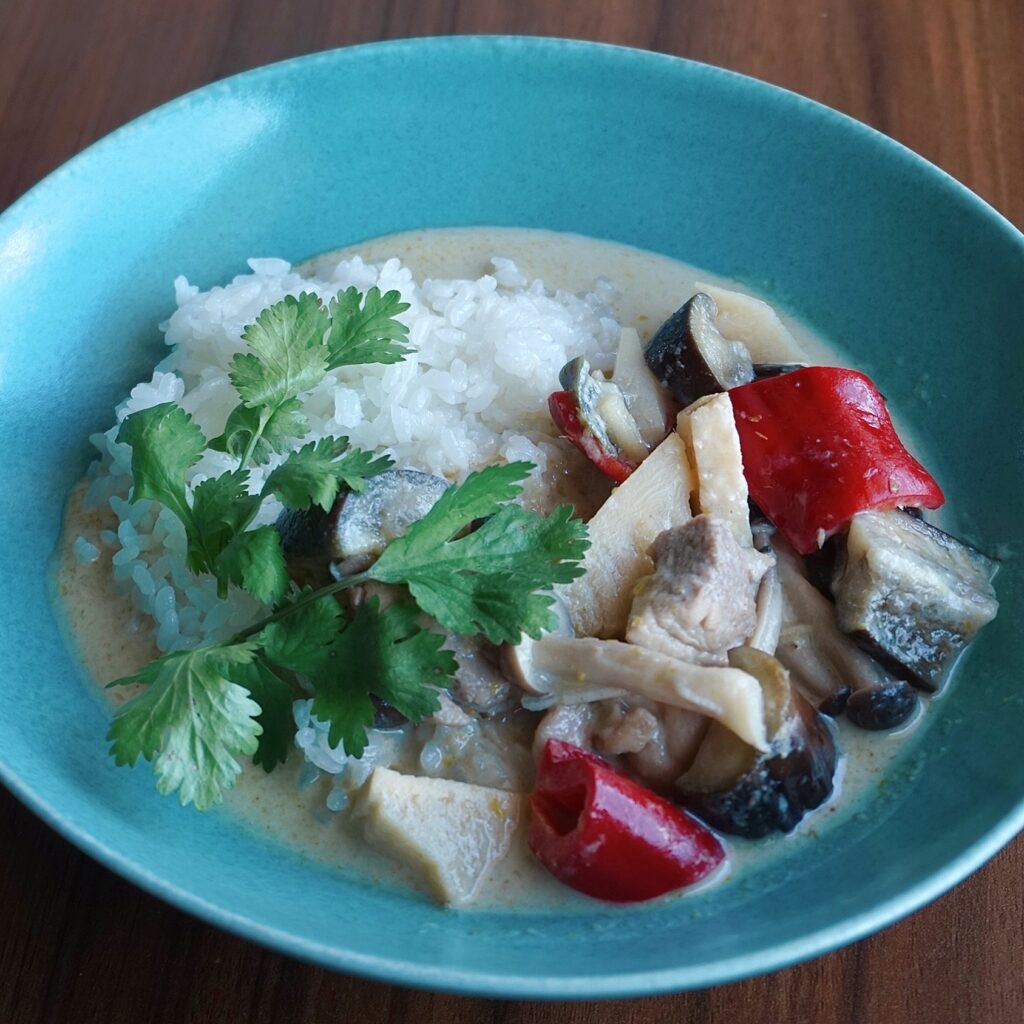
Green Curry (Gaeng Keow Wan / แกงเขียวหวาน)
Green Curry (Thai: Gaeng Keow Wan / แกงเขียวหวาน) is an iconic simmered dish originating from central Thailand. Literally translating to “sweet green curry,” it is famous for its vibrant green hue, rich and creamy sweetness from coconut milk, and sharp heat from fresh green chilies.
In Japan, green curry has moved far beyond being just an exotic specialty—it has become a staple on home dining tables, in convenience stores, and at supermarkets as an “easy yet stylish, authentic curry.”
My First Encounter with Green Curry
My first memory of green curry goes back to when Ritsumeikan Asia Pacific University (APU) was built in Oita Prefecture. My parents took me to an open-campus event, and we ate at the university cafeteria because my father loves green curry.
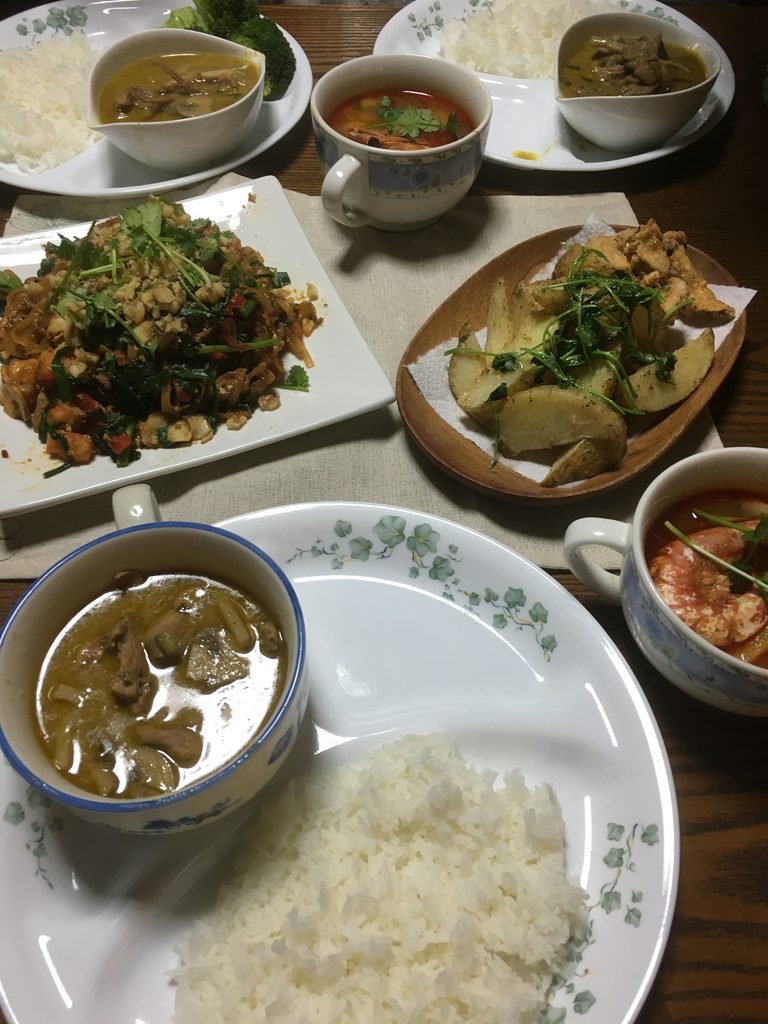
To be honest, I didn’t like it at all at first! Years later, a friend who adored Thai food hosted a Thai dinner party. Trying green curry and pad thai again after all that time, I was amazed by how delicious it was—I suppose my palate had finally grown up.
Since then, I’ve loved exploring various ethnic cuisines, including Sri Lankan curry and Burmese food. Thanks to APU, Beppu is now home to many international restaurants run by native chefs, making it effortless to enjoy truly authentic global flavors right in town.
If you are new to ethnic cuisine, green curry is a fantastic starting point to experience the magic of fresh spices and fish sauce. Curry pastes are now readily available at regular Japanese supermarkets, so give this recipe a try!
How Green Curry Adapted to Japan
Green curry has evolved in several unique ways to fit Japanese culinary habits and home kitchens:
- The Rise of Retort Pouches & Pastes: Gathering and grinding fresh Thai herbs from scratch is difficult in Japan, so ready-to-eat retort pouches and commercial pastes (from brands like Kaldi, MUJI, and Yamamori) are overwhelmingly popular. MUJI’s Sozai o Ikashita Curry: Green in particular became a massive hit that spearheaded the green curry boom in Japan.
- Tailored for Japanese Short-Grain Rice: While traditionally served in Thailand as a thin, brothy soup over long-grain jasmine rice, in Japan it is usually eaten with stickier short-grain white rice (Japonica rice). Many local versions are slightly thicker and seasoned with a touch more salt and umami so the sauce clings well to the rice.
- Accessible Ingredient Substitutions: Instead of Thai pea eggplants and Thai holy basil, Japanese home cooks commonly use long Japanese eggplants, bell peppers, shimeji mushrooms, okra, and spinach. Swapping coconut milk for soy milk or dairy milk is also a popular way to make a lighter version at home.
How It Is Perceived in Japan
In Japan, green curry occupies a unique space separate from European-style Japanese curry and Indian curry.
Before trying it, some people are hesitant due to its green color and unfamiliar ingredients like coconut milk and basil. Once they take a bite, however, many get hooked on the addictive balance of fiery heat, subtle sweetness, and complex herbs. Today, it holds a firm reputation as a healthy, vegetable-packed, and sophisticated ethnic dish.
What Makes It Green & Flavorful?
Unlike Japanese curry made from flour-and-spice roux blocks, green curry relies on a paste of pounded fresh herbs and aromatics.
- The Green Color: The vibrant hue comes from unripe green bird’s eye chilies (prik kee noo) blended with generous amounts of green herbs, including kaffir lime leaves (bai makrut), lemongrass, and sweet basil.
- Balance of Flavors: The sharp heat of the green chilies is mellowed by the creamy richness of coconut milk. Fish sauce (nam pla) adds savory depth and saltiness, while palm sugar brings a gentle sweetness that ties everything together.
Key Ingredients
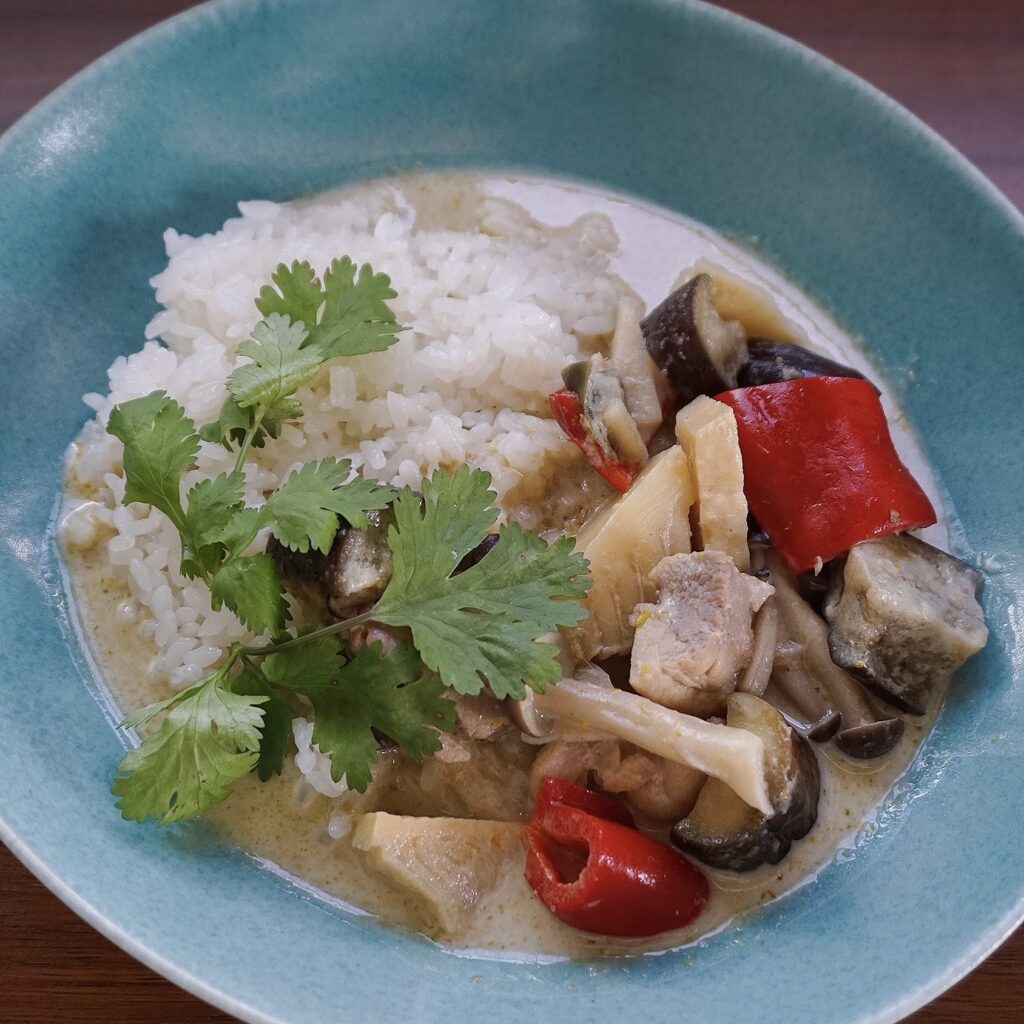
- Paste Aromatics: Green chilies, lemongrass, galangal (Thai ginger), kaffir lime zest and leaves, garlic, shallots, coriander root, cumin, and kapi (fermented shrimp paste).
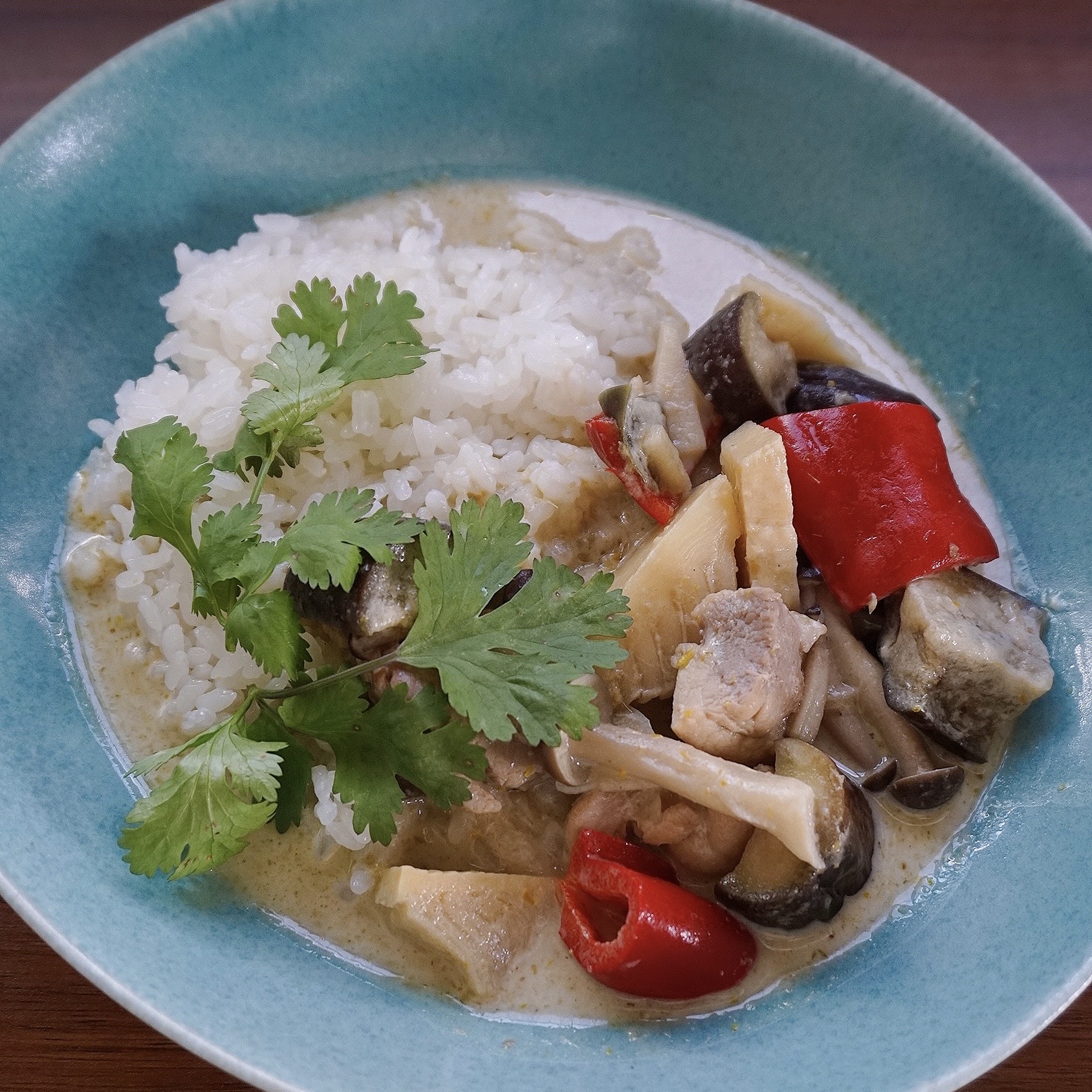
- Classic Fillings: Chicken (especially bone-in pieces or thighs), Thai round eggplants or Japanese eggplants, bamboo shoots, bell peppers, and Thai sweet basil (horapa).
How to Eat It & Other Thai Curries
- How to Serve: Because of its soup-like consistency, it is best spooned gradually over less-sticky long-grain jasmine rice, or paired with khanom chin (fermented Thai rice noodles).
- Comparison with Red & Yellow Curry:
- Red Curry: Made with dried red chilies, giving it a red color and a deeper, roasted heat.
- Yellow Curry: Colored with turmeric, offering a milder spice level compared to the other two.
- Green Curry: Built on fresh green chilies and herbs, making it the most aromatic and sharply spicy of the three.
Popular Green Curry Paste Brands
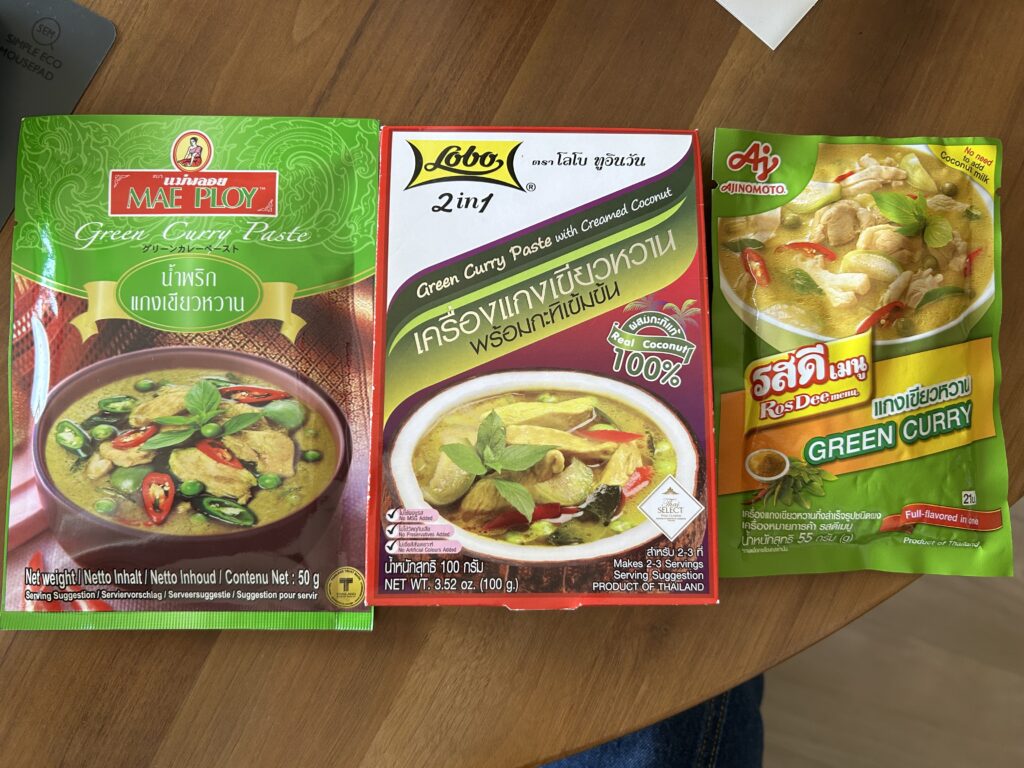
- Mae Ploy (Most Popular)
- A world-famous staple trusted by Thai restaurants and professional chefs. You add your own coconut milk, and it delivers an intensely aromatic, punchy, authentic heat.
- Lobo – 2-in-1 Type (Very Popular)
- A convenient brand great for easy home cooking. This “2-in-1” version already contains coconut cream powder, so beginners can simply stir-fry their ingredients and add water (just add fresh basil if desired).
- Ajinomoto / RosDee Menu (Popular Souvenir / Home Use)
- Produced in Thailand by the familiar Japanese brand Ajinomoto. This powdered mix includes coconut milk powder for ultimate convenience, though its flavor is simpler than traditional wet pastes like Mae Ploy.
Easy Green Curry Recipe (4–5 Servings)
Ingredients
- Chicken thighs: 180 g
- Shimeji mushrooms: 70 g
- Boiled bamboo shoots: 150 g
- Eggplant: 150 g
- Red bell pepper: 50 g
- Cooking oil (for stir-frying): 10 g
Paste Base (⭐︎):
- Mae Ploy Green Curry Paste: 1 pack (approx. 50 g)
- Water: 20 g
- Cooking oil: 20 g
Simmering Sauce:
- Water: 300 g
- Coconut milk: 330 g
- Fish sauce (Nam Pla): 30 g
- Sugar: 9 g
Instructions
- Prep the ingredients: Cut the chicken thighs, boiled bamboo shoots, eggplant, and red bell pepper into bite-sized pieces. Trim the woody base off the shimeji mushrooms and separate them into clusters.
- Stir-fry the meat and vegetables: Heat 10 g of oil in a pan and cook the chicken until it changes color. Add the bamboo shoots, eggplant, and shimeji mushrooms, and stir-fry together.
- Set aside: Once the eggplant has softened, transfer the cooked chicken and vegetables to a plate.
- Bloom the curry paste: Place the green curry paste and 20 g of water (⭐︎) into a pot over low heat. Once it begins to bubble gently, add 20 g of oil and stir continuously for about 1 minute until fragrant.
- Simmer and finish: Return the cooked chicken and vegetables to the pot, along with the 300 g of water, coconut milk, fish sauce, sugar, and red bell pepper. Bring to a gentle boil and serve warm.
The Japanese version of this article is available here.【グリーンカレーとは?特徴や日本での進化・市販ペーストで作る簡単本格レシピ】


コメント