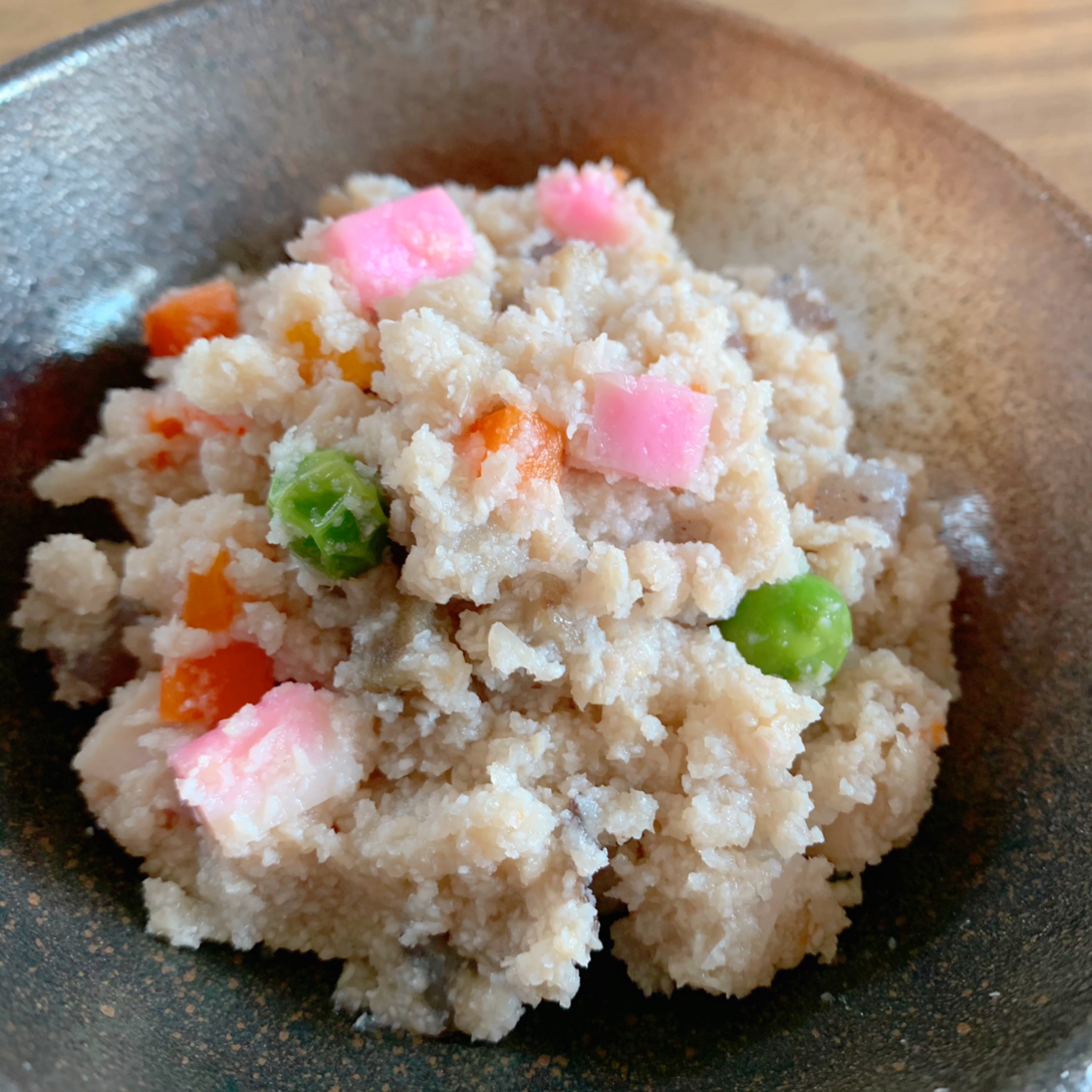
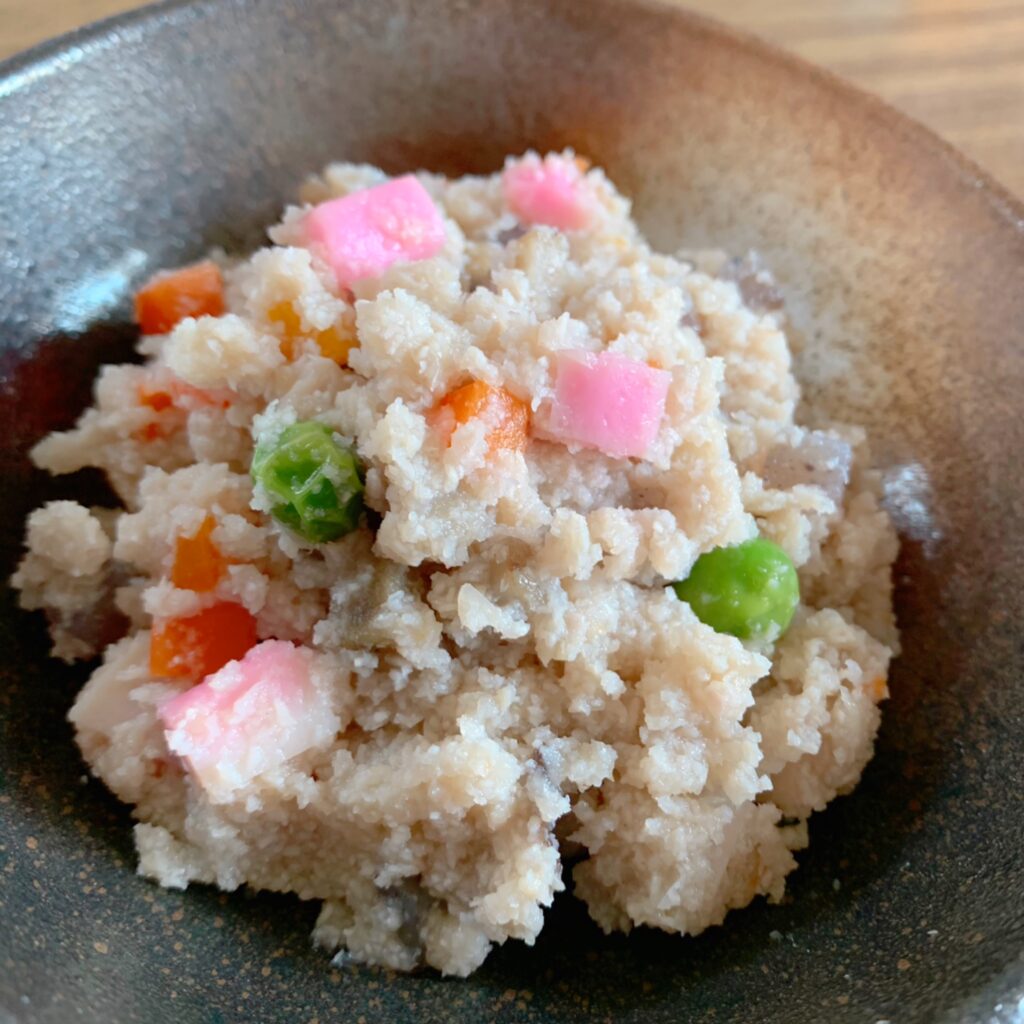
Healthy Unohana Irini Recipe: Traditional Japanese Simmered Soy Pulp
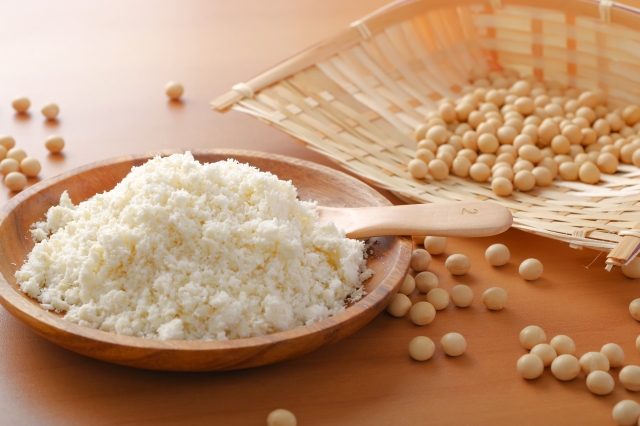
Unohana Iri-ni is a traditional, highly nutritious, and flavorful Japanese home-cooked dish. It is made by stir-frying okara (soy pulp, a byproduct of making tofu or soy milk) with fish cakes, carrots, and burdock root, then simmering it all in a rich, savory dashi broth. Because okara is incredibly rich in dietary fiber and low in fat, it is extremely popular among those looking for a healthy and well-balanced meal.
My Unique Twist: Gobo-ten and Almonds
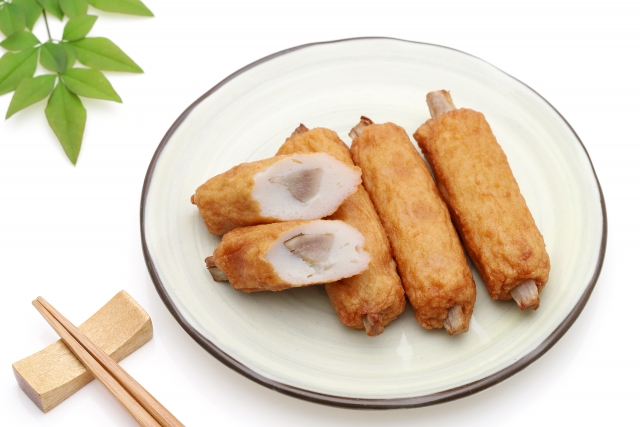
What makes my recipe special is the addition of gobo-ten (deep-fried fish cake with burdock root inside) and almonds.
Usually, buying burdock root just for Unohana leaves you with leftovers, and preparing it can be a bit of a hassle. By using gobo-ten instead, you can effortlessly add protein, savory seafood umami, and that satisfying burdock texture to the dish.
Adding almonds might sound surprising, but they actually elevate the flavor beautifully. It is an unusual ingredient for Unohana, but I highly recommend giving it a try!
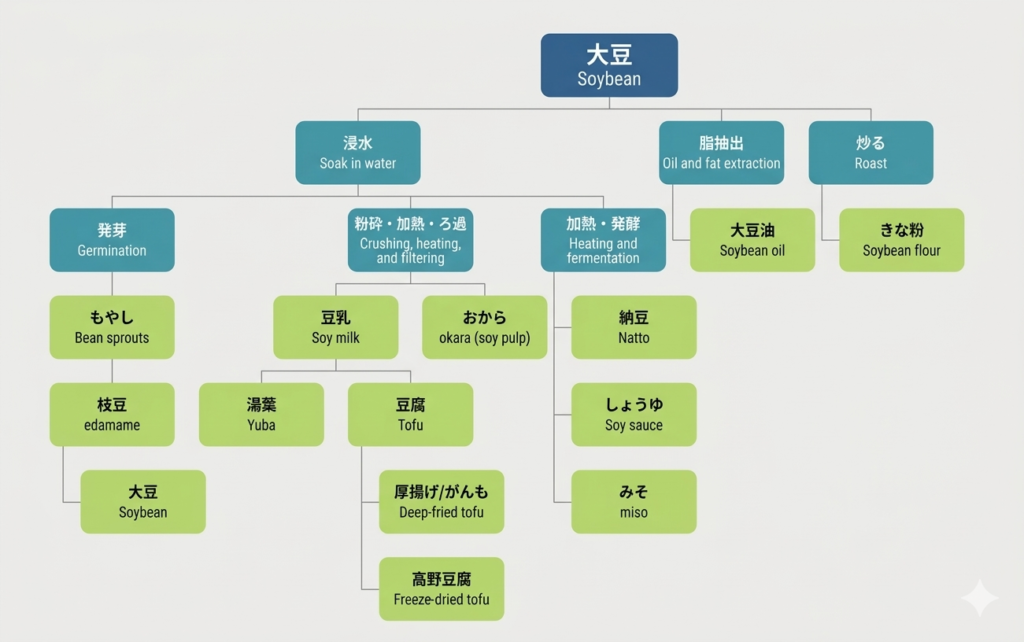
The name “Unohana” comes from the delicate white “u-no-hana” flowers (Deutzia) that bloom in April, as the fluffy white appearance of okara resembles these blossoms.
Nutrition Facts (Okara/100g)
- Calories: 88 kcal
- Protein: 6.1 g
- Fat: 3.6 g
- Total Carbohydrates: 13.8 g
- Dietary Fiber: 11.5 g
Nutrition Facts Unohana
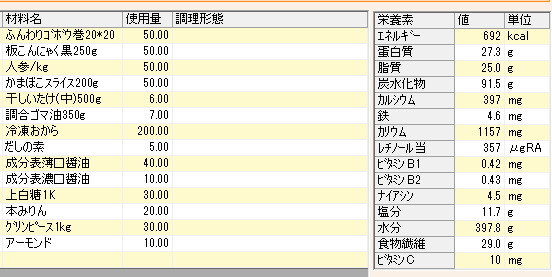
- Calories: 692 kcal
- Protein: 27.3 g
- Fat: 25.0 g
- Total Carbohydrates: 91.5 g
- Salt Equivalents: 11.7 g
Ingredients (Serves 6)
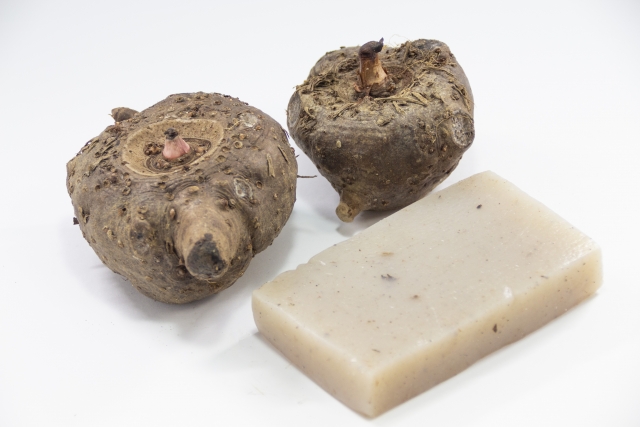
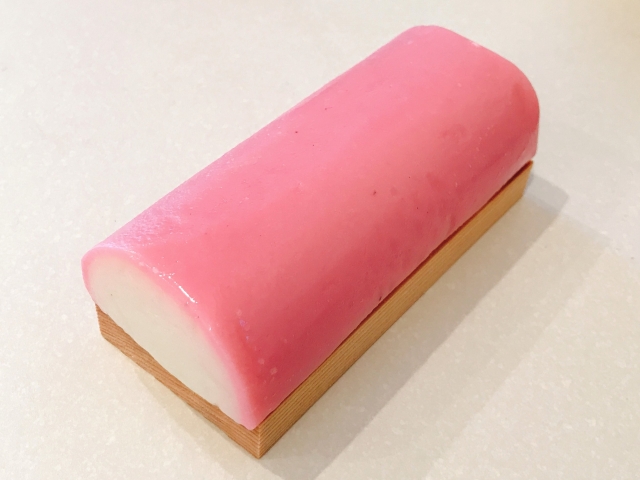
- Unohana (Okara): 200g
- Dried Shiitake Mushrooms: 6g (specifically “Donko” for a rich dashi)
- Goboten Fish Cakes (Burdock & Fish Paste): 50g
- Konnyaku (Akunuki huyou/no-lye): 50g
- Carrot: 50g
- Kamaboko (Boiled Fish Paste): 50g
- Green Peas: 30g
- Chopped Almonds: 10g
- Sesame Oil: 7g
- Seasonings:
- Shiitake Soaking Water: 700g
- Dashi Stock Granules: 5g
- Light Soy Sauce: 40g (helps keep the color bright)
- Dark Soy Sauce: 10g (adds deep flavor)
- Sugar: 30g
- Mirin: 20g
How to Make Unohana Irini
※Unohana (Okara) absorbs water and swells. Use a large deep frying pan.
Rest: For the best flavor, store in the refrigerator and serve the next day once the flavors have fully melded.
Preparation: Rehydrate dried shiitake mushrooms in 700g water (this can take several hours). Dice the mushrooms, goboten, konnyaku, carrot, and kamaboko into small cubes.
Pre-cook Carrots: Microwave diced carrots with a little water for 2 minutes to save time.
Stir-fry: Heat sesame oil in a large deep frying pan. Add the okara and all diced ingredients (except kamaboko and peas). Stir-fry until the oil is evenly distributed.
Simmer: Add the dashi granules and the shiitake soaking water. Simmer until the vegetables are tender.
Season: Add the soy sauces, sugar, and mirin. Continue to simmer.
Finish: Once the liquid has mostly evaporated, fold in the kamaboko, green peas, and almonds. Adding these at the end keeps their colors vibrant.
The Versatility of Okara
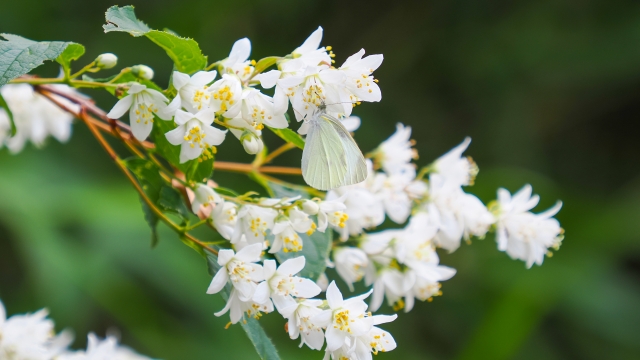
Okara itself has a very mild flavor and aroma, making it an incredibly versatile ingredient for your kitchen. In Japanese supermarkets, it is very affordable—you can often find a 200g pack for around 50 yen. Recently, due to rising health consciousness, convenient “Okara powder” has also become widely available for long-term storage.
Beyond the Traditional Stir-fry While “Irini” is the most traditional way to enjoy it, there are many modern ways to use Okara:
- For Meat Dishes: Replace a portion of minced meat in hamburgers or croquettes to reduce calories and add fiber.
- For Baking: Use it as a gluten-free alternative to flour when making healthy cookies and cakes.
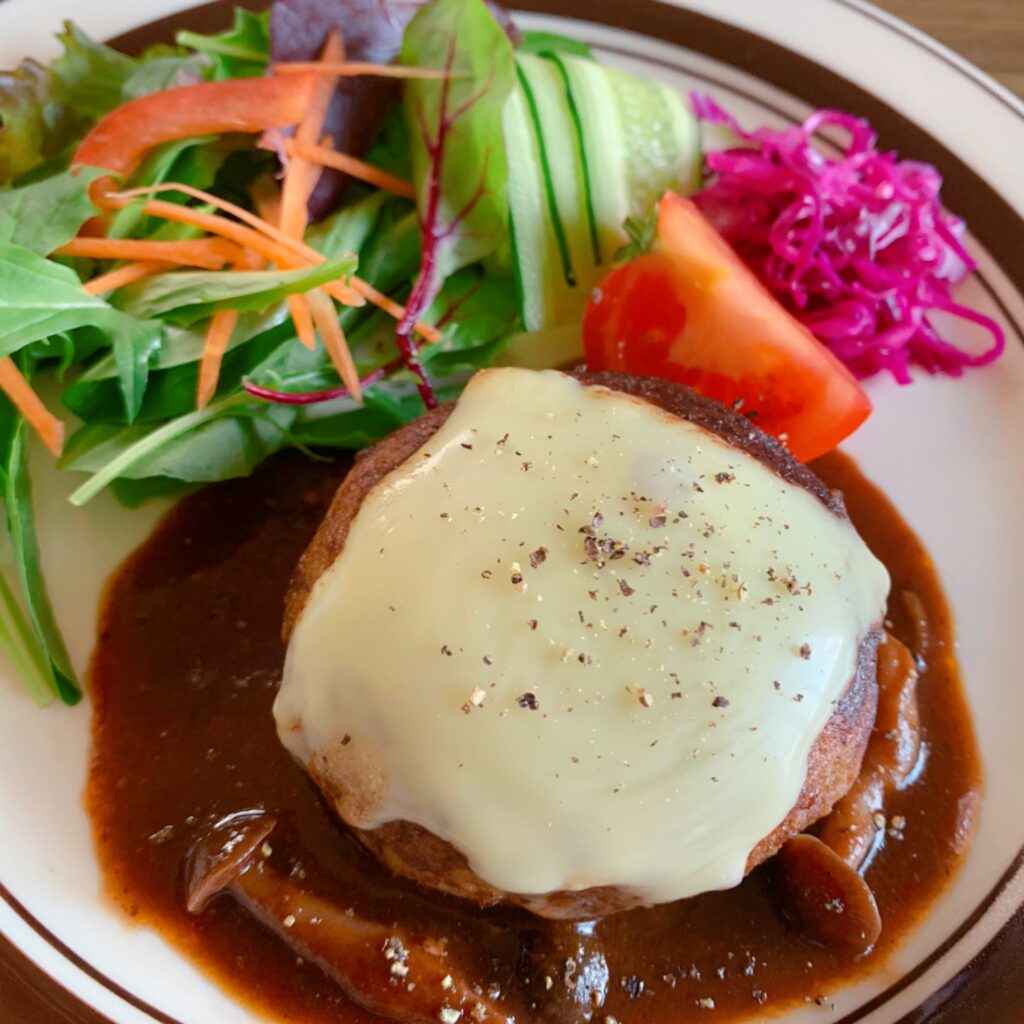
おからを使ったヘルシーなハンバーグのレシピもぜひチェックしてみてください!
おからのもう一つの素晴らしい活用法として、私のヘルシーなおからハンバーグのレシピはいかがでしょうか?おからとひき肉を合わせることで、カロリーと糖質を抑えながらも、ジューシーで満足感のある一品に仕上がります。食物繊維がたっぷり詰まっており、罪悪感のない夕食にぴったりです。ぜひ試してみてくださいね!👉 [Healthy Okara Hamburger Steak Recipe]
📖Read the Japanese version of this article here! [【伝統と新感覚】ごぼ天とアーモンド香る、ヘルシーな卯の花(おから炒り煮)レシピ]

コメント