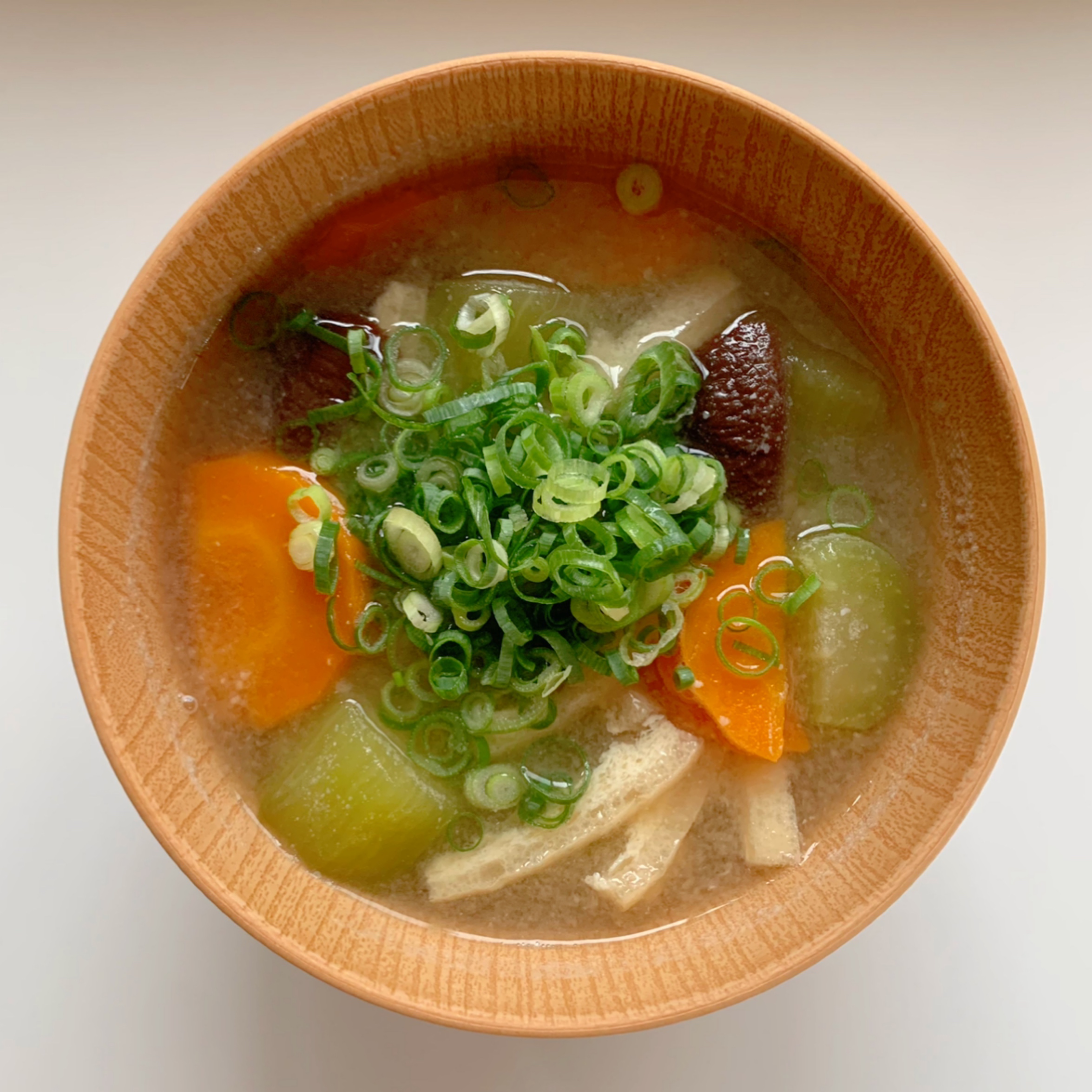
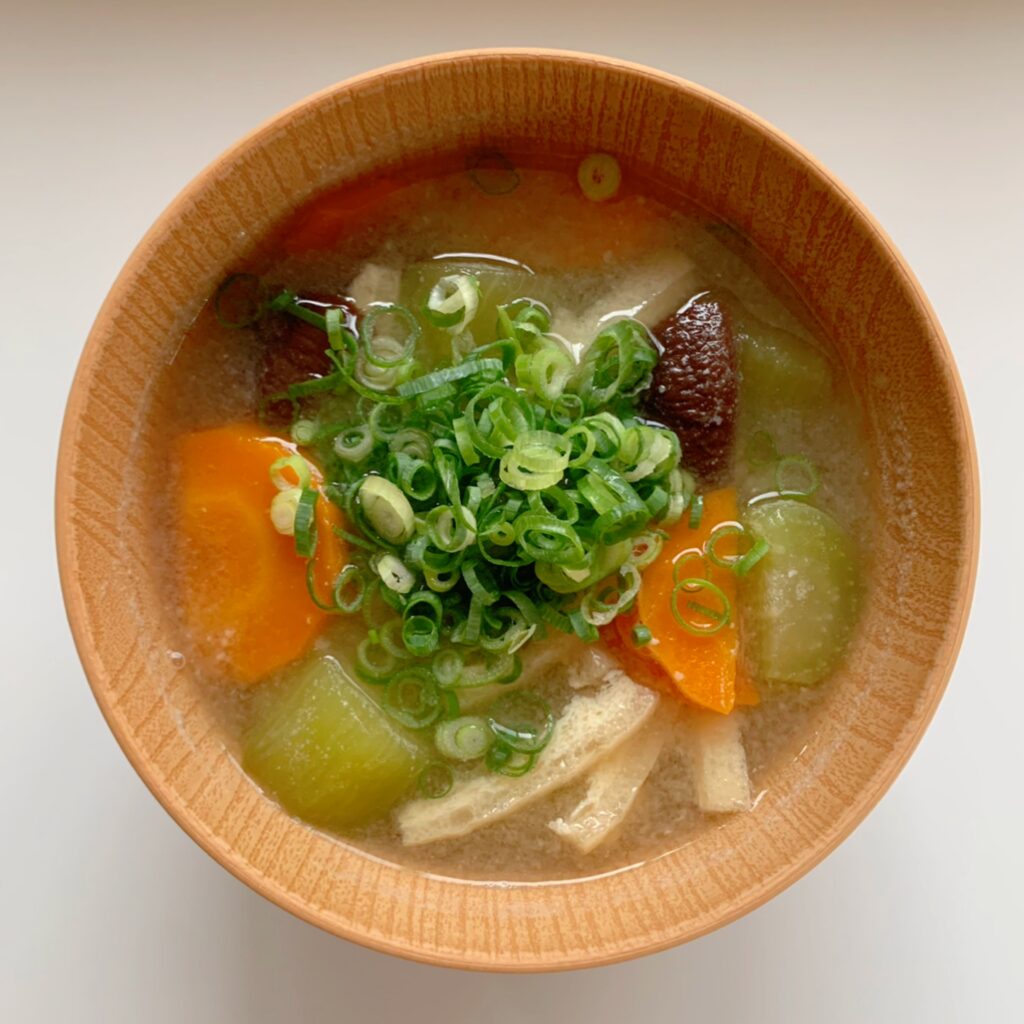
A Comforting Taste, Our Family Staple: “Basic Vegetable-Packed Miso Soup” Made with Dashi Granules
What kind of menu comes to mind for your daily breakfast? Fluffy freshly cooked rice, warm miso soup, salt-grilled salmon, tamagoyaki… When we think of the “ideal breakfast” that makes us glad to start a new day, there is always a warm bowl of miso soup right at the center.
If you open the internet or magazines, you will find endless recipes fit for a high-end Japanese restaurant. However, making dashi from scratch using kombu and bonito flakes every single day is honestly a bit too much of a hurdle for busy everyday life.
That is precisely why “dashi stock granules” become such a reliable ally in our modern lives.
Quick to use and foolproof, yet genuinely delicious. Today, we would like to introduce a vegetable-packed miso soup that fits right into the realistic, everyday dining table of an ordinary household.
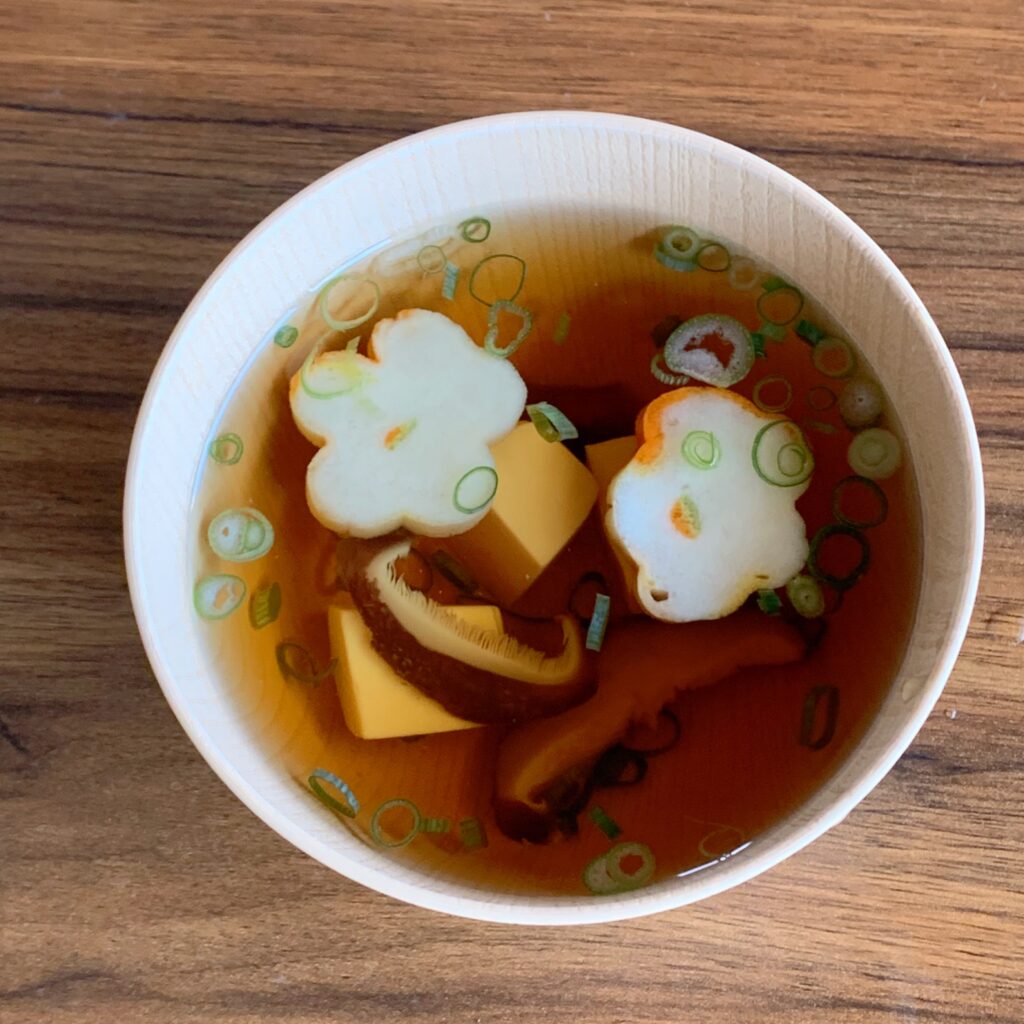
Check out the recipe for sumashi jiru to learn how to make dashi soup using kelp and bonito flakes. 👉 A simple yet elegant Sumashi soup recipe (Sumashi jiru)
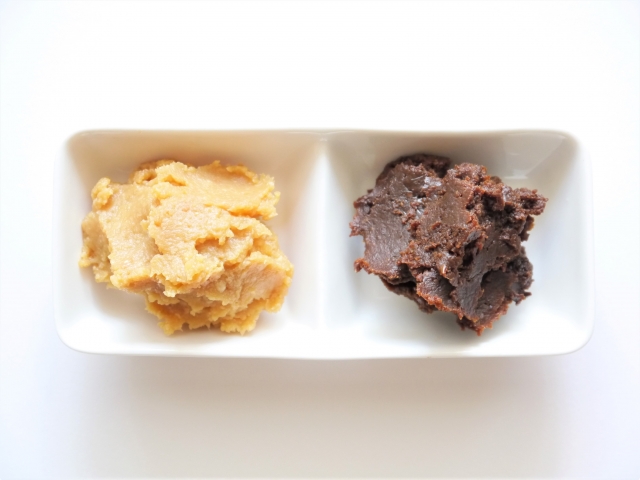
For more information on miso, check out this article. 👉 Japanese traditional seasoning miso
Pro Tip: The Secret to a Delicious Soup Lies in “Salinity”
The secret that makes cooking so much more delicious—the key to soup making—is salinity. Adjusting the salt concentration to 0.9% to 1.2%, which is close to human blood and body fluids, creates the golden ratio that our taste buds perceive as the most “delicious.”
For example, the basic golden ratio recommended on official sites for products like “Hondashi” is 600ml of water, 4g of “Hondashi,” and 2 tablespoons (about 36g) of miso. Keeping this balance in mind prevents the flavor from becoming vague and ensures it always turns out as delicious as if it came from a restaurant! (Note: In this recipe, the amounts are slightly adjusted to match 4 servings with 800ml of water)
Nutritional Insight: The Amazing Power of “Rice + Miso Soup”
Miso, made from soybeans—often called “meat from the field”—is packed with nutrients. The proteins that build our bodies are made up of 20 types of amino acids, among which 9 “essential amino acids” cannot be synthesized by the body and must be obtained from food.
What is fascinating here is the compatibility between rice and soybeans:
- Rice: Low in lysine, rich in methionine
- Soybeans: Low in methionine, rich in lysine
In other words, because they make up for each other’s missing amino acids, the combination of “rice and miso soup” is an exceptionally well-balanced meal from a nutritional standpoint.
Furthermore, “isoflavones” found in soybeans have excellent antioxidant properties and act similarly to female hormones. It is a welcome component for anyone mindful of their health, especially those concerned about menopausal symptoms or osteoporosis. Consuming soybeans daily is more effective than eating a large amount all at once. The recommended daily intake is about 50g of soybeans (roughly half a block of tofu or 1.5 packs of natto). Why not easily incorporate this into your daily miso soup?
NUTRITION FACTS
Total Nutrition (4 Servings)
- Calories: 278.8 kcal
- Protein: 16.3 g
- Fat: 8.1 g
- Carbohydrates: 38.6 g
- Sodium (Salt Equivalent): 12.1 g
Per Serving (1/2 Amount)
- Calories: 69.7 kcal
- Protein: 4.1 g
- Fat: 2.0 g
- Carbohydrates: 9.7 g
- Sodium (Salt Equivalent): 3.0 g
Ingredients (4 Servings)
- Green onions: 20g
- Eggplants: 230g
- Carrots: 70g
- Water: 800g
- Shiitake mushrooms: 3g
- Deep-fried tofu (Aburaage): 15g
- Dashi stock granules: 8g
- Miso: 70g
My Favorite Seasonings Memo
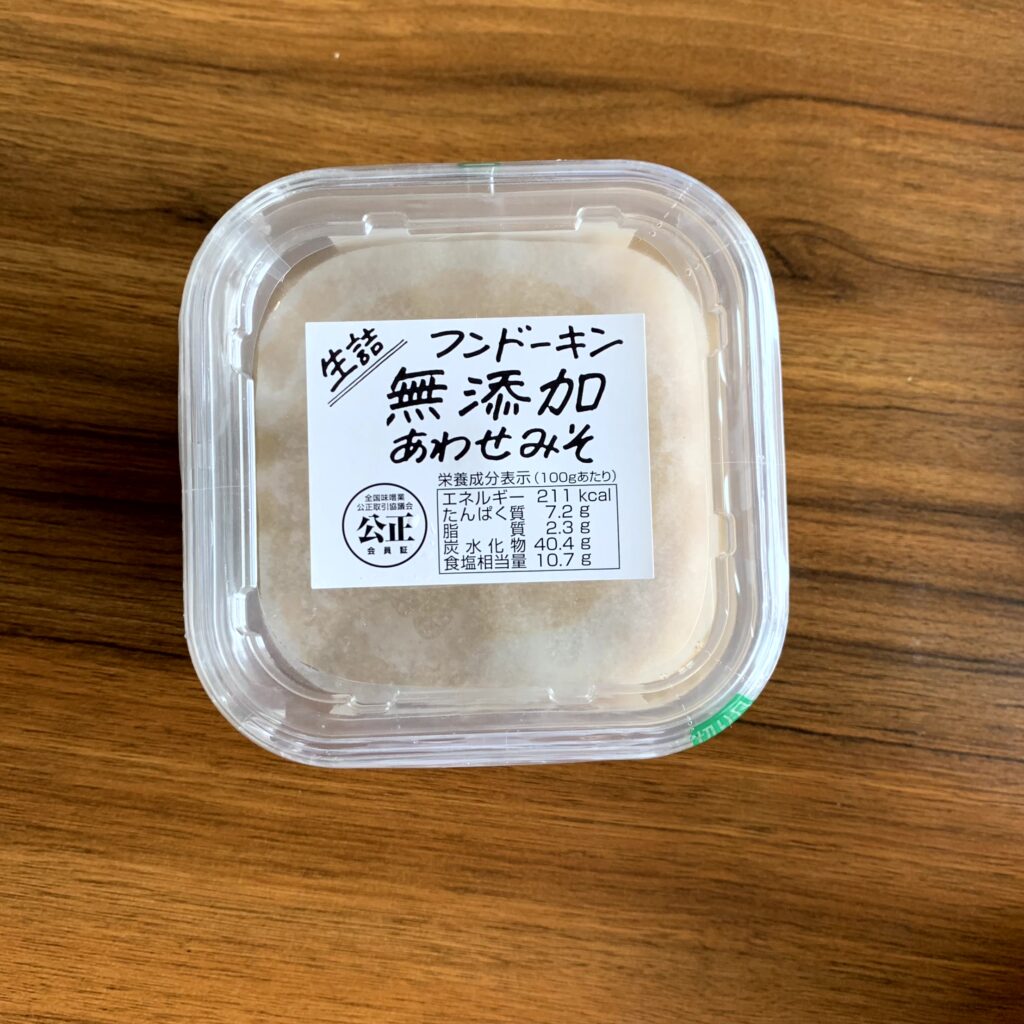
- Miso: I love Fundokin’s “Mixed Miso.” It is sweet, not too salty, and finishes with a gentle flavor.
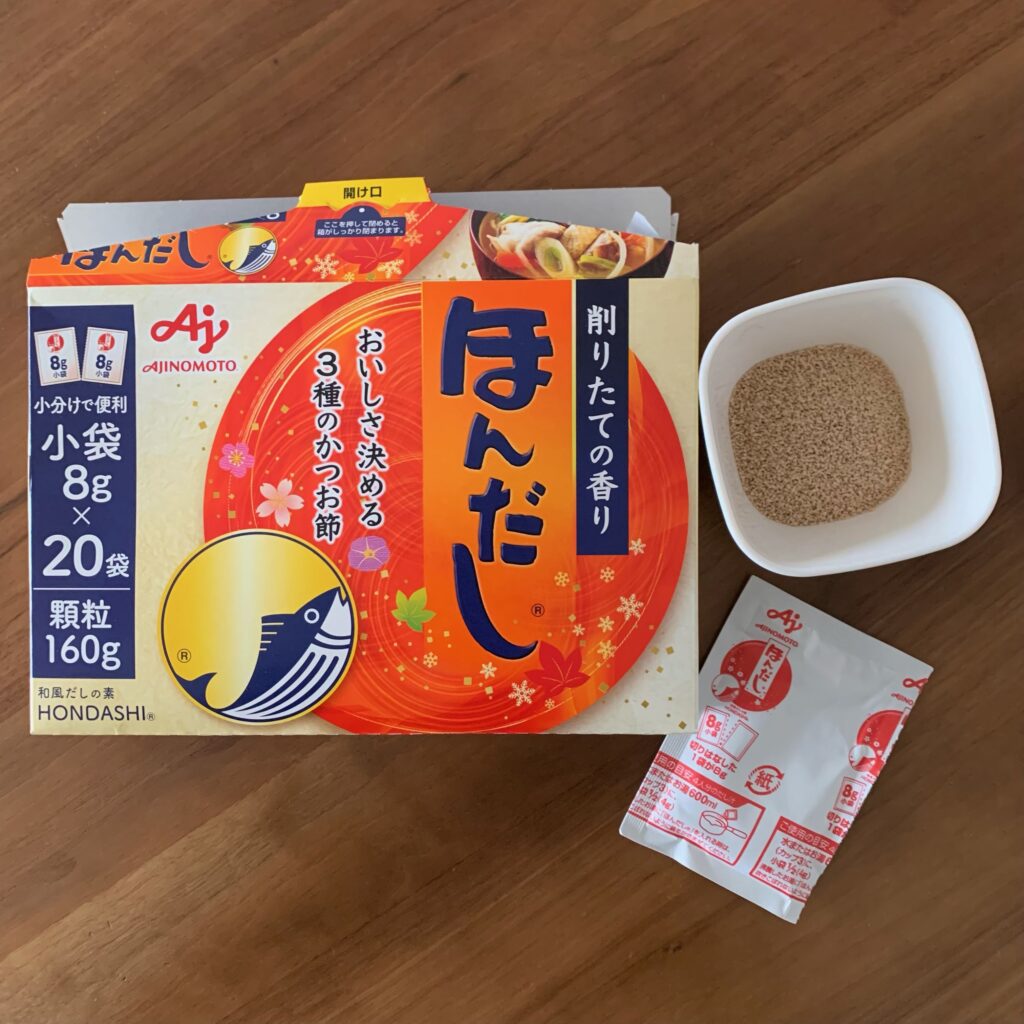
- Dashi granules: My usual go-to is the convenient “Hondashi Bonito Flavor.” When I want a little luxury, “Kayanoya Dashi” is also delicious and brings it a step closer to restaurant-style taste.
How to Make
- Prep the ingredients Cut the green onions into small pieces. Peel the eggplants and cut them into bite-sized pieces, and cut the carrots into half-moon slices.
- Boil the root and hard vegetables Put the eggplants, carrots, and water into a pot and heat until the vegetables become soft.
- Add savory ingredients Add the shiitake mushrooms (cut to appropriate sizes) and deep-fried tofu (cut into thick strips) into the pot.
- Dissolve the miso and finish While keeping salinity and balance in mind, add the dashi granules, and thoroughly dissolve the miso into the soup using a miso strainer or ladle.
- The final touch Once you add the miso and it comes to a gentle boil, turn off the heat immediately (letting it boil too long will cause the aroma and flavor to escape). Finally, scatter the chopped green onions on top, and it is ready!
A warm bowl to help you get through the day ahead. It still turns out delicious even if you throw in some leftover vegetables from your fridge. Please feel free to adapt it and enjoy making it your own “family flavor”!


コメント