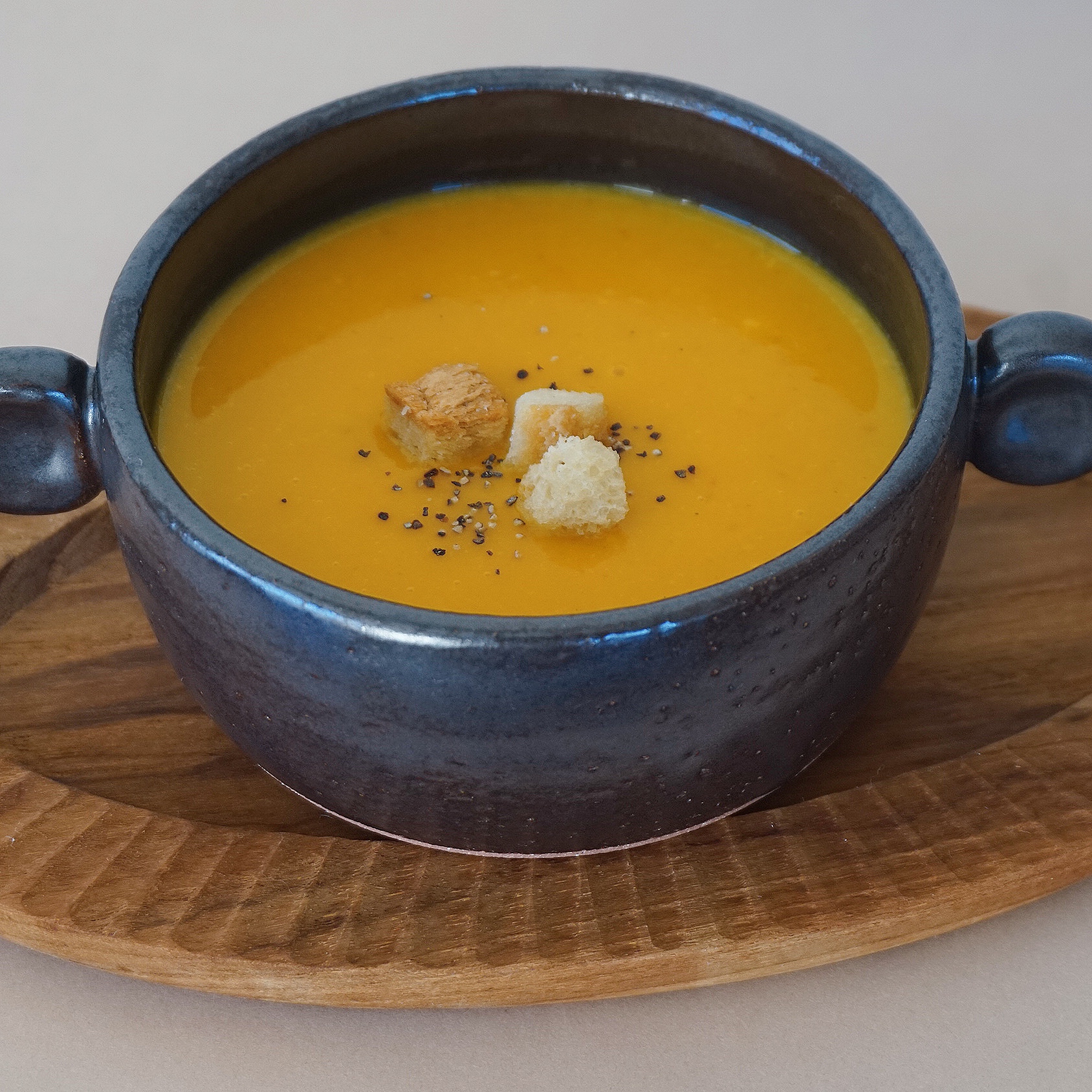
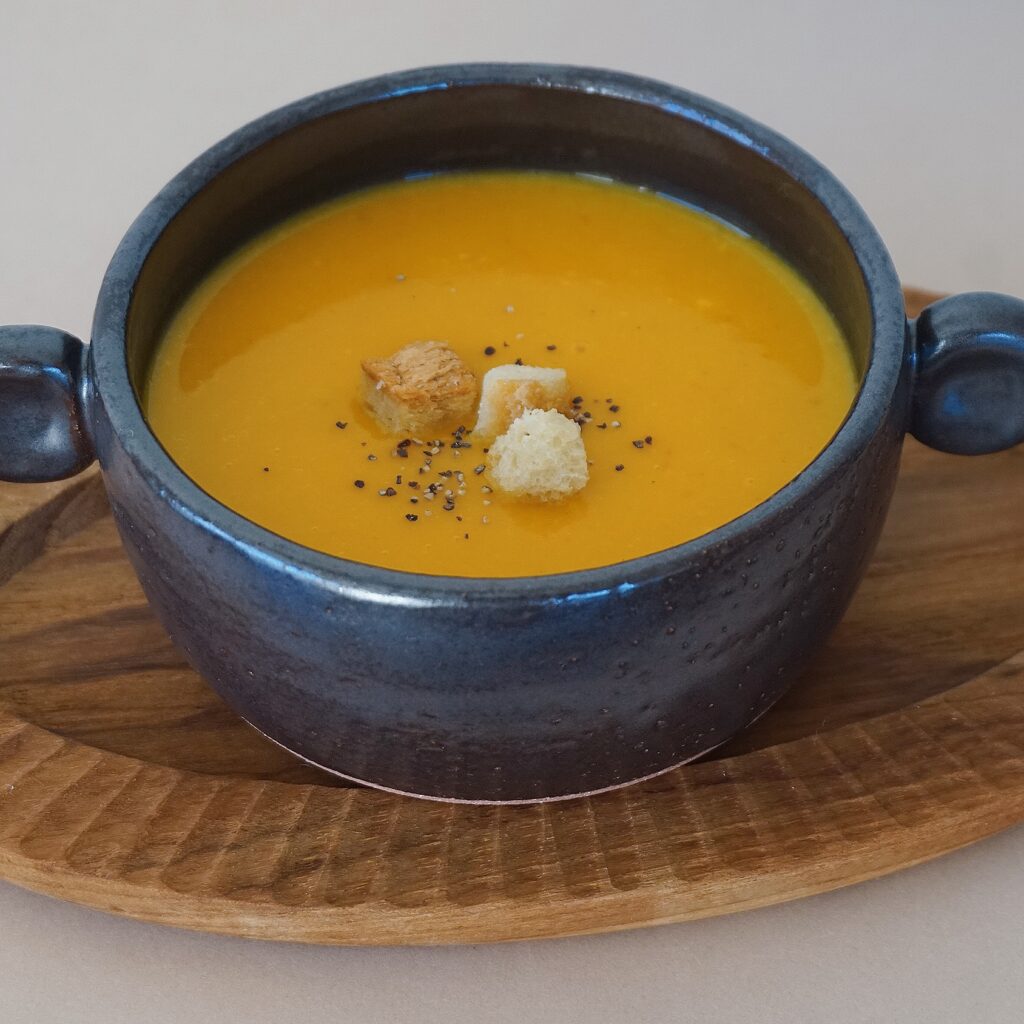
Pumpkin potage(パンプキンポタージュ)
There is something undeniably comforting about a vibrant pumpkin potage. Whether it’s the deep orange of squash or the delicate flavors of corn, potato, or green peas, a well-made potage captures the pure essence of the vegetable. In fact, when the ingredients are fresh, you can achieve a rich, full-bodied flavor without ever touching a cube of instant consommé.
What exactly is “Potage”?
While we often use the term for thick, blended soups, the word has a broader history:
- The Origin: Derived from the French word pot, “potage” historically referred to anything cooked in a communal pot.
- The French Definition: In France, potage is a broad category. It includes everything from clear broths like Consommé to hearty meat-and-veg dishes like Pot-au-feu, and even chilled classics like Vichyssoise.
- The Japanese Definition: In Japan, we typically use “potage” to describe potage lié—soups that have been puréed in a blender or thickened with cream to create a smooth, velvety texture.
Potage vs. Stew: What’s the difference?
The line can be blurry, but it generally comes down to texture and technique:
- Potage: Ingredients are often finely chopped or blended into a smooth liquid.
- Stew: Features large, rustic chunks of meat and vegetables, traditionally thickened with a flour-based roux and simmered for a long time.
About pumpkins
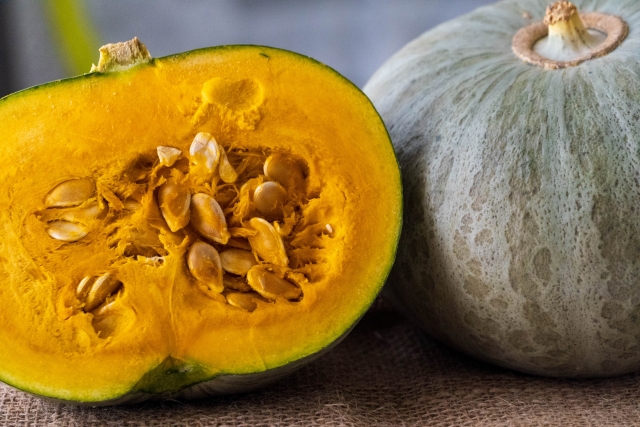
The Winter Powerhouse: Western Pumpkin
While we often associate pumpkin with traditional Japanese cuisine, the variety most common in Japan today is actually the Western pumpkin. It is favored for its sweetness and flaky, chestnut-like texture, but its true value lies in its incredible nutrient density.
The “Antioxidant Trio” (ACE)
Pumpkin is famous for containing the “ACE” vitamins—Vitamins A (Beta-carotene), C, and E—which work together to protect the body:
- Beta-carotene (Vitamin A): High concentrations give the pumpkin its orange hue. It maintains healthy skin and mucous membranes, acting as a shield against winter dryness.
- Vitamin E: Often called the “rejuvenation vitamin,” it improves blood circulation and helps the body fight oxidative stress.
- Heat-Resistant Vitamin C: Unlike many vegetables where Vitamin C is destroyed by boiling, the Vitamin C in pumpkin is protected by its starch content. This means it survives the cooking process, making potage an excellent way to boost your immune system during flu season.
Why It’s the Perfect Winter Food
In Japan, there is a tradition of eating pumpkin during the Winter Solstice (Toji). This isn’t just folklore; it’s nutritional wisdom. Because it stores well and retains its vitamins through the cold months, it was historically the best way to prevent vitamin deficiencies when fresh green vegetables were scarce.
💡Pro-Tip: Since Beta-carotene and Vitamin E are fat-soluble, adding a tiny bit of butter, cream, or olive oil to your potage actually helps your body absorb those nutrients much more efficiently!
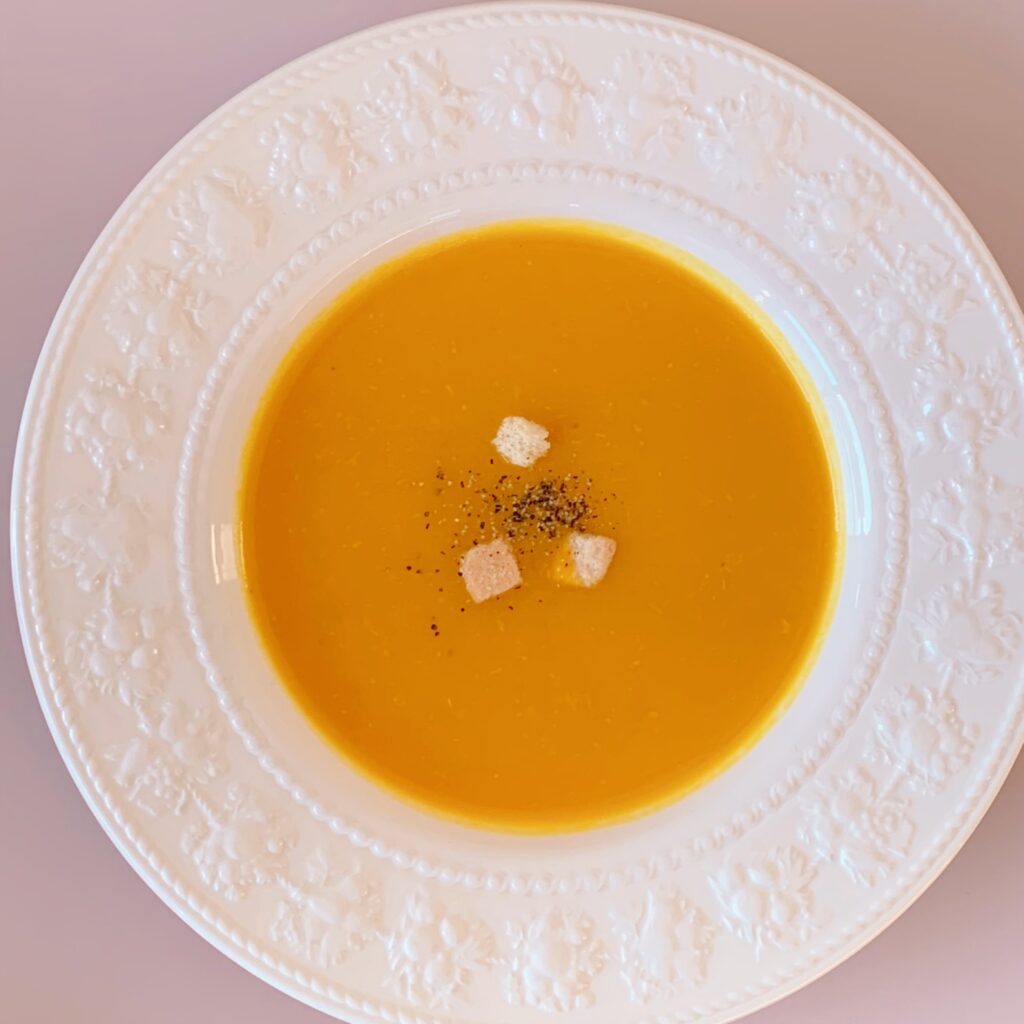
Nutrition Facts: Pumpkin Potage
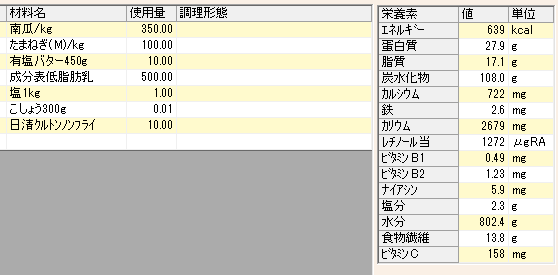
Based on 1 serving (Total 6 servings)
| Nutrient | Per Serving (1 bowl) | Total (6 servings) |
| Calories | 106.5 kcal | 639 kcal |
| Protein | 4.65 g | 27.9 g |
| Total Fat | 2.85 g | 17.1 g |
| Total Carbohydrates | 18.0 g | 108.0 g |
| Salt Equivalents | 0.38 g | 2.3 g |
INGREDIENTS (Serves: 6) : Kabocha potage (Creamy Pumpkin Soup)
- Kabocha (Japanese Pumpkin): 1/4 (approx. 500g with skin, 350g peeled/seeded)
- Onion: 100g
- Butter: 10g
- All-purpose Flour: 5g
- Milk: 500ml
- Salt: 1g (or to taste)
- Pepper: To taste
- Croutons: 10g (for garnish)
How to make Kabocha potage (Creamy Pumpkin Soup)
- Prep the Pumpkin: Remove the seeds from the kabocha with a spoon.
- Steam: Steam the pumpkin for 20–30 minutes.
- Tip: Steaming thoroughly is the secret to bringing out the natural sweetness!
- Prep the Onion: Peel the onion and slice it into 1cm thick pieces.
- Sauté: Melt the butter in a deep skillet or pot over medium heat and sauté the onions.
- Flour: Once the onions turn a light golden brown, turn off the heat. Sift in the flour and stir well to combine.
- Simmer: Add the milk and the steamed pumpkin (flesh). Return to medium heat and simmer, stirring occasionally with a spatula to ensure the bottom doesn’t burn.
- Blend: Transfer the mixture to a blender.
- Caution: Do not overfill! Blend in two separate batches to avoid any messy overflows. (;´Д`)
- Season: Pour the blended soup back into the pan and reheat. Season with salt and pepper to taste.
- Finish: Turn off the heat just before the soup reaches a boil to maintain the best texture.
- Serve: Ladle into bowls and top with croutons.



コメント