Healthy Japanese-Style Gapao Rice | Registered Dietitian’s Easy Recipe
What kind of dish is Gapao Rice(ผัด กะเพรา) ?
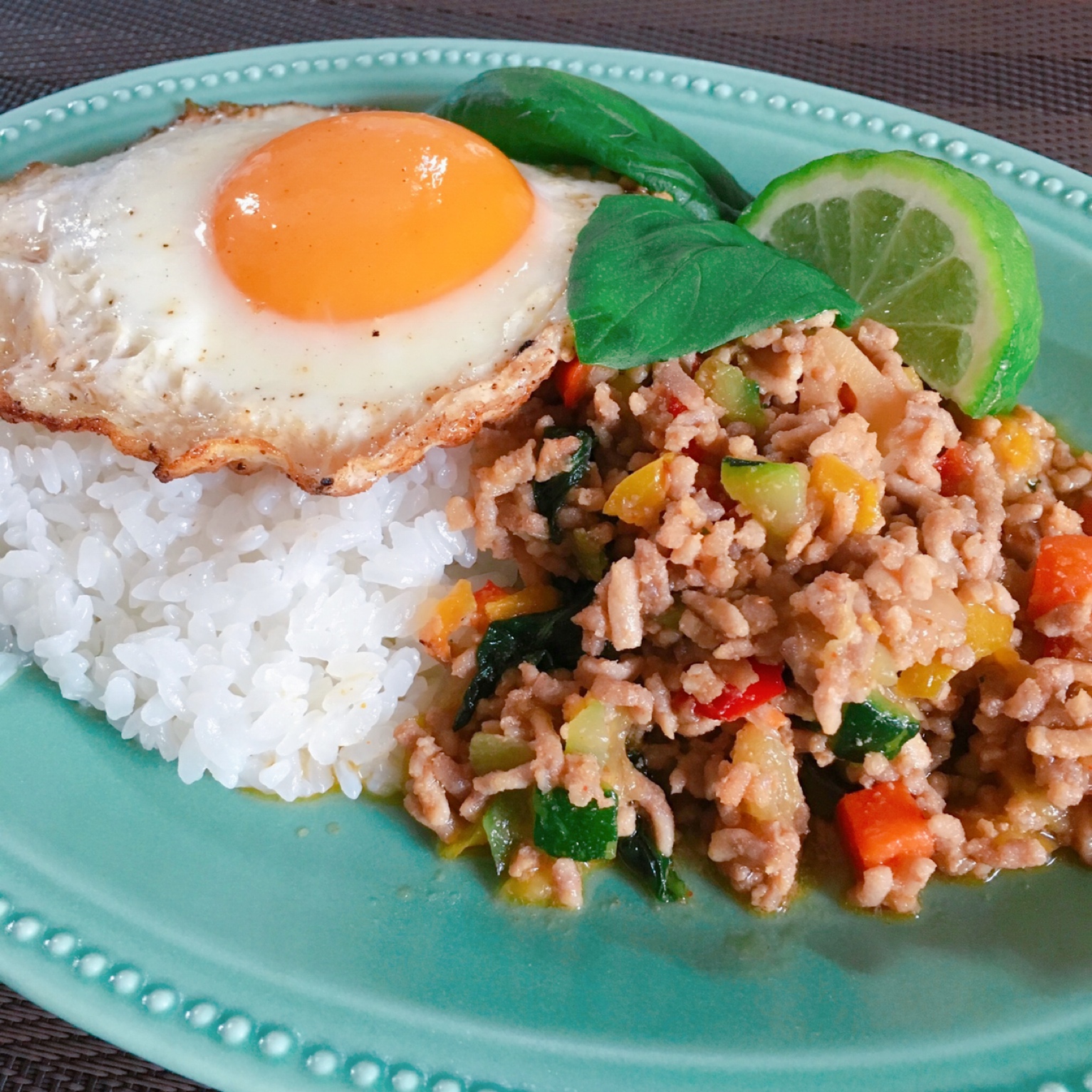
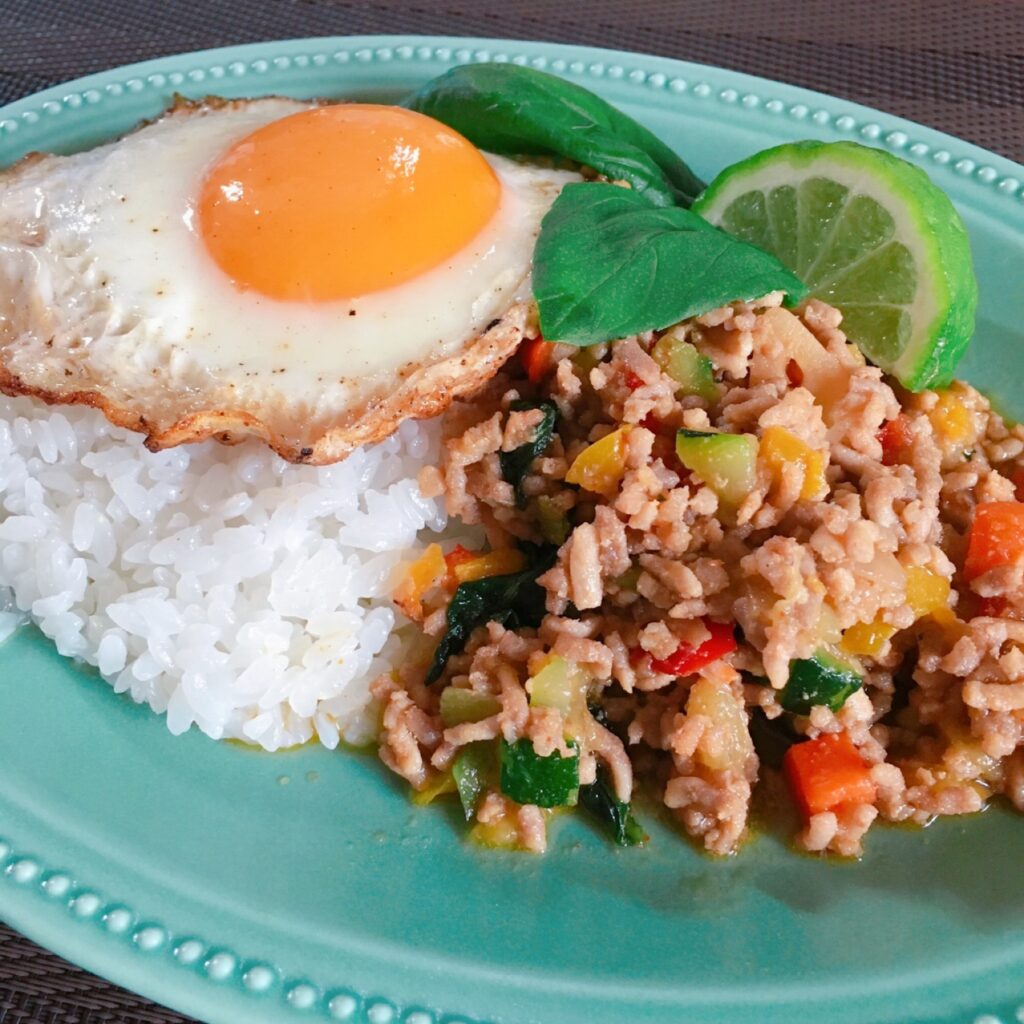
What is “Gapao Rice” in English? If you’re wondering how to call this dish, it is most commonly known as “Thai Basil Stir-Fry” or by its authentic Thai name, “Phat Kaphrao.” In Japan, it is widely loved as “Gapao Rice,” where “Gapao” actually refers to the Holy Basil used in the stir-fry. As a Registered Dietitian (RD) working in a hospital, I’ve refined this recipe to be not only authentic but also nutritionally balanced and “body-friendly.”
One of the key features of this recipe is the sodium control. While restaurant versions often exceed 4g of salt, my “Golden Ratio” seasoning keeps the sodium to just 2.6g per serving without sacrificing flavor.
I’ve also included zucchini and eggplant—summer vegetables rich in potassium—which are excellent for reducing swelling and maintaining healthy blood pressure. Enjoy this simple, one-plate meal that perfectly balances protein, carbs, and essential nutrients!
Why a Registered Dietitian (RD) Recommends This Dish
The preparation is incredibly simple: chili peppers, garlic, and ground meat are stir-fried over high heat and seasoned with nam pla (fish sauce) and sugar. As a registered dietitian, I recommend this recipe because it allows you to easily consume a balanced mix of carbohydrates, protein, and vegetables all in one plate.
Customizing Your Protein
- Pork Mince: Best if you are looking for juiciness.
- Chicken Mince or Seafood: Ideal for those who want a high-protein, low-fat meal (Seafood is common in Thailand, whereas chicken and pork are standard in Japan).
- Tofu or Atsu-age (Deep-fried Tofu): A great choice for vegetarians; simply drain the water from the tofu or chop the atsu-age.
Pro-tip for Leftovers: If you have small amounts of ingredients left over, try simmering them with curry roux. The ingredients for Gapao rice and Keema curry are almost identical, making it a perfect transition.
The Key Ingredient: Basil
The most crucial ingredient is “Holy Basil.” However, since Holy Basil can be difficult to find in Japan, Sweet Basil is often used as a substitute. Consequently, the Gapao rice eaten in Japan differs slightly from the authentic version found in Thailand.
Supplement: About Basil Types
- Sweet Basil (e.g., Genovese Basil): Commonly used in Italian cuisine for dishes like Pesto Genovese. In Japan, this is the variety most people recognize simply as “basil.”
- Holy Basil: A species widely used in Southeast Asia. In India, it is highly valued in traditional Ayurvedic medicine and served as herbal tea. In Thailand, the variety known as “Gapao” is used specifically for dishes like Khao Phat Kaphrao.
Health Benefits: The refreshing scent of basil comes from essential oil components like linalool and eugenol. These help with relaxation, improve concentration, stimulate appetite, and support gastrointestinal function.
What is Nam Pla?
Nam Pla (น้ำปลา) is an indispensable seasoning in Thai cooking. The word “Nam” means liquid, and “Pla” means fish. Similar to Japanese “Gyosho” (fish sauce), it is a liquid made by fermenting raw fish in salt. It is characterized by a concentrated umami flavor, saltiness, and a unique aroma. While some find the scent strong at first, its distinctive taste becomes quite addictive. You can now find Nam Pla in the Asian food section of most Japanese supermarkets.
Restaurant Recommendation
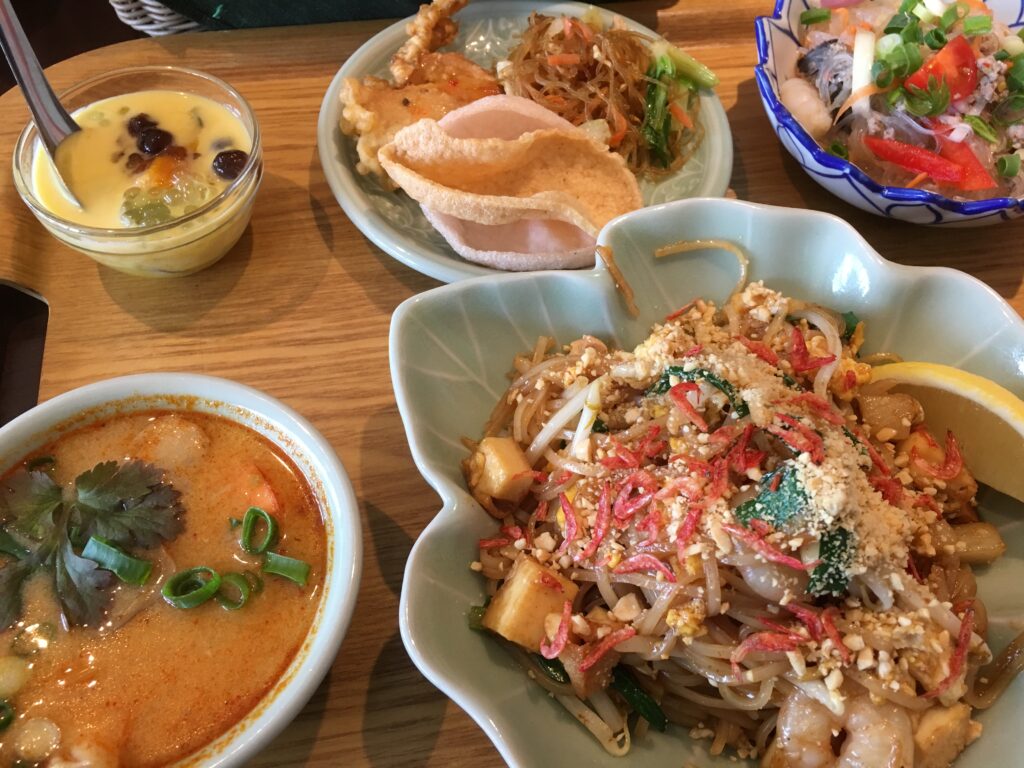
Thai cuisine offers unique aromas and flavors, and dishes like Green Curry, Tom Yum Goong, and Pad Thai are widely loved in Japan. I highly recommend this Thai restaurant in Kyoto—it was delicious, and I can’t wait to go back: 👉 Rim Naam Kyoto
NUTRITION FACTS : Gapao Rice (Thai basil stir-fry)
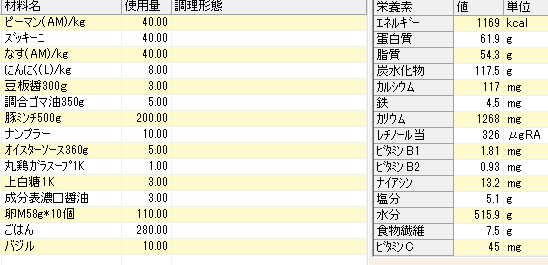
Total (Full Dish with Rice and Egg):
- Energy: 1,170 kcal
- Protein: 61.9 g
- Fat: 54.2 g
- Carbohydrates: 117.6 g
- Sodium: 5.1 g
Nutrition Facts (Per Serving) Including rice and egg
- Energy: 585 kcal
- Protein: 31.0 g
- Fat: 27.1 g
- Carbohydrates: 58.8 g
- Sodium: 2.6 g
Gapao Only (Excluding Rice and Egg):
- Energy: 577 kcal
- Protein: 41.5 g
- Fat: 42.2 g
- Carbohydrates: 13.3 g
- Sodium: 4.7 g
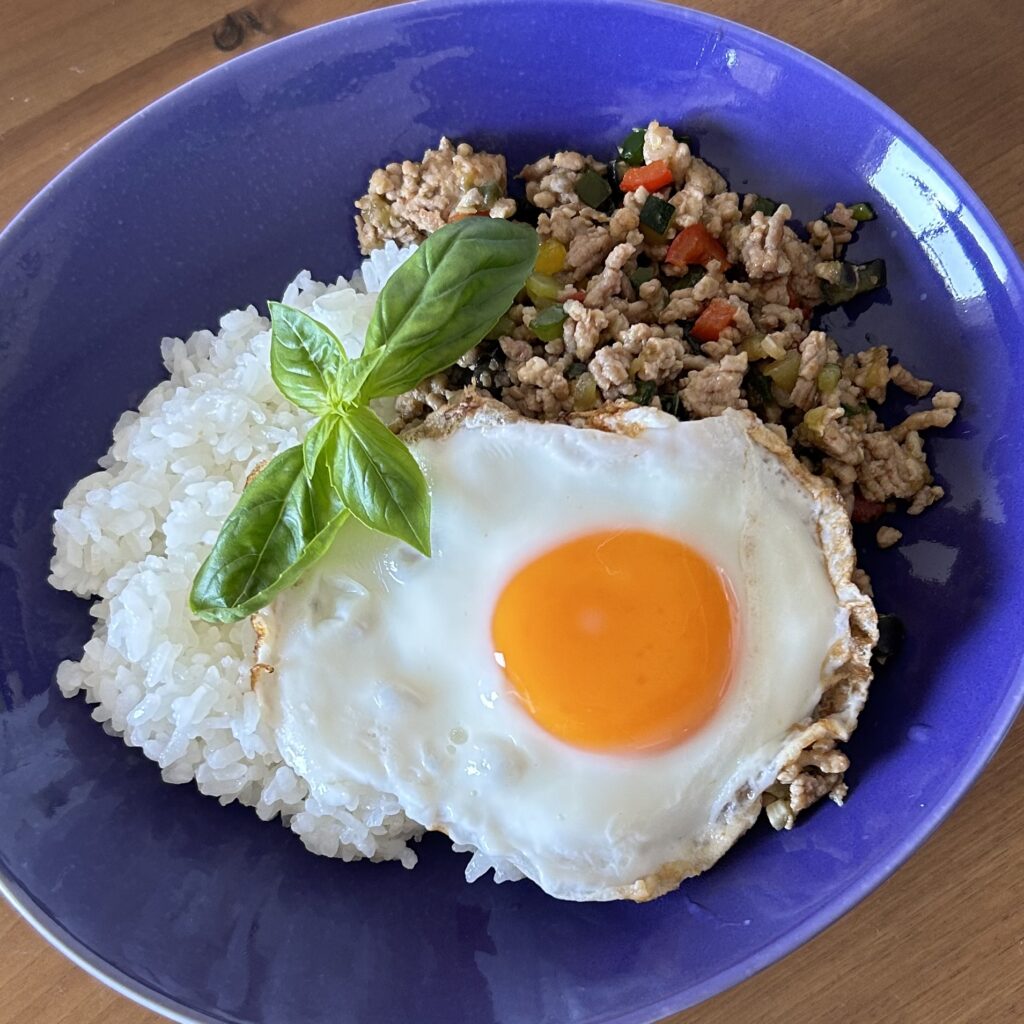
INGREDIENTS (2SERVINGS) : Gapao Rice (Thai basil stir-fry)
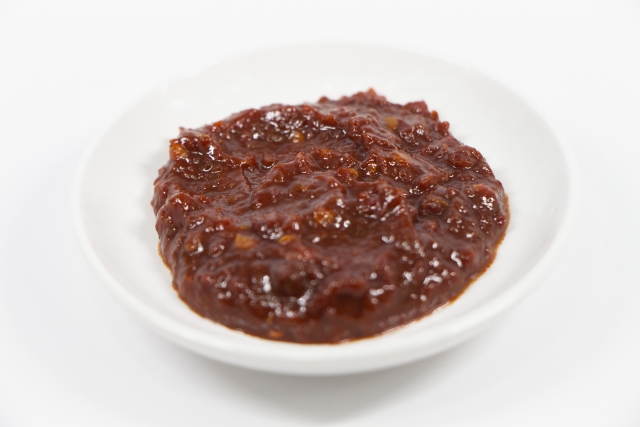
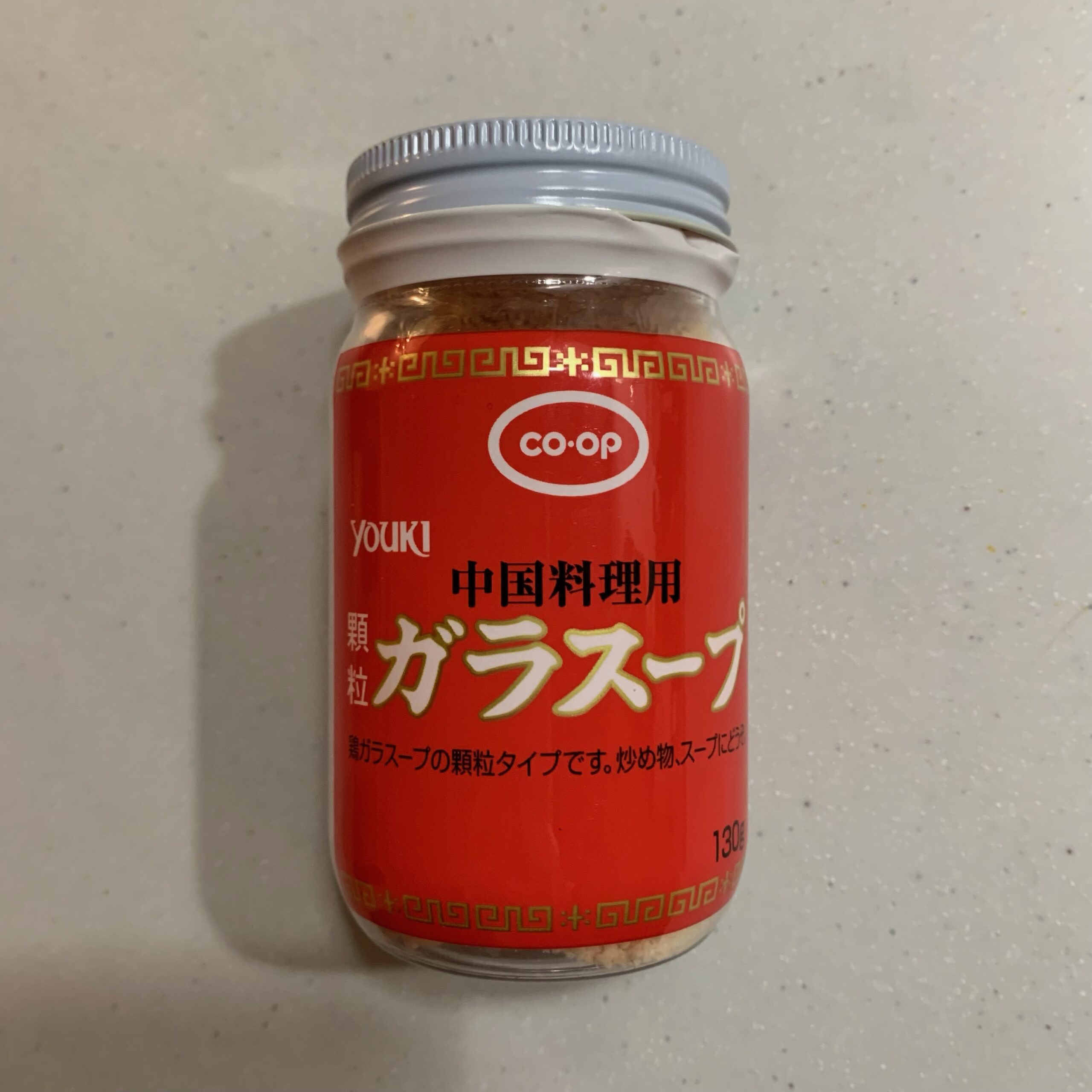
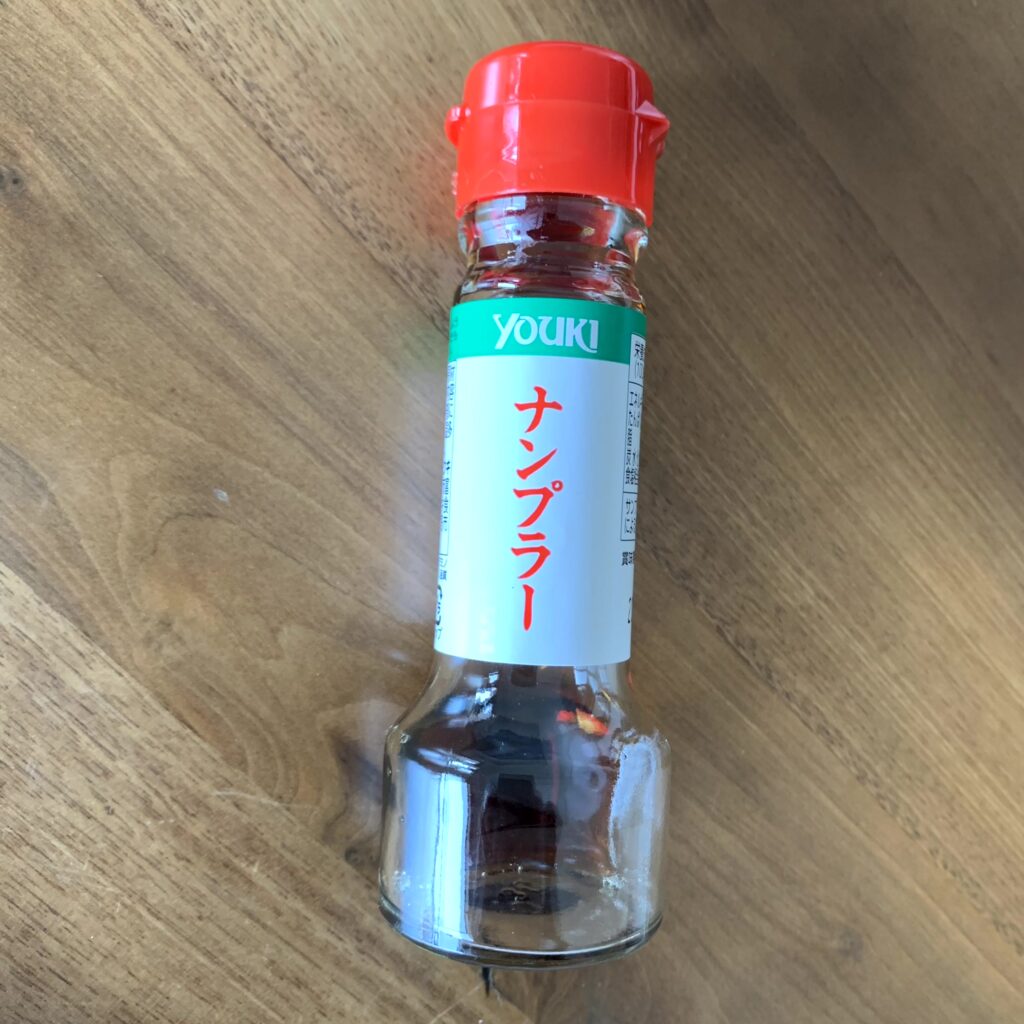
Ingredients:
- Ground Pork: 200g
- Bell Pepper (or Paprika): 40g
- Zucchini: 40g
- Eggplant: 40g
- Garlic: 8g (sliced)
- Toban-djan (Chili Bean Paste): 3g
- Sesame Oil: 5g
- Fresh Basil: 6–10 leaves
- Eggs: 2 (for fried eggs)
- Cooked Rice: 280g
- Lime: For garnish
- Seasoning Mix (☆):
- Nam Pla (Fish Sauce): 10g
- Oyster Sauce: 5g
- Chicken Stock Powder: 1g
- Sugar: 3g
- Soy Sauce: 3g
A Note on Peppers: In Japan, “Peeman” (green bell peppers) are small, slightly bitter, and usually eaten cooked. “Paprika” is larger, thicker, sweeter, and can be eaten raw. A Note on Rice: I use Japanese rice, but using Thai rice or Jasmine rice will provide a more authentic experience.
How to make Gapao Rice (Thai basil stir-fry)
- Remove the stems and seeds from the peeman (bell peppers).
- Cut off the ends of the zucchini and eggplant.
- Dice the peeman, zucchini, and eggplant into 5mm cubes.
- Peel and slice the garlic.
- In a frying pan, add garlic, toban-djan, and oil. Heat over low heat until fragrant.
- Add the ground pork and stir-fry until the color changes.
- Add the diced vegetables and stir-fry until softened.
- Add the seasoning mix (☆) (Nam Pla, oyster sauce, chicken stock, sugar, and soy sauce) and stir-fry briefly to combine.
- Add the basil leaves at the very end and turn off the heat immediately.
- Fry the eggs (sunny side up).
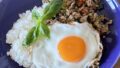
- Serve the Gapao mixture and the fried egg over the rice.
- Squeeze fresh lime over the dish right before eating. Enjoy!
📖Related Link: Read the Japanese version of this article here! [簡単ガパオライス(タイバジル炒め)]


コメント