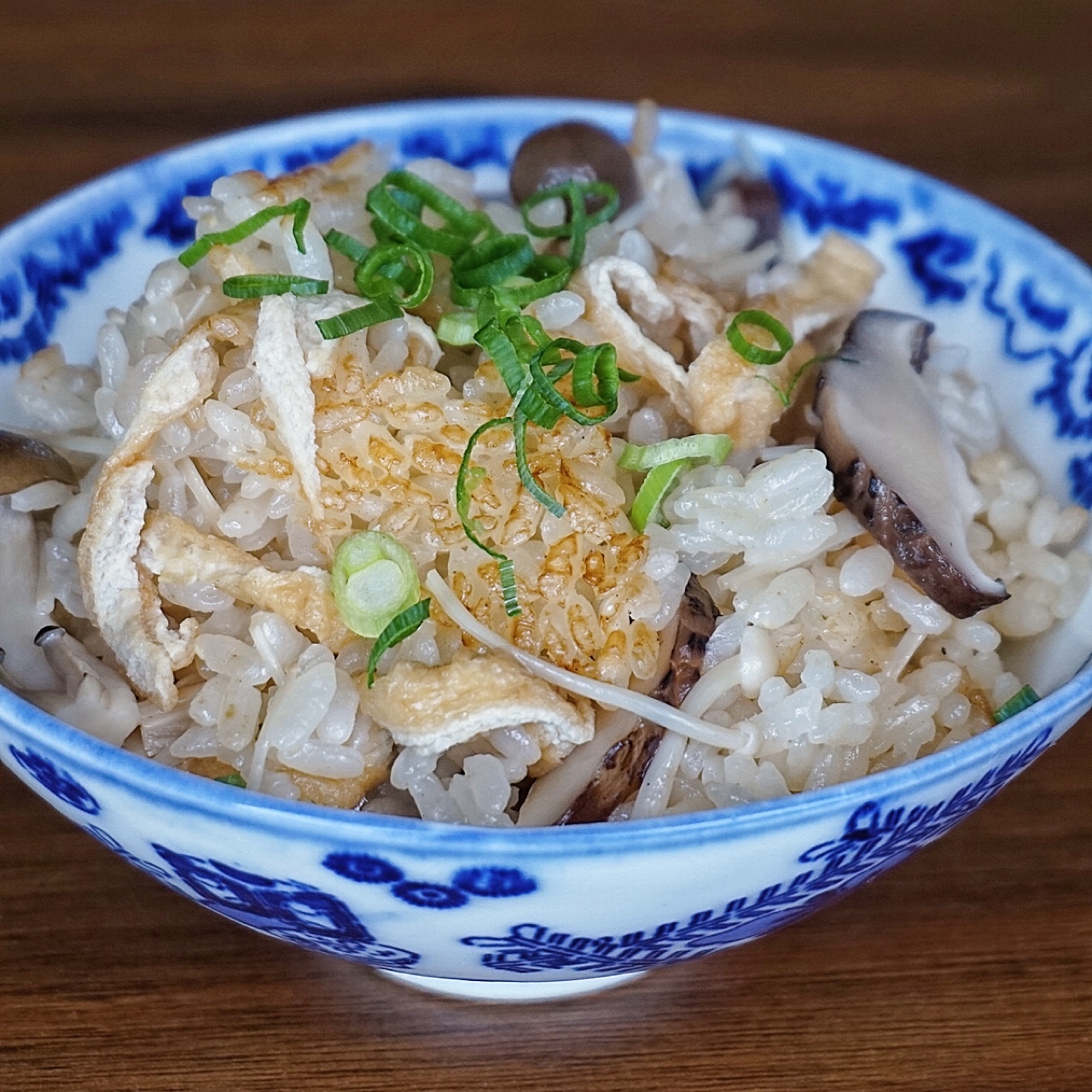
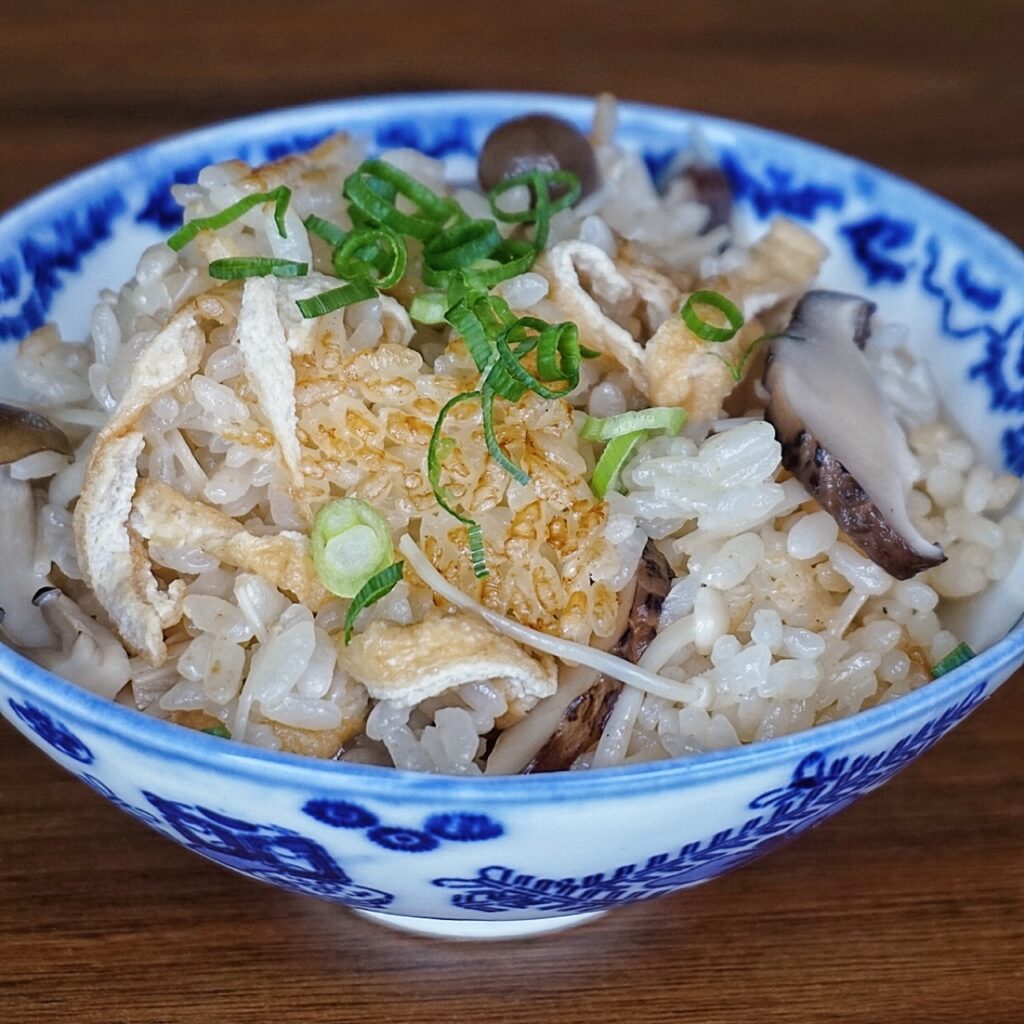
Kinoko Gohan (Mushroom Rice): A Savory, Umami-Packed Seasonal Delight
“Takikomi gohan”—rice cooked with seasonal ingredients—is a timeless Japanese staple loved by all ages. There are no strict rules: the beauty lies in pairing seasonal meats and vegetables to enjoy the distinct flavors of every time of year. Because it remains delicious even after cooling, it is also a perfect option for bento boxes or picnic rice balls.
Autumn is the absolute best season for takikomi gohan, packed with an abundance of ideal ingredients. While naturally sweet sweet-potato rice and chestnut rice are hard to resist, mushroom rice (“kinoko gohan”) is an absolute must-try for its irresistible aroma and unique texture.
To maximize the natural flavor of the mushrooms, this recipe keeps the seasoning simple with just dashi broth and soy sauce. The secret to creating a rich, deep flavor is combining several types of mushrooms with different textures and aromas. My personal favorite trio is Oita Prefecture’s specialty dried shiitake (donko), combined with enoki and shimeji mushrooms.
Feel free to mix and match your favorite mushrooms and give it a try!
Nutritionist’s Advice: The Power of Mushrooms
Mushrooms have been a staple of the Japanese diet since ancient times. They are low in calories but packed with nutrients that modern diets often lack.
- Vitamin D and Dietary Fiber: They are rich in Vitamin D, which supports bone health, and dietary fiber, which helps maintain a healthy gut environment.
- Don’t Lose the Water-Soluble Nutrients: Mushrooms contain B vitamins and potassium, which dissolve easily in water. By making “Takikomi Gohan,” the rice absorbs all those dissolved nutrients, allowing you to enjoy the full nutritional benefits!
- Boost Umami by Freezing or Drying: Freezing or drying mushrooms breaks down their cell walls, producing “guanylic acid,” a powerful umami component. This is the secret behind why dried shiitake mushrooms are so incredibly flavorful.
Pro Tip: Try “Sun-Drying” :Most store-bought dried shiitake mushrooms are heat-dried indoors, meaning their vitamin D is still “asleep.” Before using them, place them in direct sunlight gill-side up for about 30 to 60 minutes. Exposure to UV light triggers vitamin D production, boosting their nutritional value multi-fold!
Golden Ratio for Water Amount in Rice Cooking by Rice Type (For 320g of Rice)
- Basic Formula: Water (ml) = Weight of rice (g) × 1.4 (e.g., 320g × 1.4 = 448ml)
| Rice Type | Water Ratio | Water Amount (for 320g Rice) |
|---|---|---|
| Standard Rice | 1.4x | 448ml |
| New-crop Rice (Shinmai) | 1.0x (equal) | 320ml |
| Rinse-free Rice (Musenmai) | 1.5x | 480ml |
The Golden Ratio for Seasoning Takikomi Gohan
When making takikomi gohan (seasoned rice cooked with ingredients), the biggest headache is often getting the seasoning right. Have you ever felt like your rice turned out too bland, or maybe too salty, leaving you with a dish that just didn’t hit the spot?
In professional kitchens and food science, the ideal flavor threshold—the sweet spot where rice tastes most delicious—is widely considered to be a 0.7% salt concentration relative to the final weight of the cooked rice.
While “0.7%” might sound tricky to calculate, you only need to remember one of these two simple rules of thumb:
- Based on raw rice weight: 1.5% salt
- Based on total liquid weight (water + liquid seasonings): 1.0% salt
For 1 Cup of Rice (150g), 14g of Soy Sauce is the Golden Ratio!
For example, when cooking 1 cup of raw rice (150g), the required amount of salt is roughly 2.25g. If you get all that salt strictly from standard regular soy sauce (which is about 16% salt), it comes out to exactly 14g (a little over 3/4 tablespoon).
When in doubt about your seasoning, start by using this “14g of soy sauce per 1 cup of rice” as your baseline!
If you’re using a generous amount of ingredients—like in mushroom rice—you can add a bit more soy sauce or adjust the flavor by adding dashi powder, just like in this recipe.
INGREDIENTS (Serves 2 cups of rice)
- New crop rice: 2 cups (320g)
- Dried Shiitake Mushrooms: 2 pieces (reserve the soaking liquid)
- Shimeji Mushrooms: 30g
- Enoki Mushrooms: 30g
- Abura-age (Fried Tofu): 1 piece (13g)
- Green Onions: 15g (for garnish)
[Seasonings & Dashi for Cooking]
- Soy Sauce: 30g (A 50/50 blend of light and dark soy sauce is recommended!)
- Sake: 20g
- Dashi Stock Granules: 5g
- Water (combined with Shiitake soaking liquid): Water: 320ml
Step-by-Step Guide
1. Rehydrate the Dried Shiitake Mushrooms Soak the dried shiitake mushrooms in water ahead of time (as a guide: ~20 minutes at 20°C / ~40 minutes at 10°C).
- Quick Tip: If you are in a rush, soak them in lukewarm water with a small pinch of sugar to speed up the process. Note: Avoid using boiling water, as high temperatures destroy their aroma and umami!
2. Prep the Ingredients
- Rice: Wash the rice, drain it in a mesh strainer, and let it sit.
- Dried Shiitake: Gently squeeze out excess liquid (be sure to save the soaking liquid!), remove the tough stem ends, and slice the caps.
- Shimeji & Enoki Mushrooms: Trim off the roots and separate them into small clusters. Cut the enoki in half lengthwise to make it easier to eat.
- Aburaage (Deep-fried Tofu Pouch): Slice thinly into 5mm strips.
- Note on Maitake Mushrooms: If you decide to add maitake, cooking them directly with rice can sometimes turn the rice a dark, greyish color. To keep your rice looking bright and clean, quickly blanch the maitake in boiling water before adding it.
3. Set in the Rice Cooker & Cook
- In the inner pot of your rice cooker, add the washed rice, the reserved shiitake liquid plus enough extra water to reach the line, soy sauce, sake, and dashi powder. Stir gently to mix.
- Once the liquid is mixed, layer the shiitake, shimeji, enoki, and aburaage evenly on top of the rice. Press the start button.
2 Golden Rules for Cooking Success!
- Add seasonings right before cooking: Salt and soy sauce increase osmotic pressure, preventing rice grains from absorbing water properly. Leaving rice in seasoned water for too long leads to hard, dry rice—so start cooking immediately after adding seasonings.
- Do NOT mix the toppings into the rice: After stirring the seasonings into the water, simply place the toppings on top. This ensures the rice beneath absorbs water evenly throughout.
4. Finish & Serve Once cooked, open the lid and use a rice paddle to gently toss and fluff the rice from the bottom up. Scoop into bowls, garnish with finely chopped green onions, and enjoy!
Nutrition Facts (Total Value)
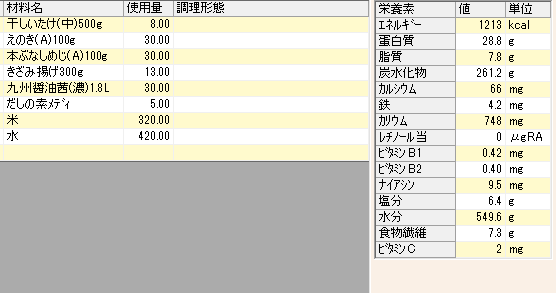
- Calories: 1213 kcal
- Protein: 28.8 g
- Total Fat: 7.8 g
- Total Carbohydrates: 261.2 g
- Salt Equivalents: 6.4 g
Related articles
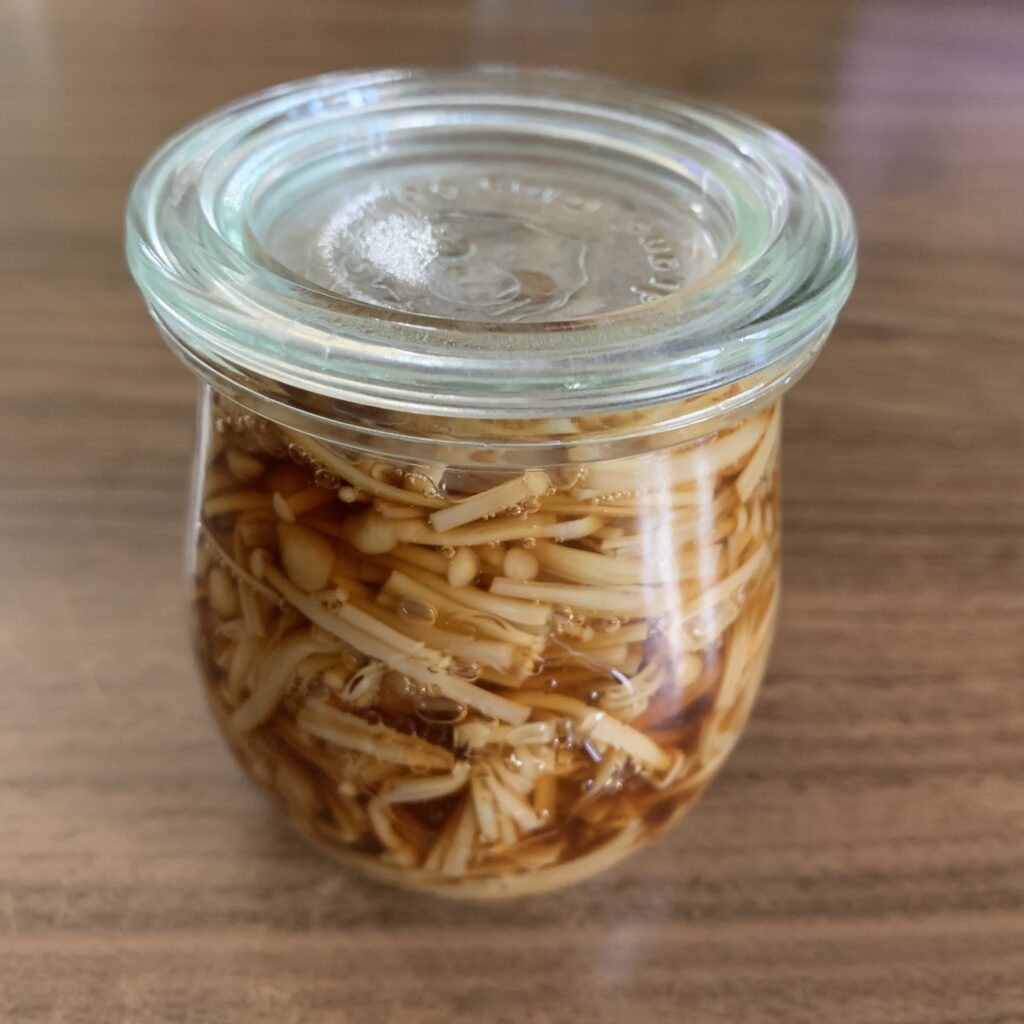
If you’re wondering what to do with leftover enoki mushrooms, I highly recommend making homemade nametake (soy-braised mushrooms)! Be sure to check out this recipe. 【How to Make Homemade Nametake】
Read the Japanese version of this article here! [【秋を味わう】旨味たっぷりきのこご飯]

コメント