

🌸 Renkon: The Beautiful & Lucky Lotus Root
The Lotus Root is the edible rhizome (underground stem) of the lotus plant. In Japanese culture, it is far more than just a vegetable; it is a symbol of foresight and good fortune.
🧧 Cultural Significance
- A Clear Future: Because of its unique holes, it is said that you can “see through to the future.” This makes it a staple in Osechi-ryori (Japanese New Year food).
- Family Prosperity: Since the plant produces many seeds, it is also a symbol of fertility and the health of future generations.

🥗 Culinary Versatility & Texture
One of the most exciting things about Renkon is how its texture transforms based on how you cook it:
| Cooking Method | Resulting Texture | Recommended Dishes |
| Thinly Sliced | Crispy & Light | Lotus root chips, salads |
| Quick Sauté/Stir-fry | Crunchy | Kinpira (sweet & salty stir-fry) |
| Deep-fried | Airy & Savory | Tempura |
| Simmered | Starchy & Tender | Chikuzenni (braised vegetables) |
| Grated | Mochi-like & Sticky | Renkon Manju (steamed dumplings) |
🌿 Health & Beauty Benefits
- Vitamin C: Great for skin health and immune support.
- Dietary Fiber: Promotes healthy digestion.
- Tannins: Contains polyphenols that have antioxidant properties.
🔪 Pro-Tips for Preparation
- Prevent Discoloration: Lotus root oxidizes quickly. To keep it white and beautiful, soak slices in water with a splash of vinegar for a few minutes immediately after cutting.
- The Perfect Slice: For consistent, paper-thin slices (ideal for chips), use a high-quality slicer.Recommendation: Kyocera’s ceramic slicers are highly recommended. They are affordable, incredibly sharp, and won’t rust.
🌍 What International Cooks Want to Know (Extra Tips)
To help people who are new to Renkon, here are three points they often search for:
- Selection: Look for roots that are heavy, firm, and have a light tan skin. Avoid any with dark soft spots or bruises.
- Edibility: Yes, the skin is edible after a good scrub, but most people prefer to peel it with a vegetable peeler for a cleaner look and better texture.
- Storage: If you bought a whole root, wrap it in a damp paper towel and put it in a plastic bag in the fridge. If it’s already sliced, keep it submerged in water in a container (change the water daily).
🥢 Mastering Lotus Root: A Collection of Exquisite Recipes
🍠 Depachika-Style: Sweet Potato & Lotus Root with Black Vinegar
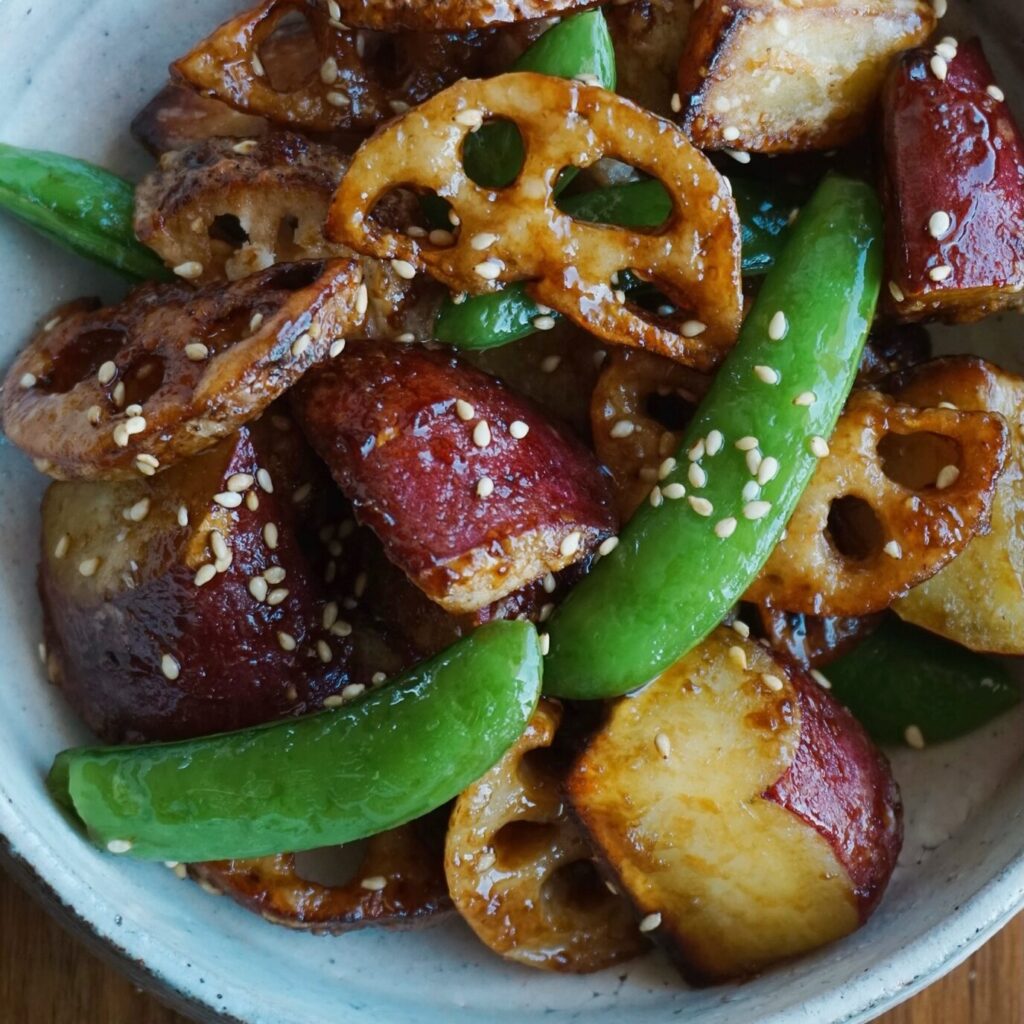
This authentic Japanese side dish offers a sophisticated balance of flavors, reminiscent of high-end department store food halls (Depachika).
- The Secret: Coat the vegetables in potato starch and pan-fry them to ensure a long-lasting crunch. The mellow acidity of black vinegar creates a satisfying main dish, even without meat.
- Pro Tip: Keep the skins on for maximum nutrition! Add snap peas for a pop of green to make the dish visually stunning.
- Adaptation: Add chicken or pork to increase the volume for a heartier meal.
[Get the Recipe 👉 Sweet and Sour “Amazu” Glazed Sweet Potato & Lotus Root ]
🌸 Curried Lotus Root Chips (The Ultimate Vegan Snack)
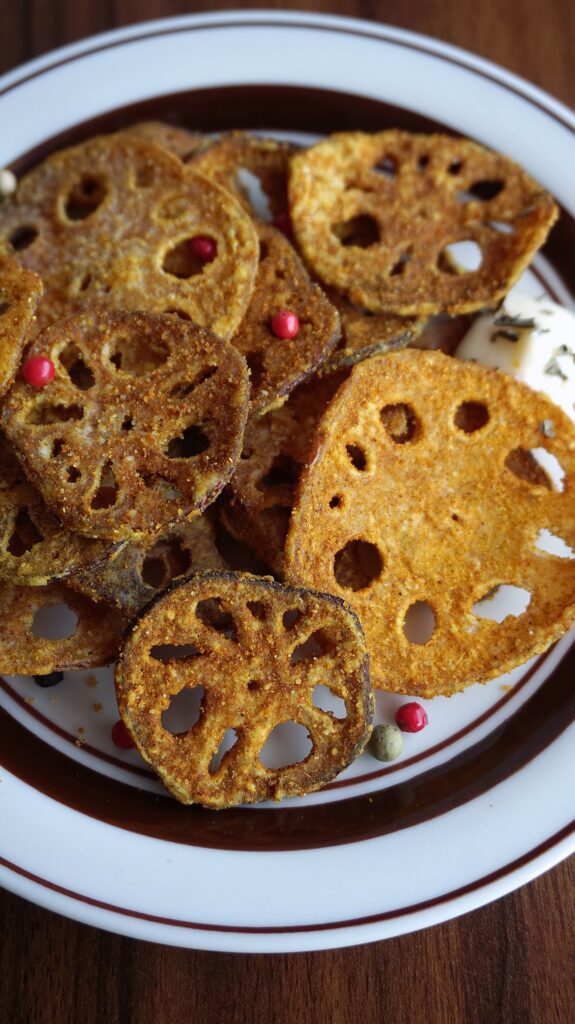
A spicy, addictive snack that outperforms traditional potato chips.
- The Secret: Slicing the lotus root into 2mm paper-thin rounds creates a professional-grade crunch. Simply toss them in a bag with curry powder and herb salt for an instant hit.
- Pro Tip: The ultimate key to avoiding greasiness is to wipe off every drop of moisture before frying.
- Best Served: Pair with a cold beer or highball. These are a guaranteed crowd-pleaser for vegan parties.
[Get the Recipe 👉 Crunchy Lotus Root Curry Chips: The Ultimate Vegan Otsumami ]
✂ Stuffed Lotus Root: The “Shaki-Shaki” Main Dish
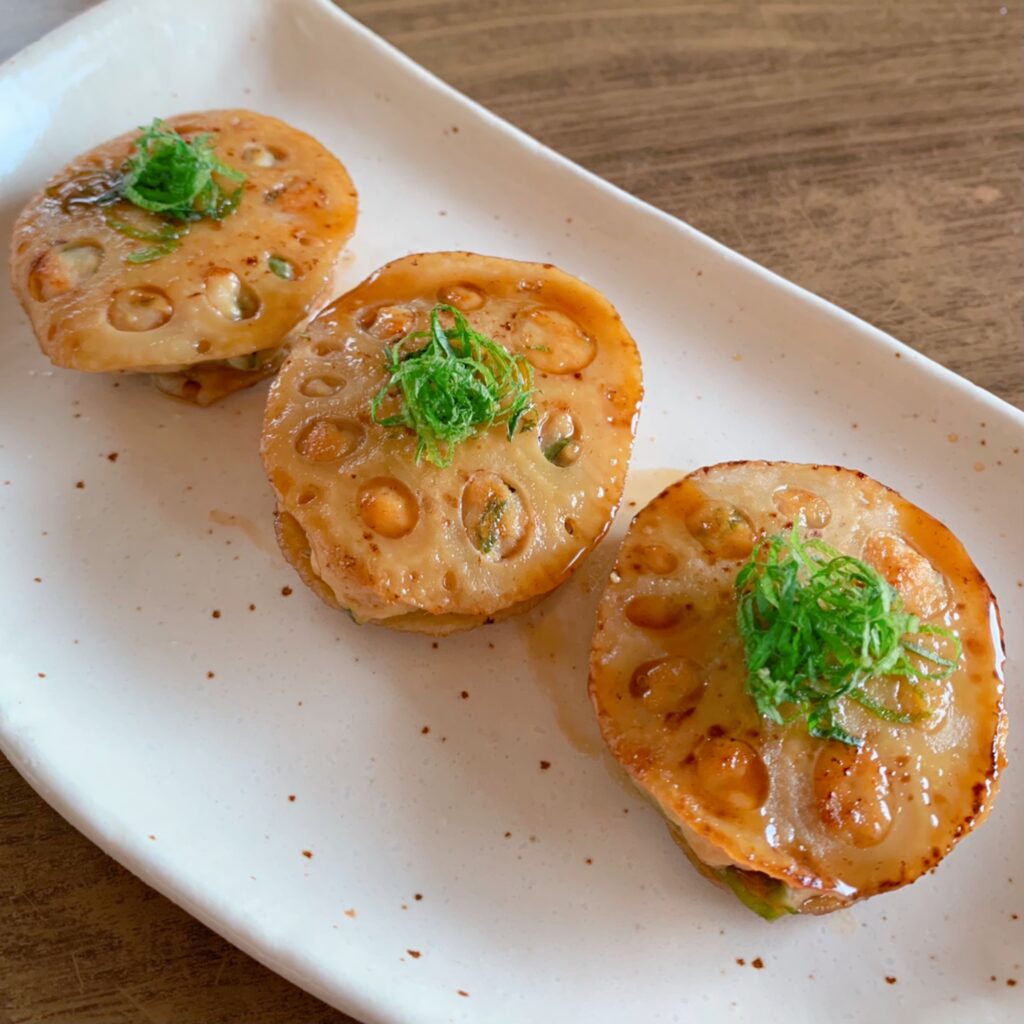
The star of any bento box, featuring a delightful textural harmony.
- The Secret: Mix minced chicken with perilla leaves (shiso) and ginger for a refreshing aroma. Finish with a sweet and savory glaze (soy sauce, sugar, vinegar, and sake) that pairs perfectly with rice.
- Pro Tip: Press the lotus root slices firmly so the meat filling anchors into the holes. Use potato starch as “glue” to lock in the meat’s juices.
- Adaptation: Deep-fry them to make “Hasami-age”! If frying, try serving with just a pinch of rock salt to highlight the natural sweetness of the lotus root.
[Get the Recipe 👉 Renkon hasamiyaki (Lotus root mince sandwich)]
🥗 Hijiki & Lotus Root Mayo Salad
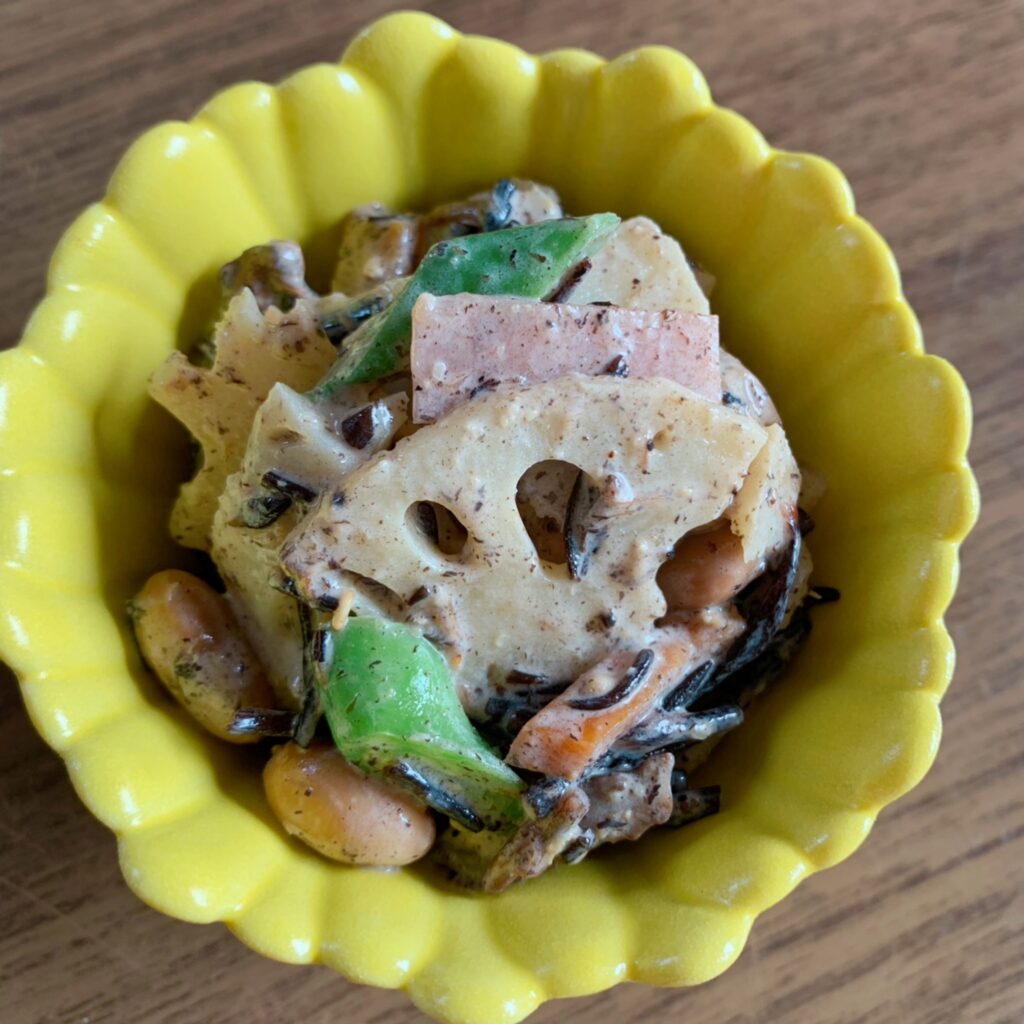
A modern remake of a traditional simmered dish transformed into a creamy, savory salad.
- The Secret: First, simmer the hijiki seaweed, carrots, and lotus root in soy sauce and sugar until the flavor penetrates the core. Once cooled, toss with ham, mayonnaise, and ground sesame seeds.
- Pro Tip: Cook down the simmering liquid completely. This prevents the salad from becoming watery and ensures a rich, concentrated flavor when mixed with mayo.
- The Experience: Enjoy the rhythmic contrast between the crunchy lotus root and the tender hijiki. Add edamame or snap peas for extra color.
[Get the Recipe 👉 Dried Hijiki Seaweed Mayonnaise Salad]
📖Related Link: Read the Japanese version of this article here! [日本のレンコンガイドとレシピ]
れんこん #蓮根レシピ #おうちごはん #旬の野菜 #常備菜 #LotusRoot #JapaneseFood #HealthyRecipe #レンコン



コメント