Yamaimo (Japanese Mountain Yam): Types, Recipes & Health Benefits
Have you ever tried Japanese yamaimo? Known for its unique sticky texture and mild flavor, yamaimo is a popular root vegetable in Japanese cooking. It can be enjoyed raw, grated, grilled, or cooked in a variety of dishes.
In English, yamaimo is commonly called Japanese mountain yam. However, Japan has several varieties of yamaimo, each with its own texture, flavor, and culinary uses.
In this guide, you’ll discover what yamaimo is, how to identify its different varieties, its nutritional benefits, and delicious Japanese yamaimo recipes you can easily try at home.
What Is Yamaimo?
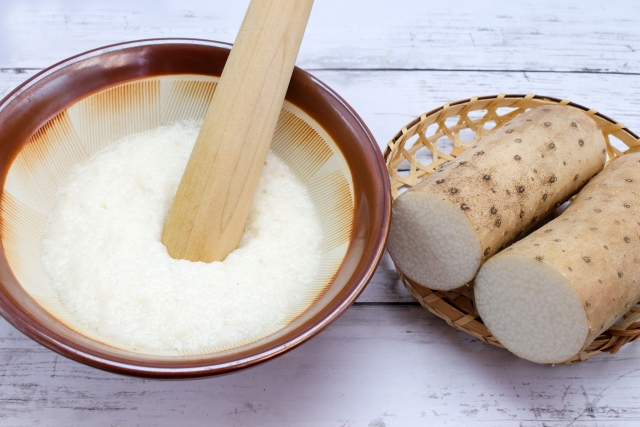
Yamaimo (山芋) is a general Japanese name for edible yams belonging to the genus Dioscorea, in the family Dioscoreaceae.
It is often translated as Japanese mountain yam or Japanese yam. Depending on the variety and context, you may also encounter the English name Chinese yam.
Yamaimo is a popular ingredient in Japanese cuisine because of its distinctive sticky texture. Unlike potatoes and sweet potatoes, many Japanese yams can be eaten raw.
They are delicious in many forms, from crunchy slices to smooth, grated yam called tororo.
What Is Yamaimo Called in English?
The English name depends on the variety:
- Yamaimo: Japanese mountain yam or Japanese yam.
- Nagaimo: Japanese long yam, often also called Chinese yam.
- Jinenjo: Japanese native wild yam or Japanese mountain yam.
- Yamato-imo: A Japanese variety of yam, sometimes sold under the name Japanese mountain yam.
These names can overlap in English, so knowing the Japanese variety names is helpful when looking for a specific type.
4 Types of Japanese Yamaimo
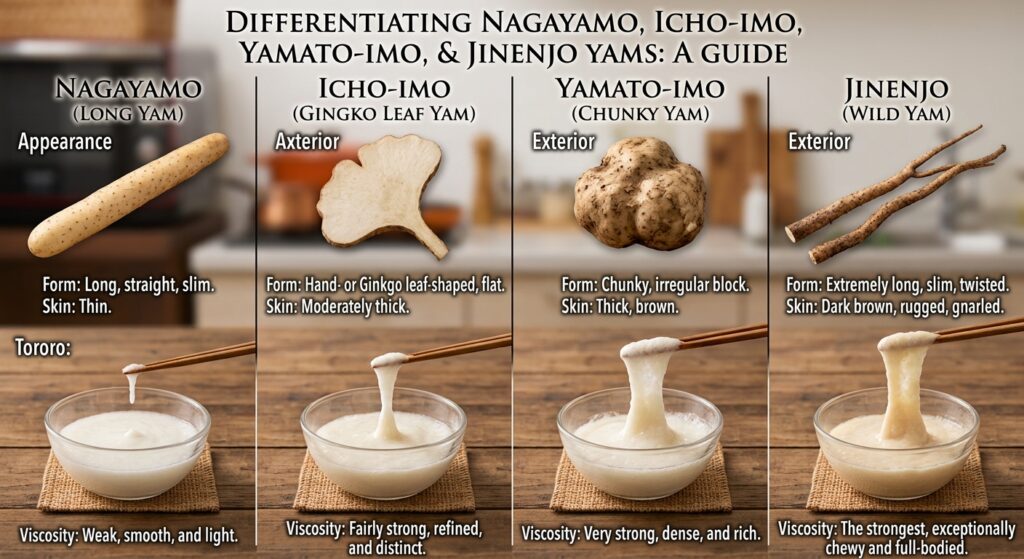
There are four commonly recognized types of yamaimo in Japanese cooking: Nagaimo, Icho-imo, Yamato-imo, and Jinenjo.
Each variety has a different shape, moisture content, and degree of stickiness.
1. Nagaimo (Long Yam)
Shape: Long and cylindrical.
Characteristics: High water content with a mild flavor and relatively light stickiness.
How to enjoy it: Nagaimo is the most commonly available variety in Japanese supermarkets. It can be eaten raw for a refreshing, crunchy texture or cooked until tender and fluffy.
It is especially delicious in salads, stir-fries, and grilled dishes.
2. Icho-imo (Ginkgo-shaped Yam)
Shape: Flat and fan-shaped, resembling a ginkgo leaf.
Characteristics: Generally thicker and stickier than nagaimo.
How to enjoy it: Icho-imo is often grated to make tororo, a smooth and sticky topping for rice or noodles.
In some regions, it is sold under the name Yamato-imo, so the names can sometimes be confusing.
3. Yamato-imo (Japanese Yam)
Shape: Round, irregular, and often knobby.
Characteristics: Dense flesh with relatively low moisture content and strong stickiness.
How to enjoy it: Its rich, sticky texture makes it ideal for grated yam dishes such as tororo and Japanese-style teppanyaki. It is also delicious in deep-fried dishes such as isobe-age.
4. Jinenjo (Japanese Native Wild Yam)
Shape: Long and slender, usually with dark-colored skin.
Characteristics: A traditional Japanese wild yam known for its distinctive aroma, rich flavor, and strong stickiness.
How to enjoy it: Jinenjo is highly valued for making premium tororo dishes. It is less commonly available and often more expensive than other varieties.
In traditional Japanese food culture, it has also been appreciated as a nourishing food.
Best Japanese Yamaimo Recipes
One of the best things about yamaimo is its versatility.
Depending on how you prepare it, you can enjoy three very different textures: crunchy, smooth and sticky, or soft and fluffy.
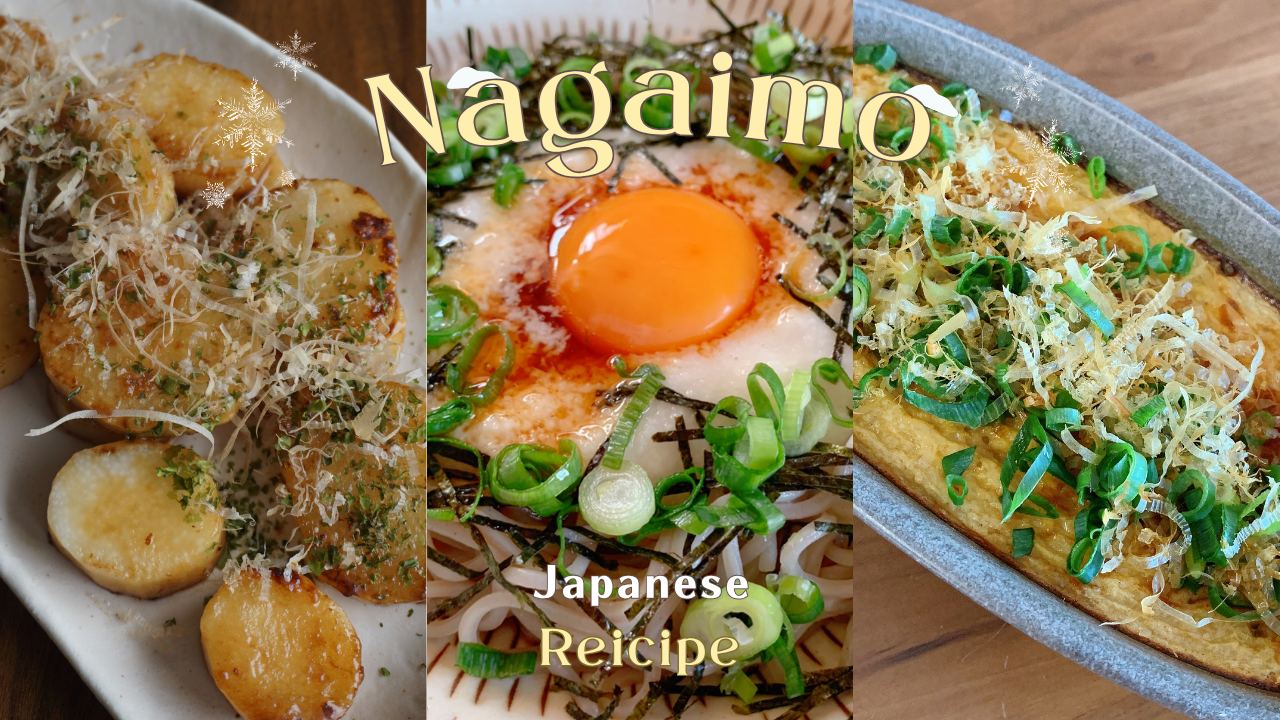
Here are three delicious Japanese recipes that showcase the unique characteristics of yamaimo.
1. Nagaimo Steak (Japanese Yam with Butter Soy Sauce)
Enjoy the delicious contrast between a lightly crisp exterior and a tender, crunchy center.
This nagaimo steak is pan-fried in butter and finished with fragrant soy sauce. Bonito flakes and aonori (dried green laver) add extra Japanese umami flavor.
It’s an easy Japanese side dish made with simple ingredients and is perfect as a snack or accompaniment to rice.
Nagaimo Steak (Yam with Butter Soy Sauce)

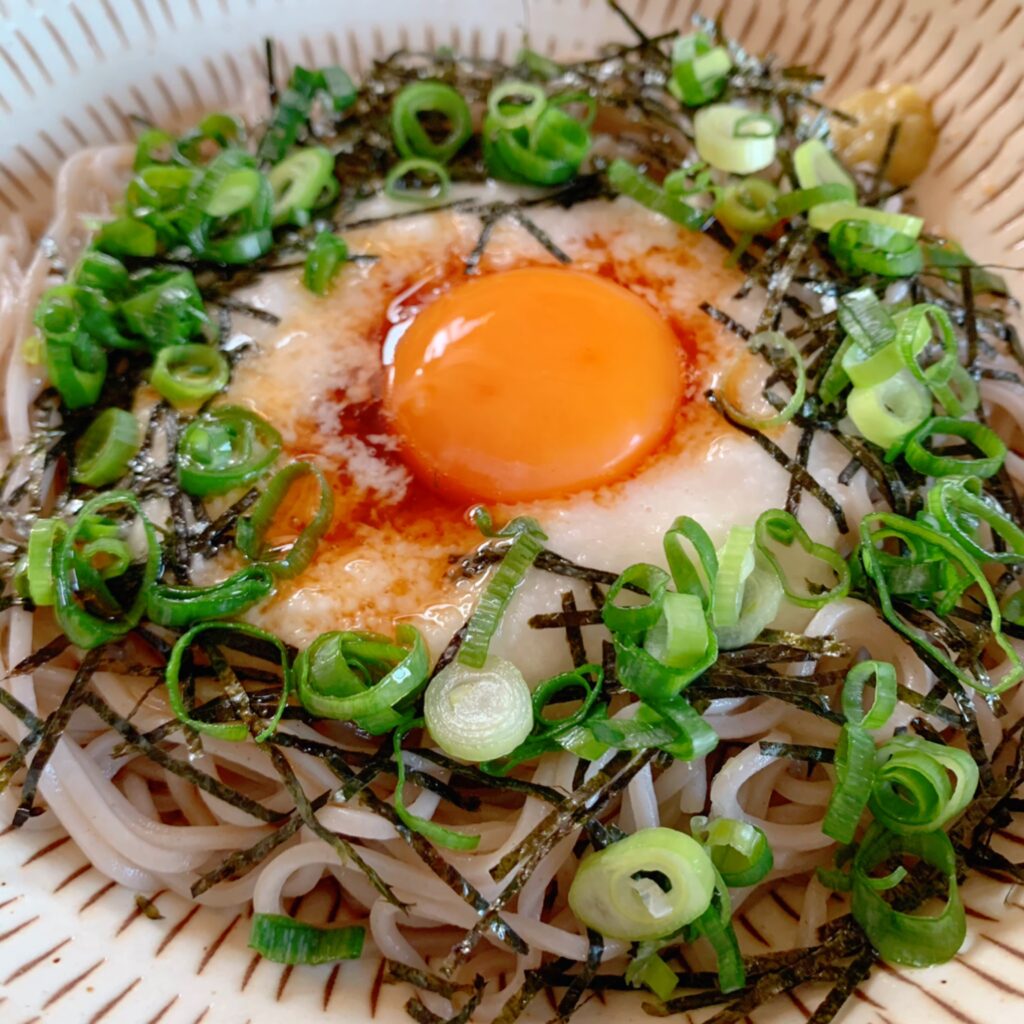
2. Tororo Soba (Soba Noodles with Grated Japanese Yam)
Tororo soba is a classic Japanese noodle dish featuring chilled soba noodles topped with freshly grated yamaimo.
The smooth, creamy texture of the grated yam pairs beautifully with the chewy buckwheat noodles.
This recipe is served with homemade tsuyu (Japanese noodle sauce), a rich egg yolk, crisp green onions, and shredded nori.
It is a refreshing yet satisfying meal, especially during warmer months.
Tororo Soba (Grated Yam with Soba Noodles)
3. Grated Yam Teppanyaki (Japanese Tororo Gratin)
If you love fluffy and creamy dishes, this grated yam teppanyaki is a must-try!
Made with grated yamaimo and cooked without flour, this Japanese-style dish develops a wonderfully soft and airy texture.
It looks a little like okonomiyaki, but the texture is much lighter and creamier. It is a popular izakaya-style dish that is surprisingly easy to make at home.
Grated Yam Teppanyaki (Easy Japanese Tororo Gratin)

Can You Eat Japanese Yamaimo Raw?
Yes! One of the most distinctive characteristics of Japanese yamaimo is that it can be enjoyed raw.
Unlike regular potatoes and sweet potatoes, which are generally cooked before eating, varieties such as nagaimo are commonly eaten fresh in Japan.
Grated yamaimo, known as tororo, is a particularly popular way to enjoy it.
Yamaimo contains amylase, an enzyme that helps break down starch into smaller carbohydrates. This enzyme is sensitive to heat, so some of its activity may be reduced during cooking.
However, cooked yamaimo is also delicious and provides a different texture and eating experience.
Here are some popular ways to enjoy it:
- Raw and crunchy: Slice nagaimo into sticks or thin rounds for salads and side dishes.
- Grated and smooth: Make tororo and serve it over rice or soba noodles.
- Grilled and tender: Pan-fry slices with butter and soy sauce.
- Soft and fluffy: Mix grated yam into Japanese-style teppanyaki dishes.
Nutrition and Health Benefits of Yamaimo
Yamaimo is a nutritious root vegetable that provides carbohydrates, dietary fiber, potassium, and other nutrients.
Its nutritional composition varies depending on the variety and preparation method.
1. Amylase and Starch Digestion
Yamaimo contains amylase, an enzyme involved in breaking down starch.
This is one reason why raw grated yam is traditionally enjoyed alongside rice and noodles in Japanese cuisine.
However, the amount of enzyme activity varies, and eating yamaimo does not guarantee improved digestion.
2. Dietary Fiber for Digestive Health
Yamaimo contains dietary fiber, which contributes to normal bowel function and helps support digestive health.
Including a variety of fiber-rich vegetables in your daily diet is a good way to maintain a balanced eating pattern.
3. Potassium for Fluid Balance
Yamaimo provides potassium, an essential mineral that helps regulate fluid balance and supports normal muscle and nerve function.
Adequate potassium intake is an important part of a healthy diet.
4. A Versatile Source of Energy
Like other root vegetables, yamaimo contains carbohydrates that provide energy.
Its mild flavor and versatility make it easy to incorporate into everyday meals, whether served raw, grilled, or cooked.
Enjoy the Unique Taste of Japanese Yamaimo
From crunchy nagaimo steak to smooth tororo soba and fluffy grated yam teppanyaki, Japanese yamaimo offers many delicious ways to enjoy this traditional root vegetable.
Each variety has its own texture and characteristics, making it an interesting ingredient to explore in Japanese cooking.
If you’ve never tried yamaimo before, start with nagaimo. Its mild flavor and refreshing crunch make it an easy introduction to this unique Japanese vegetable!
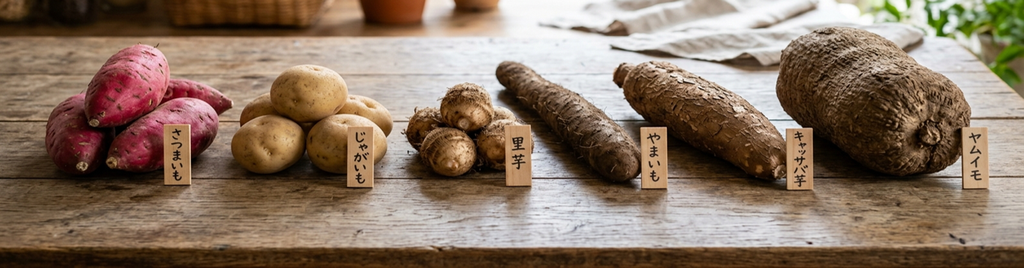
Note: There are four main types of root vegetables eaten in Japan: sweet potatoes, white potatoes, taro, and Japanese mountain yams.
Overseas, other varieties are also consumed, such as cassava (in Brazil and Indonesia) and yams (in Africa and Oceania).
Read the Japanese version of this article here:【長芋ガイド:日本の山芋を使った最高のレシピと効能】

コメント