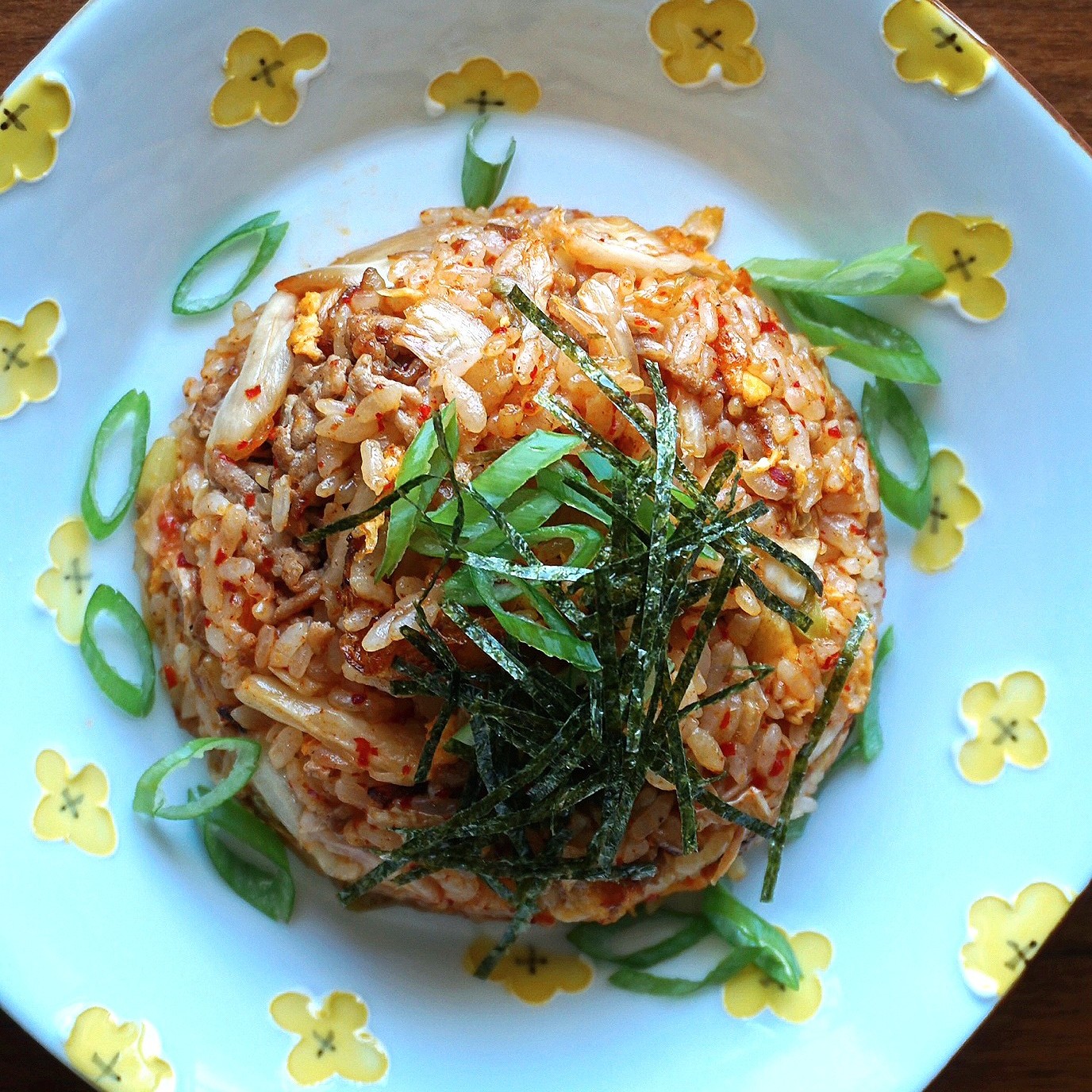
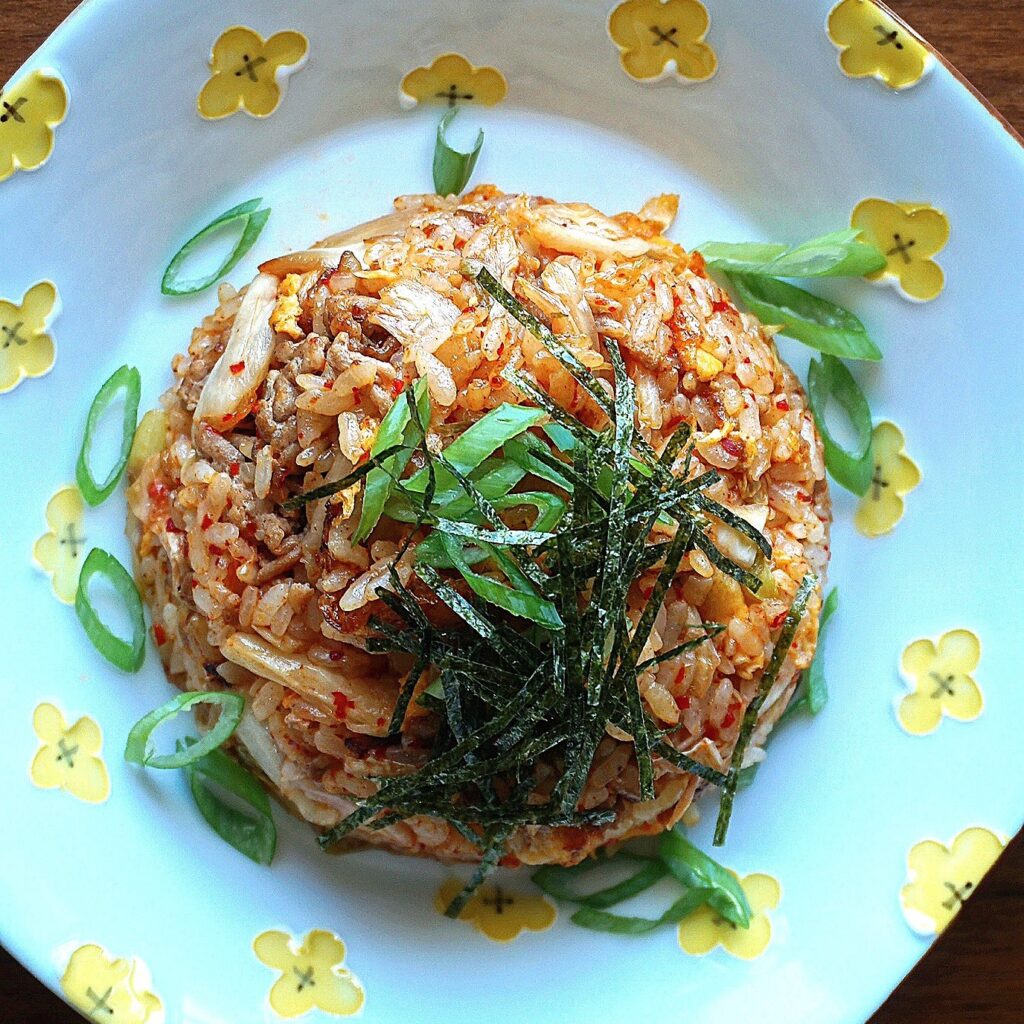
- What is Japanese-Style Kimchi Fried Rice (Kimchi Chahan)?
- This is the most important point in recreating Ohsho’s kimchi fried rice!
- Professional Tips for “Para-Para” (Fluffy & Separated) Rice at Home
- Gyoza no Ohsho Copycat Kimchi Fried Rice Ingredients & Nutrition Facts
- Step-by-Step Guide: How to Achieve the Perfect Golden Texture
- Love Spicy Food? Explore More Flavorful Kimchi Variations
What is Japanese-Style Kimchi Fried Rice (Kimchi Chahan)?
~Deliciously spicy and addictive! The appeal of kimchi fried rice.~
Fried rice originated in China and has become a beloved staple in Japan, where it is also known as “Yakimeshi.” While the standard version is typically made with eggs, ham, and vegetables seasoned with chicken stock or soy sauce, the “Kimchi” variation is incredibly popular across all generations due to its perfect balance of acidity and spice.
This recipe is inspired by the Kimchi Fried Rice at the famous restaurant “Gyoza no Ohsho,” designed to bring out the full depth of flavor from the ground pork and kimchi.
This is the most important point in recreating Ohsho’s kimchi fried rice!
While standard fried rice recipes often call for ham or char siu (barbecue pork), using ground pork is the ultimate key to replicating the iconic flavor of Gyoza no Ohsho. As it cooks, the ground pork releases highly flavorful fat that coats the rice, adding a deep, savory richness you can’t get from pre-cooked meats.
By gently frying the Gochujang (Korean chili paste) and sesame oil with aromatics like garlic and ginger at the very beginning, we dissolve the fat-soluble flavor compounds. This blooming process creates a savory, restaurant-quality umami base that coats every single grain of rice, reducing the need for excess salt while delivering maximum satisfaction!
Professional Tips for “Para-Para” (Fluffy & Separated) Rice at Home
Warm vs. Cold: How to Prep Your Rice to Prevent Stickiness
Tip for the perfect texture: Use slightly cooled or room-temperature rice
While using a high-heat iron wok is ideal, you can achieve professional results on a standard home stove and frying pan by following these key points:
- Warm Rice: Spread it out on a tray for about 10 minutes to let it cool. This allows excess moisture to evaporate and prevents the rice from becoming sticky.
- Cold/Refrigerated Rice: Microwave for 2–3 minutes before frying. Slightly warm rice absorbs oil more evenly than cold rice, resulting in a fluffier texture.
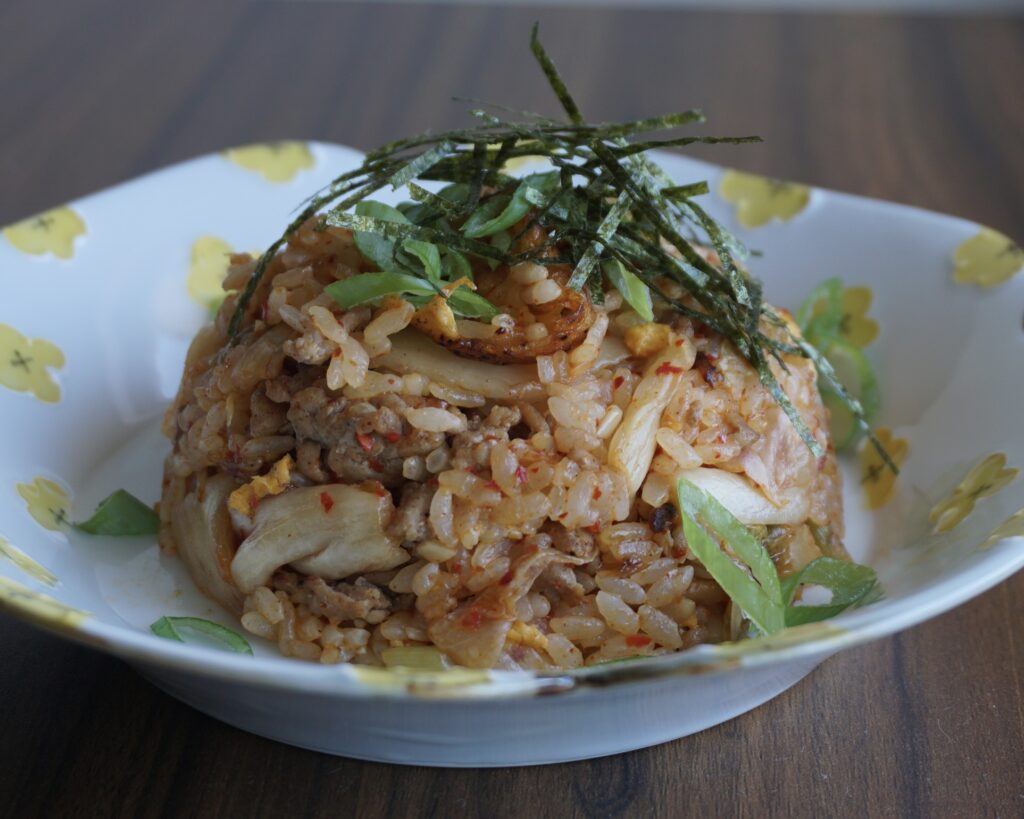
Never Lift the Pan! The Golden Rule for Maintaining High Heat at Home
The “Don’t Shake the Pan” Rule:
Home stoves lose heat quickly if the pan is lifted. Keep the pan on the burner and use a spatula to mix the ingredients with a “cutting” motion to maintain the high temperature needed for that perfect texture.
Gyoza no Ohsho Copycat Kimchi Fried Rice Ingredients & Nutrition Facts
Ingredients (Serves 2–3)
- Cooked Rice: 400g
- Green Onion (White part): 50g (roughly minced into 1cm pieces)
- Ground Pork: 150g
- Eggs: 110g (approx. 2 large eggs)
- Kimchi: 150g (Yoshinoya Kimchi is recommended)
- Aromatics: Garlic 3g, Ginger 3g (both finely minced)
- Seasonings:
- Sesame Oil: 5g
- Gochujang (Korean Chili Paste): 3g
- Chicken Stock Powder: 4g
- Dark Soy Sauce: 10g
- Sake (Japanese Rice Wine): 10g
Nutrition Facts
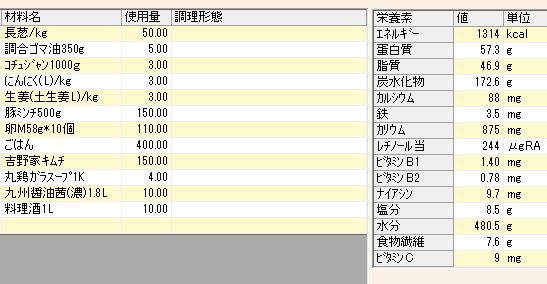
Here is the nutritional breakdown for the total recipe and per serving (when divided into 2 servings):
| Nutrients | Total Recipe (approx. 2-3 servings) | Per Serving (when divided by 2) |
| Calories | 1,314 kcal | 657 kcal |
| Protein | 57.3g | 28.7g |
| Fat | 46.9g | 23.5g |
| Carbohydrates | 172.6g | 86.3g |
| Salt Equivalent | 8.5g | 4.3g |
Note: This dish is very satisfying and perfect for a high-energy meal. If you are watching your salt intake, you can adjust the amount of kimchi or soy sauce slightly.
Step-by-Step Guide: How to Achieve the Perfect Golden Texture
Watch the tutorial video here (Shorts):
The aroma of the aromatic vegetables and the rich fat of the minced pork are slowly brought out!
- Release the Aromas: Add sesame oil, gochujang, garlic, ginger, and green onions to the pan. Sauté over low heat until fragrant.
- Cook the Meat: Add the ground pork (pork mince) and cook until browned.
⚠️ Pro-Tip to Avoid Soggy Rice: Make sure to sauté the pork thoroughly until the meat is fully cooked and the released fat runs clear. If the meat still has too much moisture when you add the rice, your fried rice will turn out soggy rather than beautifully fluffy and distinct!
Toss & Crisp
- Add the Eggs: Push the ingredients to one side of the pan. Pour the beaten eggs into the empty space and scramble until soft-set.
- Final Toss: Add the warm rice, followed by the chicken stock powder, soy sauce, sake, and kimchi. Stir-fry quickly until the rice is golden and the grains are beautifully separated.
💡 The Golden Rule: Pour Seasonings Directly Over the Rice! When adding your liquid seasonings (like soy sauce and sake), make sure to pour them directly onto the rice, rather than over the egg or the meat. Here is why:
- Don’t pour on the egg: Contact with salty seasonings will cause the eggs to discolor, losing their bright, beautiful yellow contrast.
- Don’t pour on the meat: If the meat absorbs all the seasonings, the rice itself will taste bland, making the overall dish feel under-seasoned.
Seasoning the rice directly ensures that every grain is perfectly coated with savory flavor. This gives you that instant, punchy “Ohsho-style” deliciousness with every single bite!
Love Spicy Food? Explore More Flavorful Kimchi Variations
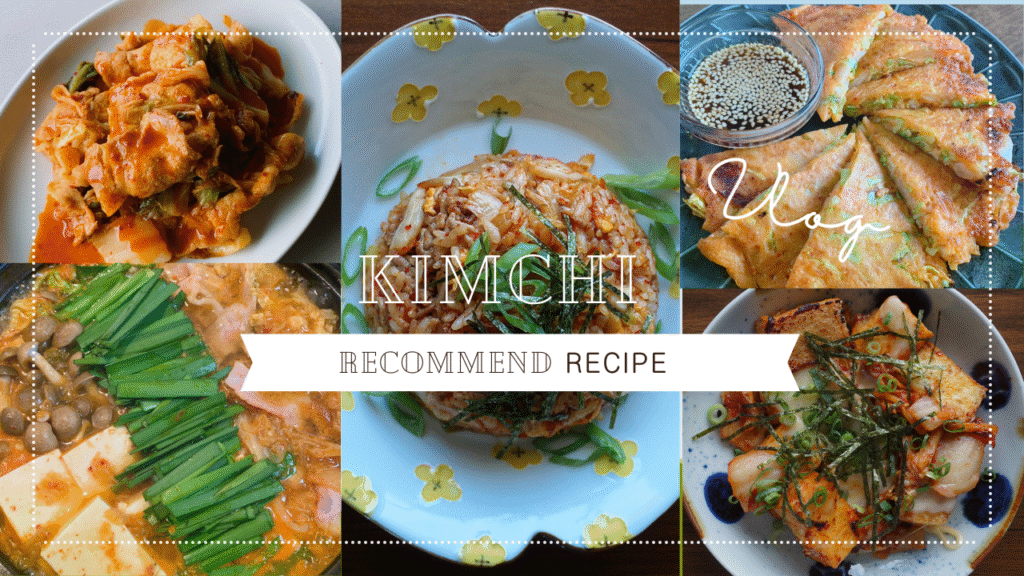
Want more Kimchi inspiration? Check out my roundup of recommended recipes using Kimchi here! Each article has detailed instructions. Kimchi Love: 6 Must-Try Recipes for Spicy Food Fans
Read the Japanese version of this article here! [【プロの味を再現】餃子の王将風キムチ炒飯の絶品レシピ!]


コメント