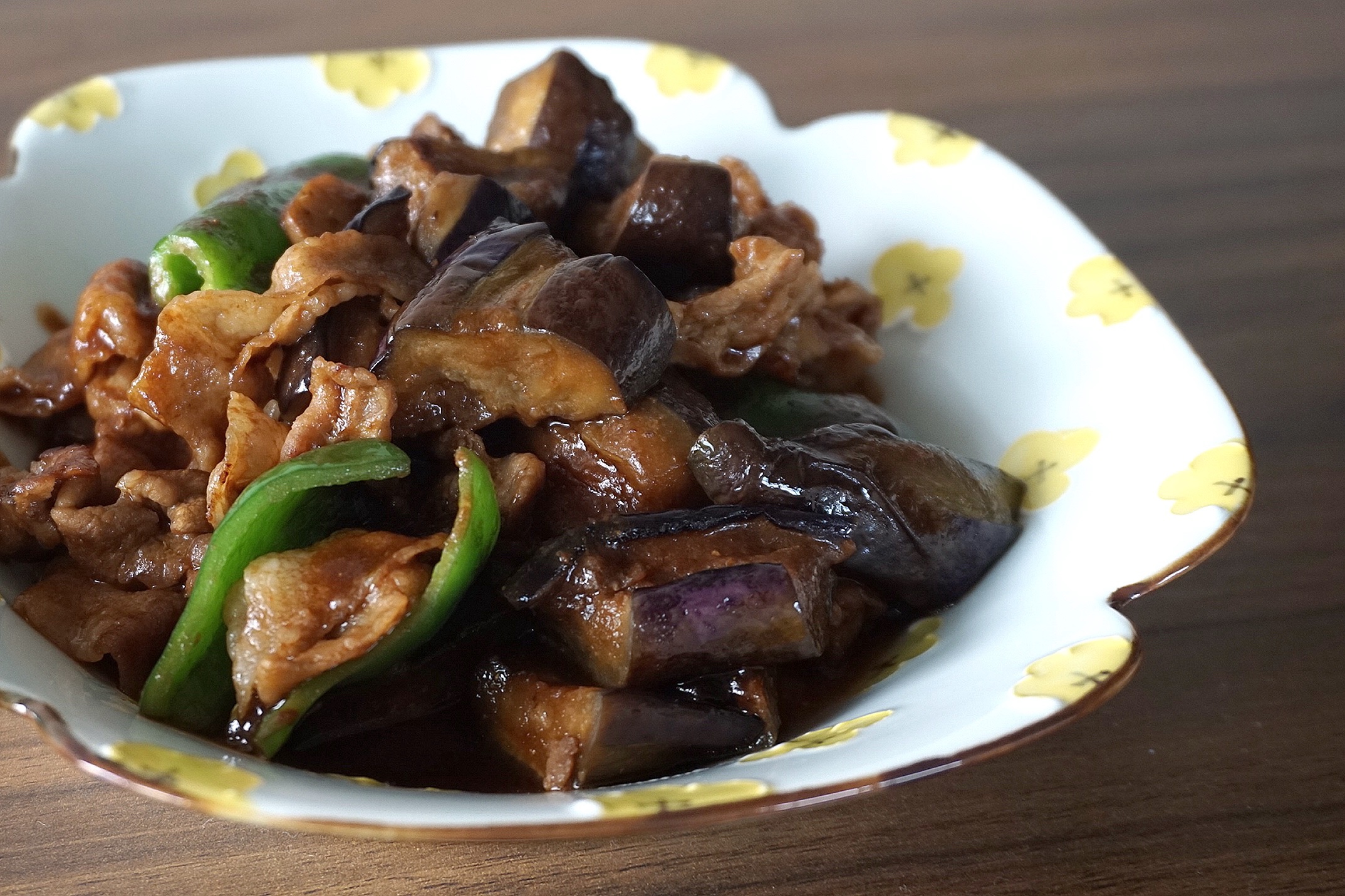
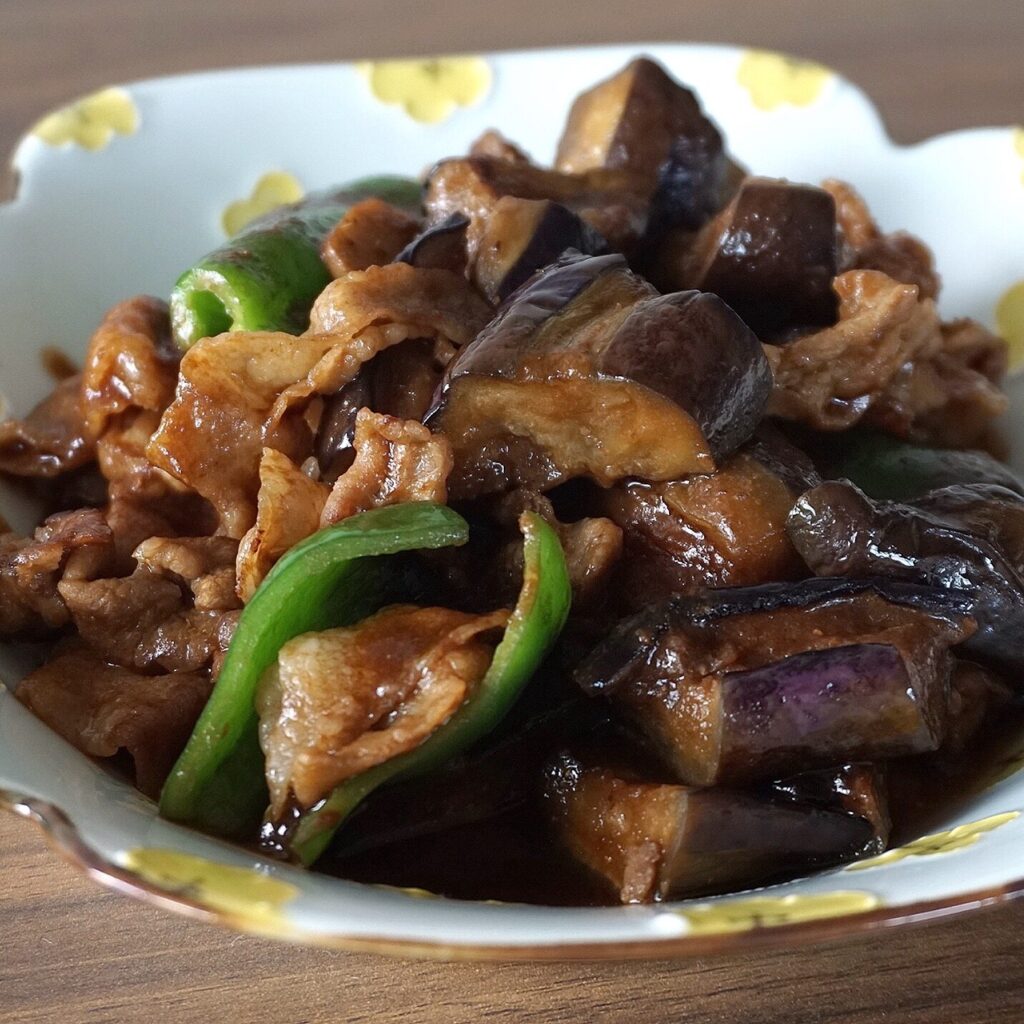
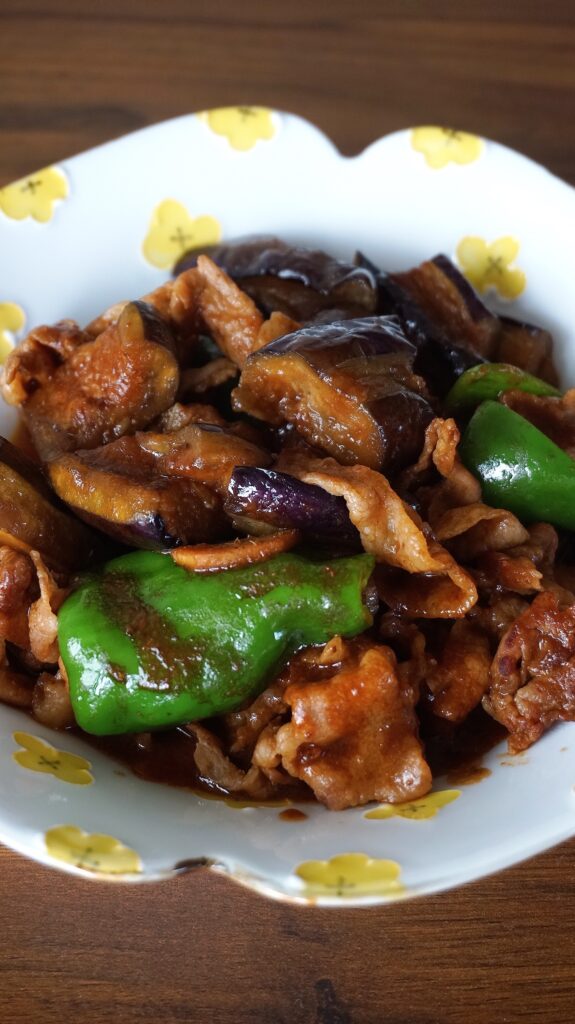
Easy Spicy Miso Eggplant and Pork Stir-Fry (Nasu Miso Itame) Recipe
- Nasu (ナス) = Eggplant
- Miso Itame (味噌炒め) = A stir-fry cooked with miso
This dish features pork, eggplant, and green bell peppers stir-fried in fragrant sesame oil and seasoned with a rich miso sauce. Packed with fresh eggplants and green peppers—both at their peak flavor during summer—it brings a wonderful taste of the season to your table.
Rather than a typical Japanese restaurant menu item, this is a quintessential style of home-cooked comfort food (“ofukuro no aji” / “mom’s home cooking”) frequently served in Japanese households during the summer.
Japanese summers are notoriously hot and humid. Pork is exceptionally rich in vitamin B1, which helps combat fatigue, making this the perfect stamina-boosting meal to power through the summer heat.
The Magic of Eggplants & My Recipe’s Special Twist
Eggplants act like a sponge, absorbing oils and savory flavors with ease. As they soak up the rich sesame oil and rendered fat from the pork, they develop a deliciously crispy, fragrant exterior and a soft, melt-in-your-mouth interior.
What makes my recipe unique is the addition of ginger and gochujang, which gives it a subtle, appetizing spicy kick. The sweet, savory, and aromatic sauce pairs wonderfully with warm white rice!
- What is Gochujang?Gochujang is a fermented Korean condiment made from glutinous rice, fermented soybeans (kojified), and chili spices. It is an essential ingredient in dishes like bibimbap, yangnyeom (sweet and spicy fried) chicken, and bibim-guksu (spicy cold mixed noodles). It balances both sweetness and heat, offering a milder, smoother spice compared to doubanjiang (Szechuan chili bean paste).
- Fermented Miso & Flavor DepthMiso is a traditional Japanese fermented condiment made from soybeans (and sometimes barley or rice) that adds deep, savory umami to dishes. Depending on the type of miso you use—such as white miso (sweet and mild), red miso (rich and robust), or awase miso (a blended mix)—the flavor profile changes noticeably. Because my recipe leans toward a savory, spicy flavor profile, red miso works exceptionally well!
For my everyday cooking, I personally use miso produced by Fundokin.
Visit the Official Fundokin Website
Local Regional Inspiration: “Koneri”
Eggplant and miso are a match made in heaven. Another dish I highly recommend is Koneri, a traditional local specialty from Oita Prefecture made with eggplant and bitter melon (goya). Be sure to check out the recipe if you enjoy this dish!
“Koneri” Recipe: Stir-Fried Eggplant and Bitter Melon with Miso

Nutritional Information (Per Serving)
| Nutrient | Amount |
|---|---|
| Energy (Calories) | 484 kcal |
| Protein | 28.3 g |
| Fat | 27.0 g |
| Carbohydrates | 31.3 g |
| └ Sugars | 24.3 g |
| └ Dietary Fiber | 7.0 g |
| Salt Equivalent | 3.0 g |
Ingredients (3 Servings)
- Pork shoulder loin: 120 g
- Eggplant: 260 g
- Green bell peppers: 60 g (trimmed weight without stems and seeds)
- Grated ginger: 5 g
- Sesame oil: 15 g
☆ Sauce Mixture
- Miso (blended / awase miso): 20 g
- Gochujang: 5 g
- Sugar: 5 g
- Sake (Japanese cooking wine): 20 g
Cooking Instructions
- Prep the eggplant:
- Trim off the stem caps (the hard tip) of the eggplants.
- Peel the skin slightly with a vegetable peeler if desired, or peel away any brown or hard spots. Peeling a few strips of skin helps the eggplant absorb the oil and flavor better!
- Cut the eggplants into generous, bite-sized wedge cuts (rangiri). If you are concerned about astringency, soak them in water for about 3 minutes. This removes bitterness and prevents discoloration.
- Prep the bell peppers:
- Slice off the stems and remove the seeds from the green bell peppers.
- Cut each pepper into 4 to 6 pieces.
- Start frying:
- Place the pork, eggplant, grated ginger, and sesame oil into a skillet or wok, and turn on the heat.
- Once the eggplant becomes tender and soft, add the bell peppers and stir-fry briefly.
- Mix the sauce:
- In a small bowl, thoroughly mix the miso, gochujang, sugar, and sake together. Make sure the miso is completely dissolved into a smooth paste with no lumps.
- Combine & finish:
- Pour the sauce mixture into the skillet. Stir continuously over high heat to coat all ingredients evenly.
- Once the excess liquid cooks off and thickens around the ingredients, turn off the heat and serve! Enjoy!

コメント