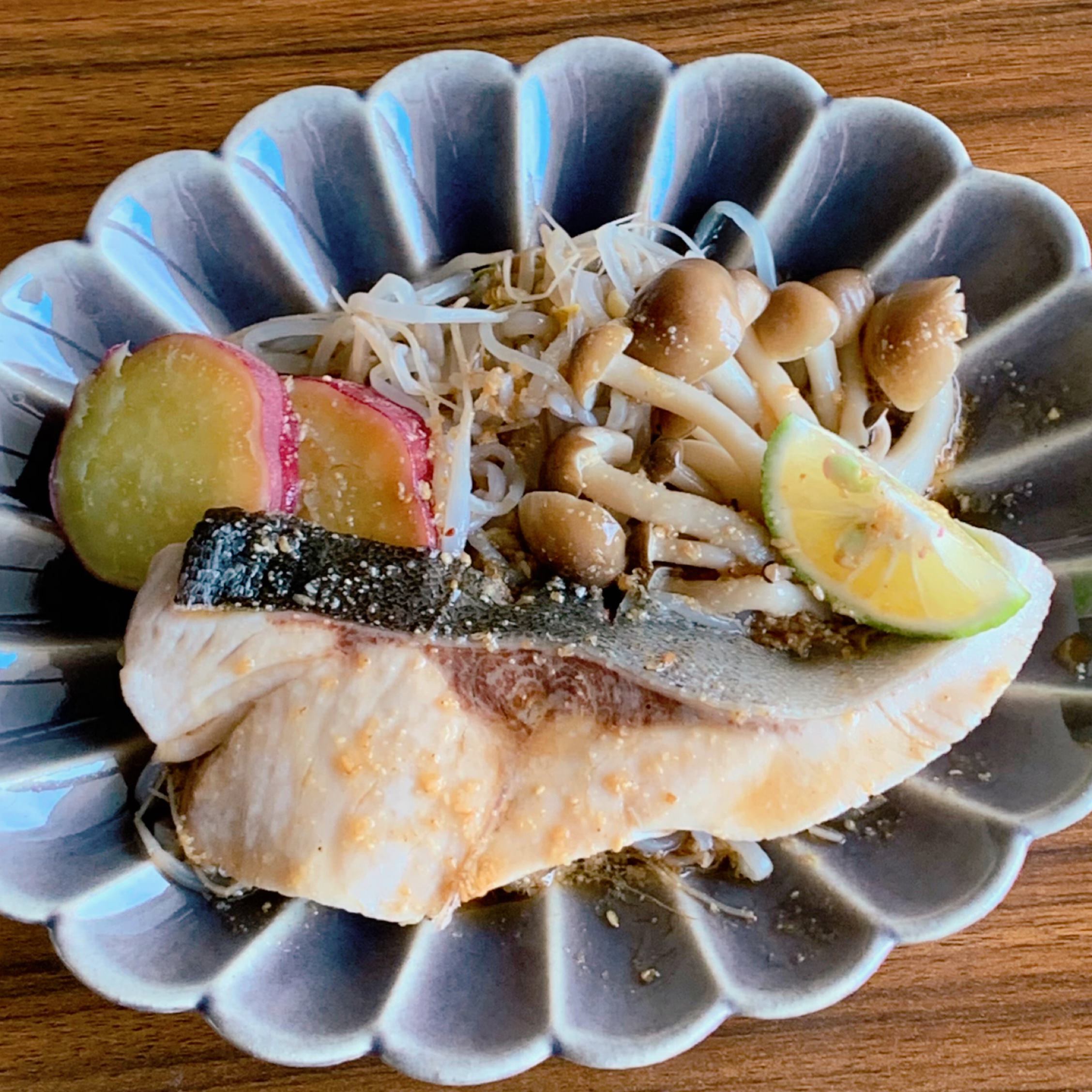
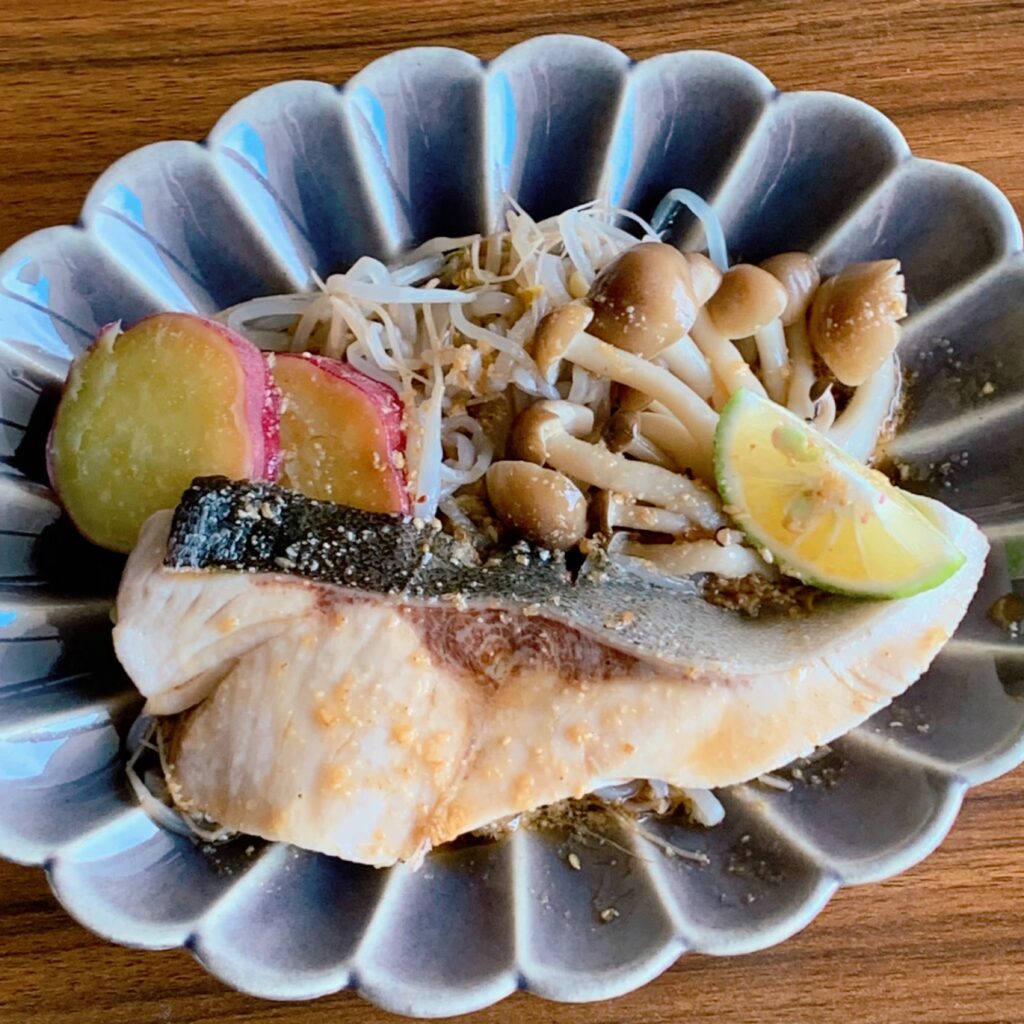
Plump & Tender! Sake-Steamed Yellowtail (Buri Sakamushi)
Buri Yasai Sakamushi is a traditional Japanese dish that uses Seishu (refined sake) to steam ingredients. This method harnesses the unique properties of sake to eliminate fishy odors while locking in moisture, resulting in a plump and tender texture.
While Buri (Yellowtail) is a winter staple, this recipe is highly versatile—try it with cod, mackerel, chicken breast, or shrimp!
📋 Nutrition Facts (Per Serving); Buri Sakamushi
| Calories | Protein | Fat | Carb | Salt Equivalent |
| 284 kcal | 18.2 g | 14.1 g | 22.8 g | 1.8 g |
🛒 Ingredients (2 Servings); Buri Sakamushi
- Yellowtail (Buri): 140g
- Salt: 1g (for prepping the fish)
- Sweet Potato: 100g
- Bean Sprouts: 100g
- Shimeji Mushrooms: 80g
- Steaming Liquid: 200g Water + 50g Japanese Sake (Seishu recommended)
- The Sauce: 20g Ponzu, 3g Ground Sesame, 1g Chili Oil (Ra-yu)
- Garnish: 30g Kabosu (or Lime/Lemon)
🔪 Buri Sakamushi Preparation & Cooking
- Prep the Buri: Rub salt onto the yellowtail and let it sit for a few minutes. This draws out excess moisture and residual odors.
- Prep the Vegetables: Slice the sweet potato into rounds and soak in water for 5 minutes. Wash the bean sprouts and trim the ends off the shimeji mushrooms.
- Arrange: Pour the water into a pressure cooker and set a stainless steel steamer basket inside. Layer the vegetables first, place the yellowtail on top, and sprinkle the sake over everything.
- Pressure Cook: Heat over medium. Once the cooker reaches pressure (you hear the “hissing” sound), turn off the heat immediately.
- Depressurize: Wait for the pressure to release naturally. This gentle finish ensures the fish remains plump rather than becoming tough.
- Serve: Mix the ponzu, ground sesame, and chili oil. Drizzle the sauce over the dish and finish with a squeeze of fresh Kabosu.
💡 Pro-Tips for Success
Why Sake is Essential
Cooking sake is generally categorized into three types: Seishu (for drinking), salt-free cooking sake, and salted cooking sake. Using a high-quality Seishu provides a much better aroma than salted versions.
- The Power of Sake: Through the azeotropic effect, alcohol carries away unpleasant odors as it evaporates. Additionally, the organic acids in sake neutralize alkaline fishiness, while its natural sugars help flavors penetrate the ingredients.
- Texture: Sprinkling sake on meat or fish increases moisture retention, making the texture significantly softer after cooking.
What is Chili Oil (Ra-yu)?
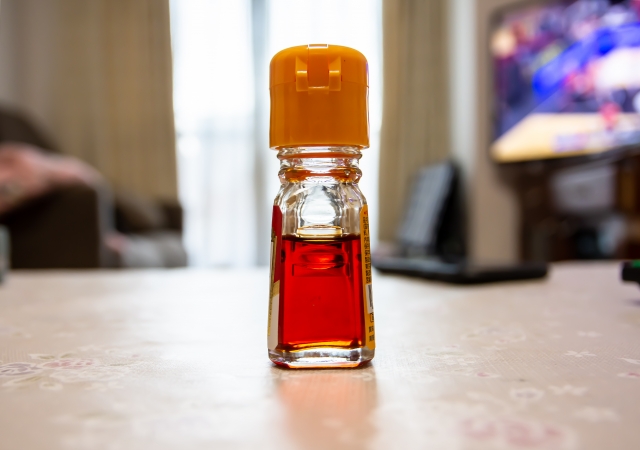
Originating in China, Ra-yu is typically made by heating oil with aromatics like green onions, ginger, and peppers, then infusing it with chili flakes.
- Uses: It is an essential accent for gyoza, Mapo Tofu, and Dan Dan noodles.
- Substitute: If you can’t find it, you can create a similar seasoning by soaking chili flakes in warm sesame oil.
The Magic of the Pressure Cooker
Yellowtail tends to toughen if cooked for too long. Using a pressure cooker drastically shortens the cooking time, keeping the fish succulent.
- No pressure cooker? You can achieve great results using a tightly lidded frying pan or a microwave-safe steamer.
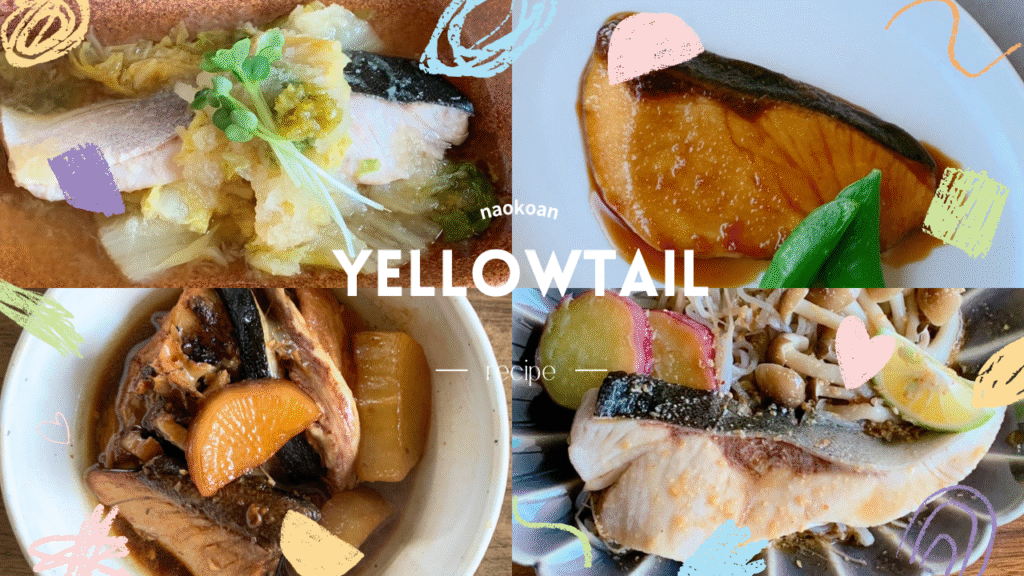
Winter Buri is famous for being fatty and juicy—a true icon of Japanese winter cuisine. The combination of the refreshing ponzu and the spicy kick of chili oil creates the perfect balance for this rich fish! 👉 [The Ultimate Yellowtail (Buri) Recipe Collection]
📖Related Link: Read the Japanese version of this article here! []
Yellowtail #Buri #ぶり #JapaneseFood #Washoku #YellowtailRecipe #ぶりレシピ #HomeCooking #HealthyEating #JapaneseCuisine #Seafood #おうちごはん #FishRecipe

コメント