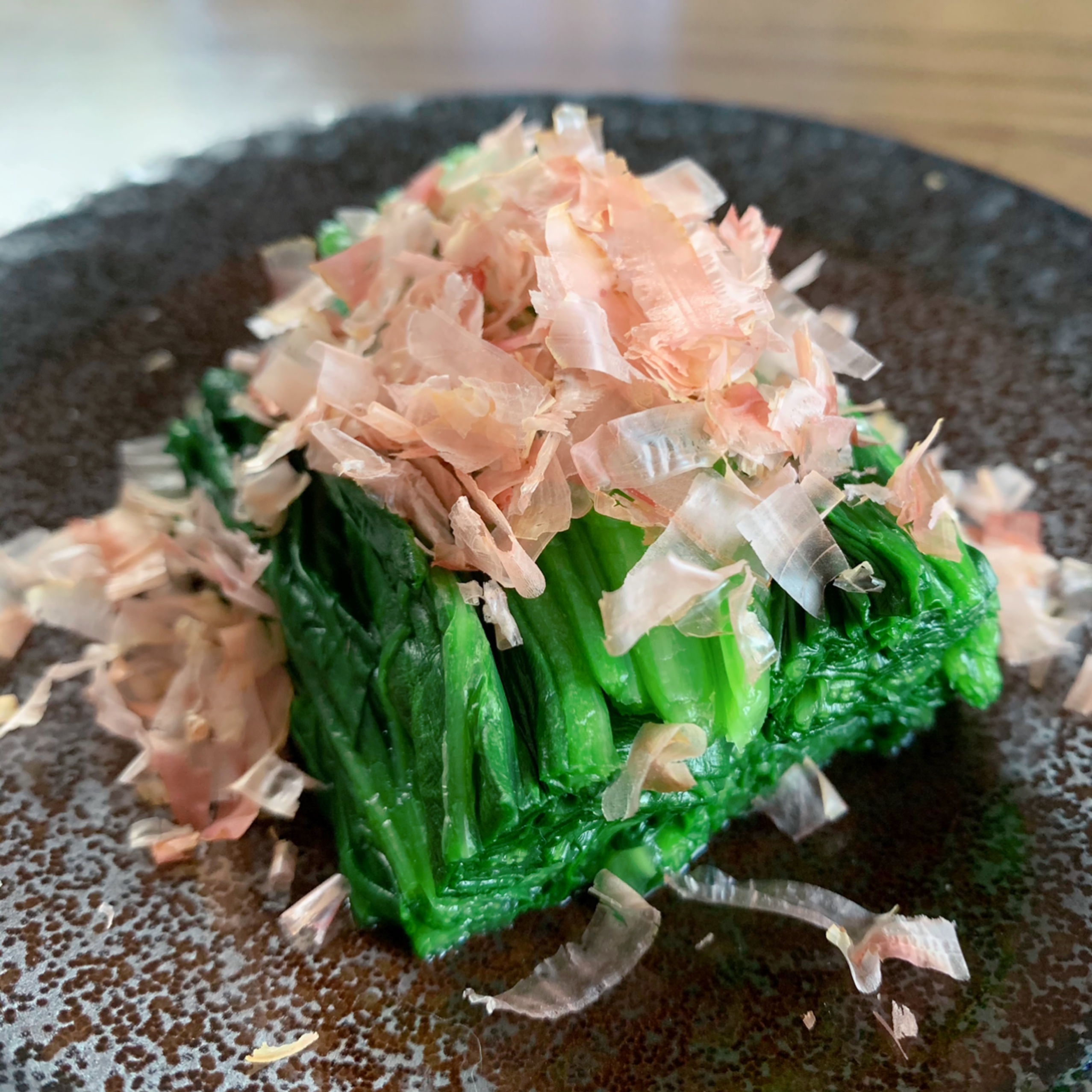
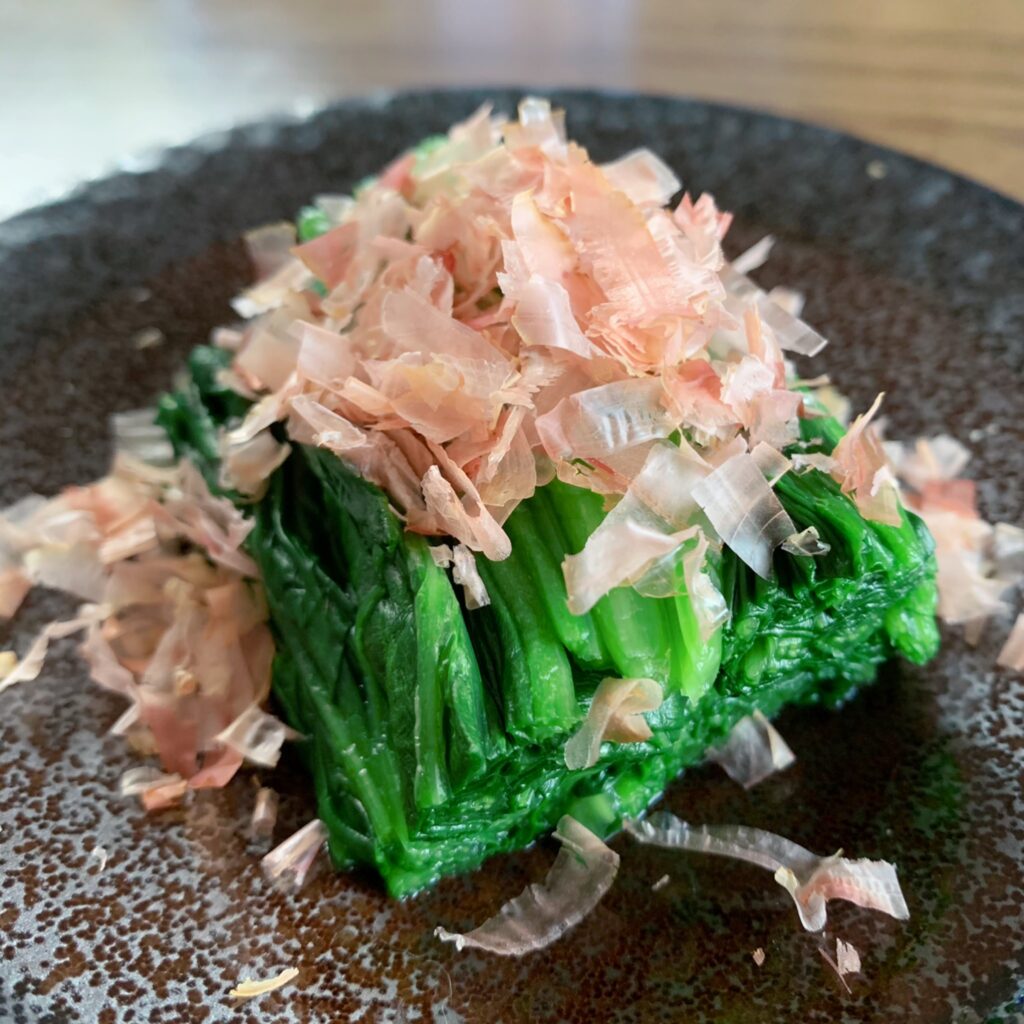
Horenso Ohitashi (Japanese Spinach Salad) / ほうれん草のお浸し
Spinach Ohitashi is a quiet yet indispensable classic on the Japanese dining table.Unlike Western-style marinades that use oil or vinegar, it is “marinated in dashi.”
By making the most of the rich umami flavor of dashi, Japanese Ohitashi achieves a light, healthy, and deeply flavorful finish.Containing zero fat, it can be said to be an ideal side dish for a healthy meal.
What is Ohitashi?
The name “ohitashi” comes from the word hitashi, which means “to soak.” The process starts by quickly boiling the vegetables and immediately shocking them in ice water. Submerging them in ice water prevents overcooking, preserving their crunchy texture and vibrant green color. Next, they are soaked in a mixture of dashi, soy sauce, and mirin for at least an hour, allowing the flavors to infuse deep into the core.
Boiled spinach simply topped with soy sauce cannot be called “ohitashi.” Making it with soy sauce alone tends to result in a salty and harsh taste. On the other hand, soaking the ingredients in a mellow, flavorful dashi broth keeps the sodium content low while achieving a gentle and deeply satisfying flavor.
Although it may seem like a simple dish, a little extra care—such as properly blanching to remove bitterness and choosing a good dashi—can make it taste even better.
The Three Sisters of Hitashi:
- Ohitashi: Boiled vegetables marinated in cold dashi.
- Agebitashi: Fried vegetables (like eggplant or pumpkin) marinated in dashi.
- Nibitashi: Vegetables simmered in dashi and cooled together to deepen the flavor.
Science & Nutrition
Spinach is a quintessential green and yellow vegetable. It is highly regarded for its exceptional nutritional value, being rich in vitamins, calcium, and iron. Interestingly, spinach is actually the vegetable in which folic acid was first discovered.
While spinach is highly nutritious, it also contains high levels of oxalic acid, commonly known as “aku” (bitterness or lye) in Japanese. Oxalic acid is known to combine with calcium, which can lead to the formation of kidney stones. There are also concerns that it may inhibit iron absorption and has even been discussed regarding potential carcinogenic risks.
Spinach Cooking Tips
- Oxalic Acid Removal: Boiling allows the oxalic acid to leach out into the water.
- Preserving the Green Color: Salt stabilizes chlorophyll, while plunging the spinach into ice water immediately after boiling prevents discoloration from residual heat. To prevent fading, boil briefly in a 2% salt solution and cool rapidly in ice water. Keep the lid off while boiling to allow organic acids to evaporate.
- Retaining Nutrients: Cooking for a short time (1 to 2 minutes) minimizes the oxidation and loss of vitamin C.
Pro-Tips for Other Vegetables
You can enjoy this dish with a variety of other vegetables, such as Komatsuna (Japanese mustard spinach), Nanohana (rape blossoms), Shungiku (garland chrysanthemum), or Hakusai (Napa cabbage).
Vegetables like Nanohana, Shungiku, Fukinotou (butterbur buds), and Seri (Japanese parsley) are exceptionally nutritious. However, they can have a strong “grassy” aroma and a distinct bitterness. To balance these flavors, I recommend adding a touch of Karashi (Japanese mustard) or Yuzu Kosho (citrus chili paste) to the marinade.
The Finishing Touch Always remember to top your dish with Katsuobushi (bonito flakes). It adds a rich aroma and savory depth to an otherwise simple dish, making the flavor profile much more complex and rewarding.
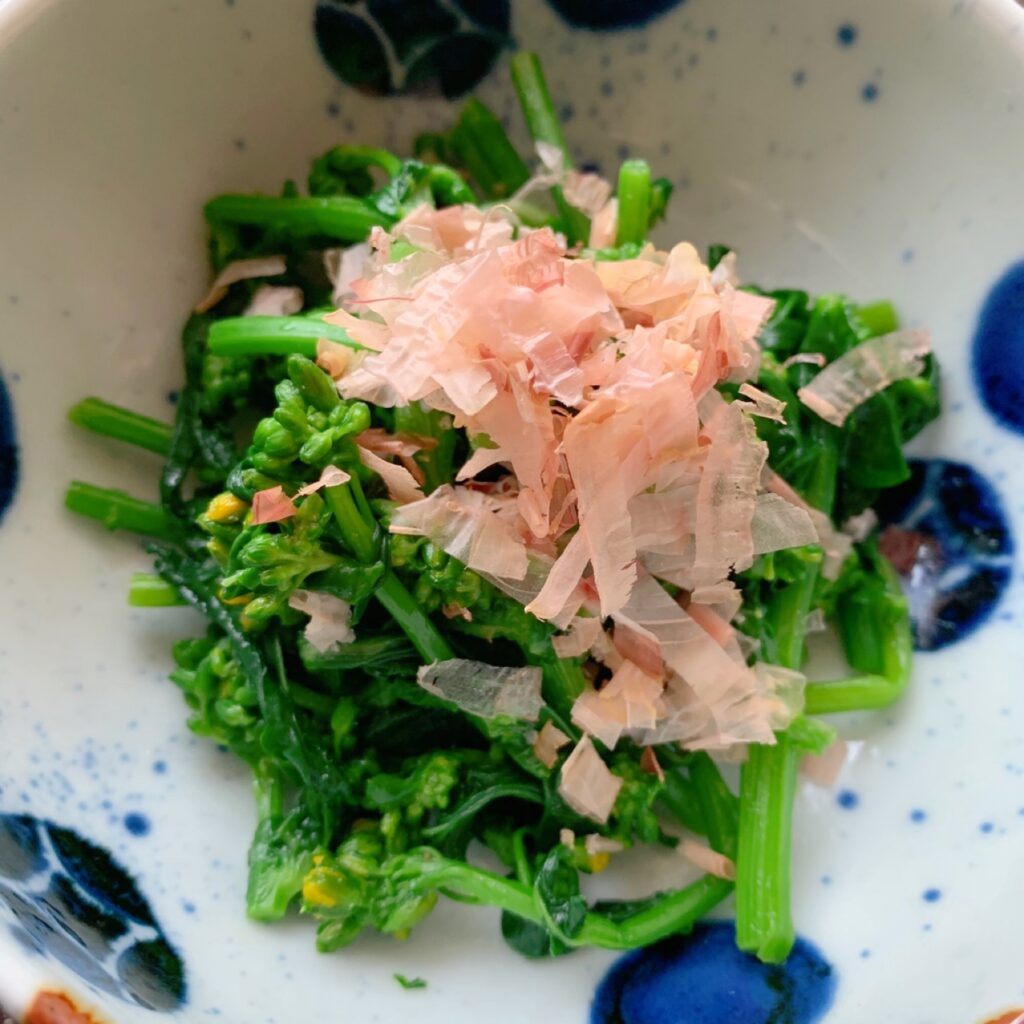
The photo below shows Ohitashi made with Nanohana.
Nutritional Information per Capita (Estimated)
| Nutrients | Total (3 Servings) | Per Serving |
| Calories | Approx. 73 kcal | Approx. 24.3 kcal |
| Protein | Approx. 7.7 g | Approx. 2.6 g |
| Fat | Approx. 0.9 g | Approx. 0.3 g |
| Carbohydrates | Approx. 10.0 g | Approx. 3.3 g |
| Sodium (Salt Equivalent) | Approx. 2.03 g | Approx. 0.68 g |
Ingredients (Serves 3)
- Main: 200g Spinach
- Boiling Water: Boiling water: 1000g water + 1g salt [Golden ratio] Use 1% salt for every 5 times the weight of water as spinach.
- The Marinade (Dashi Mixture):
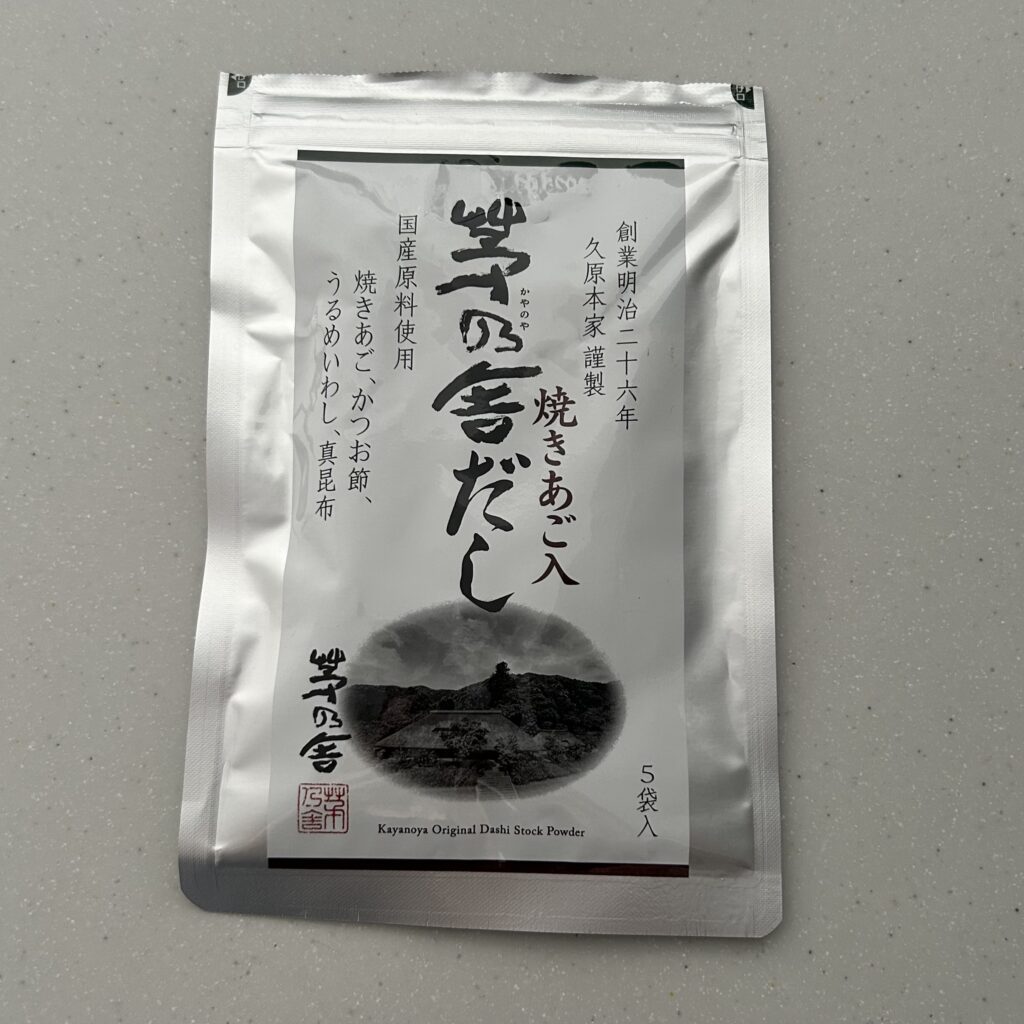
- 1 Packet Kayanoya Dashi (No chemical seasonings/preservatives)
- 400g Water (You will use 60g of the finished dashi for this recipe)
- 5g Dark soy sauce (for depth of flavor)
- 4g Light soy sauce (to maintain bright color)
- 7g Mirin
- Topping: Katsuobushi (Bonito flakes)
The Secret to the Flavor: Kayanoya Dashi
To achieve an authentic and professional taste, we recommend using Kayanoya Dashi.
- Premium Quality: This soup stock is crafted from carefully selected Japanese ingredients, with no chemical seasonings or preservatives added.
- Salt Content Note: One packet (1P) of Kayanoya Dashi contains approximately 1.0g of salt.
- Official Website: Kayanoya Japan
How to make ohitashi
- Prepare Dashi: Soak the Kayanoya dashi packet in 400g water for 1 hour.
- Wash: Carefully clean the spinach roots to remove all soil.
- Boil: Bring 1L of water to a boil with salt. Insert spinach stem-side first, then submerge the leaves. Boil for only 1 to 2 minutes.
- Shock: Immediately move spinach to ice water to lock in the bright green color.
- Prep Spinach: Squeeze out excess water and cut into 4–5cm pieces.
- Mix Sauce: Combine 60g of your prepared dashi, both soy sauces, and mirin. Microwave for 20 seconds, then let cool.
- Marinate: Place spinach in a flat container, pour the mixture over it, and ensure it is evenly soaked.
- Chill: Refrigerate for at least 1 hour to let the flavors infuse.
- Serve: Plate the spinach and top with a generous amount of bonito flakes for aroma and flavor.
Today’s Menu Example
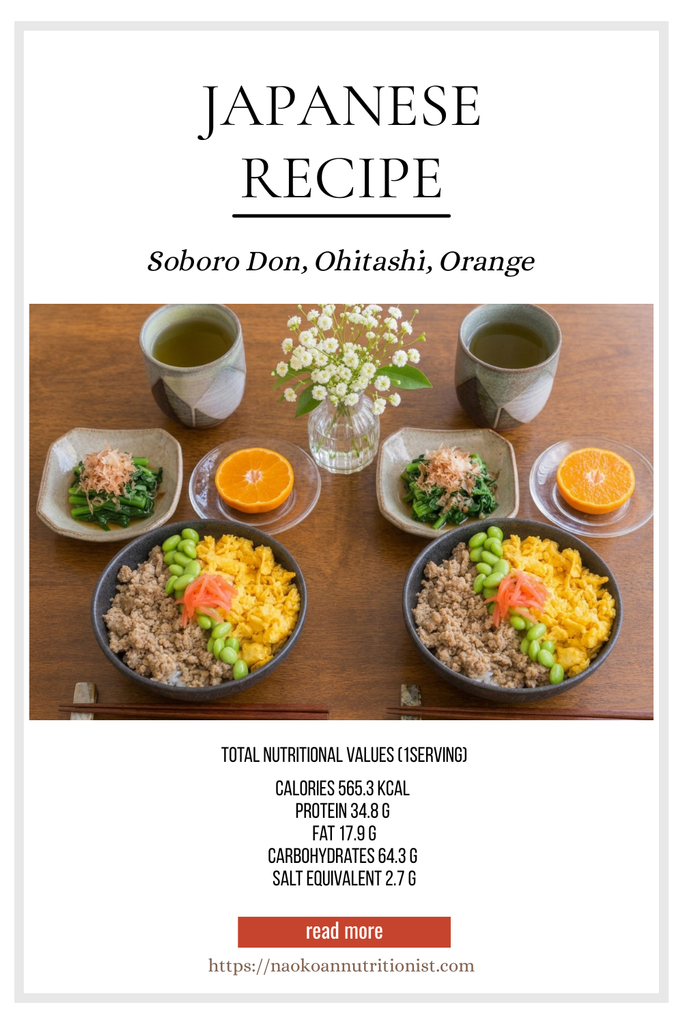
Soboro Don (1 serving)
- Energy: 512 kcal
- Protein: 30.8 g
- Fat: 14.8 g
- Carbohydrates: 61.2 g
- Dietary Fiber: 1.8 g
- Salt Equivalent: 1.5 g
- Vitamin B1: 0.16 mg
- Vitamin B2: 0.38 mg
- Vitamin C: 2 mg
- Iron: 2.7 mg
- Calcium: 48 mg
Spinach Ohitashi (1 serving)
- Energy: 22 kcal
- Protein: 2.1 g
- Fat: 0.3 g
- Carbohydrates: 2.8 g
- Dietary Fiber: 1.6 g
- Salt Equivalent: 0.5 g
- Vitamin B1: 0.05 mg
- Vitamin B2: 0.10 mg
- Vitamin C: 14 mg
- Iron: 1.1 mg
- Calcium: 38 mg
Satsuma Mandarin 1/2 (1 serving)
- Energy: 18 kcal
- Protein: 0.2 g
- Fat: 0.04 g
- Carbohydrates: 4.8 g
- Dietary Fiber: 0.4 g
- Salt Equivalent: 0.0 g
- Vitamin B1: 0.04 mg
- Vitamin B2: 0.01 mg
- Vitamin C: 13 mg
- Iron: 0.1 mg
- Calcium: 9 mg
| Nutrient | Total per Meal | Daily Reference Value (*1) | Target per Meal (1/3) | Meal Target Fulfillment |
| Energy | 552 kcal | 2,000 kcal | Approx. 667 kcal | 82.8% (Moderate & Well-balanced) |
| Protein | 33.1 g | 50 g (Target: 65–100g) | 16.7 g | 198.2% (High Protein) |
| Fat | 15.14 g | 44–66 g (20–30% kcal) | Approx. 15–22 g | Optimal Range (Approx. 24% kcal) |
| Dietary Fiber | 3.8 g | 18 g or more | 6.0 g | 63.3% |
| Salt Equivalent | 2.0 g | Less than 6.5 g | Less than 2.17 g | Optimal (Target Achieved) |
| Vitamin B1 | 0.25 mg | 1.1 mg | 0.37 mg | 67.6% |
| Vitamin B2 | 0.49 mg | 1.2 mg | 0.40 mg | 122.5% (Target Achieved) |
| Vitamin C | 29 mg | 100 mg | 33.3 mg | 87.1% |
| Iron | 3.9 mg | 10.5 mg (Menstruating) | 3.5 mg | 111.4% (Target Achieved) |
| Calcium | 95 mg | 650 mg | 216.7 mg | 43.8% |
Based on Dietary Reference Intakes for Japanese (2020 Edition) for females aged 40–49 with a physical activity level of II (Moderate).
For the Soboro don recipe, check it out here 【 Moist & Colorful! Basic Three-Color Soboro Don (Minced Chicken Rice Bowl) Recipe】.
Read the Japanese version of this article here! [おひたしをマスターしよう:日本の伝統的なほうれん草サラダのレシピ]

コメント