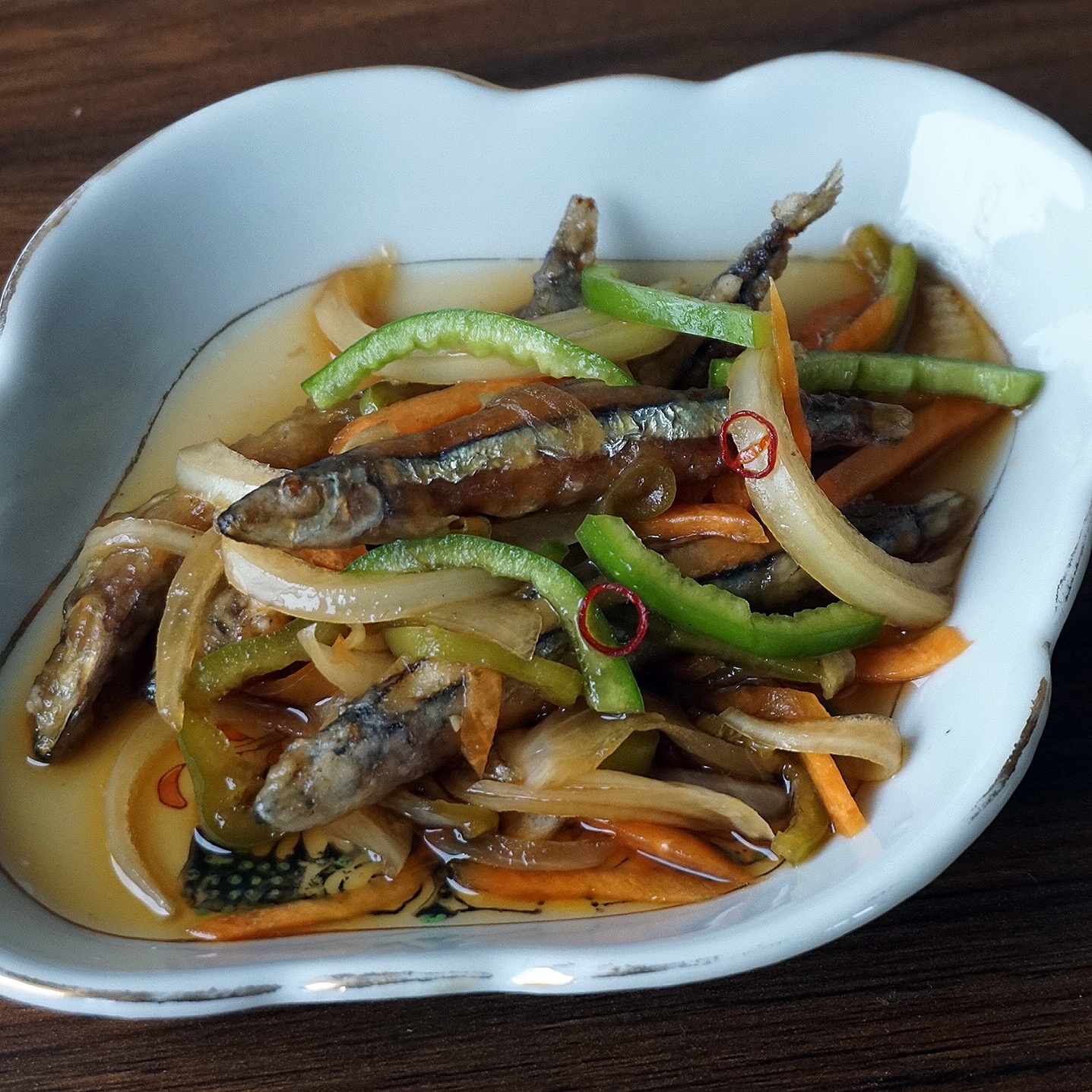
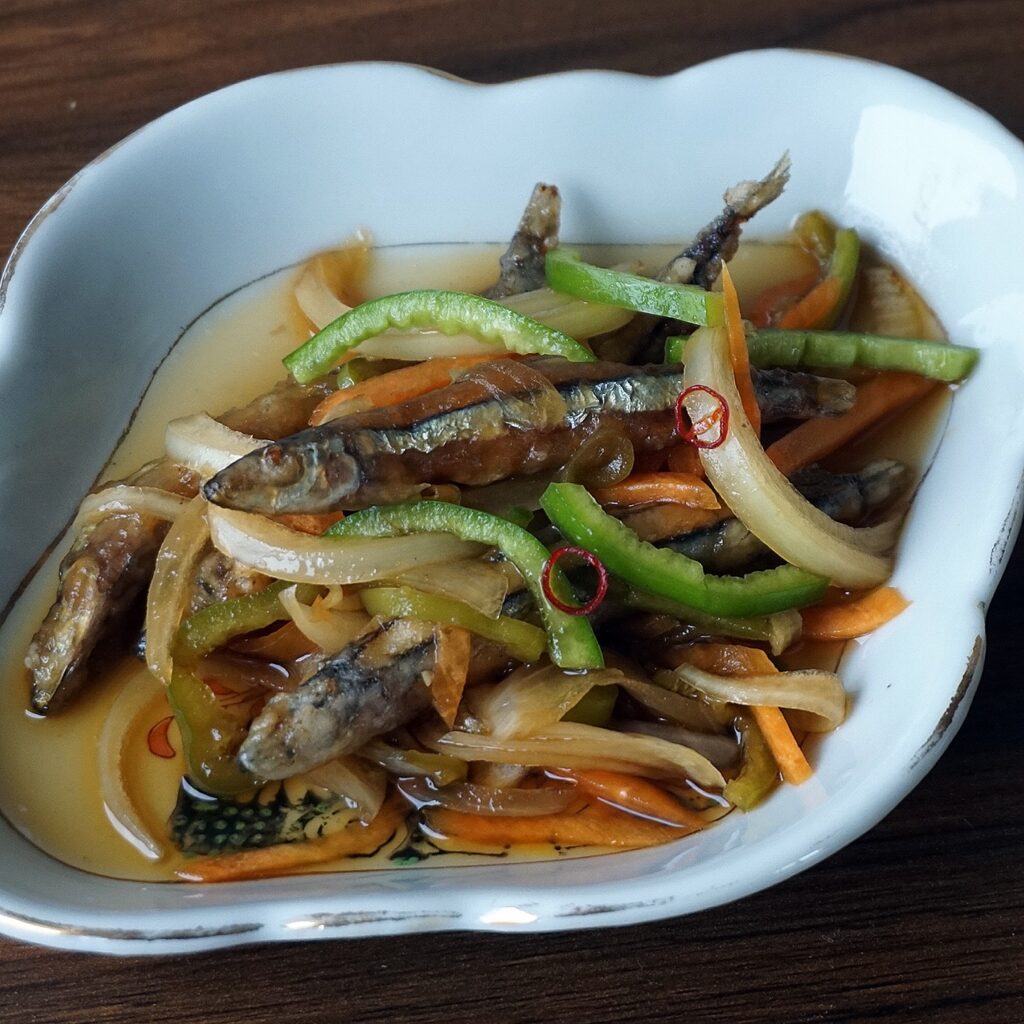
- Beat the Summer Heat! Easy “Kibinago (Silver Stripe Round Herring) Nanbanzuke” — Just Fry and Marinate
- 3 Culinary Science Secrets from a Registered Dietitian for Healthy & Delicious Nanbanzuke
- Ingredients for “Kibinago Nanbanzuke” (Serves 2)
- Step-by-Step Instructions: Quick Microwave Method
- Nutrition Facts (Total vs. Per Serving)
- 【Extra Delicious When Chilled】 A Refreshing Summer Twist with Japanese Herbs
- Beyond Fish: Creative Twists!
Beat the Summer Heat! Easy “Kibinago (Silver Stripe Round Herring) Nanbanzuke” — Just Fry and Marinate
“I’m worried my family isn’t getting enough calcium, but I don’t know how to cook small fish…”
“In the summer, I want to minimize my time in a hot kitchen and make a refreshing side dish that keeps well!”
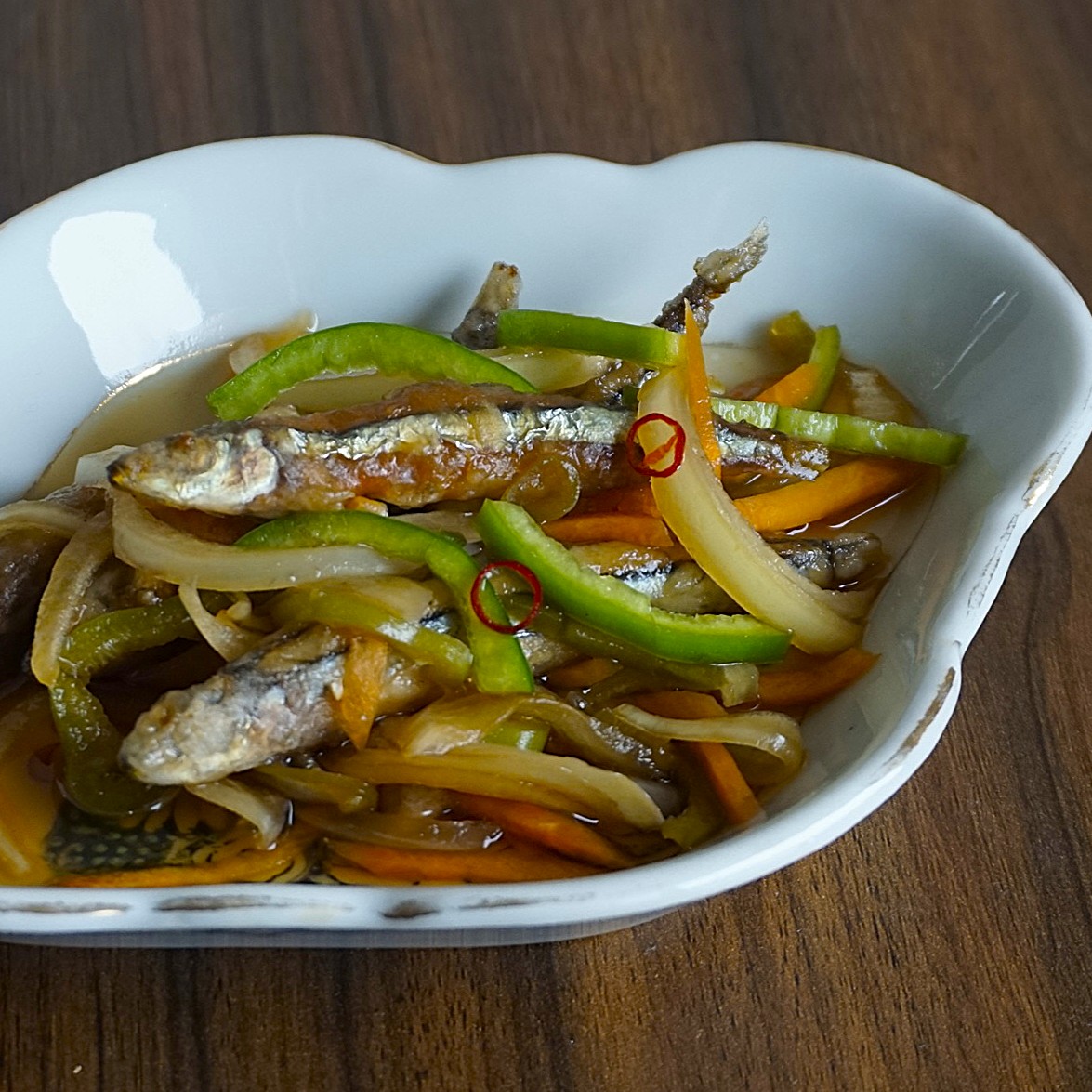
If this sounds like you, Kibinago Nanbanzuke is the perfect solution. This dish features seasonal silver stripe round herring, harvested from the rich waters of Western Japan.
Kibinago is a small fish characterized by its beautiful, silvery stripe. Because it can be eaten whole—from head to bone—it is a fantastic natural source of calcium and Omega-3 fatty acids (EPA and DHA), allowing you to absorb all its nutritional benefits without any waste.
This recipe is a Japanese twist on “escabeche”—a dish of Portuguese origin where meat or fish is fried and marinated in a sweet vinegar sauce. As a Registered Dietitian, I am excited to share this authentic yet healthy recipe that combines a professional frying technique to minimize oil absorption with a time-saving microwave hack!
3 Culinary Science Secrets from a Registered Dietitian for Healthy & Delicious Nanbanzuke
1. Boost Calcium Absorption by Eating Whole Fish
Kibinago has naturally soft bones, making it one of those rare, wonderful fish that can be eaten entirely whole. Marinating it in a vinegar-based sauce offers a fantastic nutritional synergy: the citric and acetic acids in the vinegar actually help convert the fish’s calcium into a form that is much easier for the body to absorb.
2. Lower Oil Absorption by Maintaining 160∘C to 180∘C
The ultimate secret to keeping the calories in check lies in temperature control. Frying the fish steadily between 160∘C and 180∘C ensures a crisp outer texture. This technique prevents the potato starch (katakuriko) coating from absorbing excess oil, resulting in a Nanbanzuke that stays perfectly light and crisp—never greasy—even after it cools down.
3. Let Acidity Do the Work When Cutting Back on Salt
If you want to keep the sodium from the soy sauce in check, try using low-sodium soy sauce or slightly increasing the ratio of vinegar. Leveraging the refreshing acidity of vinegar tricks the brain into feeling fully satisfied with flavor, allowing you to cut back on salt without sacrificing taste.
Ingredients for “Kibinago Nanbanzuke” (Serves 2)
To ensure accurate nutritional balance and perfect flavor reproduction, this blog recommends measuring ingredients in grams (g).
- Kibinago (Silver stripe round herring): 200g (Note: Small horse mackerel or sardine fillets can be used as a substitute)
- Potato starch (Katakuriko): 20g
- Frying oil: As needed
- Onion: 100g (Approx. 1/2 medium onion)
- Carrot: 35g (Approx. 1/3 carrot)
- Green bell pepper: 30g (1 pepper)
Step-by-Step Instructions: Quick Microwave Method
1. Prep the Kibinago (Secret to Preventing Fishiness)
Gently rinse the kibinago under cold running water, then use paper towels to thoroughly pat the surface completely dry. (Any remaining moisture can cause a fishy odor or lead to dangerous oil splatters during frying).
Place the dried fish into a plastic bag along with the potato starch (20g). Seal the bag and shake it gently until every fish is lightly and evenly coated.
2. Fry to a Crisp
Gently tap off any excess starch from the fish. Lower them into oil heated to 160°C–180°C and deep-fry for about 5 minutes, or until the surface feels completely crisp. Once fried, transfer them onto a wire cooling rack or paper towels to drain the excess oil thoroughly.
3. Cut the Vegetables
Finely julienne the onion, carrot, and green bell pepper. Keeping the slices as uniform in thickness as possible will ensure that the marinade absorbs beautifully and evenly into all the vegetables.
4. 【Time-Saving Hack】Make the Marinade in the Microwave
In a heatproof bowl, combine the rice vinegar, sugar, mirin, soy sauce, and sliced red chili pepper, stirring well. Add the julienned vegetables to the bowl and toss until thoroughly coated in the liquid.
Cover the bowl loosely with plastic wrap and microwave at 600W for 2 minutes. (Note: Heating the vegetables first softens them slightly, allowing them to soak up the marinade flavors much faster!)
5. Marinate
Immediately submerge the freshly fried, hot kibinago into the warm marinade. Combining them while both components are hot allows the deep flavors to penetrate the fish instantly. Toss everything gently together, and your dish is ready!
Nutrition Facts (Total vs. Per Serving)
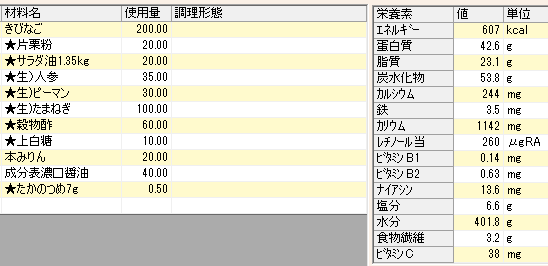
| Nutrients | Total (2 Servings) | Per Serving |
| Calories | 607 kcal | 303.5 kcal |
| Protein | 42.6 g | 21.3 g |
| Total Fat | 23.1 g | 11.55 g |
| Total Carbohydrates | 53.8 g | 26.9 g |
| Salt Equivalent | 6.6 g | 3.3 g |
【Extra Delicious When Chilled】 A Refreshing Summer Twist with Japanese Herbs
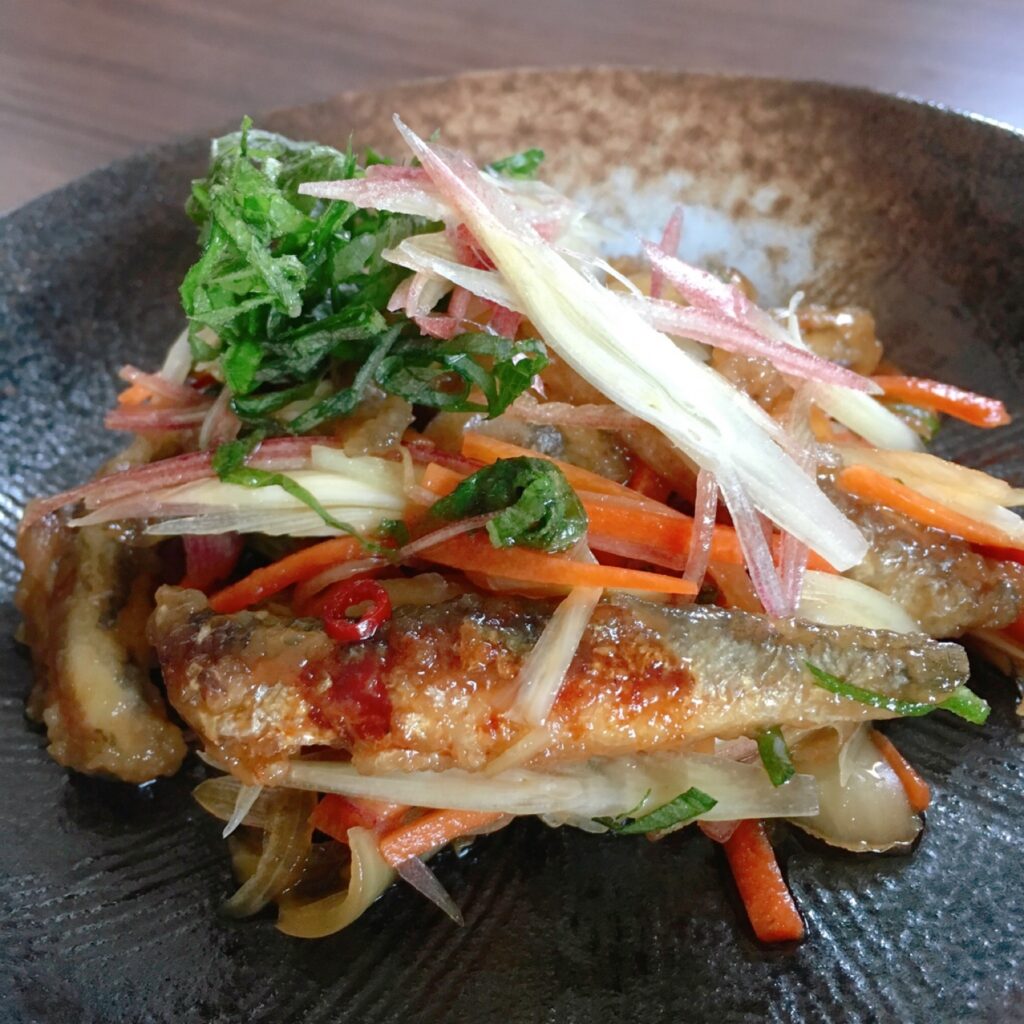
While this dish tastes wonderful freshly made and warm, letting it chill thoroughly in the refrigerator allows the flavors to meld together perfectly, making it absolutely exquisite! It is the ultimate refreshing side dish to prep ahead for your weekly meal rotation.
When serving it cold, try topping the dish generously with finely slivered shiso (perilla leaves) and myoga (Japanese ginger) just before serving. The vibrant aroma of the shiso and the crisp texture of the myoga cut through the richness of the fried fish and complement the tangy vinegar sauce. It creates a stunning flavor harmony that will stimulate your appetite, keeping your chopsticks moving even on the hottest summer days!
Beyond Fish: Creative Twists!
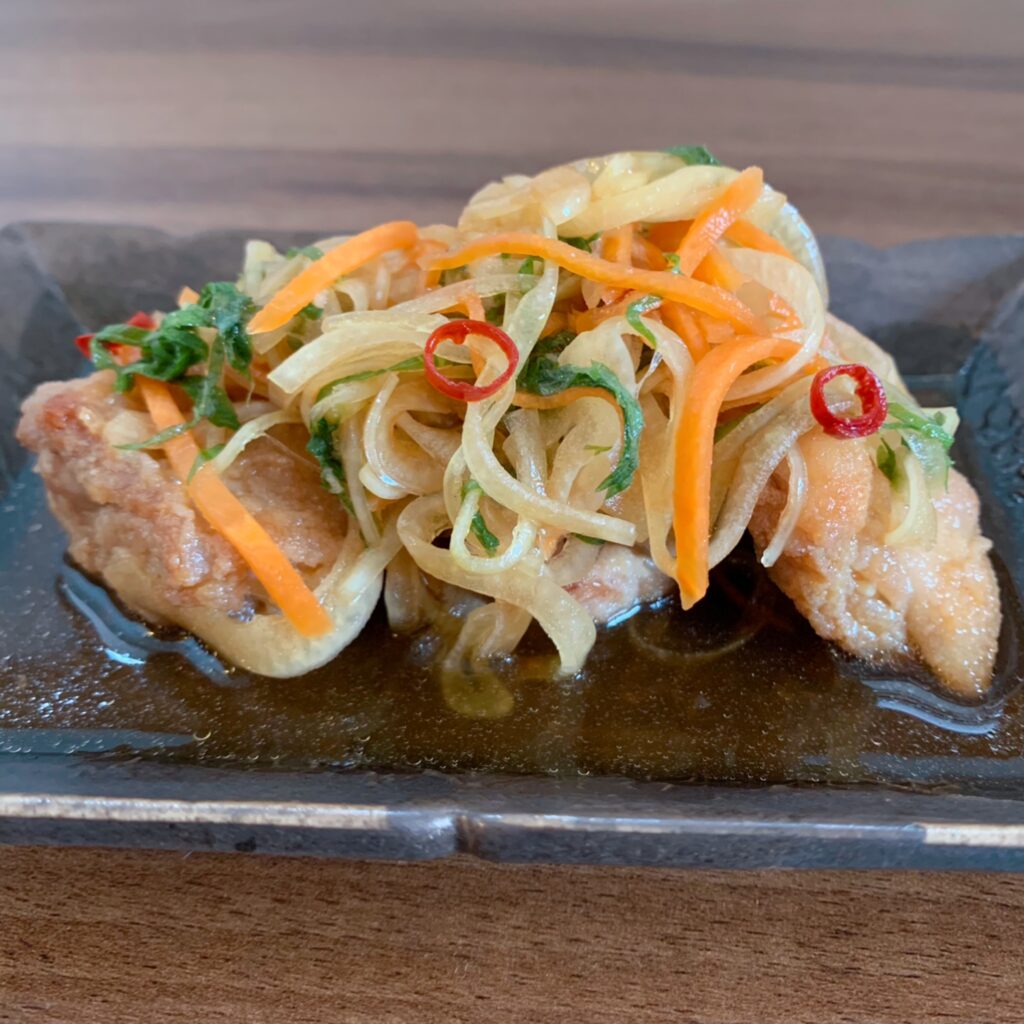
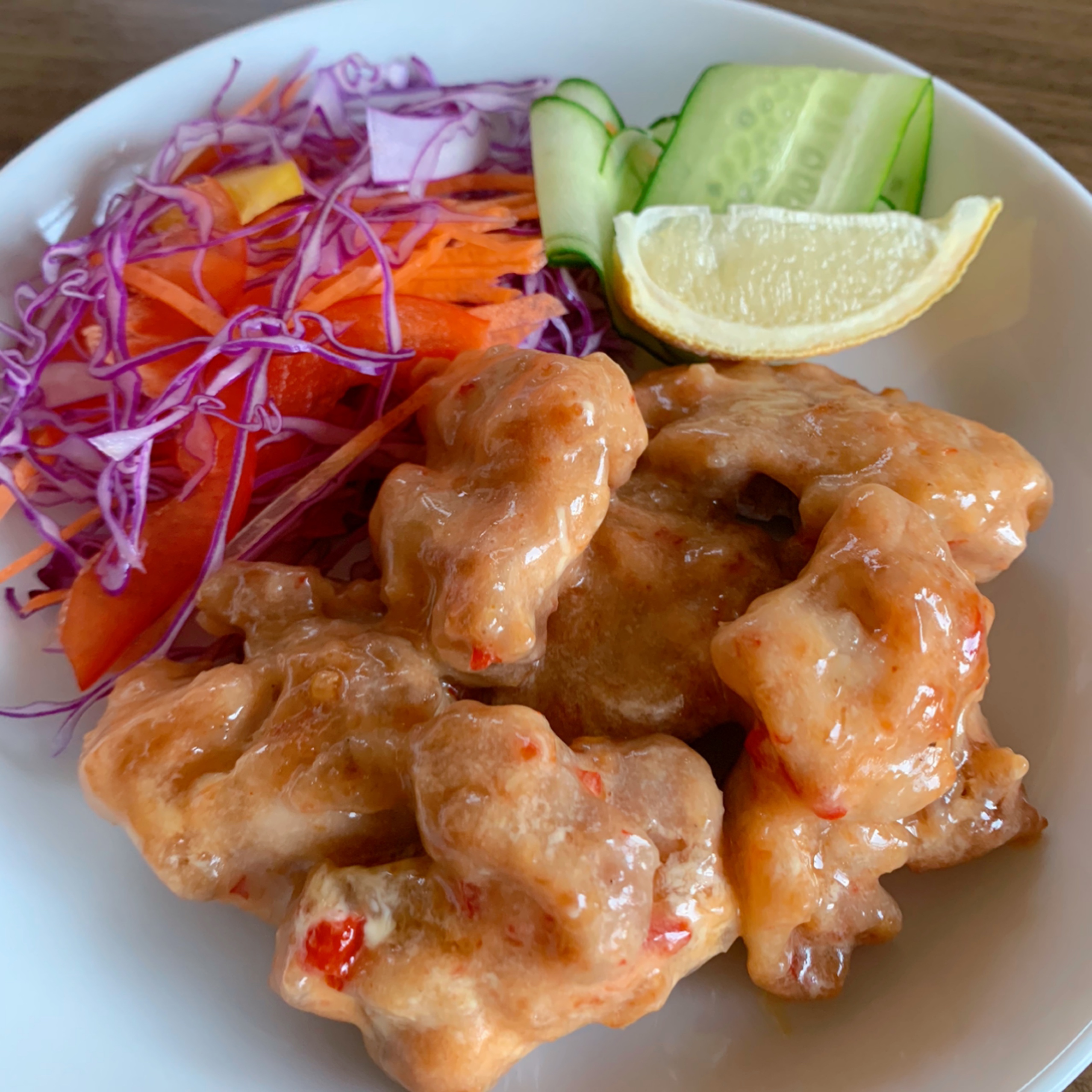
Nanbanzuke is traditionally made with blue fish like horse mackerel or sardines. But if you aren’t big on fish or don’t have any on hand, chicken is an awesome way to go!
📖Read the Japanese version of this article here! [カルシウムたっぷり!きびなごの南蛮漬けレシピ|揚げて漬けるだけの簡単常備菜]

コメント