- Master Your Bread Machine! The “Golden Ratio” Rye Bread Recipe with Manuka Honey
Master Your Bread Machine! The “Golden Ratio” Rye Bread Recipe with Manuka Honey
Do you think of rye bread as sour, dense, or difficult to bake? Think again. By using a “Golden Ratio” of bread flour to rye flour, even beginners can achieve a professional-style loaf with a crispy crust and a moist, tender crumb—all from the comfort of a home bread machine.
Inspired by the traditional flavors of Russia, this recipe creates a nutrient-dense, luxurious fusion of rye and Manuka honey. Here is why this bread deserves a spot on your breakfast table and how to bake it to perfection.
1. Why Rye? Three Scientific Reasons for Better Health
Rye is a resilient grain that thrives in cold climates like Germany and Russia. From a nutritional standpoint, it is a powerhouse of essential nutrients that many modern diets lack.
① Low Glycemic Index (GI) for Blood Sugar Control
Rye bread has a GI value of approximately 55, which is significantly lower than white bread (approx. 95). This prevents “sugar spikes” after eating, thanks to high levels of soluble fiber that slow down glucose absorption.
② Exceptional Satiety from High Fiber Content
Rye contains nearly 5 times more dietary fiber than refined wheat. Because the crumb is dense and fiber-rich, it keeps you feeling full longer, making it an ideal choice for sustainable weight management.
③ Metabolic Support: Potassium & B-Vitamins
Rye acts as a “natural supplement.” It contains 5 times more potassium to help reduce bloating (edema) and 6 times more Vitamin B1 to boost energy metabolism compared to refined wheat.
Nutrition Comparison: Rye Flour vs. Wheat Flour (per 100g)
| Nutrient | Rye Flour (Whole) | Wheat Flour (Bread) | The “Rye” Advantage |
|---|---|---|---|
| Dietary Fiber | 13.3g | 2.7g | 5x Higher! (Blood sugar stability) |
| Potassium | 450mg | 89mg | 5x Higher! (Detox & heart health) |
| Iron | 3.5mg | 0.9mg | 4x Higher! (Anemia prevention) |
| Vitamin B1 | 0.52mg | 0.09mg | 6x Higher! (Energy & recovery) |
2. The Foolproof “Golden Ratio” Rye Bread Recipe (1 Loaf)
While 100% rye loaves can be difficult to rise, this recipe uses a 2:1 ratio (Wheat to Rye). This is the perfect balance for ensuring a successful rise in a standard bread machine.
【Ingredients】
- Strong Bread Flour: 170g
- Rye Flour: 90g
- Milk: 70g
- Water: 100g
- Unsalted Butter: 12g
- Sugar: 17g
- Salt: 4g
- Dry Yeast: 3g (Red Saf is recommended)
【Toppings】
- Cream Cheese
- Mixed Nuts & Dried Fruit
- Manuka Honey (High MGO rating recommended)
3. Step-by-Step Bread Machine Instructions
- Liquid First: Pour the milk and water into the bread machine container.
- The Flour Barrier: Combine the bread flour and rye flour, then add them to the container, ensuring they completely cover the liquid.
- Corner Seasoning: Place the sugar, salt, and butter in the four corners of the container.
- The Yeast Well: Create a small hollow in the center of the flour (ensure it does not reach the water) and add the dry yeast.
- Baking Mode: Set your machine to the “Rye” or “Whole Wheat” mode. This process typically takes about 5 hours to develop deep flavor and texture.
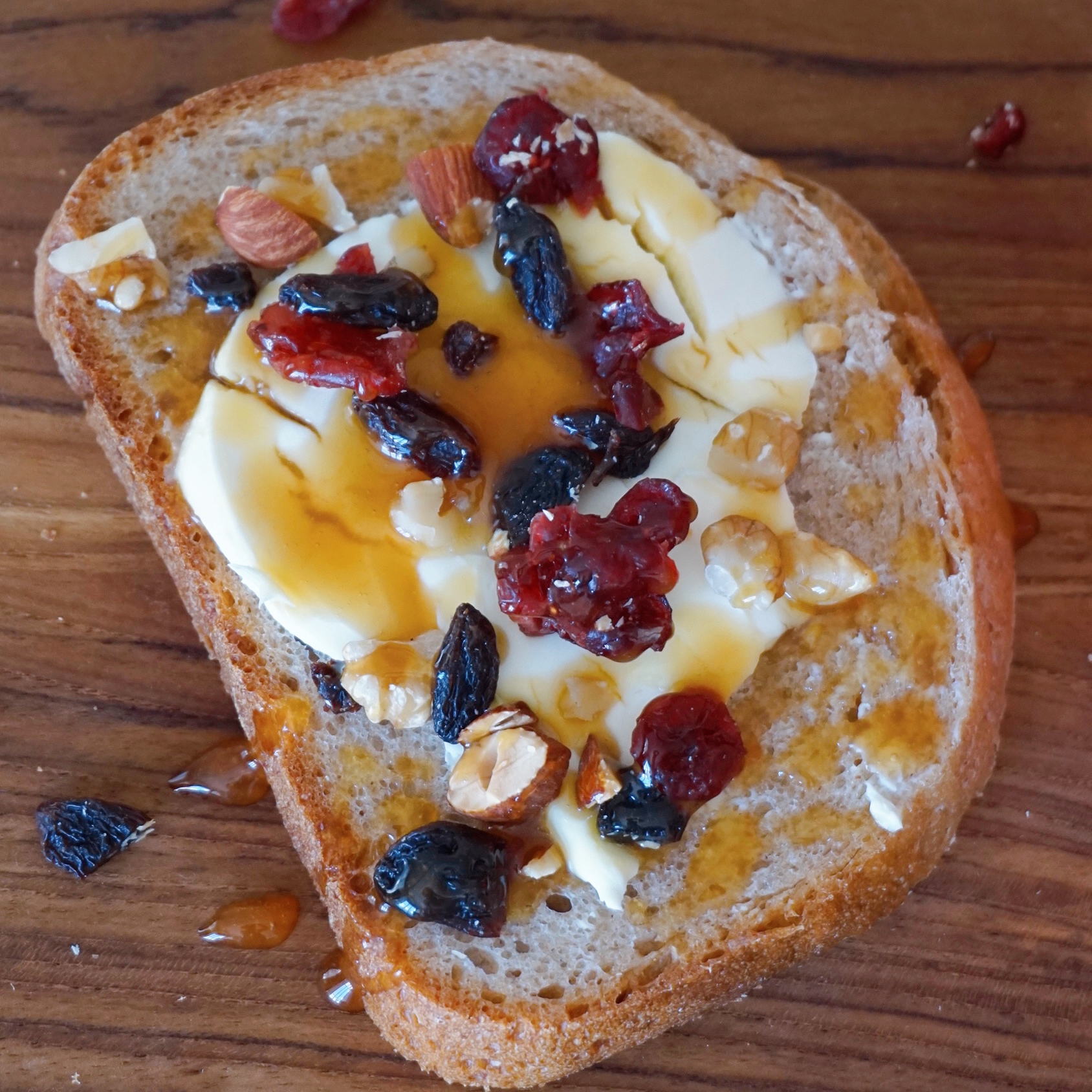
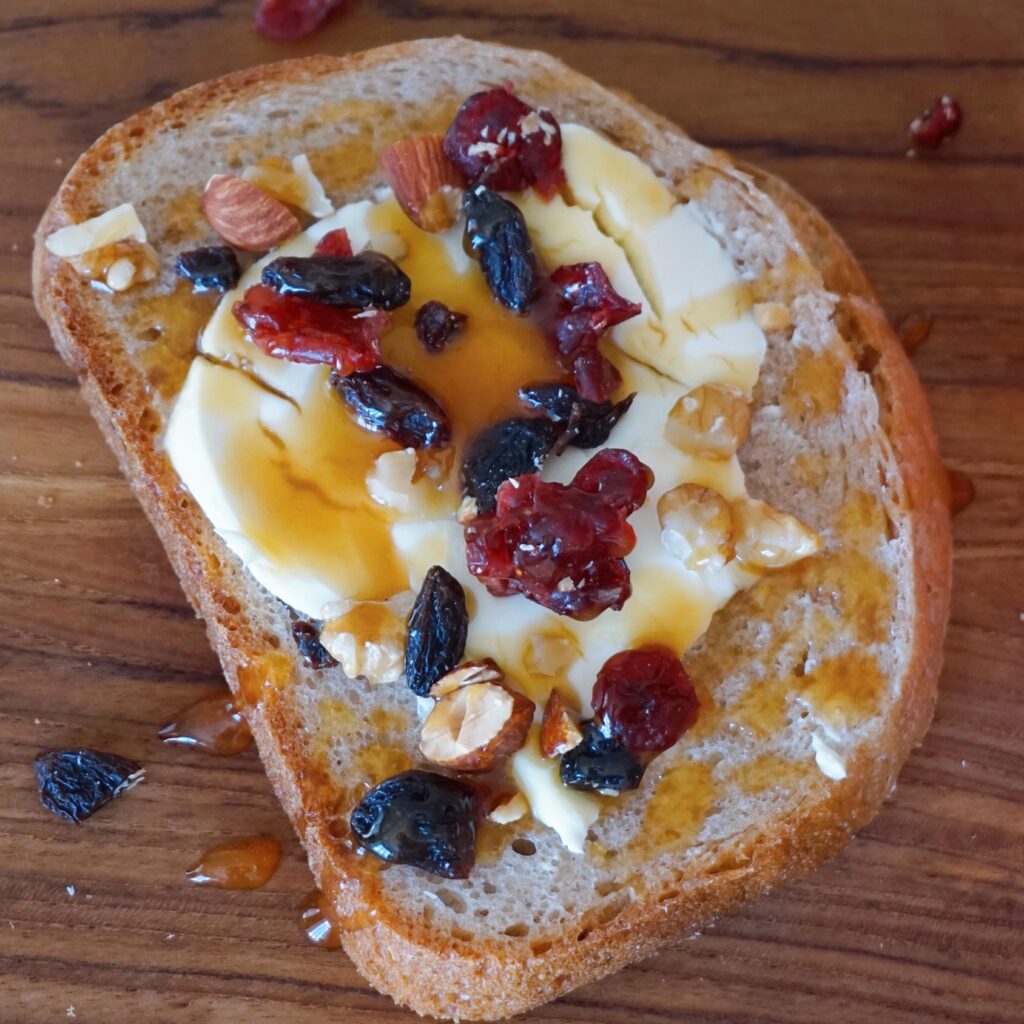
- Assembly: Once baked and cooled, slice into 1cm (0.4 inch) pieces. Toast until golden, spread a thick layer of cream cheese, top with nuts and fruit, and finish with a generous drizzle of Manuka honey.
4. Professional Tips for Nutrient Absorption
Maximize the health benefits of your loaf with these pairing strategies:
- Iron + Vitamin C: Top your bread with dried apricots or berries. The Vitamin C significantly boosts the absorption of the iron found in rye.
- Preserving Manuka Benefits: The antibacterial compound in Manuka honey, Methylglyoxal (MGO), is heat-sensitive. Always drizzle the honey after toasting to preserve its medicinal properties.
【Deep Dive】 Honoring Tradition: The Secret of “Sauerteig” (Sourdough)
While this recipe uses dry yeast for convenience, the world of authentic rye bread is centered on the German tradition of “Sauerteig” (Sourdough).
The Structural Power of Acidity
Unlike wheat, rye contains enzymes (amylase) that can break down the bread’s structure. The lactic acid produced in a sourdough starter neutralizes these enzymes, allowing the bread to hold its shape and creating that signature tangy flavor.
A Complex Aroma Profile
Sauerteig is a symbiotic culture of wild yeast and lactic acid bacteria. This combination creates a sophisticated, multi-layered aroma and a moist crumb that stays fresh for days—qualities that commercial yeast alone cannot replicate.
💡 Our Formula Design: Growing a traditional sourdough starter at home takes time. This recipe’s specific flour ratio is meticulously designed to mimic that old-world depth and hearty texture while maintaining the simplicity of a bread machine cycle.
Conclusion: Upgrade Your Breakfast to “Functional Food”
By merging ancient Russian wisdom with modern nutritional science, this rye bread is more than just a meal—it is a foundation for a healthy day. Let your bread machine do the heavy lifting and enjoy the deep, nutty complexity of rye paired with the floral notes of Manuka honey. Your body will thank you.
📖Read the Japanese version of this article here! [手作りライ麦パンとマヌカハニー:栄養が凝縮された至高のフュージョン]


コメント