Homemade Rye Bread With Manuka Honey: A Nutrient-Dense Fusion
If you’ve ever found rye bread to be too sour or dense, this recipe is for you. I’ve developed a “Golden Ratio” of bread flour to rye flour that captures the earthy aroma and hearty texture of traditional European bread while remaining approachable for home bakers.
Inspired by the firm, fragrant loaves I first tasted as a gift from Russia, this version is optimized for a home bread machine to ensure a perfect rise every time.
Why Rye? The Science of Slow-Release Energy
Rye is a resilient grain that thrives in the cold climates of Germany, Poland, and Russia. Beyond its rustic flavor, it offers significant health benefits that make it a favorite among nutritionists:
- Low Glycemic Index (GI): With a GI value of around 55 (compared to ~95 for white bread), rye bread causes a much slower rise in blood sugar. Its high concentration of soluble fiber forms a gel-like substance in the gut, slowing down glucose absorption.
- High Satiety: Because rye lacks the elastic gluten of wheat, the crumb is dense and fiber-rich. This promotes a feeling of fullness for longer, making it an excellent choice for weight management.
- Micronutrient Powerhouse: Rye is significantly higher in magnesium, iron, and B vitamins than refined wheat flour, supporting metabolic health and energy production.
Nutrition Comparison: Rye Flour vs. Wheat Flour (per 100g)
| Nutrient | Rye Flour (Whole) | Wheat Flour (Bread) | The “Rye” Advantage |
| Calories | 327 kcal | 337 kcal | Lower energy density |
| Dietary Fiber | 13.3 g | 2.7 g | 5x Higher! (Low GI) |
| Potassium | 450 mg | 89 mg | 5x Higher! (Heart health) |
| Calcium | 33 mg | 15 mg | 2x Higher |
| Iron | 3.5 mg | 0.9 mg | 4x Higher! |
| Vitamin B1 | 0.52 mg | 0.09 mg | 6x Higher! (Energy) |
| Vitamin B2 | 0.16 mg | 0.04 mg | 4x Higher! |
| Folic Acid | 60 μg | 18 μg | 3x Higher! (Blood health) |
| Total Fat | 2.0 g | 1.5 g | Healthy plant oils |
| Carbohydrates | 70.3 g | 71.3 g | Complex energy source |
💡 Dietitian’s Key Insights
- Potassium Power: Rye contains 5 times more potassium than refined wheat. Potassium is essential for balancing sodium levels in the body and supporting healthy blood pressure—a perfect functional benefit for a daily breakfast.
- The Fiber Gap: While the carb counts are similar, the massive amount of fiber in rye creates a “steady energy” effect, preventing the mid-morning sugar crash.
- Blood & Metabolism: The combination of high Iron, Folic Acid, and B-Vitamins makes this bread a natural supplement for energy production and cardiovascular health.
The Secret of Aroma: Traditional Rye Sourdough (Sauerteig)
In countries like Germany, traditional rye bread isn’t fermented with standard yeast. Instead, bakers use Rye Sourdough (Sauerteig).
Unlike wheat dough, rye requires the acidity of a sourdough starter to stabilize its structure and activate its flavors. This “Sauerteig” is a symbiotic culture of wild yeast and lactic acid bacteria, which creates that distinct, tangy aroma and deep complexity that lasts for days. While this recipe uses dry yeast for convenience, our specific flour ratio is designed to mimic that sophisticated, old-world depth right in your kitchen.
The Manuka Honey & Dried Fruit Synergy
Pairing this bread with Manuka honey and nuts isn’t just for the taste—it’s functional nutrition.
- Antibacterial Properties: Manuka honey contains Methylglyoxal (MGO), providing unique antibacterial and anti-inflammatory benefits that regular honey lacks.
- Iron & Mineral Absorption: Pairing the minerals in rye with the Vitamin C found in dried fruits (like apricots or berries) helps optimize your body’s nutrient uptake.
Ingredients (1 Loaf); Homemade Rye Bread With Manuka Honey
The Bread Base:
- Strong Bread Flour: 170g
- Rye Flour: 90g
- Milk: 70g
- Water: 100g
- Unsalted Butter: 12g
- Sugar: 17g
- Salt: 4g
- Dry Yeast (e.g., Red Saf): 3g
The Toppings:
- Cream Cheese
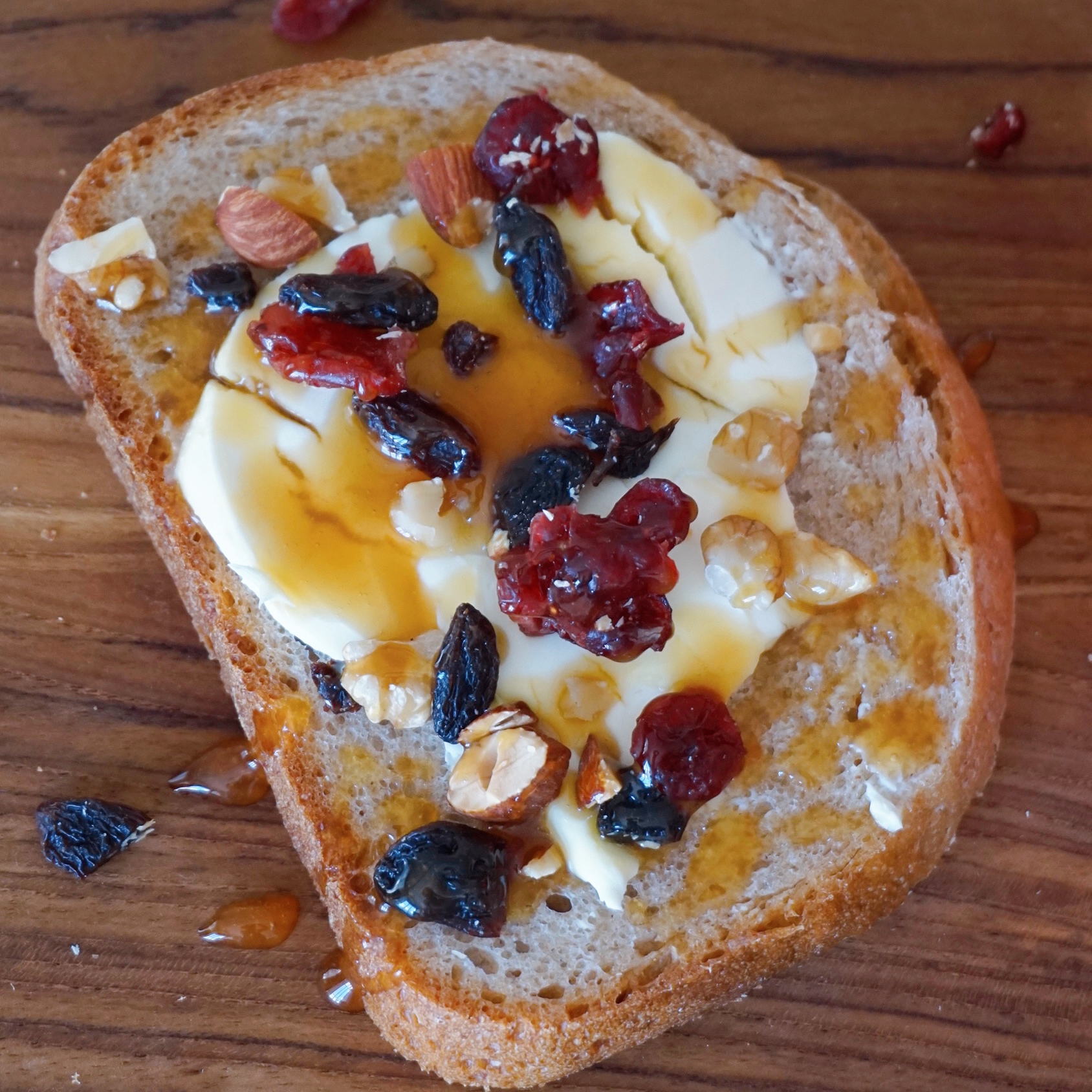
- Mixed Nuts & Dried Fruit
- Manuka Honey
Homemade Rye Bread With Manuka Honey Instructions
- Liquid First: Pour the milk and water into the bread machine container.
- The Flour Barrier: Combine the bread flour and rye flour, then add them to the container, ensuring they completely cover the liquid.
- Seasoning: Place the sugar, salt, and butter in the four corners of the container.
- Yeast Placement: Create a small well in the center of the flour (make sure it doesn’t reach the water) and add the dry yeast.
- Baking: Set your machine to the “Rye Bread” or “Whole Wheat” mode. This process typically takes about 5 hours to develop the flavor and texture.
- Cooling: Once baked, remove the loaf and let it cool until it is firm enough to slice cleanly.
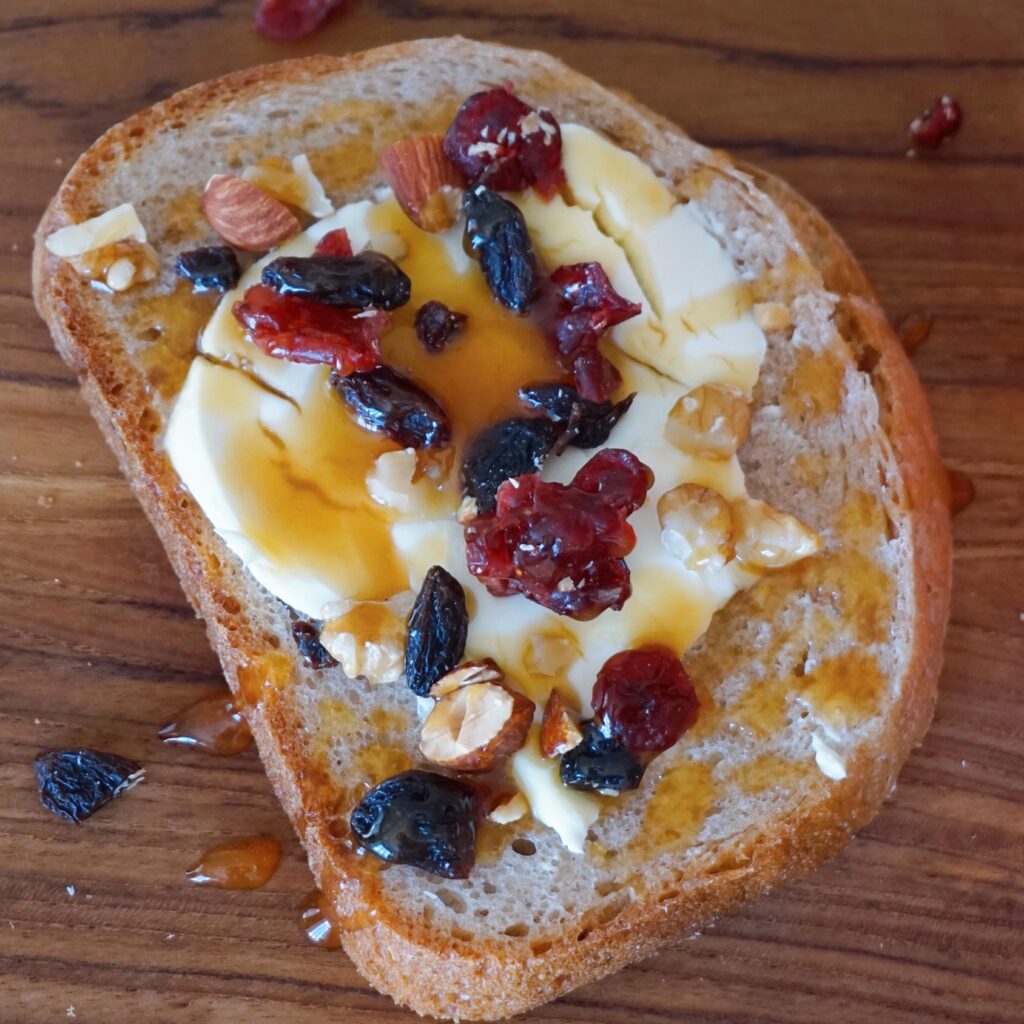
- Toast & Assemble: Slice the bread into 1cm (approx. 0.4 inch) slices. Toast until golden brown, spread with a thick layer of cream cheese, top with chopped nuts and fruit, and finish with a generous drizzle of Manuka honey.
Professional Tip for Success
Rye flour has very little gluten, which means it won’t rise like a fluffy white loaf. By using a 2:1 ratio of wheat to rye, we achieve the perfect balance: the structural integrity of a classic loaf with the deep, nutty complexity reminiscent of a traditional German sourdough.
📖Related Link: Read the Japanese version of this article here! [手作りライ麦パンとマヌカハニー:栄養が凝縮された至高のフュージョン]



コメント