- Traditional Shiratama Cream Anmitsu (Japan’s Ultimate Chilled Summer Parfait)
- Key Ingredients
- Popular Variations
- Recipe: Homemade Shiratama Cream Anmitsu
- Comparison Chart of Gelling Agents (Agar, Gelatin, Carrageenan)
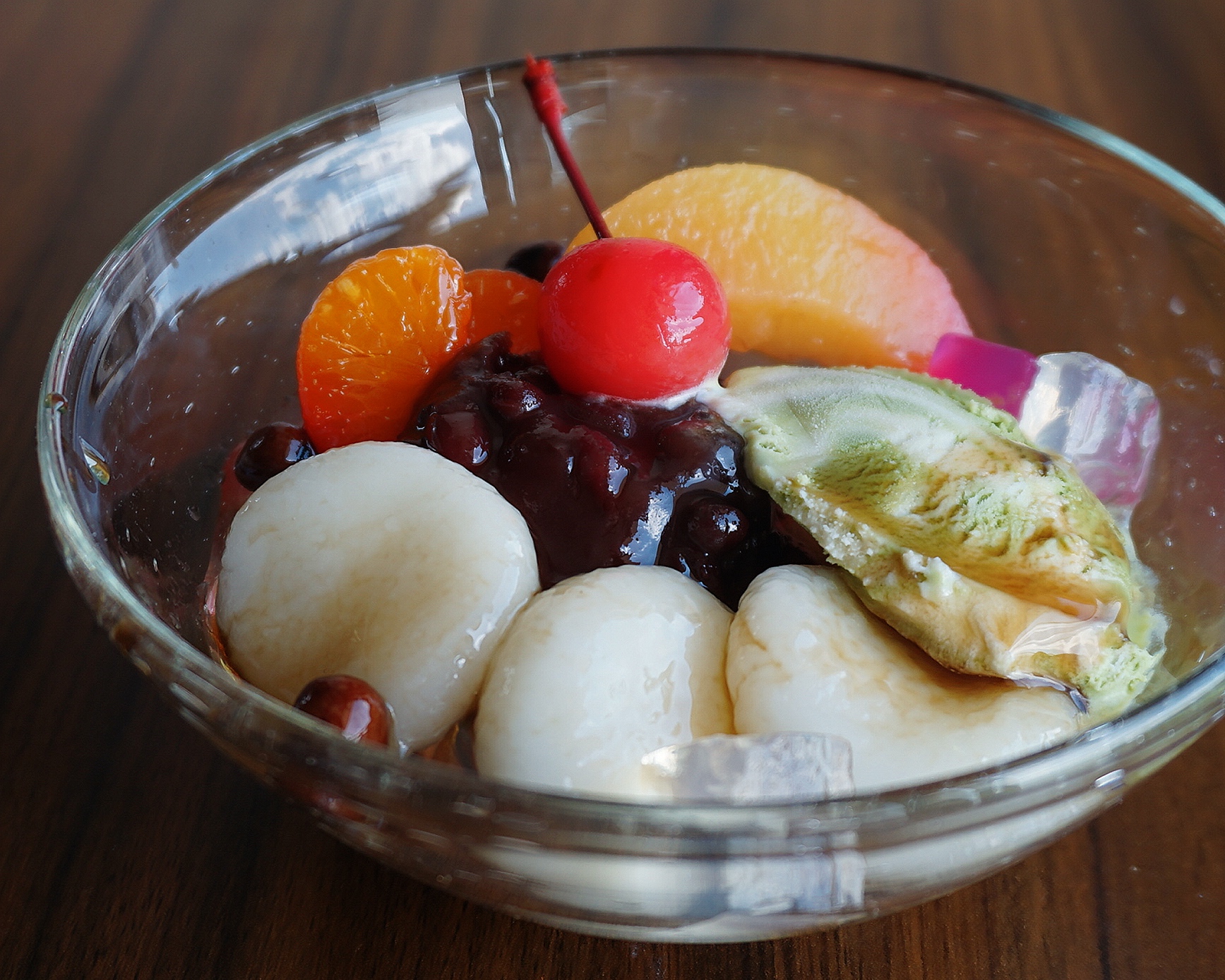
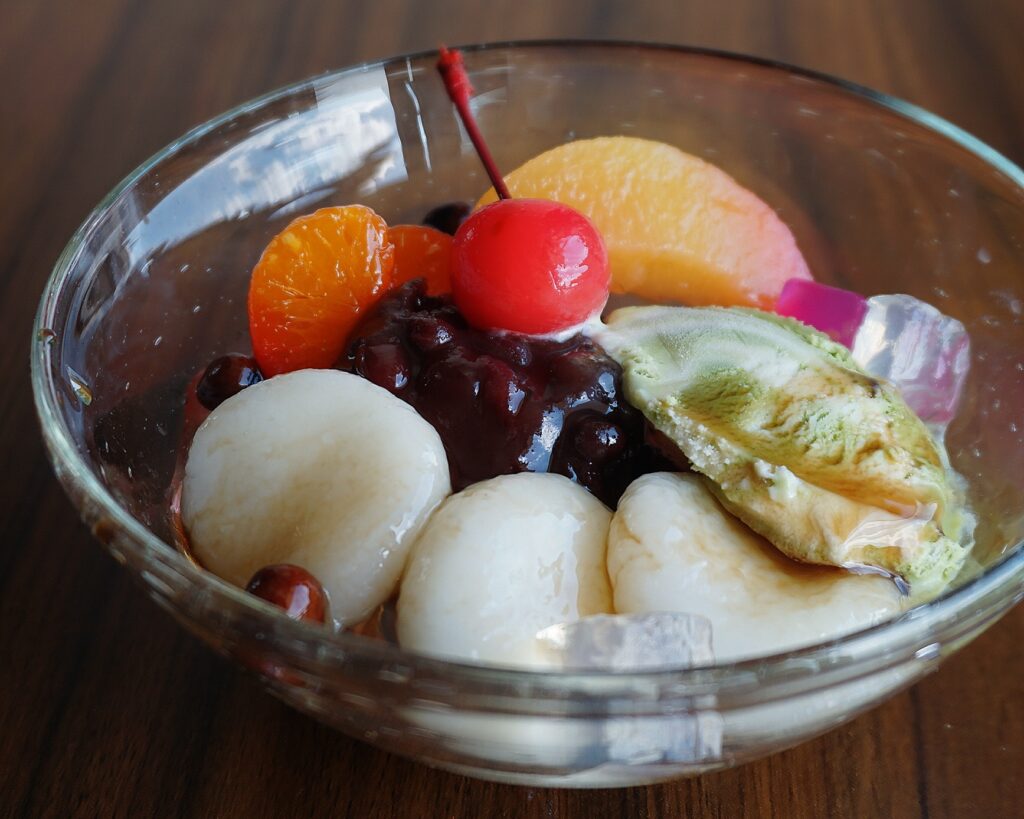
Traditional Shiratama Cream Anmitsu (Japan’s Ultimate Chilled Summer Parfait)
Anmitsu is a traditional Japanese cold dessert featuring cubed agar jelly (Kanten), sweet red bean paste (Anko), fresh fruits, chewy mochi bites (Gyuhi or Shiratama), and salted red peas. It is served with a rich black sugar syrup (Kuromitsu) poured generously over the bowl just before eating.
Flavor & Texture Profile
- Textural Harmony: Refreshing, firm agar jelly combined with smooth sweet red bean paste, chewy mochi balls, and soft fruit slices.
- Balanced Sweetness: The subtle pinch of saltiness from the red peas cuts through the rich sweetness of the dark brown sugar syrup.
Where the Name Comes From
The word Anmitsu is a blend of two main elements:
- An (餡) = Sweetened red bean paste
- Mitsu (蜜) = Sugar syrup (Kuromitsu)
Key Ingredients
| Ingredient | |
|---|---|
| Kanten (Agar Jelly) | A plant-based jelly made from red seaweeds. Unlike gelatin, it is 100% vegan, virtually calorie-free, and holds a crisp, firm bite. |
| Anko (Sweet Red Bean Paste) | Azuki red beans slow-cooked with sugar. |
| Kuromitsu (Black Sugar Syrup) | A rich syrup made from unrefined brown sugar (Kokuto). |
| Red Peas (Salted Peas) | Lightly salted boiled peas. |
| Shiratama Dango | Soft and chewy dumplings made from glutinous rice flour. |
| Fruits | Oranges, yellow peaches, kiwis, cherries, etc. |
Popular Variations
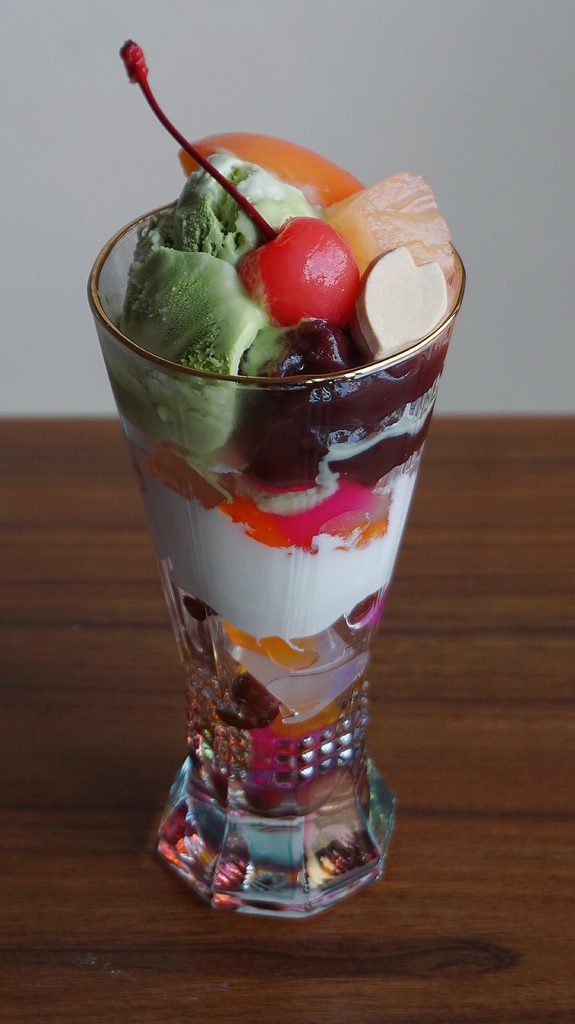
- Cream Anmitsu (クリームあんみつ): Topped with a scoop of matcha or vanilla ice cream—a heavenly Japanese-style sundae!
- Shiratama Anmitsu (白玉あんみつ): Loaded with tender, freshly boiled rice flour dumplings.
- Mitsumame (みつ豆): The original bean-and-jelly bowl served without red bean paste.
Recipe: Homemade Shiratama Cream Anmitsu
- Prep time: 15 mins
- Cook time: 15 mins
- Servings: 3 servings
Ingredients (5 Servings )
Mochi Dumplings (Shiratama):
- Shiratama-ko (Glutinous rice flour): 100 g
- Water:90 g (added incrementally)
- Boiling water: 1 L (for cooking)
Black Sugar Syrup (Kuromitsu):
- Japanese brown sugar (Kokuto): 30 g
- Water: 30 g
Toppings & Assembly:
- Canned Anmitsu (size 4 can): 1 can (450g, solid content 280g)(If unavailable, you can substitute with agar jelly + canned mandarin oranges, kiwi, cherries, etc.)
- Matcha or Vanilla Ice Cream:150 g
- Yude-Azuki (Sweetened boiled red beans):120 g
Step-by-Step Instructions
1. Make the Shiratama Dumplings
- In a mixing bowl, combine the Shiratama-ko flour with half of the water (45 g). Begin kneading with your hands.
- Gradually pour in the remaining water and knead until a smooth, pliable dough forms (it should feel soft like an earlobe).
- Divide the dough and roll into 12 g balls. Gently press the center of each ball with your thumb to form a shallow dimple (this ensures even cooking).
- Bring 1 L of water to a rolling boil. Drop in the dumplings.
- Once they float to the surface, continue cooking for another 1 to 2 minutes to ensure the centers are fully cooked.
- Transfer the cooked dumplings immediately into a bowl of ice water to chill and set their chewy texture.
2. Prepare the Kuromitsu Syrup
- Combine the brown sugar (30 g) and water (30 g) in a small saucepan.
- Heat over low-medium heat, stirring occasionally until the sugar dissolves and lightly thickens into a glossy syrup.
- Remove from heat and allow to cool completely.
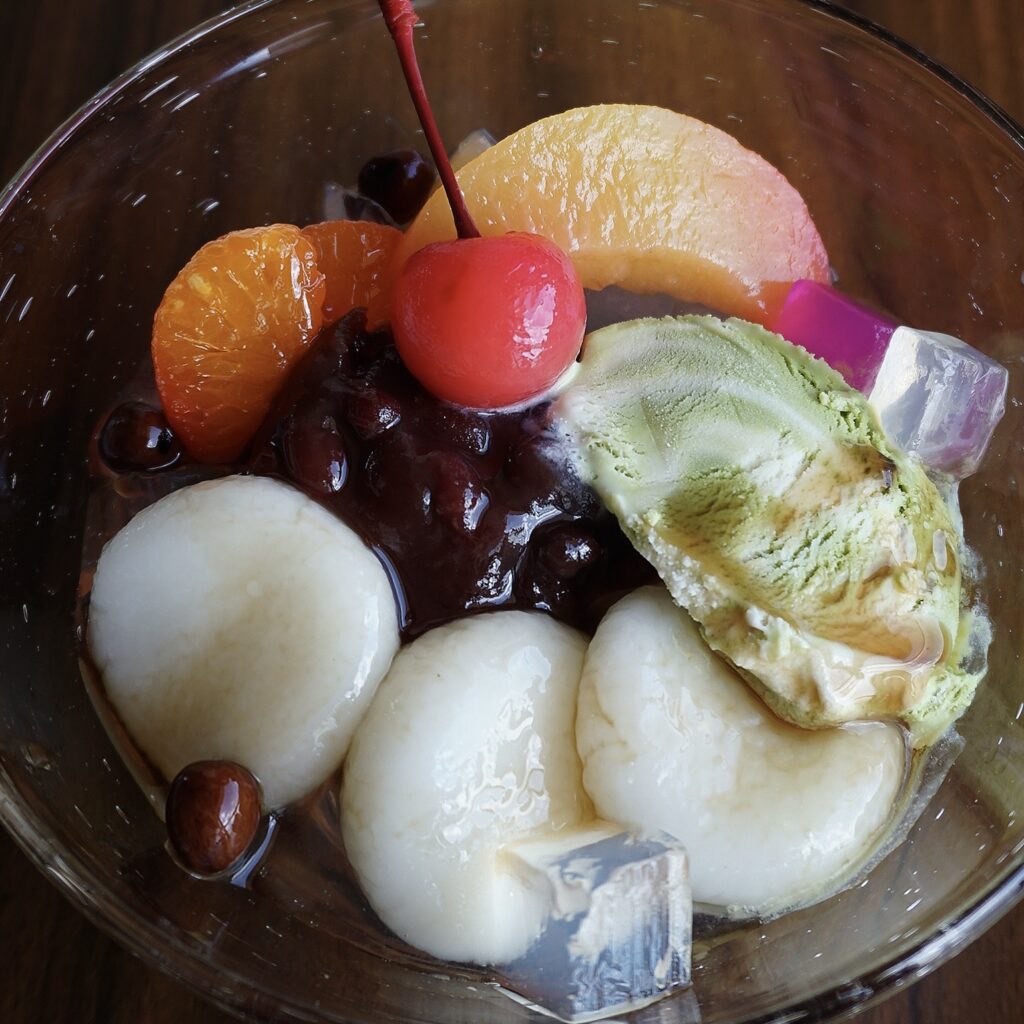
3. Assemble & Serve
- Drain the canned Anmitsu agar cubes and fruit. Divide evenly into 3 dessert bowls.
- Add a generous scoop of sweet red beans (Azuki) and the chilled Shiratama dumplings to each bowl.
- Top with a scoop of matcha or vanilla ice cream.
- Drizzle the homemade Kuromitsu syrup over the top right before serving.
Pro Chef Tips & Troubleshooting
- Undercooked Dumplings: If the dumplings are removed as soon as they float, the centers may remain powdery. Let them cook floating for an extra minute. Avoid over-boiling, as they can become soggy.
- Overcooked Syrup: If you boil the syrup too long, it will harden into candy as it cools. Simply whisk in a splash of hot water over low heat to loosen it back into syrup.
- Canned Fruit Alternatives: If pre-made Anmitsu cans are unavailable, cut plain homemade agar or fruit jelly into 1.5 cm cubes and pair with canned mandarin oranges, fresh kiwi, and maraschino cherries.
How to Make Homemade Kanten (Agar-Agar) Jelly
- Add 4g of kanten (agar-agar powder) to about 500ml of water, place over heat, and stir constantly until fully dissolved.
- Once it reaches a boil, reduce the heat just enough to keep it from boiling over, and let it simmer for 1 to 2 minutes.
- Pour the mixture into a mold and allow it to cool and set.
Nutrition Facts
The canned anmitsu is calculated with its total contents including syrup (450g). Draining the syrup will reduce total calories and carbohydrates.
Ice cream values are based on standard dairy ice cream (~200 kcal/100g). Using lower-fat ice cream, gelato, or sorbet will adjust lipid and caloric values accordingly.
| Ingredient / Item | Quantity | Energy (kcal) | Protein (g) | Fat (g) | Carbohydrates (g) | Salt Equivalent (g) |
| Shiratama-ko (Glutinous Rice Flour) | 100g | 369.0 | 6.0 | 0.9 | 81.8 | 0.0 |
| Muscovado / Dark Brown Sugar (Kokuto) | 30g | 106.2 | 0.2 | 0.0 | 26.9 | 0.0 |
| Canned Anmitsu (including syrup) | 450g | 337.5 | 1.4 | 0.5 | 83.3 | 0.1 |
| Ice Cream (Vanilla or Matcha) | 150g | 300.0 | 4.5 | 18.0 | 30.0 | 0.15 |
| Sweetened Azuki Beans (Yude-azuki) | 120g | 294.0 | 6.2 | 0.6 | 67.8 | 0.12 |
| Total | — | 1,406.7 kcal | 18.3 g | 20.0 g | 289.8 g | ~ 0.4 g |
Option 1: Divided into 4 Servings (Per Portion)
- Calories: 352 kcal
- Protein: 4.6 g
- Fat: 5.0 g
- Carbohydrates: 72.5 g
- Salt Equivalent: 0.1 g
Option 2: Divided into 5 Servings (Per Portion)
- Calories: 281 kcal
- Protein: 3.7 g
- Fat: 4.0 g
- Carbohydrates: 58.0 g
- Salt Equivalent: 0.08 g
Comparison Chart of Gelling Agents (Agar, Gelatin, Carrageenan)
| Gelling Agent | Conc. (%) | Gel Temp / Melting Temp | Origin, Structure & Texture Characteristics | Cooking Cautions & Inhibitors |
| Agar (Kanten) Bring to a boil | 0.5–1.0% | Approx. 35°C / Approx. 80°C | Red seaweed polysaccharide Sets firmly at room temperature with high shape retention and stability. | 【Heat + Acid】 Adding acidic juices while boiling breaks down carbohydrate chains, preventing setting. ※Remove from heat and allow to cool slightly before adding acidic liquids. |
| Gelatin Do not boil | 2.0–3.0% | Approx. 3°C / Approx. 20°C | Animal collagen (protein) Melts at body temperature, offering a smooth, melt-in-the-mouth texture. | 【Proteolytic Enzymes】 Broken down by raw enzymes (e.g., actinidin) in fresh kiwi, pineapple, or papaya, preventing setting. ※Use canned or heated/cooked fruit instead. |
| Carrageenan Heat until just before boiling | 0.5–1.5% | Approx. 40°C / Approx. 60°C | Red seaweed polysaccharide Sets at room temperature with a soft, elastic texture. Gelation is enhanced when combined with milk (calcium). | 【Heat + Acid】 More acid-resistant than agar, but when mixing with acidic juices, cool below 50°C before combining. |
Important Preparation Rules:
- Agar (Kanten): Boiling agar together with acidic fruit juices (like lemon or orange) breaks down its carbohydrate chains, preventing it from setting. Always boil the agar fully in water first, cool the mixture down to 60–70°C, and then stir in acidic juices or fruits.
- Gelatin: Contains animal protein. Raw kiwi, pineapple, and papaya contain proteolytic enzymes that break down gelatin and stop it from setting (use canned fruit instead, as heating neutralizes the enzyme).
- Carrageenan: Ideal for milk-based desserts and smooth jelly making. When adding acidic ingredients, cool the mixture below 50°C and stir quickly.
- Syrup Absorption: High sugar concentration helps prevent water separation (syneresis) in agar jelly.
Click here to see the Japanese version of the article. 【完全版】あんみつの魅力と作り方|基本知識から凝固剤の科学まで

コメント