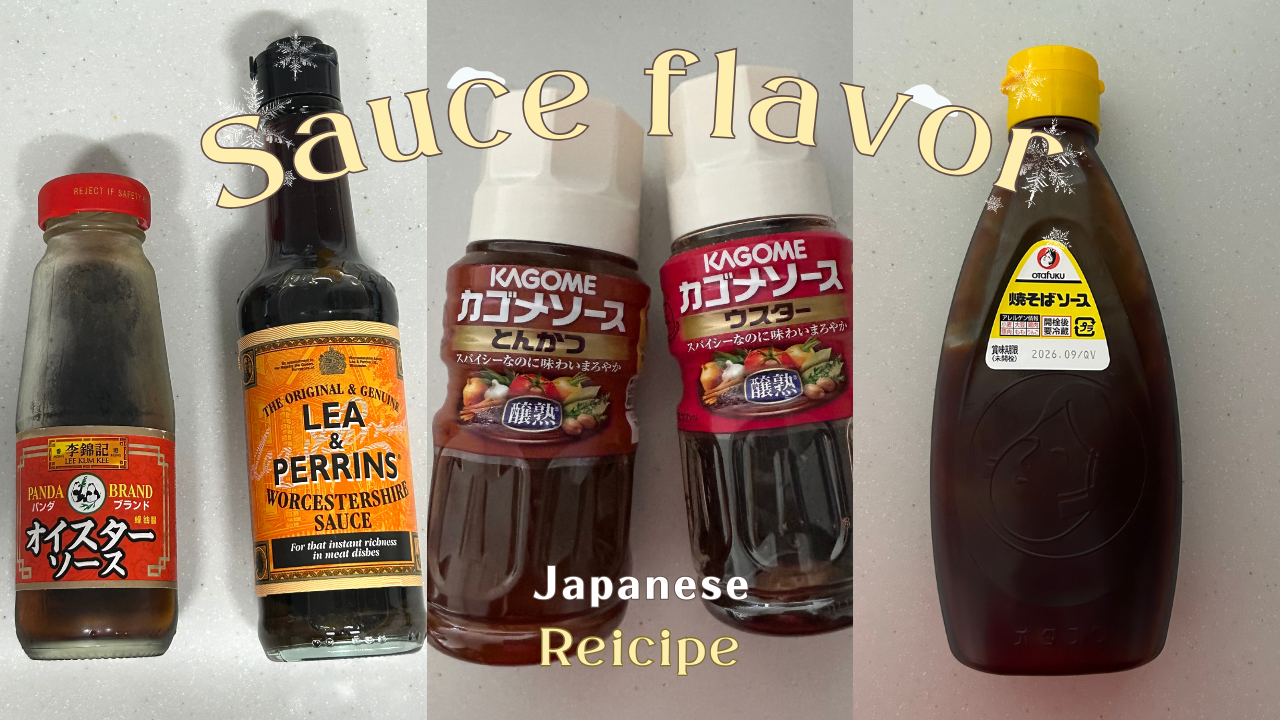
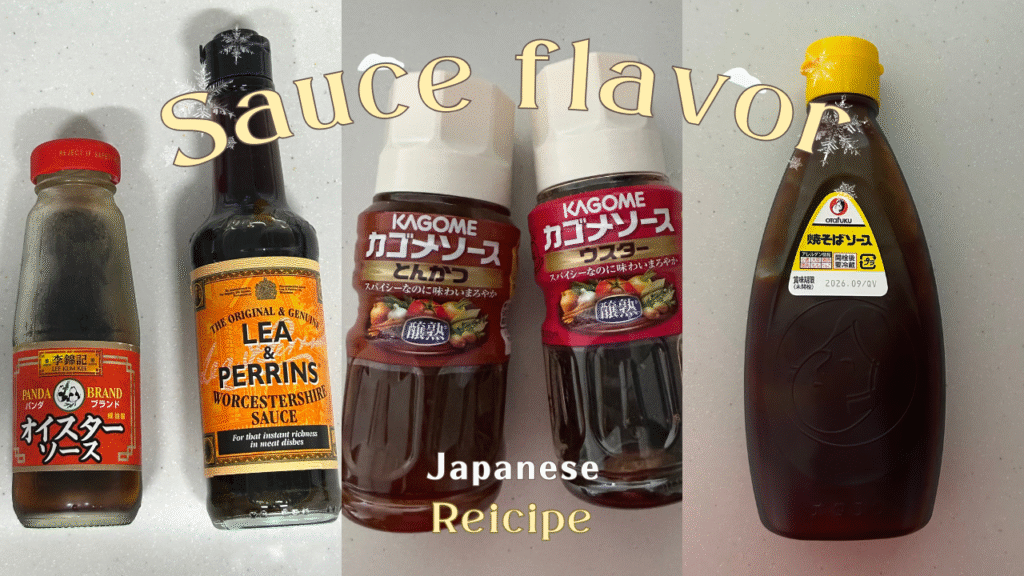
A Guide to Japanese Sauces
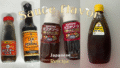
In Japan, the word “sauce” usually refers to a dark, savory, and tangy condiment made from vegetables, fruits, and spices. While they may look similar, their viscosity and flavor profiles vary significantly. Here is how to navigate the world of Japanese sauces!
1. Classification by JAS Standard (Viscosity)
JAS規格による分類(粘度の違い) According to Japanese Agricultural Standards (JAS), sauces are primarily categorized into three types based on their thickness.
- Worcestershire Sauce (Usuta Sauce / ウスターソース)
- Profile: The thinnest and most liquid of the three. It has a sharp, spicy, and acidic bite.
- Origin: Inspired by the 19th-century English original, though the Japanese version (like Kagome) has its own unique savory profile.
- Best For: Dishes like Tonteki (Pork Steak) or as a quick flavor booster.
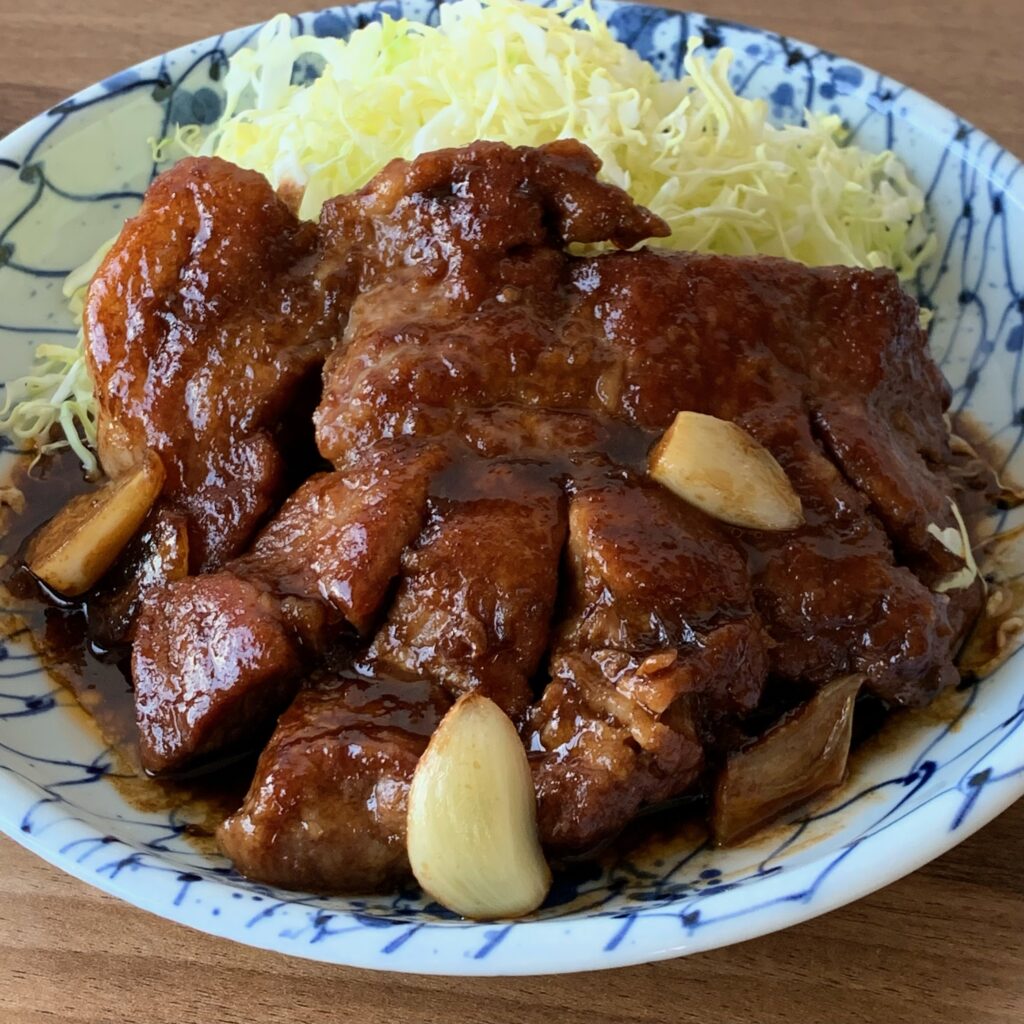
👉 Tonteki Recipe: Japanese Pork Steak with a Unique Sour Sauce
- Chuno Sauce (Medium-Thick / 中濃ソース)
- Profile: “Chuno” means medium viscosity. It’s a perfect balance of the spicy kick of Worcestershire and the fruity sweetness of thicker sauces.
- Best For: A versatile all-rounder for fried foods, or as a secret ingredient in Cottage Pie, curry, and meat sauces.
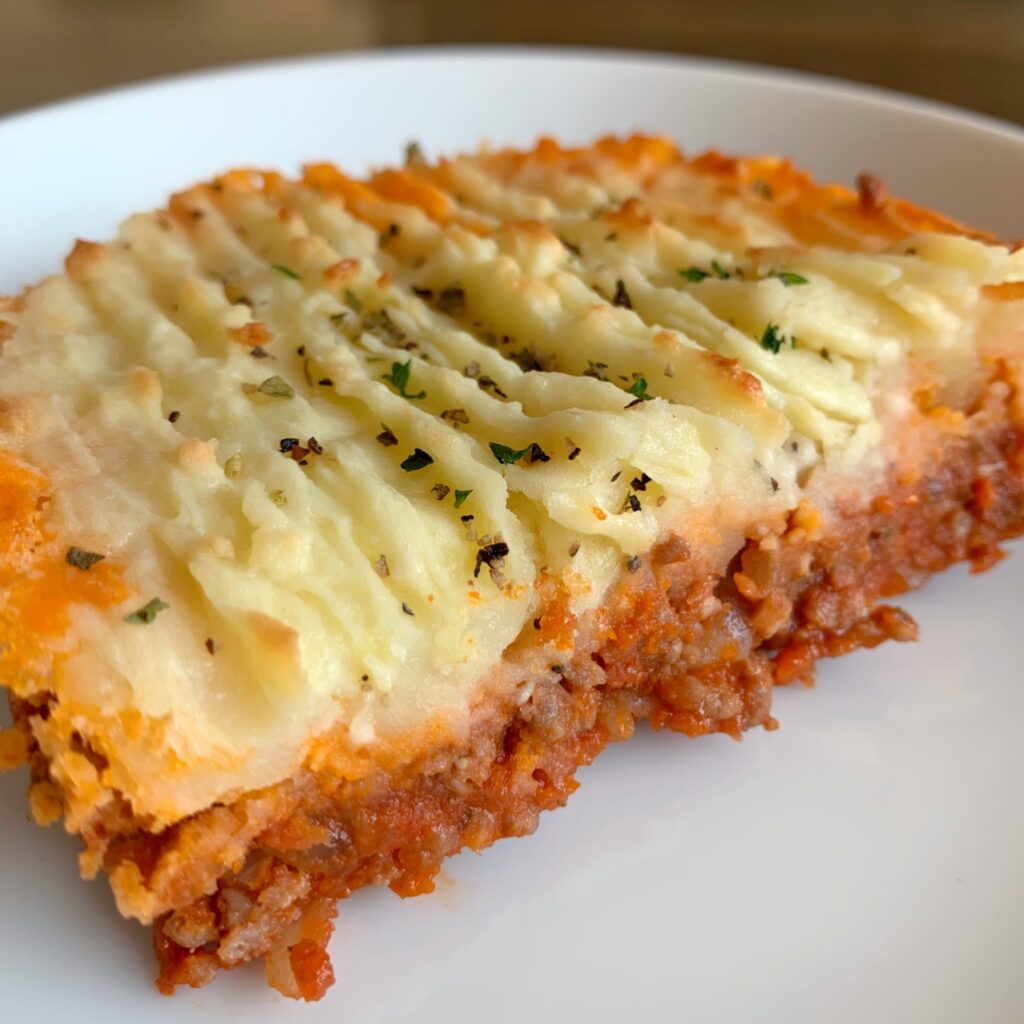
👉 Cottage Pie (Mashed potato and meat sauce)
- Nouko Sauce (Thick / 濃厚ソース)
- Profile: High viscosity with a bold, sweet flavor and low acidity. It’s thick enough that it won’t make fried breading soggy.
- Best For: This is the standard for Tonkatsu, which is why many labels simply call it “Tonkatsu Sauce.” Its mild sweetness makes it a hit with children.
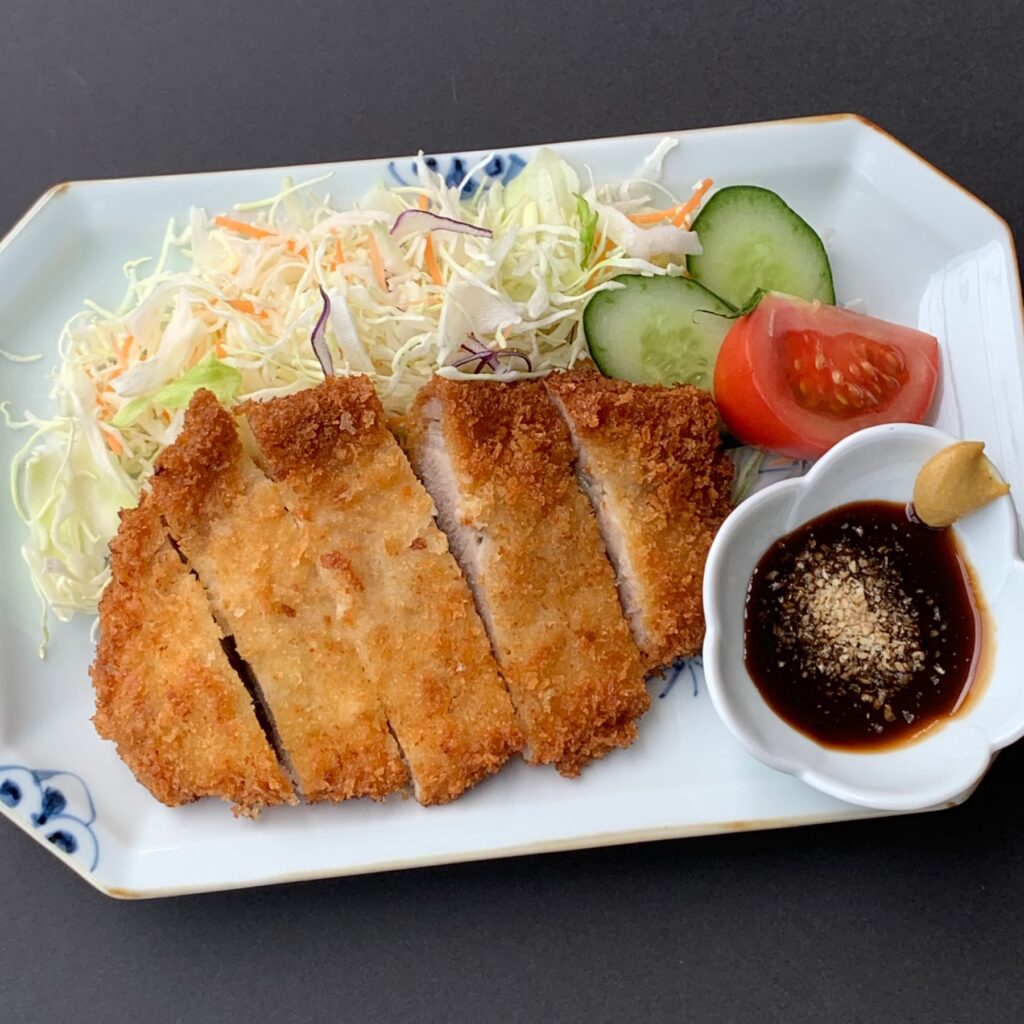
👉 Tonkatsu Made With Batter Liquid
2. Specialty & Regional Sauces
個性豊かな専門ソース
- Oyster Sauce (オイスターソース)
- An essential for Chinese-inspired dishes like Chinjao Rosu (Beef and Pepper Stir-fry) and Shanghai Yakisoba. It provides a deep, umami richness that only oysters can offer.
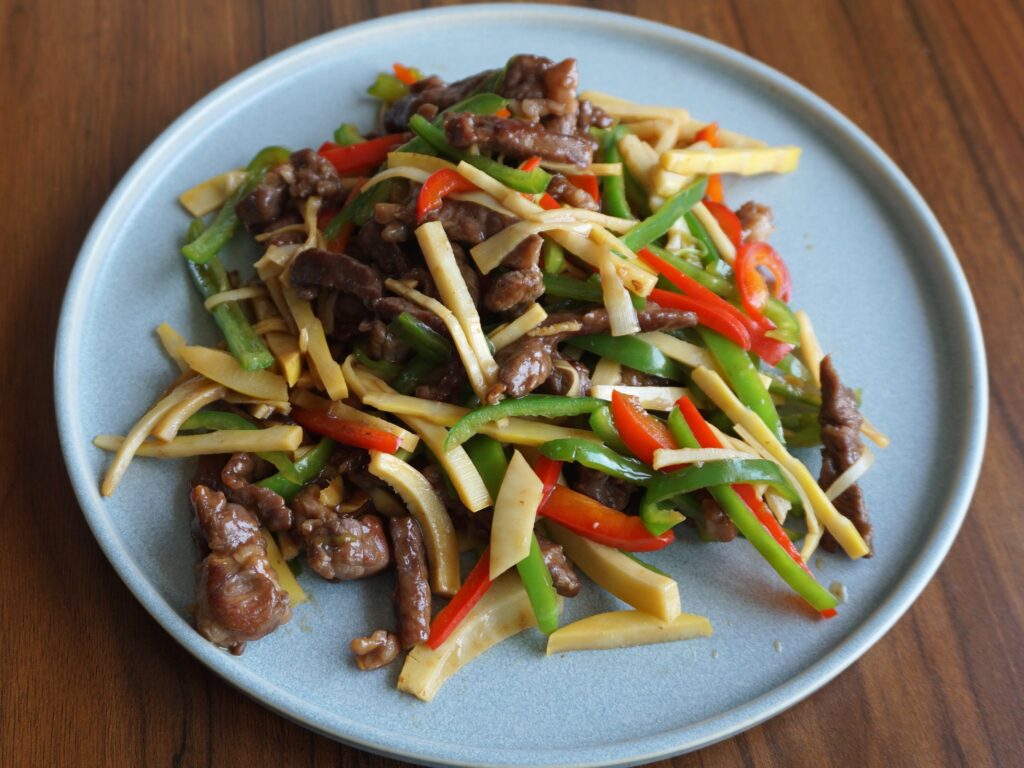
👉 Chinjao Rosu ( Beef and pepper stir-fry)
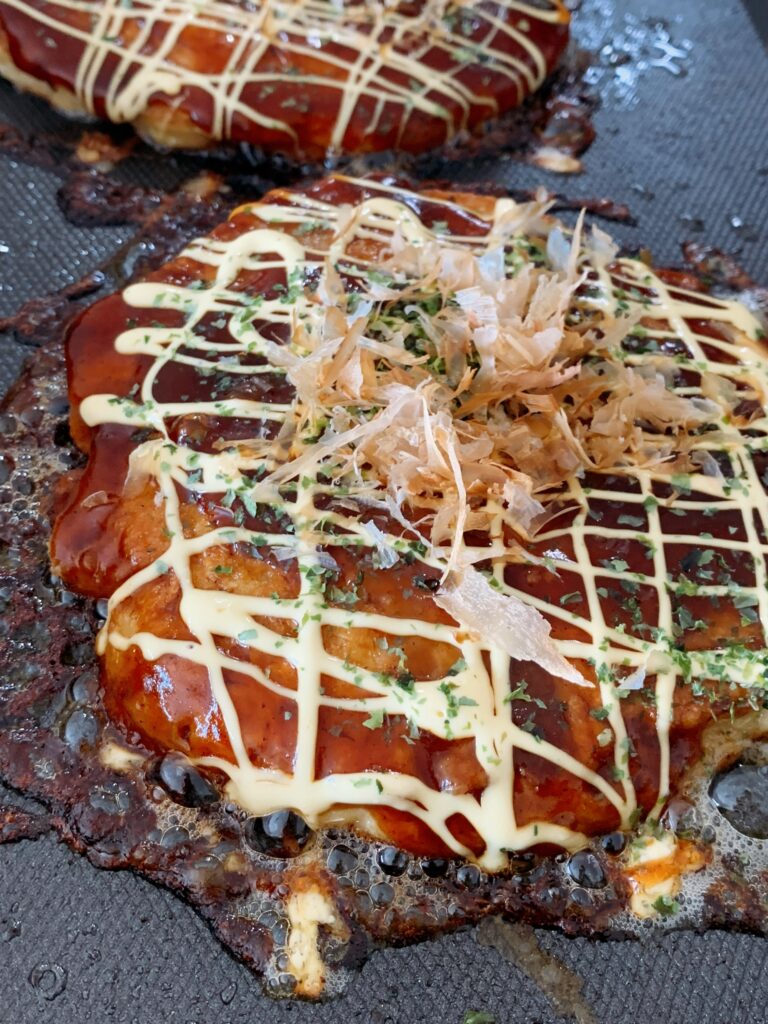
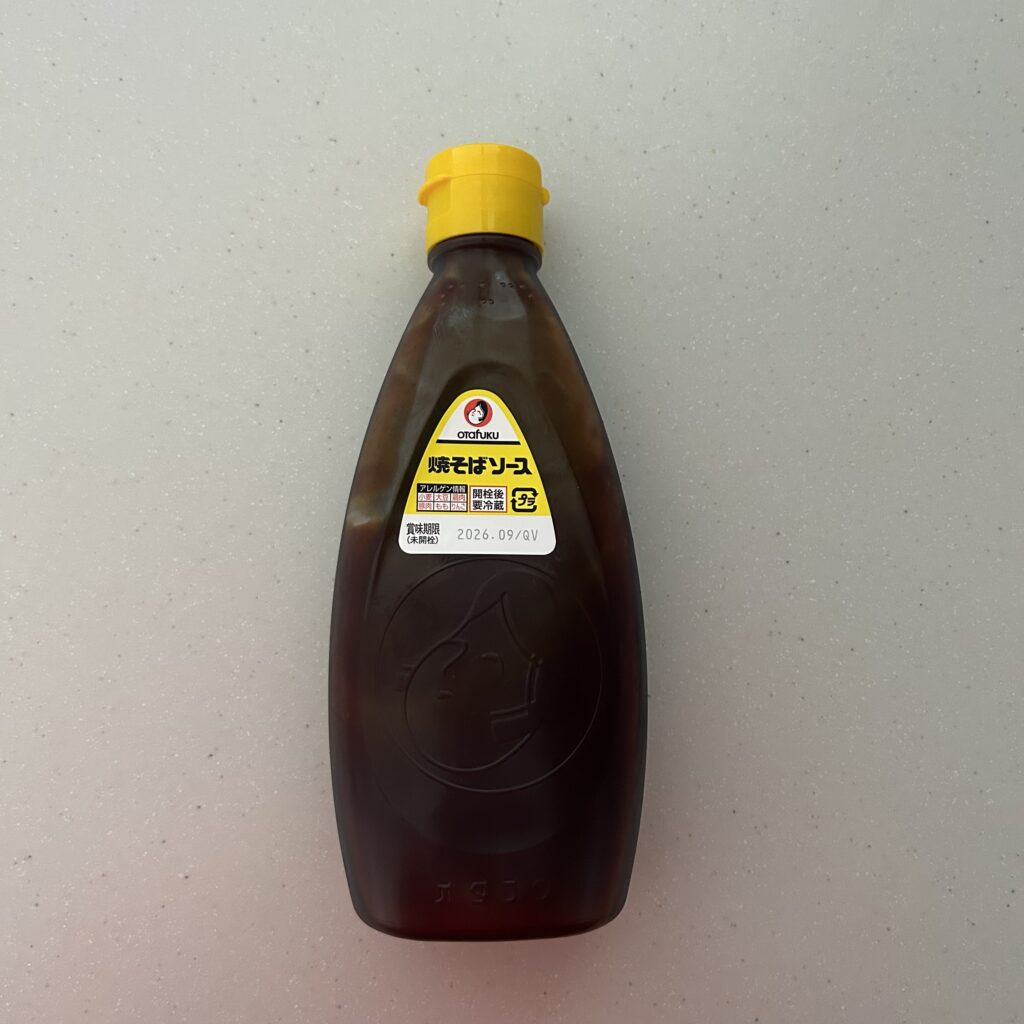
- Otafuku Sauce (Okonomiyaki/Yakisoba Sauce)
- Famous for its use of dates as a key ingredient, giving it a distinctive fruity sweetness. Beyond Okonomiyaki, it’s a great addition to Hayashi Rice or hamburger steaks.
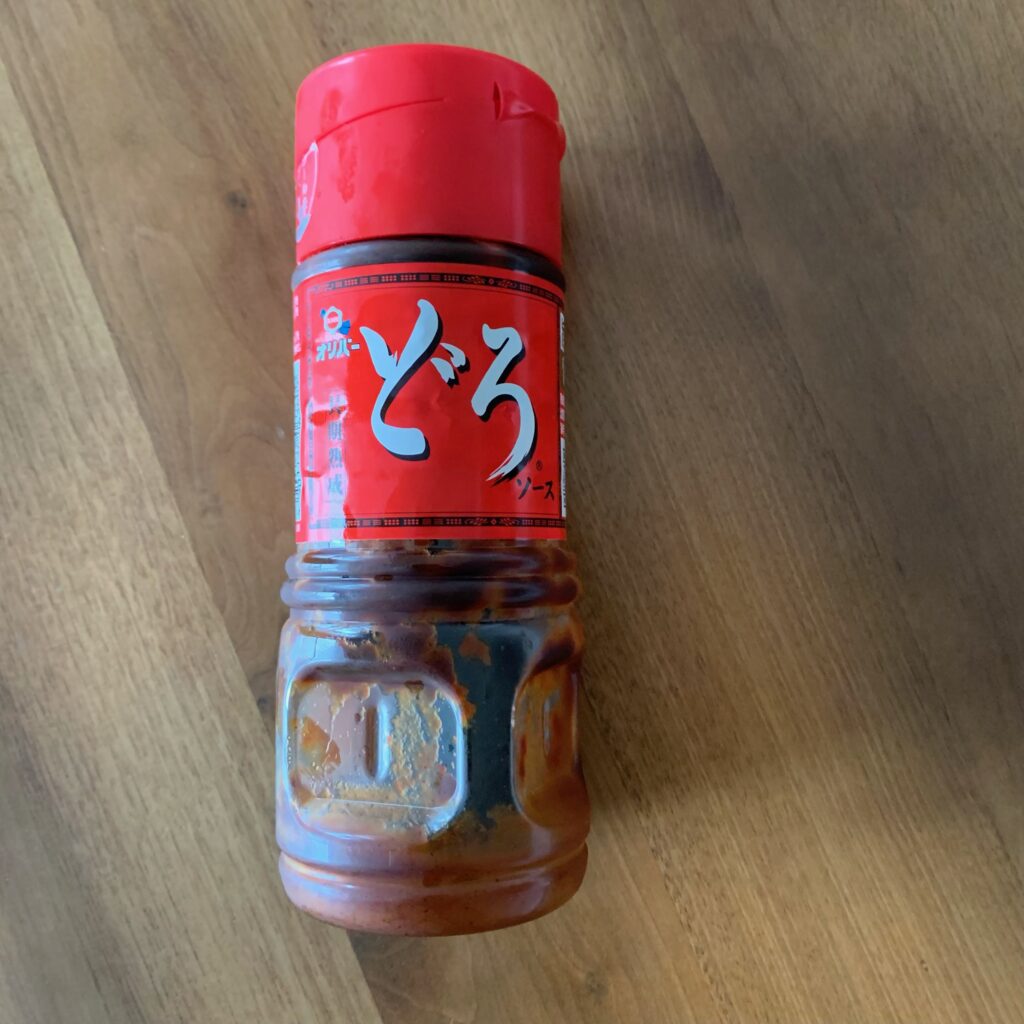
- Doro Sauce (どろソース)
- The Story: Manufactured by Oliver Sauce Co., this sauce was born from the “sediment” (called doro, meaning mud) left over during the production of Worcestershire sauce.
- Profile: It is a concentrated, matured sauce with a unique, spicy, and complex depth that is unmatched by standard sauces. It’s a must-try for those who love a bit of a kick!
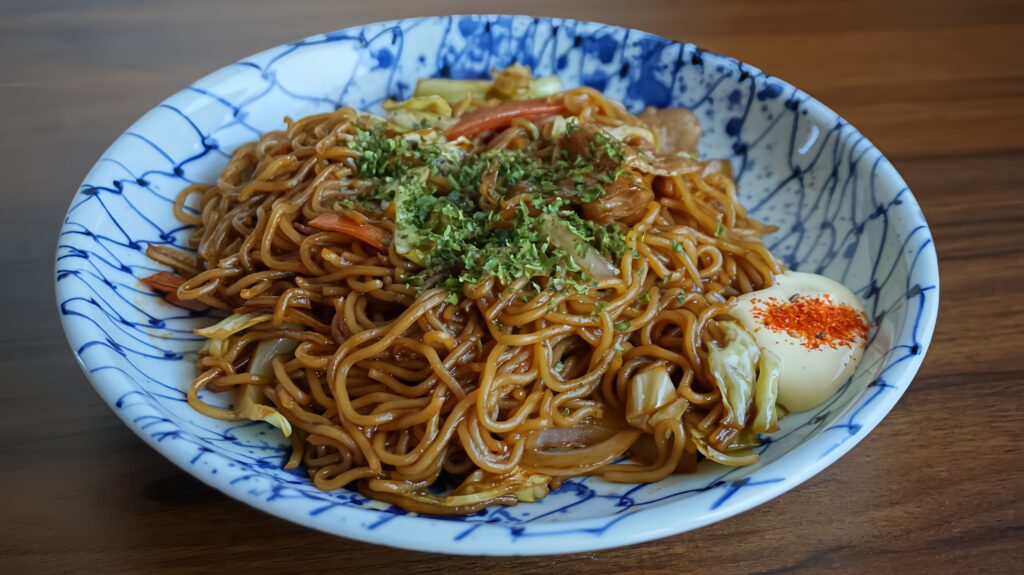
👉 Authentic Homemade Yakisoba Sauce
Summary Table / ソース比較まとめ
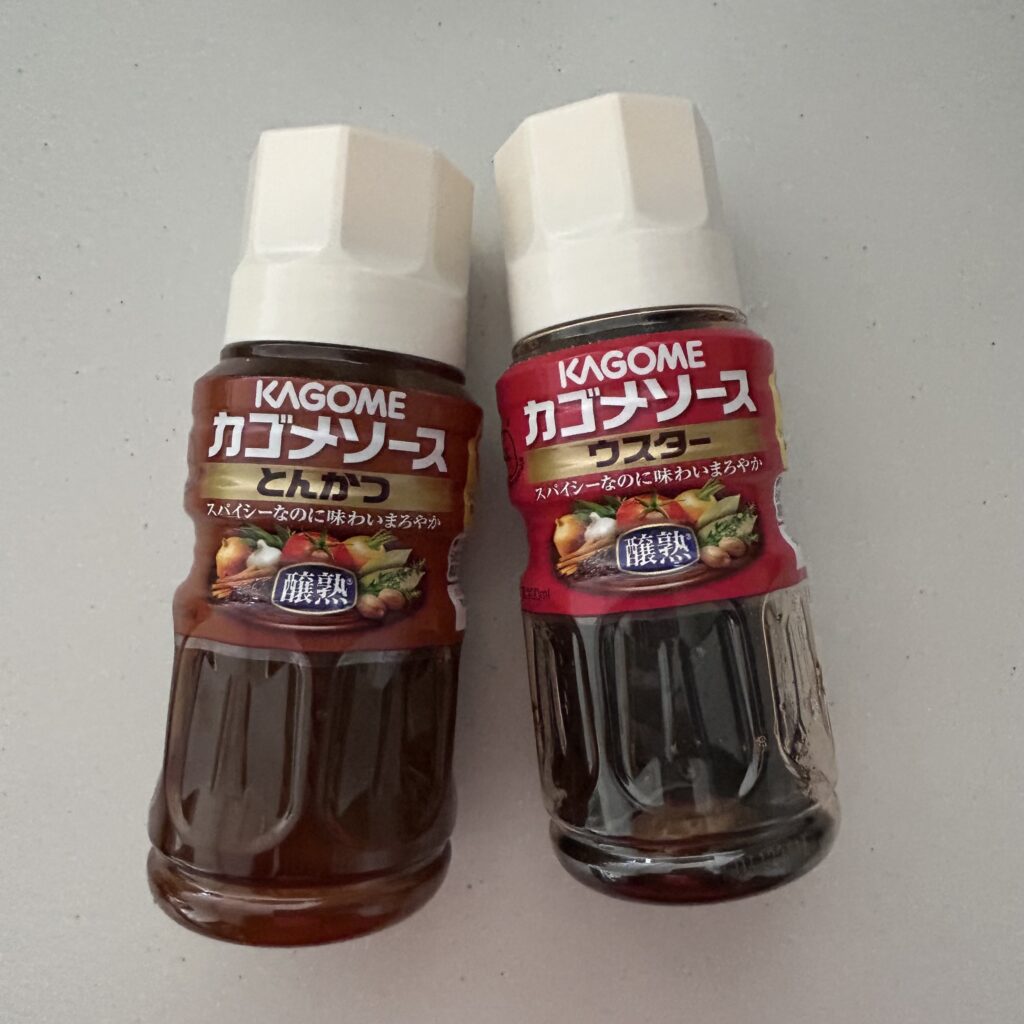
The thick sauce has a nice spice to it.
| Type | Viscosity (粘度) | Flavor (味の特徴) | Perfect Pairing (おすすめ料理) |
| Worcestershire | Low (サラサラ) | Sharp, Spicy (スパイシー) | Tonteki, Fried Fish |
| Chuno | Medium (中間) | Balanced (万能・フルーティー) | Fried Foods, Curry |
| Nouko (Tonkatsu) | High (ドロドロ) | Sweet, Rich (甘口・濃厚) | Tonkatsu, Korokke |
| Doro Sauce | High (濃厚) | Spicy, Deep (辛口・熟成感) | Okonomiyaki, Soba-meshi |
#ソース #調味料 #ウスターソース #中濃ソース #濃厚ソース #オタフクソース #どろソース #カゴメ #管理栄養士 #料理の基本 #JapaneseSauce #Worcestershire #CookingTips #Umami #Otafuku #Kagome
📖Related Link: Read the Japanese version of this article here! []

コメント