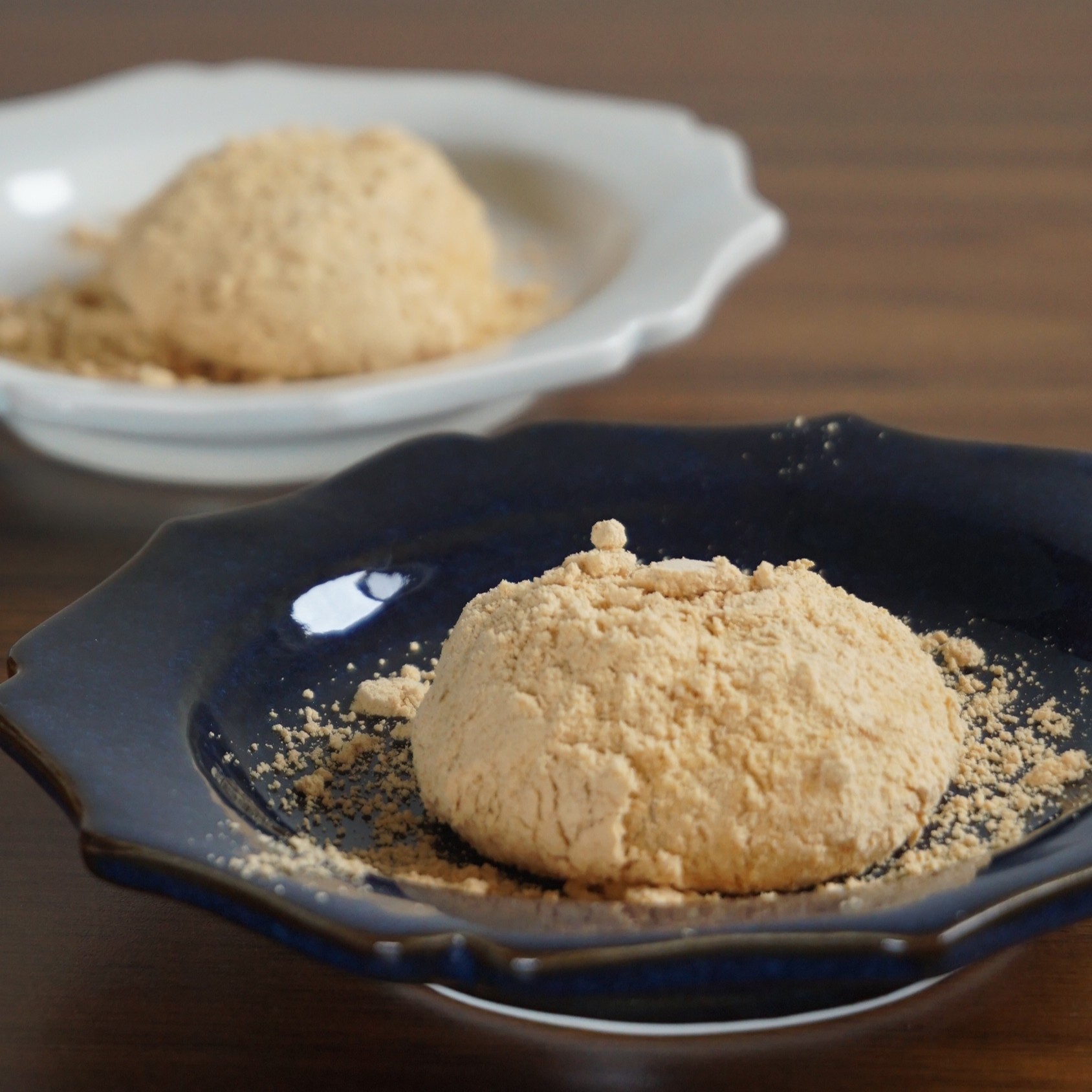
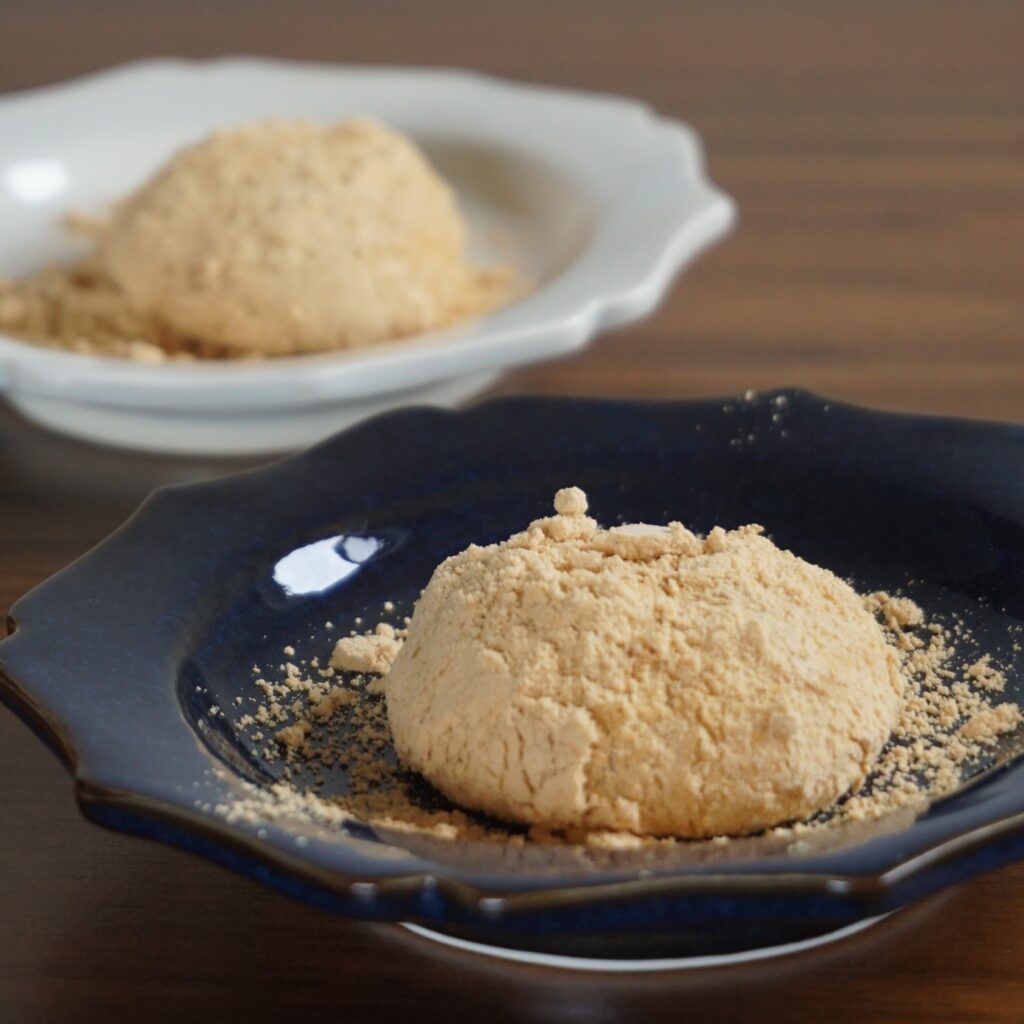
Kinako mochi: Japan’s ultimate comfort food – golden rice cakes coated in fragrant soy flour (きな粉もち)
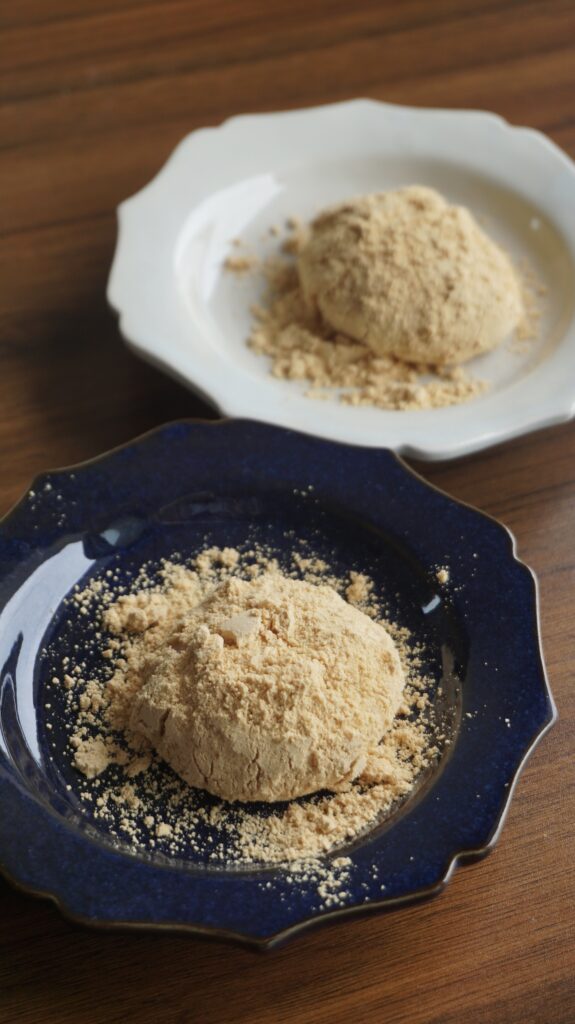
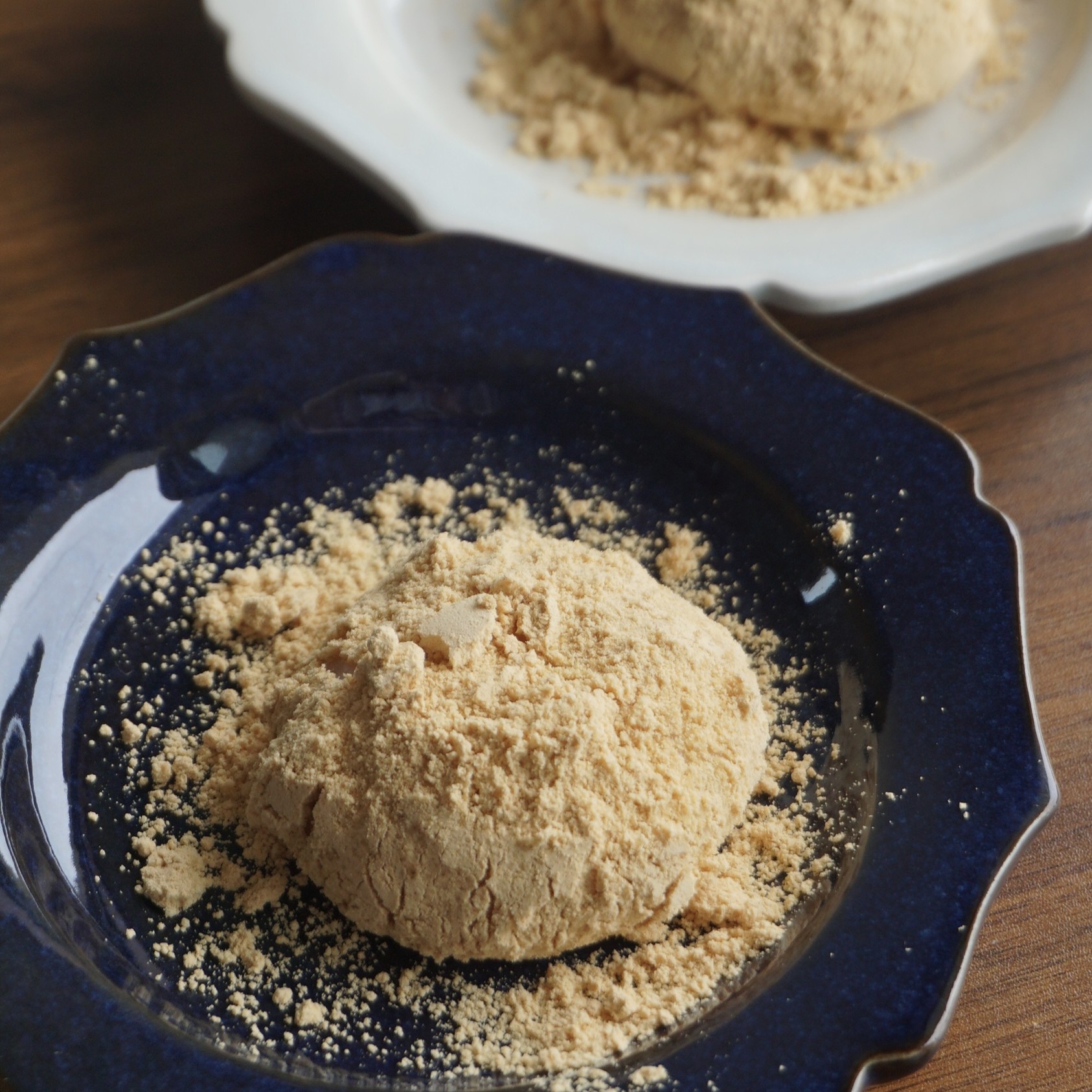
Kinako Mochi is one of Japan’s most beloved ways to enjoy rice cakes. It features soft, chewy mochi coated in Kinako, a golden-yellow powder that offers a toasted, nutty flavor. In some regions, this treat is famously known as Abekawa Mochi.
What is Mochi?
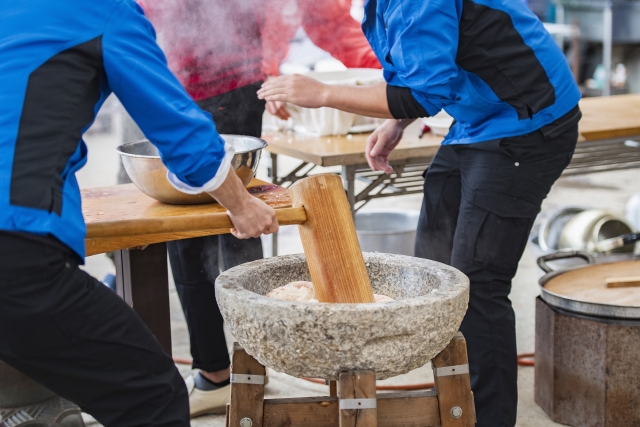
Mochi is a traditional Japanese food made from Glutinous Rice (mochigome). Traditionally, the rice is steamed and then pounded with a wooden mallet (Kine) in a large mortar (Usu) until it becomes incredibly stretchy and sticky.
- A Sacred Tradition: Since ancient times, rice has been believed to hold spiritual power. Mochi is an essential “good luck” food for Hare-no-hi (special occasions) like New Year’s and festivals.
- A Community Event: Gathering to pound mochi at the end of the year is a quintessential Japanese winter scene.
The Magic of “Kinako” (Roasted Soybean Flour)
- Flavor: A toasted, nutty aroma with the gentle natural sweetness of soybeans.
- The Secret Touch: We mix Kinako with a little sugar and a pinch of salt to enhance the richness and bring out the deep roasted notes.
- Superfood Status: Because it’s made from whole soybeans, it’s a powerhouse of plant-based protein and fiber.
📋 Nutritional Comparison: Kinako (Roasted Soybean Flour)
Kinako is so nutrient-dense; it’s truly like a ‘natural supplement’.
| Nutrient | Daily Goal / Upper Limit (Adult Female) | Amount in 20g of Kinako | % of Daily Goal Met |
| Protein | 50 g | 7.5 g | 15.0% |
| Iron | 10.5 mg* | 1.24 mg | 11.8% |
| Zinc | 8.0 mg | 0.8 mg | 10.0% |
| Dietary Fiber | 18 g+ | 3.06 g | 17.0% |
| Soy Isoflavones | 70–75 mg (Upper Limit) | Approx. 52 mg | Approx. 70% |
💡 Notes:
- Iron: The reference value is for menstruating females.
- Isoflavones: While content varies by soybean variety and harvest season, Kinako generally contains between 200–300 mg of isoflavones per 100g.
⚠️ Safety First!
Mochi is very sticky and elastic, which can be a choking hazard if not handled carefully.
- Cut into small pieces before serving.
- Chew thoroughly and eat slowly.
- Enjoy with a drink (like green tea) to help with swallowing.
- Supervise elderly guests and small children closely.
Explore More Mochi Varieties
Mochi is incredibly versatile! You can find it in different shapes—Kaku-mochi (squares) or Maru-mochi (rounds). Try these other styles:
- Zoni: A savory New Year’s soup with mochi and vegetables. [Ozouni (New Year Mochi Soup)]
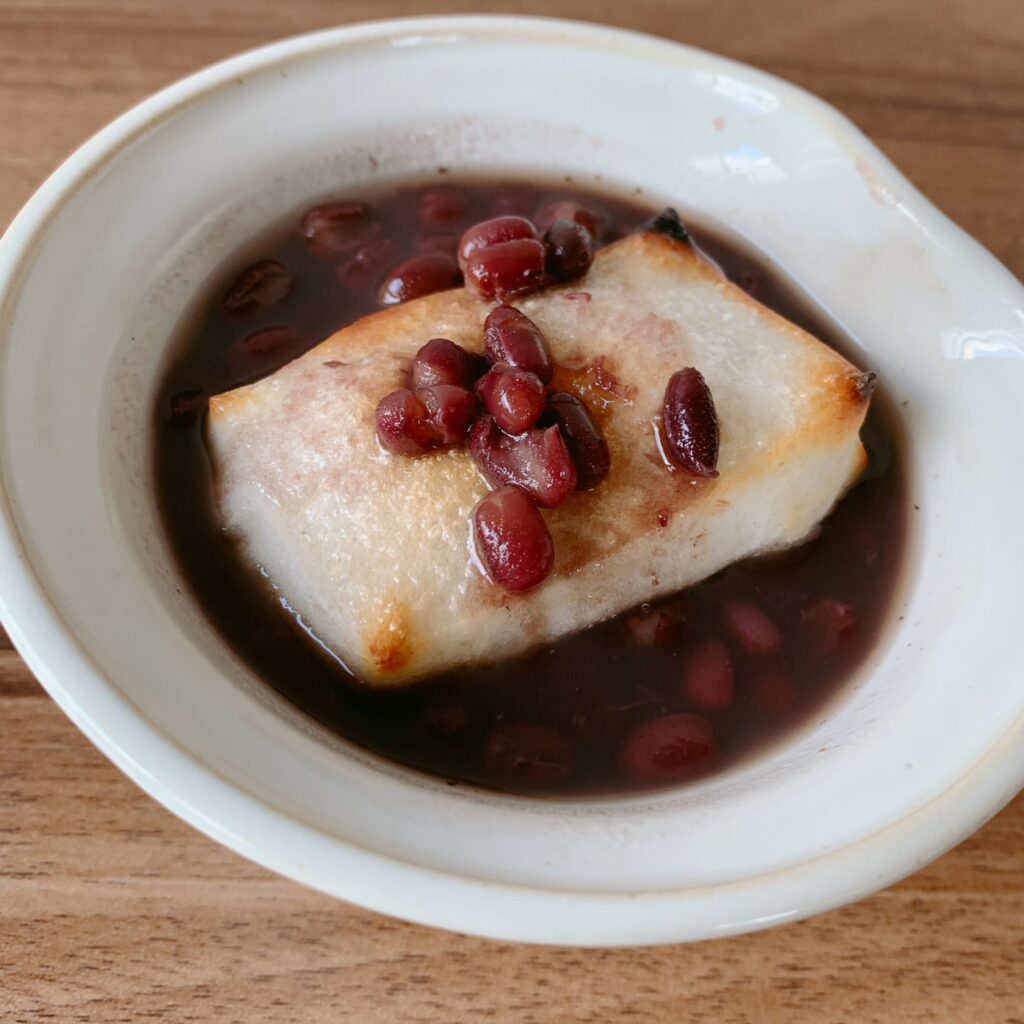
- Oshiruko: A sweet dessert soup made from red beans. [Oshiruko (Sweet red bean mochi soup)]
- Isobeyaki: Grilled mochi with soy sauce and wrapped in crispy seaweed.
Love this flavor? Check out our recipe for [Kinako Shiratama Dango (Sweet dumplings)] for a similar taste with a different texture!


🥣 Recipe: Fresh Home-Bakery Kinako Mochi
While traditional pounding is rare today, you can achieve that “freshly made” softness using a home bakery (bread machine).
Ingredients
- Glutinous Rice: 150g
- Water: 150g
- Kinako: 20g
- Sugar: 15g
- Salt: A small pinch (approx. 1g)
Instructions
- Prep the Rice: Wash the glutinous rice and let it drain in a sieve for 30 minutes.
- Machine Cook: Place the rice and water into your home bakery. Select the “Mochi” or “Knead” mode.
- Cool Slightly: Once finished, wait until the container is cool enough to handle. Dust a tray with potato starch (katakuriko) and transfer the mochi onto it.
- The Coating: While the container is cooling, combine the soybean flour, sugar, and salt in a bowl.
- Shape: Wet your hands to prevent sticking. Use your thumb and index finger to “pinch” and tear the mochi into bite-sized pieces. Toss them immediately in the Kinako mixture.
Shortcut Version: If using store-bought dried mochi (Kiri-mochi), place them in a heat-proof bowl covered with water. Microwave at 500W for about 2 minutes until soft, then coat with the Kinako mix.
📖Related Link: Read the Japanese version of this article here! [きなこ餅のレシピ:甘い大豆粉を使った日本のお餅]

コメント