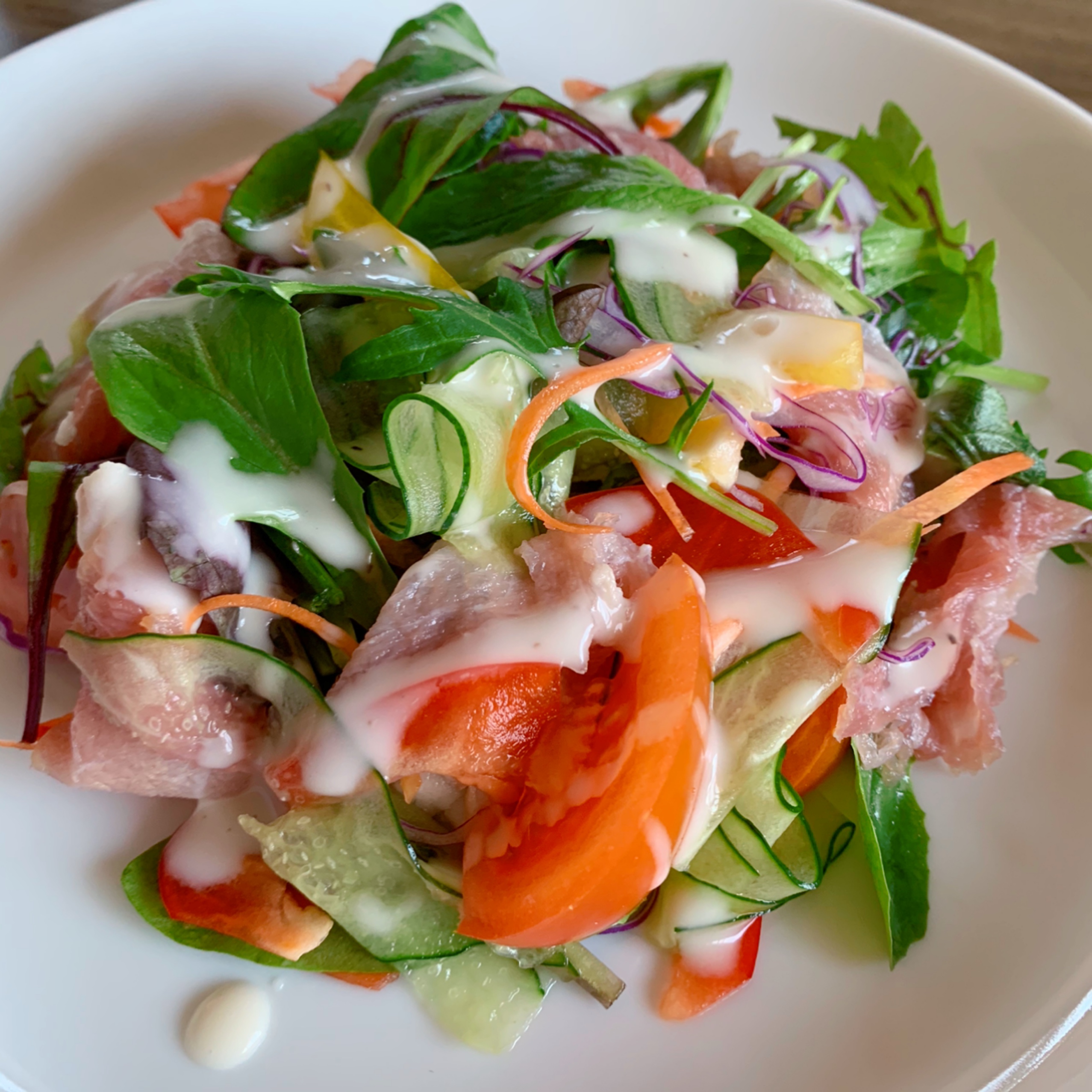
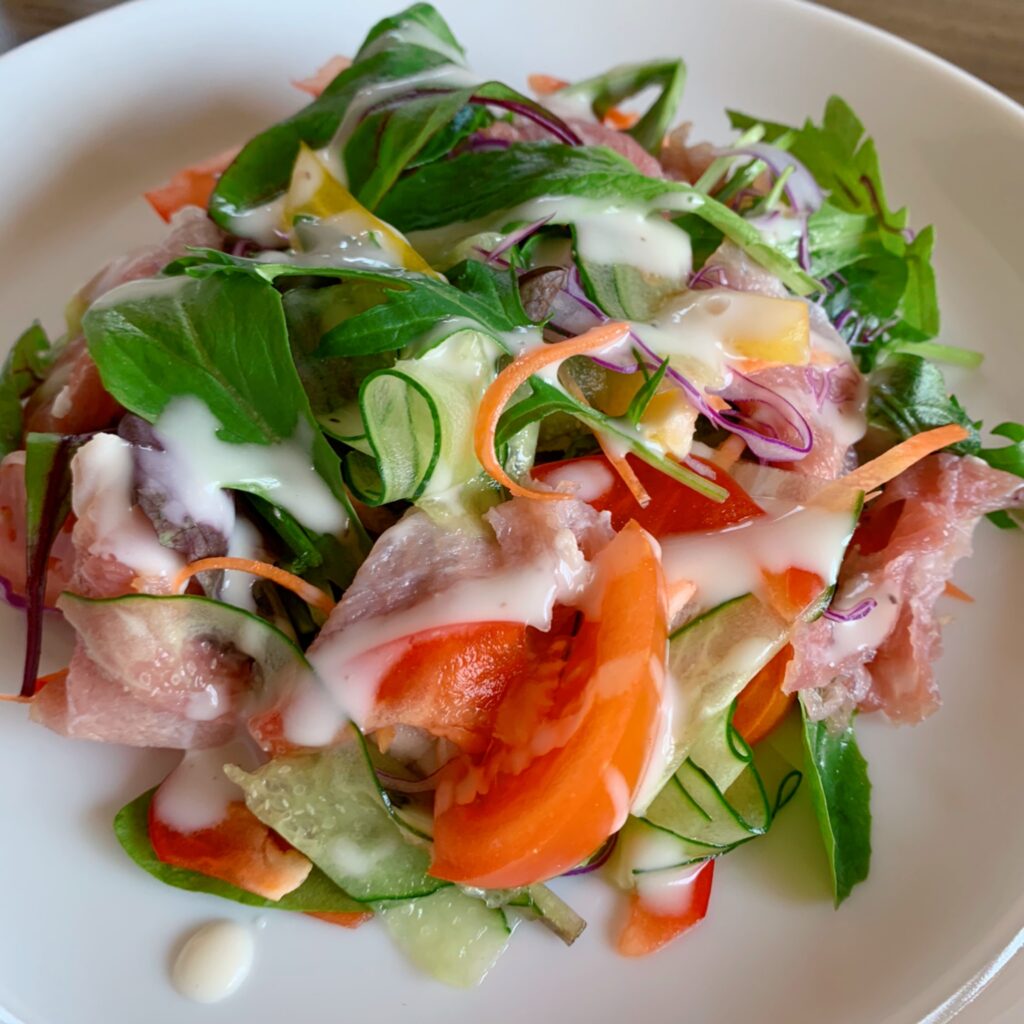
Nama ham Salad (生ハムサラダ)
🥗 What is Nama Ham (Japanese Prosciutto) Salad?
The rich aroma and intense saltiness of Nama Ham create a stunning contrast with the refreshing, crisp bitterness of baby leaves and purple cabbage.
The deep umami and slight sweetness from the ham’s fat are elevated by the sharp greens, creating a perfectly balanced bite. This deliberate contrast is what transforms a simple salad into a sophisticated centerpiece worthy of a special dinner.
💡 Key Points of This Recipe
Use long-aged nama ham (dry-cured ham)
The world’s “Big Three” dry-cured hams—Prosciutto di Parma, Jamón Serrano, and Jinhua Ham—are all defined by their long-term aging process.
- Traditional European Ham: In the cool, low-humidity climates of Europe, these hams are aged for one to two years.
- Common Japanese Nama Ham (Lachs Ham): Most Japanese Nama Ham is produced within a few weeks, resulting in a light and mild flavor profile.
The Rise of Traditional Methods in Japan Due to recent import restrictions on certain European hams, an increasing number of Japanese producers are adopting traditional, long-term aging methods right here in Japan.
Our Recipe’s Special Choice While Lachs Ham is the most common variety in Japan, this salad recipe specifically features “Japanese Prosciutto.” This is a domestic dry-cured ham crafted using the same long-term aging techniques as authentic Italian Prosciutto. Its concentrated umami and deep aroma make it the perfect star for this gorgeous salad.
Authentic prosciutto is a very powerful ingredient, and even a small amount can significantly elevate the overall quality of a dish.
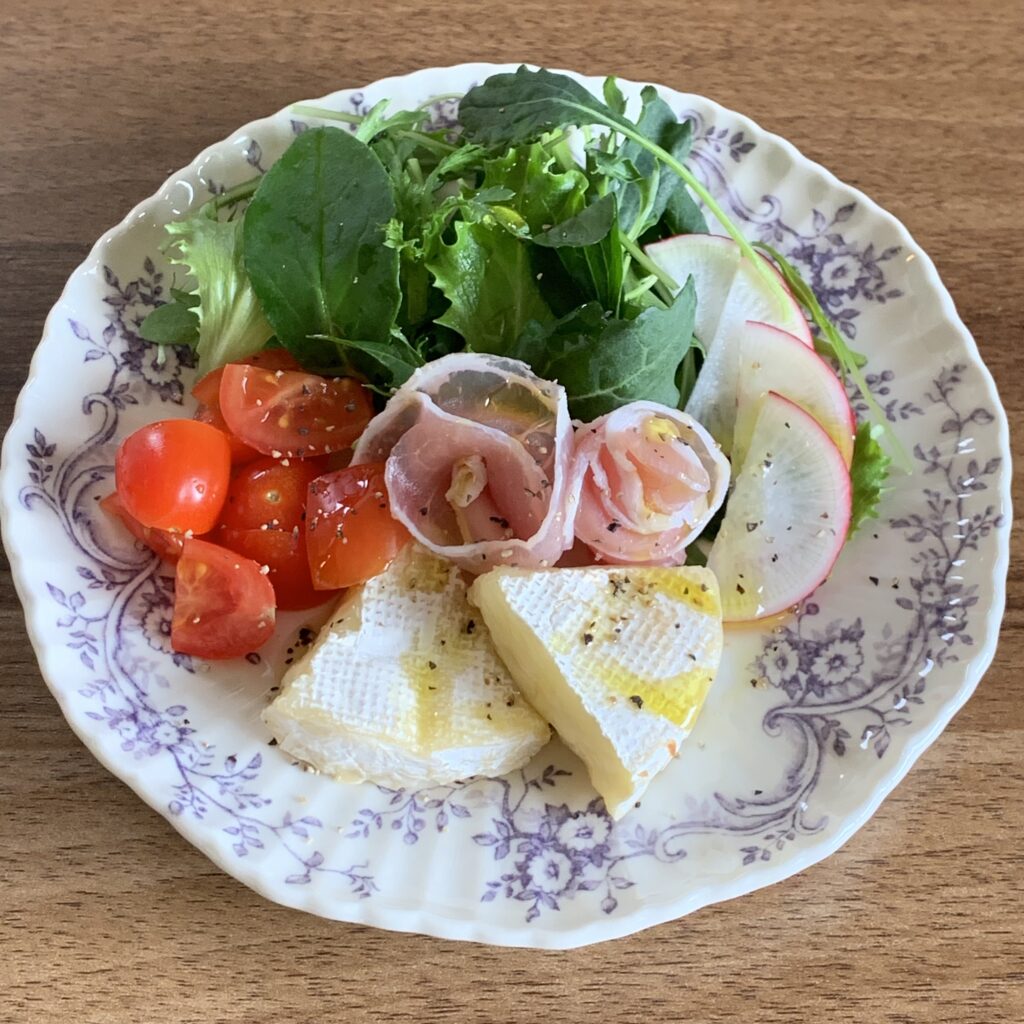
🧬 The Secret to the Deliciousness of Nama Ham
The secret behind the addictive taste of Nama Ham lies in Glutamic Acid.
- Changes in umami: Raw pork is rich in inosinic acid, but most of it is lost during the aging process.
- Concentrated Flavor: In its place, glutamic acid increases and becomes concentrated through the drying process. This compensates for the lost inosinic acid, creating a food with intense, deep umami.
📖 Understanding Ham: Categories and Differences
“Ham” vs. “Nama Ham”
- Ham: Originally a word for “pork thigh.” It is typically salted, smoked, and then steamed or boiled. Today, it is made from various cuts like loin or shoulder, not just the thigh.
- Nama Ham (Dry-Cured Ham): Pork that is salted and then dried. It is unheated (not steamed or boiled).
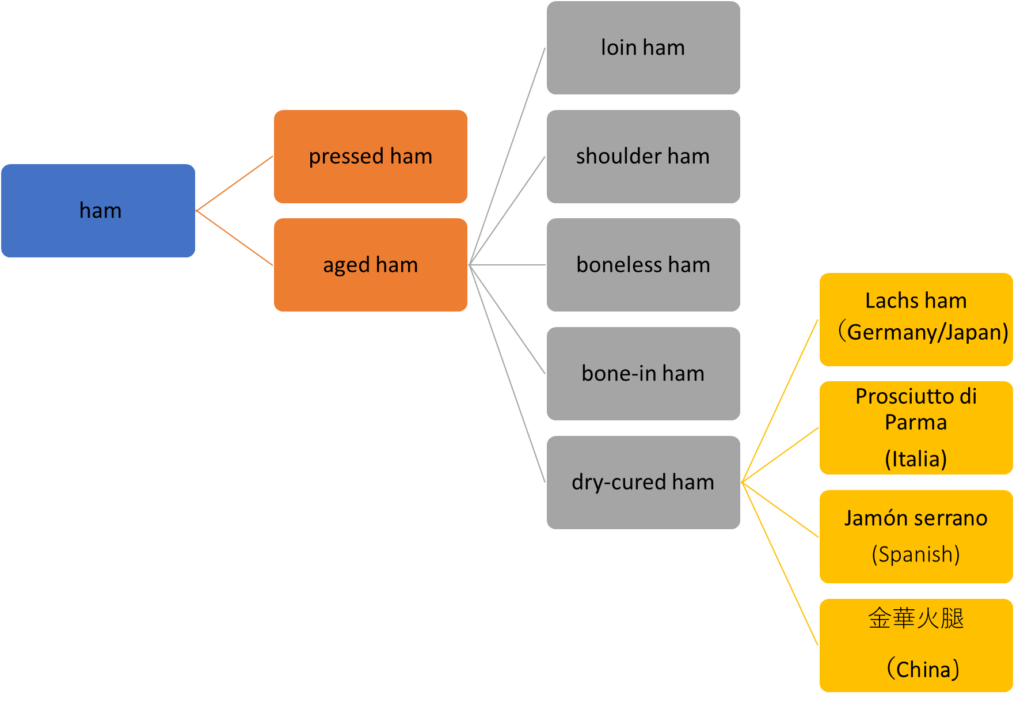
Guide to Ham Categories
Refer to the list below to understand the different types of ham:
- Pressed Ham: A common style in Japan made by pressing finely chopped meat together before heating.
- Aged Ham: Whole pieces of meat that are salted and aged.
- Loin Ham: Made from pork loin; it has a fine texture and is very popular in Japan.
- Shoulder Ham: Made from shoulder meat with a rich, natural flavor.
- Boneless Ham: Made from thigh meat with the bone removed; it is a leaner option.
- Bone-in Ham: Thigh meat aged with the bone in, often used for premium dishes.
- Dry-Cured Ham (Nama Ham): Ham that is salted and dried without being steamed or boiled.
Types of Dry-Cured Ham (Nama Ham):
- Lachs Ham (Germany/Japan): A short-term aged ham that is smoked. The name comes from its salmon-like color (“Lachs” means salmon in German).
- Prosciutto di Parma (Italy): One of the world’s top three hams, known for its mellow saltiness and fragrant aroma.
- Jamón Serrano (Spain): A Spanish mountain ham. Long-term drying creates a firm texture and concentrated flavor.
- Jinhua Ham (China): A famous Chinese dry-cured ham (金華火腿) often used as a rich, savory base for soups and other dishes.
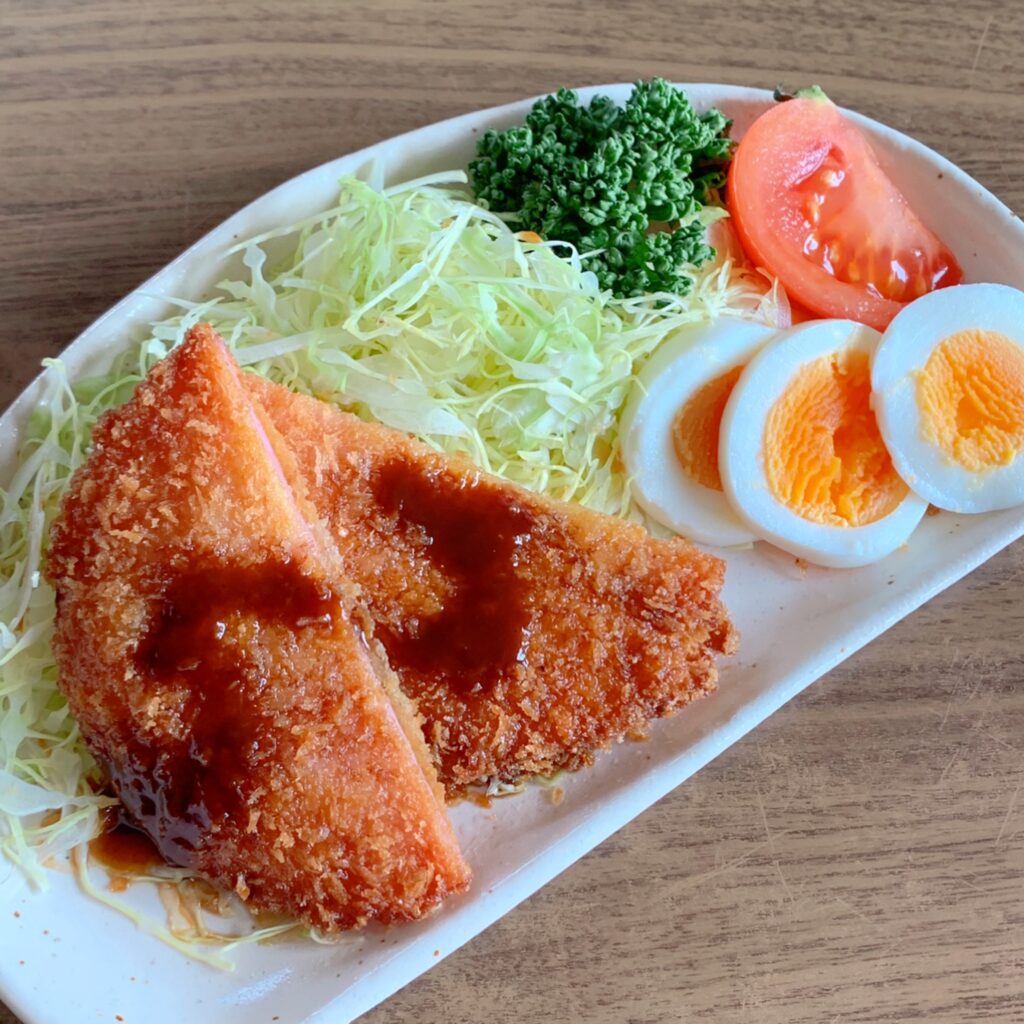
🍖 Perfect Ham Cutlet
There is something irresistibly nostalgic about a juicy Ham Cutlet. It’s a Japanese favorite for a reason! Whether as a snack or a main dish, see how we elevate this humble classic into a gourmet delight—even when using thinly sliced ham.
🔗 [Click here to see the Ham Cutlet Recipe 👉 Ham cutlet using thinly sliced ham]
NUTRITION FACTS : Nama Ham (Japanese Prosciutto) Salad
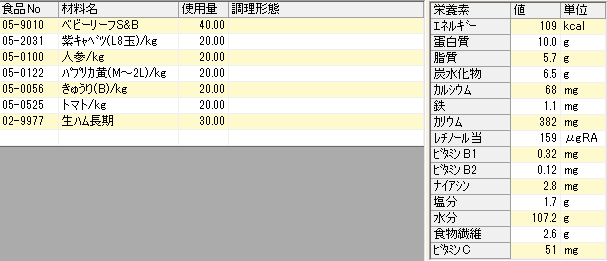
- 109 Calories
- Protein 10.0 g
- Total Fat 5.7 g
- Total Carbohydrates 6.5 g
- Sodium 1.7 g
Ingredients (Serves 1-2) : Nama Ham (Japanese Prosciutto) Salad
- Nama Ham (Japanese Prosciutto): 30g
- Baby Leaves: 40g
- Purple Cabbage: 20g
- Carrot: 20g
- Paprika: 20g
- Cucumber: 20g
- Tomato: 20g
- Dressing: Use your favorite!
How to make Nama Ham (Japanese Prosciutto) Salad
- Prep the Greens: Wash the baby leaves thoroughly and drain them well; using a salad spinner ensures they stay crisp.
- Shredding: Finely shred the purple cabbage, carrots, and paprika into thin strips.
- Ribbon Technique: Use a vegetable peeler to shave the cucumber into long, elegant ribbons to achieve a professional finish.
- Final Cuts: Cut the tomato and Nama Ham into bite-sized pieces.
- Pro Tip: Instead of using a knife, tear the Nama Ham by hand to create a natural, airy, and beautiful appearance.
✨ Styling & Presentation Tips
- Thoughtful Assembly: Rather than simply tossing everything together, put care into how you cut and arrange each ingredient.
- Create a “Mound”: When plating, aim for height by stacking the ingredients toward the center to create a mountain-like shape.
- Decorative Techniques:
- Drape the Nama Ham loosely and softly over the vegetables.
- Take the cucumber ribbons and curl them as you place them to add three-dimensional volume.
- Visual Impact: Adding height and layers gives the salad a sophisticated, gourmet volume that is visually stunning.
- Finishing Touch: Drizzle your favorite dressing over the salad just before serving to keep everything fresh.
📖Related Link: Read the Japanese version of this article here! [生ハムサラダ]

コメント