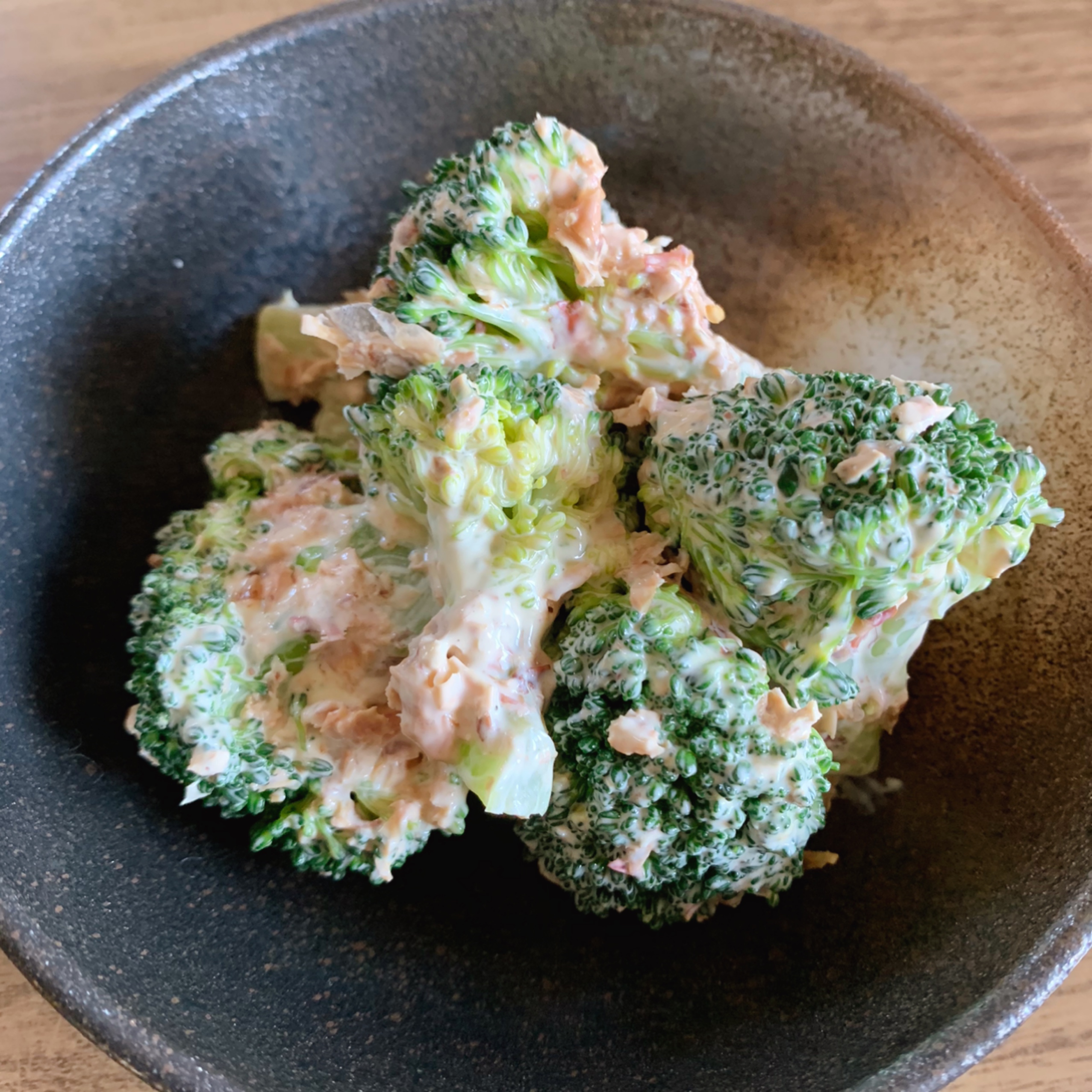
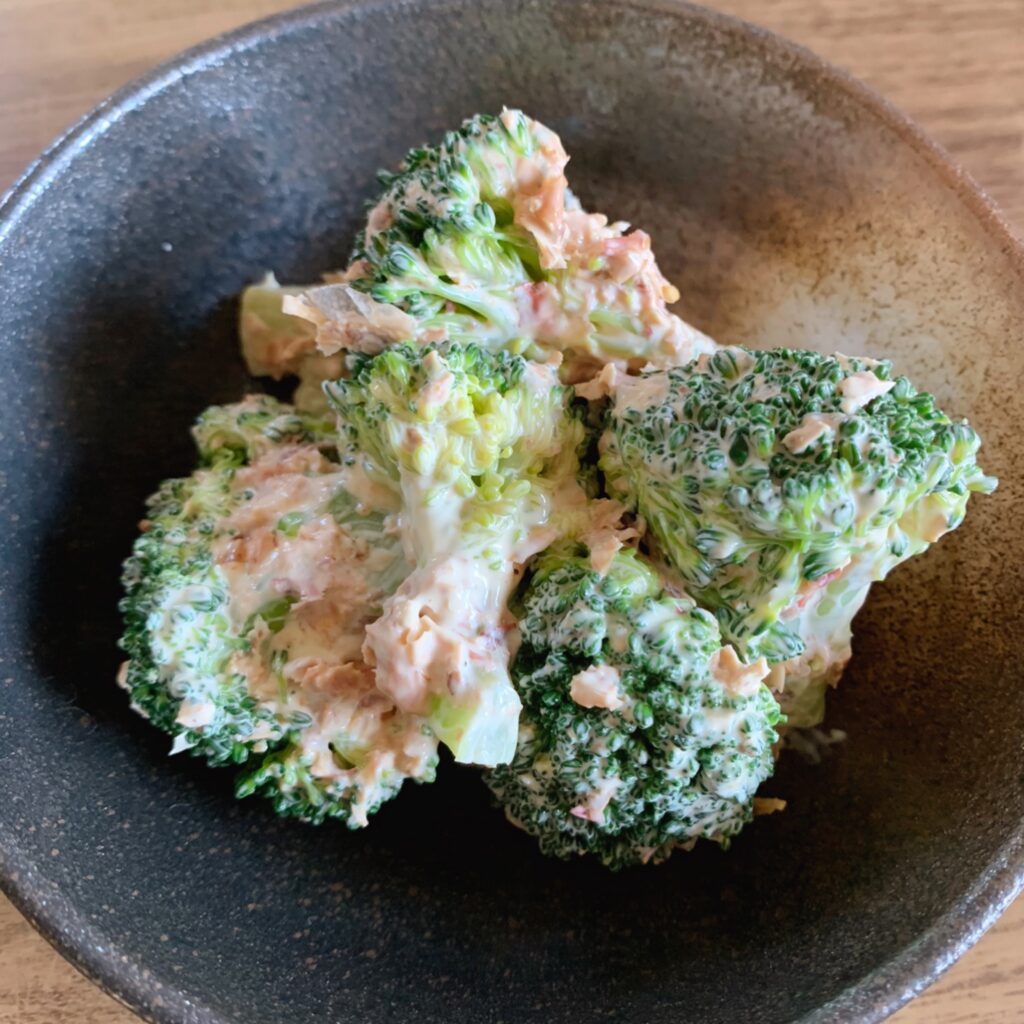
10-Minute Recipe: Broccoli with Okaka (Bonito Flakes) & Mustard Mayonnaise
A simple, delicious 10-minute side dish! While many mayonnaise-based dressings use grain mustard or lemon juice, this ultimate salad highlights katsuobushi (bonito flakes) and Japanese mustard (karashi). Enhanced with a splash of soy sauce, the “Okaka-Mayo” combination is a beloved Japanese staple that creates an unforgettable blend of deep flavor and rich aroma.
The Science Behind Why Okaka-Mayo Tastes So Good
- Synergistic Umami Effect (Inosinic Acid × Glutamic Acid)
- Okaka (Bonito Flakes): Packed with animal-based inosinic acid.
- Mayonnaise & Soy Sauce: Contain plant/fermentation-derived glutamic acid.
- Combining these creates a flavor explosion that is exponentially richer than either ingredient on its own.
- Smokiness Wrapped in Healthy Lipids
- Katsuobushi undergoes smoking and curing, giving it a unique smoky aroma.
- The oils in mayonnaise trap and hold these aroma compounds, allowing the fragrant, smoky flavor to linger deliciously on the palate.
- A Perfect Balance of Flavors
- Mayonnaise delivers rich creaminess and pleasant acidity.
- Katsuobushi contributes a deep, smoky umami with a hint of bitterness.
- Soy sauce adds a sharp, satisfying saltiness to tie everything together seamlessly.
- The “Sponge Effect” for Great Texture
- Thinly shaved katsuobushi easily absorbs the moisture and fats in mayonnaise.
- This creates a cohesive dressing that clings perfectly to vegetables without turning watery over time.
Culinary & Nutritional Benefits
- Nutritional Synergy: he healthy fats in mayonnaise enhance the absorption of fat-soluble vitamins (Vitamins A & K) found in broccoli.
- Steam-Boiling Technique: Instead of microwaving (which cooks unevenly) or boiling in excess water (which leaches water-soluble Vitamin C), steam-boiling broccoli in a tiny bit of water locks in both nutrients and a delightful crisp-tender texture.
- A Smarter Protein Alternative: Katsuobushi acts as a “Japanese bacon”—adding intense umami and smokiness with far fewer calories and lower fat than traditional bacon or ham.
- Japanese Mustard (Karashi): Adds a sharp, nasal sharpness rather than acidity, cutting through the richness of mayonnaise and elevating the dish into a sophisticated side.
Recipe (Serves 3)
Ingredients
- Broccoli: 220 g (about 1 medium head)
- Mayonnaise: 60 g
- Japanese Mustard (Karashi): 2 g (adjust to taste)
- Soy Sauce: 5 g
- Katsuobushi (Bonito Flakes): 6 g
Instructions
- Prep: Wash the broccoli and cut it into bite-sized florets.
- Steam-Boil: Place the broccoli in a pot with a tiny amount of water. Cover with a lid and steam until crisp-tender to retain bright color and maximum nutrients.
- Make the Sauce: In a bowl, mix the mayonnaise, Japanese mustard, and soy sauce until smooth.
- Toss & Serve: Add the warm broccoli and katsuobushi to the bowl. Toss gently to coat everything evenly in the sauce, and enjoy!
Nutritional Information (Per Serving)
Estimated Nutrition Facts (Total Amount)
- Calories: approx. 315 kcal
- Protein: approx. 10.7 g
- Total Fat: approx. 28.3 g
- Total Carbohydrates: approx. 10.6 g
- Sugars / Net Carbs: approx. 5.2 g
- Dietary Fiber: approx. 5.4 g
- Sodium / Salt Equivalent: approx. 1.5 g
If you want to cut down on calories, use half-calorie mayonnaise. For someone like me who aims to keep daily fat intake around 40g, reducing nearly 10g of fat is a huge plus—even if it slightly increases carbohydrate content. Also, to manage my cholesterol, I choose a whole-egg type mayonnaise. Feel free to choose between half-calorie mayonnaise or standard mayonnaise according to your preference!
| Nutritional value per serving (approximate) | With Half-Calorie Mayonnaise (Approx.) | With Standard Mayonnaise |
| Calories | ~104 kcal (Est. ~80 kcal range) | ~175 kcal |
| Protein | 5.1 g | 5.2 g |
| Fat | 6.5 g (Est. ~5.3 g range) | 15.6 g |
| Carbohydrates | 5.4 g (includes dietary fiber) | 4.5 g |
| Sodium (Salt Equivalent) | 0.69 g | 0.67 g |
The Deep Dive: What is Katsuobushi?
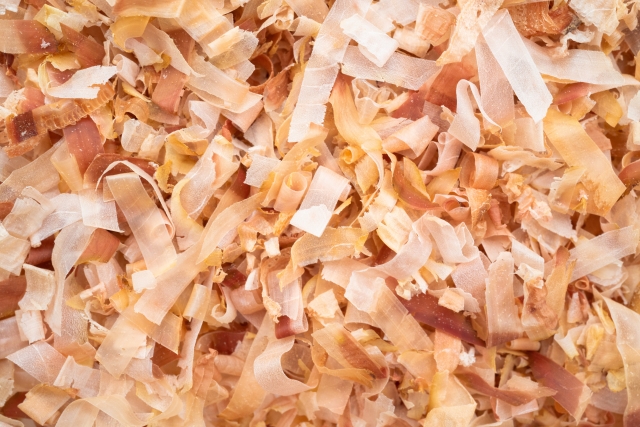
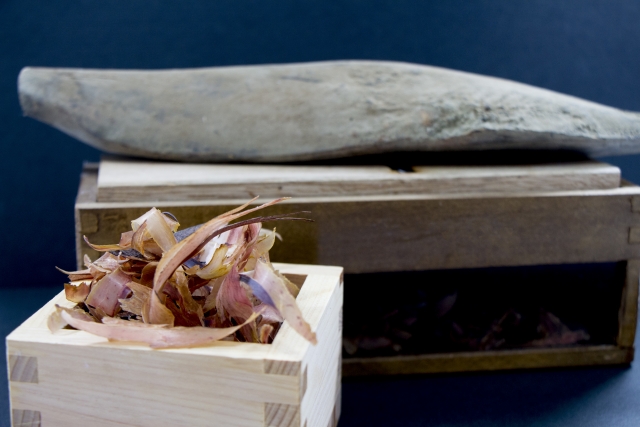
To understand this salad, you must understand its soul: Katsuobushi.
- The World’s Hardest Food: Often called “okaka,” these flakes start as bonito fish that is boiled, smoked, and fermented until it becomes as hard as a block of wood. Surprisingly, katsuobushi is a fermented food, originally developed as a way to maximize shelf life and preservation.
- The “26%” Magic: The bonito fillets are simmered and smoked to reduce the moisture content to 26% or less. This process prevents spoilage while concentrating that distinct, intense aroma.
- The Power of “Noble Mold”: High-quality katsuobushi (Katsuo-karebushi) uses a specific mold from the Aspergillus glaucus family. This beneficial mold breaks down fats, creating a refined aroma and making it easier for the body to digest.
- The “Inosinic Acid” Secret: The intense savory flavor comes from Inosinic Acid. Interestingly, this acid doesn’t exist while the fish is alive! It only develops through a “self-digestion” process after the fish is caught, which must be perfectly timed before the fish spoils.
- Gender of the Flakes: Did you know? In Japan, flakes from the back are called Onishi (Male), and those from the belly are Mebushi (Female).
Read the Japanese version of this article here! [10分で完成!旨味爆発「ブロッコリーのおかかマヨ和え」]

コメント