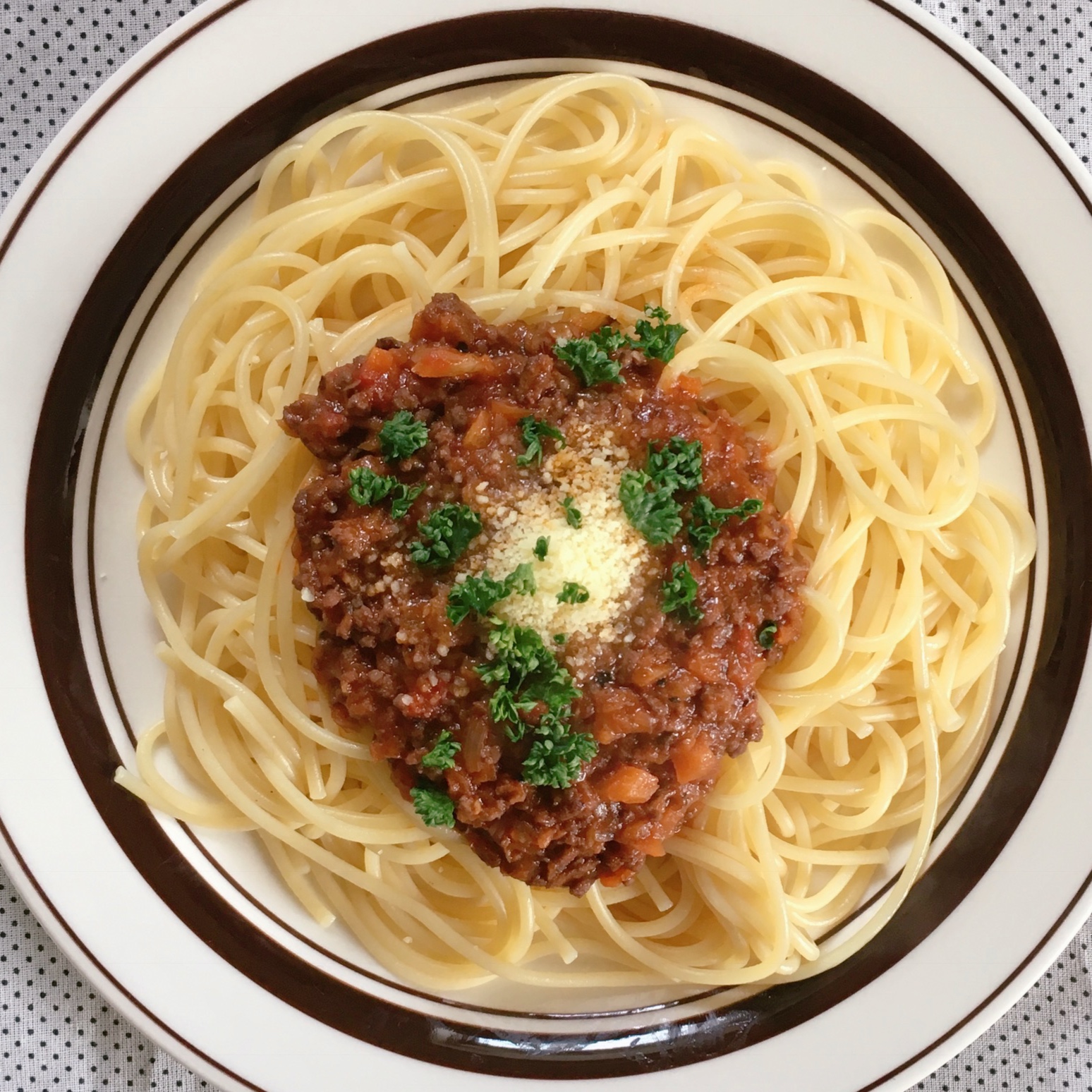
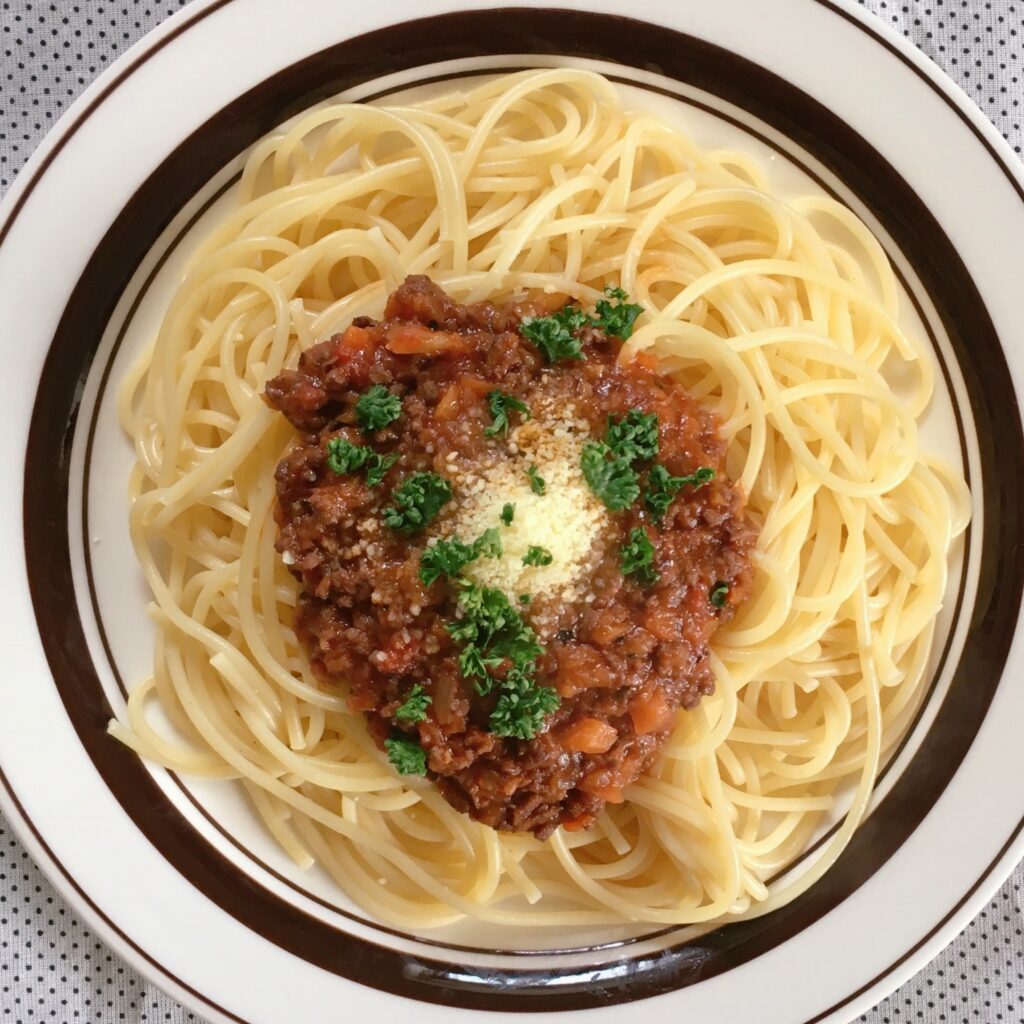
- What is Japanese Meat Sauce Spaghetti? (How It Differs from Bolognese)
- The Golden Rules for Perfect Pasta: Never Serve Bland or Sticky Noodles
- Meat Sauce vs. Fresh Tomato: Try Our Eggplant Sausage Pomodoro!
- Japanese Bolognese Ingredients & Nutrition Facts (Yield: 5 Servings)
- Step-by-Step Guide: How to Make Rich Japanese Meat Sauce
What is Japanese Meat Sauce Spaghetti? (How It Differs from Bolognese)
Spaghetti Meat Sauce is essentially the Japanese evolution of the Italian Bolognese.
While inspired by the original, it has developed its own unique character. It features an exquisite balance between the deep umami of the meat and the refreshing acidity of the tomatoes, making it a beloved “home-style” dish in Japan that is both authentic and easy to prepare.
The Key Differences
- The Meat: While traditional Bolognese typically uses beef, Japanese meat sauce often utilizes “aibiki mince”—a mixture of minced beef and pork (usually at a 7:3 ratio).
- Using 100% beef can be quite heavy and expensive; the blend offers a lighter, more balanced flavor. You can, of course, adjust this ratio to suit your personal preference.
- The Serving Style: In Italy, pasta is usually tossed with the sauce in a pan before serving. In Japan, however, it is standard to serve the plain noodles first and pour the sauce directly on top.
- A Bit of History: When spaghetti was first introduced to Japan, the flavor was considered so novel that people preferred pouring the sauce over the noodles rather than tossing them together. This serving style allowed diners to mix the sauce themselves and adjust the intensity of the flavor to their own liking.
The Golden Rules for Perfect Pasta: Never Serve Bland or Sticky Noodles
Prevent Sticking: Why You Should Toss Warm Noodles in Butter or Oil
If you serve boiled spaghetti as is, the noodles will stick together. Tossing the hot noodles with a little olive oil or butter immediately after draining will keep them smooth and separated.
The 1% Salt Rule: How to Season Your Spaghetti Properly
To ensure a delicious result, you must salt your pasta water correctly. Even the best sauce cannot save bland noodles. Use a 1% salt concentration:
- For 100g of spaghetti: 1 liter of water + 10g of salt.
- For 400g of spaghetti: 3 liters of water + 30g of salt.
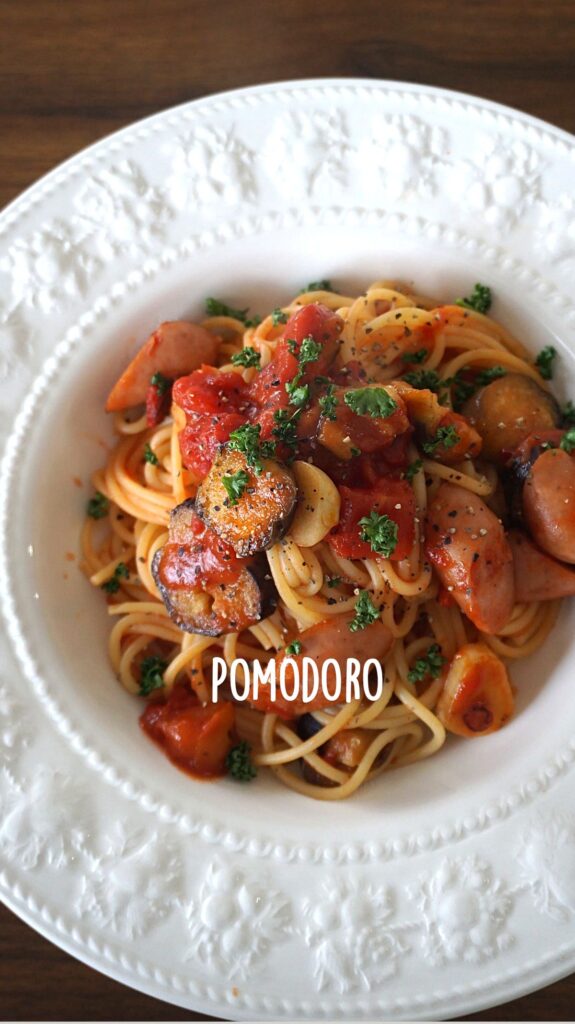
Meat Sauce vs. Fresh Tomato: Try Our Eggplant Sausage Pomodoro!
Are you in the mood for a hearty meat feast or a refreshing tomato delight? Along with meat sauce, our ‘Classic Pomodoro’ is incredibly popular and a must-see! If you’re a pasta lover, you won’t want to miss this essential guide to the perfect tomato sauce. Check it out here!【Eggplants Sausage Pomodoro (Tomato Pasta)】
Japanese Bolognese Ingredients & Nutrition Facts (Yield: 5 Servings)
Nutrition Facts
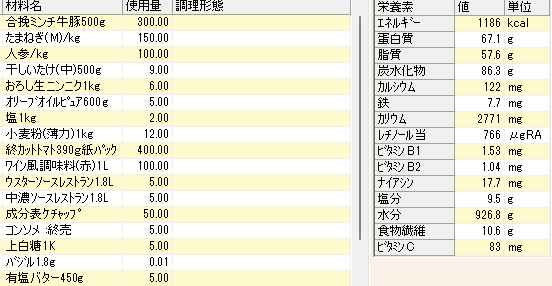
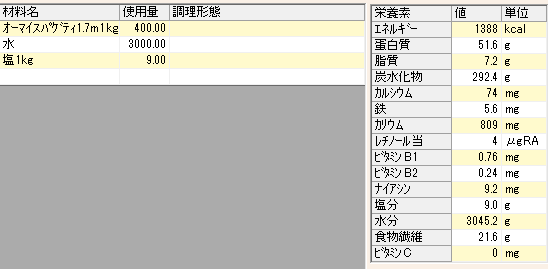
| Item | Calories | Protein | Total Fat | Total Carbs | Salt Equivalents |
| Meat Sauce (approx. 180g/portion) | 1186 kcal | 67.1 g | 57.6 g | 86.3 g | 9.5 g |
| Spaghetti (400g dry total) | 1388 kcal | 51.6 g | 7.2 g | 292.4 g | 8.0 g |
| Total Per Serving (1 of 5) | 515 kcal | 23.7 g | 13.0 g | 75.7 g | 3.5 g |
Ingredients (Yield: 5 Servings)
- The Base:
- 400g Spaghetti (1.7mm)
- 30g Salt
- 3L Water
- 5g Butter
- 400g Spaghetti (1.7mm)
- The Sauce (☆):
- 300g Aibiki mince (Beef/Pork blend)
- 6g Garlic (minced or grated)
- 5g Olive oil (for frying)
- 2g Salt + Pepper (to taste)
- 150-200g Onion (finely chopped)
- 70-100g Carrot (finely chopped)
- 12g Dried Shiitake mushrooms (3 pieces) + 100g water for soaking
- 12g Flour (for thickening)
- Seasoning
- ☆1 can (400g) Canned tomatoes
- ☆100g Red wine
- ☆100g Mushroom soaking liquid
- ☆50g Ketchup
- ☆5g Worcester sauce
- ☆5g Chuno sauce
- ☆5g Consommé (bouillon)
- ☆5g Sugar
- ☆Dried basil (to taste)
- 5g Butter
- Optional: Celery or bay leaves for added aroma.
Dietitian’s Secret: Why Shiitake Mushrooms? You might be wondering, “Shiitake mushrooms in a meat sauce?!” Trust me on this! Dried shiitake mushrooms are an incredible natural flavor enhancer.
This is based on a scientific principle called “Umami Synergy.” When the inosinic acid in the meat combines with the guanylic acid in the dried shiitake (and its soaking liquid), the savory umami flavor multiplies exponentially! It adds a deep, rich complexity to the tomato sauce without needing artificial bouillon.
Step-by-Step Guide: How to Make Rich Japanese Meat Sauce
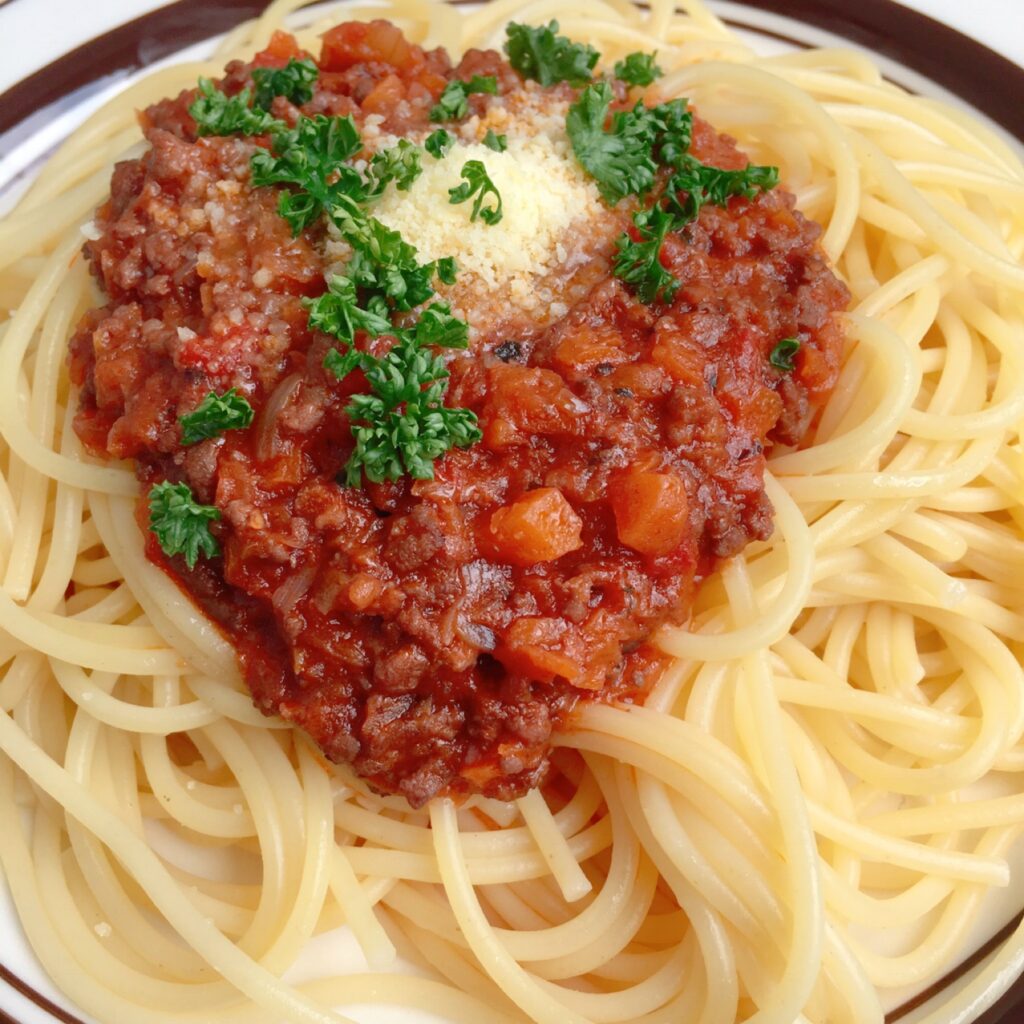
Prep & Sear: Keeping the Meat Chunky for Extra Texture
- Preparation
- Soak dried shiitake mushrooms in water for a few hours. Once they are soft, squeeze out the water. Don’t throw away the water you used to soak the shiitake mushrooms!
- Finely chop the onions, carrots, and the reconstituted shiitake mushrooms.Mince or grate the garlic.
- Searing the Meat
- Heat olive oil in a pan and sauté the garlic with the minced meat.
- Pro Tip: Do not break the meat up too finely; leave some chunks to ensure a hearty, meaty texture.
- Heat olive oil in a pan and sauté the garlic with the minced meat.
- Sautéing Vegetables
- Add the chopped onions, carrots, and shiitake mushrooms to the pan.
- Once the vegetables are soft and cooked through, season with salt and pepper.
Thicken & Simmer: The Foolproof Flour Trick for Lump-Free Sauce
- Thickening the Base
- Turn the heat down to low. Sprinkle the flour evenly over the meat and vegetables and mix well.
- Note: It is vital to add the flour now. If you add it after the liquids, it will create lumps.
- Turn the heat down to low. Sprinkle the flour evenly over the meat and vegetables and mix well.
- Simmering the Sauce
- Add all the ingredients marked with (☆): canned tomatoes, wine, mushroom liquid, sauces, ketchup, consommé, sugar, and basil.
- Mix well and simmer on low heat for about 20 minutes.
- Stir in 5g of butter at the end for richness.
- Adjustment: If the sauce is too thin, sift in a teaspoon of flour at a time until you reach your desired consistency.
Cook & Serve: Assembling the Ultimate Comfort Meal
- Cooking the Pasta
- Bring 3 liters of water to a boil and add 30g of salt.
- Cook the spaghetti according to the package instructions.
- Once drained, immediately toss the hot noodles with 5g of butter to prevent sticking.
- Serving
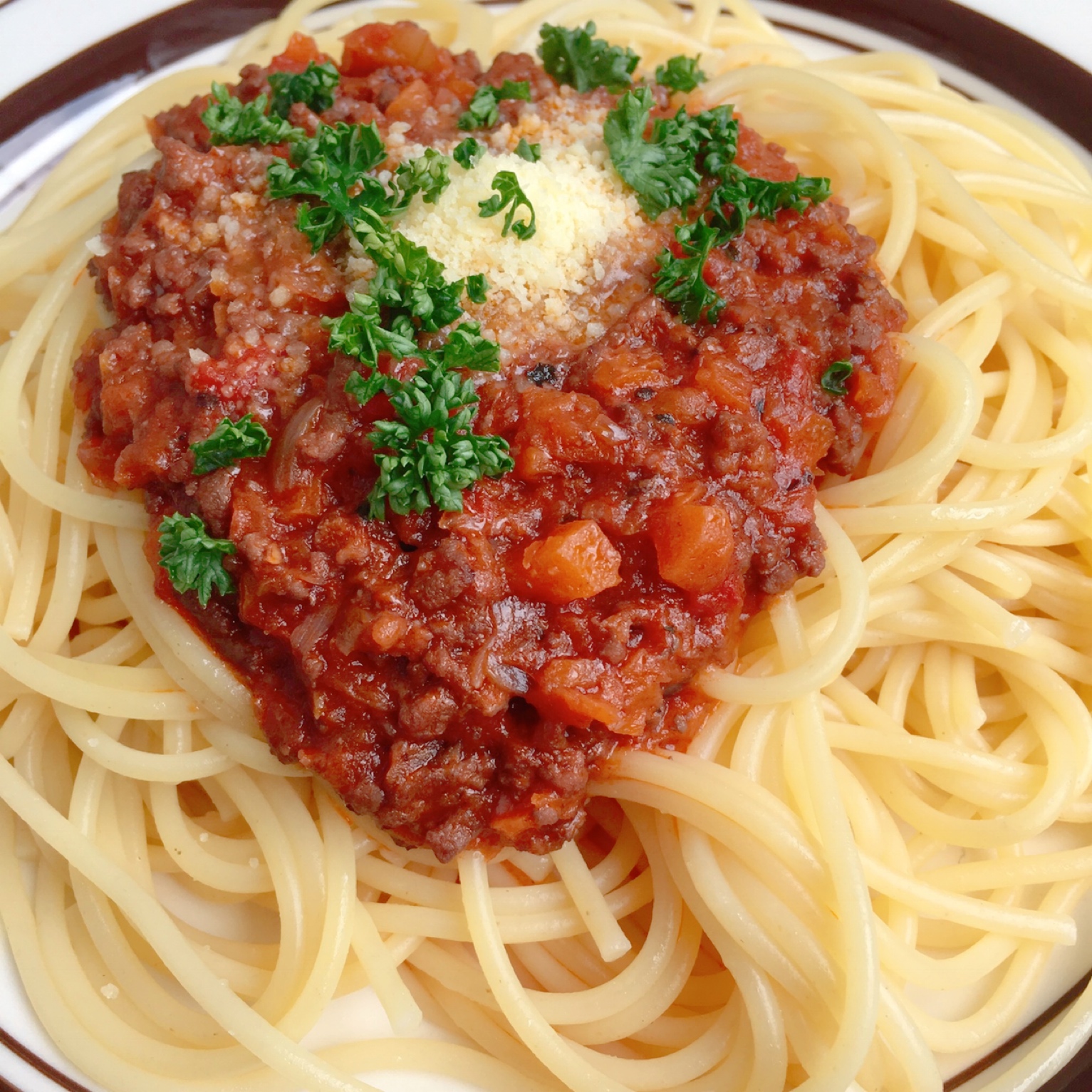
- Plate the buttered spaghetti and pour a generous portion of the meat sauce over the center. Enjoy!
Related Link: Read the Japanese version of this article here! [スパゲッティミートソース(日本のボロネーゼ)]

コメント