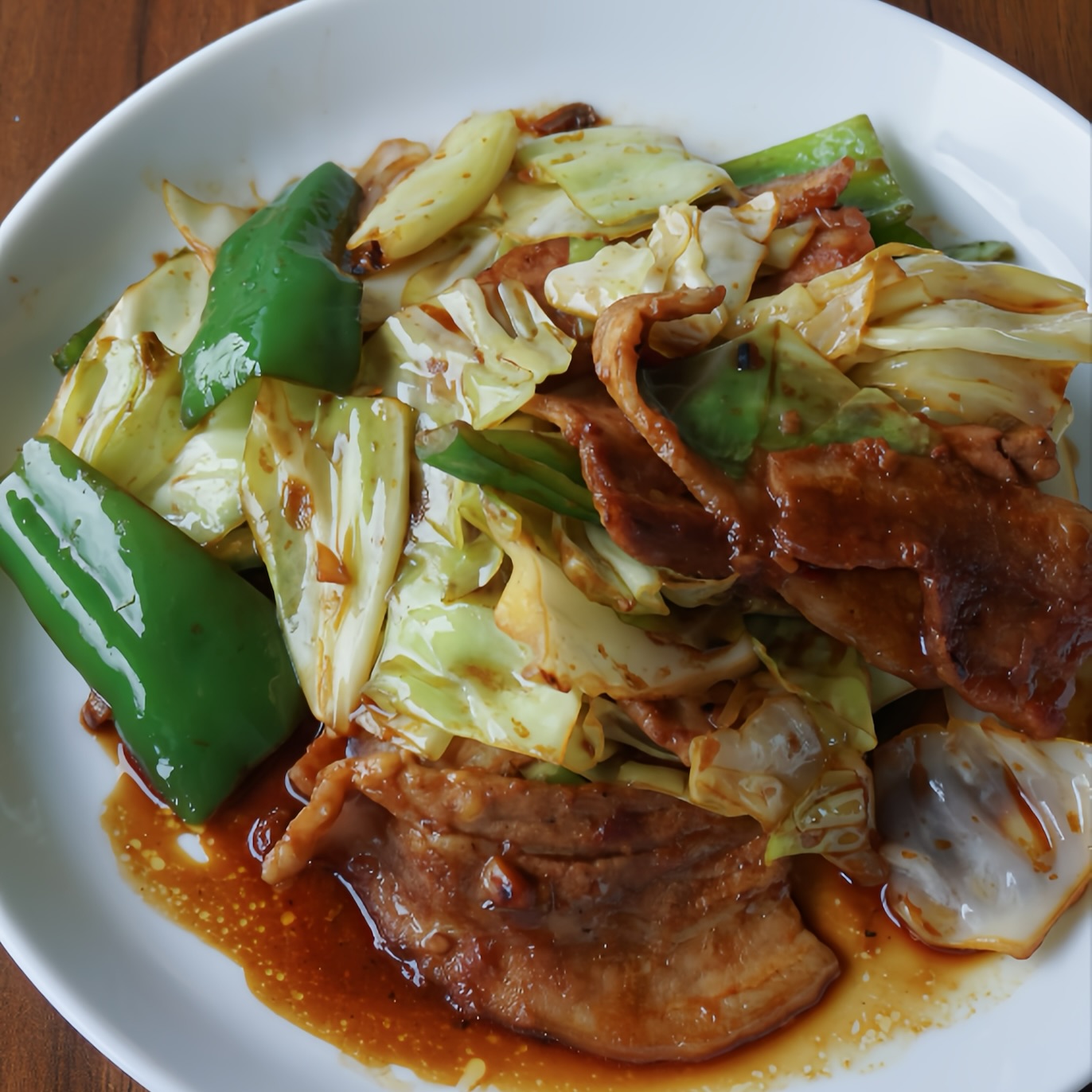
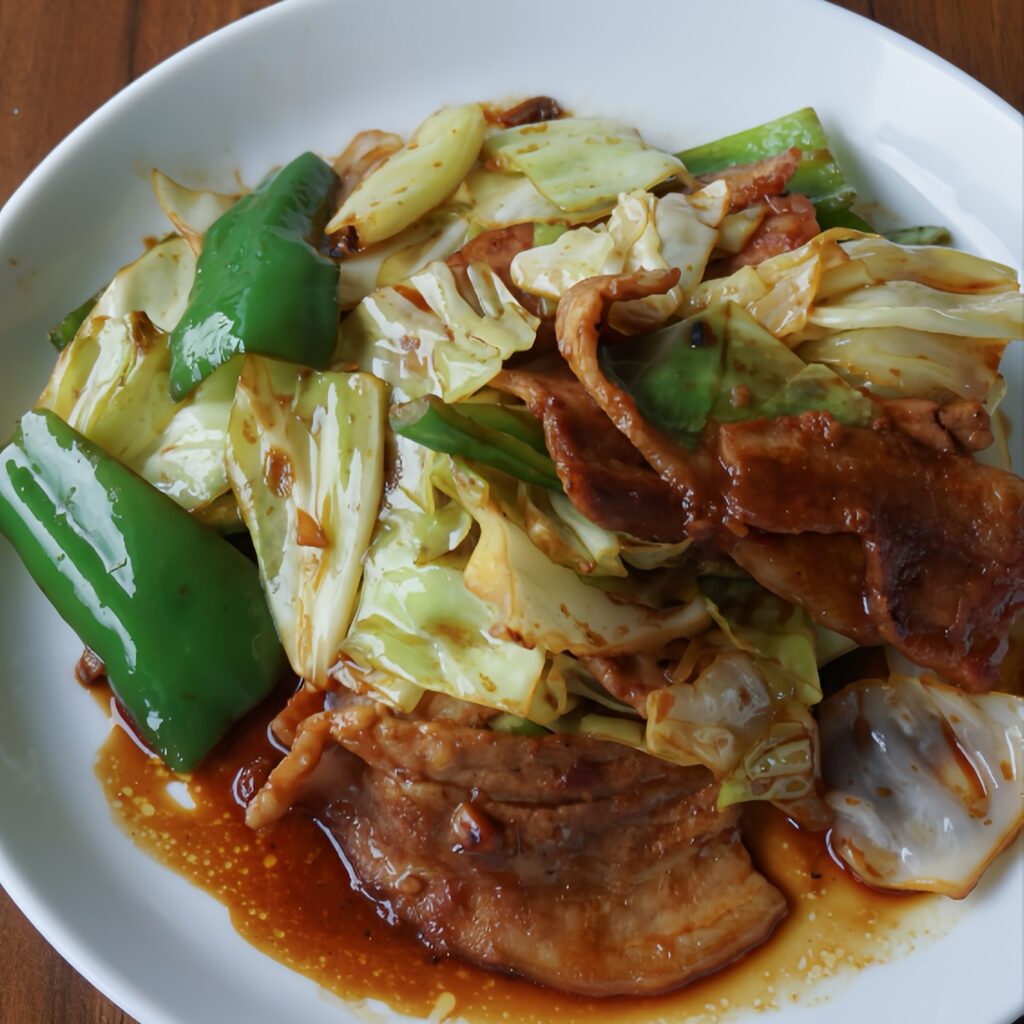
- Juicy Hoikoro: Easy Japanese Style Twice Cooked Pork Recipe(ホイコーロー、回鍋肉)
- What kind of dish is Juicy Hoikoro (Twice Cooked Pork) ??
- What is Japanese-Style Hoikoro?
- The Difference Between Sichuan-Style Twice-Cooked Pork and Japanese-Style Twice-Cooked Pork
- The Origin of the Dish’s Name and Authentic Sichuan Recipe
- The True Nature of Sweet flour sauce (Tianmian sauce) and Substitutes
- Key Differences: Doubanjiang, Tianmian sauce, and Gochujang
- 🏮 Explore the “Sichuan-Inspired Japanese Style” Series
- What kind of dish is Juicy Hoikoro (Twice Cooked Pork) ??
- NUTRITION FACTS : Juicy Hoikoro (Twice Cooked Pork)
- INGREDIENTS (4 Servings) : Juicy Hoikoro (Twice Cooked Pork)
- How to make Juicy Hoikoro (Twice Cooked Pork)
Juicy Hoikoro: Easy Japanese Style Twice Cooked Pork Recipe(ホイコーロー、回鍋肉)
What kind of dish is Juicy Hoikoro (Twice Cooked Pork) ??
Have you ever wondered how to make Chinese-style stir-fry both healthy and satisfying?
As a Registered Dietitian, I’ve perfected this Japanese-style Twice Cooked Pork (Hoikoro) to be lower in oil but incredibly juicy. In this recipe, I’ll share my professional tips on how to achieve that perfect texture and a rich, savory flavor without the guilt. Plus, discover a secret substitute for special seasonings using ingredients you already have in your kitchen!
What is Japanese-Style Hoikoro?
Hoikoro (Twice Cooked Pork) is originally a signature Sichuan dish. However, it has evolved uniquely to suit Japanese food culture.
A Beloved Staple: Despite these differences, Japanese-style Hoikoro has become one of the most popular Chinese dishes in Japan, loved in both homes and restaurants nationwide.
Evolution in Japan: Many authentic Sichuan ingredients are less common in Japan, leading to a distinct “Japanese-style” Hoikoro.
A Unique Twist: The seasonings and ingredients differ so much from the original that it often comes as a “fresh surprise” to people from China!
The Difference Between Sichuan-Style Twice-Cooked Pork and Japanese-Style Twice-Cooked Pork
| Characteristics | Sichuan style | Japanese style |
| Main Vegetable | Garlic leaves (蒜苗) | cabbage, bell peppers |
| Seasonings | Doubanjiang It has a sharp, spicy flavor. | Tianmianjiang It has a rich, sweet flavor. |
| Meat preparation | The meat is boiled and then sliced (twice cooked). | Thinly sliced meat is often stir-fried as is. |
| Flavor accents | Tianmianjiang , Sichuan peppercorns, douchi (fermented black beans), etc. | Sugar and soy sauce are often added to adjust the flavor. |
The Origin of the Dish’s Name and Authentic Sichuan Recipe
The literal translation of the Chinese characters for “Twice Cooked Pork” is “Returning the Meat to the Pot.
The name of this dish comes from the ancient Chinese custom of using boiled pork as an offering during festivals, followed by thinly slicing the meat and returning it to the pot with vegetables for stir-frying, in order to ensure that no waste is wasted.
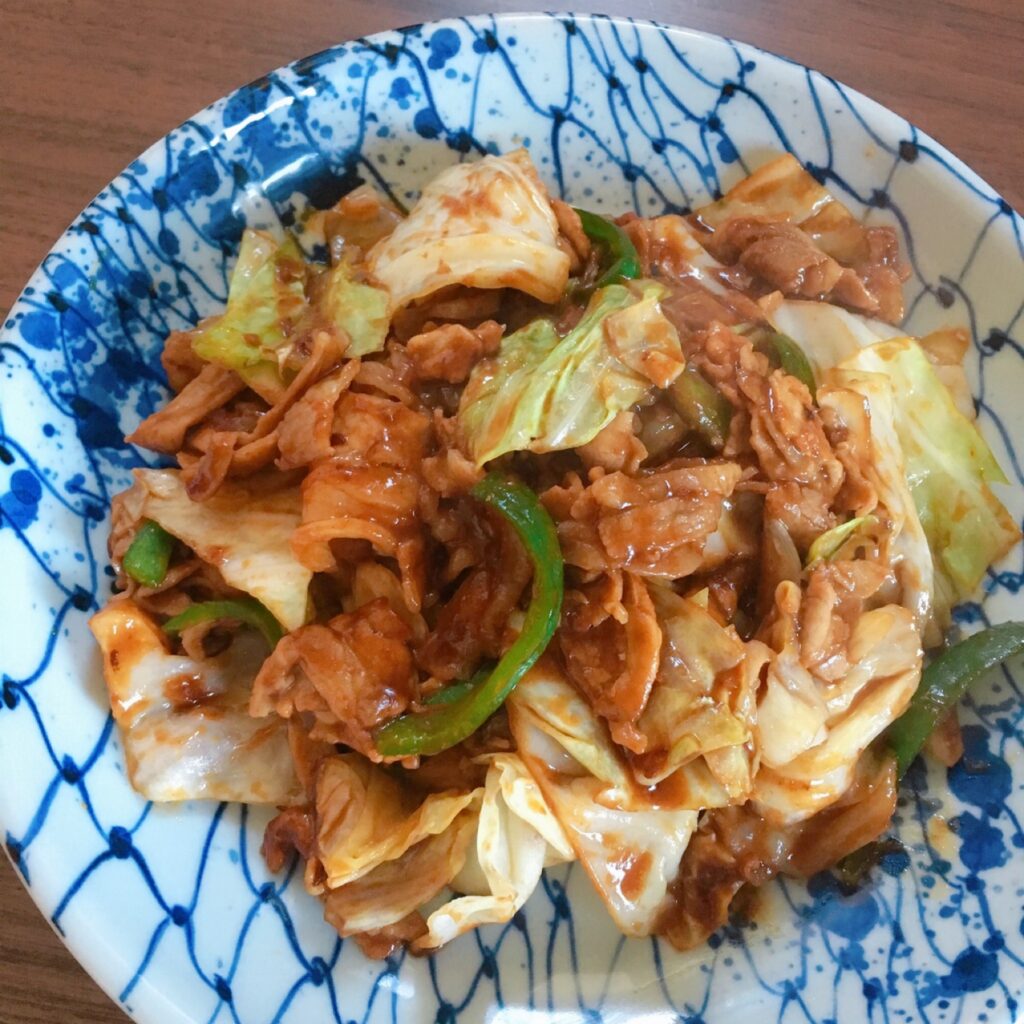
The True Nature of Sweet flour sauce (Tianmian sauce) and Substitutes
Tianmian sauce, the core flavor of stir-fried pork, is originally a condiment made by fermenting wheat flour with koji. While it is often referred to as “sweet miso,” this is technically a misleading term, as its original production method differs from that of miso, which is primarily made from soybeans. In recent years, soybean-based sweet miso has also been produced.
In Japan, sweet miso is rarely used in dishes other than hoikoro, so some people may be hesitant to purchase it.
However, if you don’t have this seasoning, you can substitute it with common ingredients you have at home.
I asked a chef at a Chinese restaurant, and he told me that if you don’t have sweet bean sauce, you can use a mixture of red miso and sugar instead. When I tried it, I was surprised to find that it recreated a flavor that was surprisingly close to sweet bean sauce.
The optimal ratio for recreating 3 tablespoons (about 45g) of sweet bean sauce is 2 tablespoons of red miso to 2 tablespoons of sugar.
Key Differences: Doubanjiang, Tianmian sauce, and Gochujang
These three fermented seasonings are indispensable in East Asian cuisine, yet they each have distinct characteristics.
| Name | Ingredient | Characteristics |
| Doubanjiang (China) | Broad Beans (Fava Beans) | A fermented seasoning. Originally made without chili peppers, but chili addition is now the norm. Develops a good aroma when heated. |
| Tianmianjiang Tianmian sauce (China) | Wheat Flour Koji | A sweet, paste-like seasoning (often called sweet flour paste). Flavored with sugar and spices. |
| Gochujang (South Korea) | Glutinous Rice Koji | A fermented seasoning characterized by the stickiness of glutinous rice. Possesses both spiciness and sweetness. |
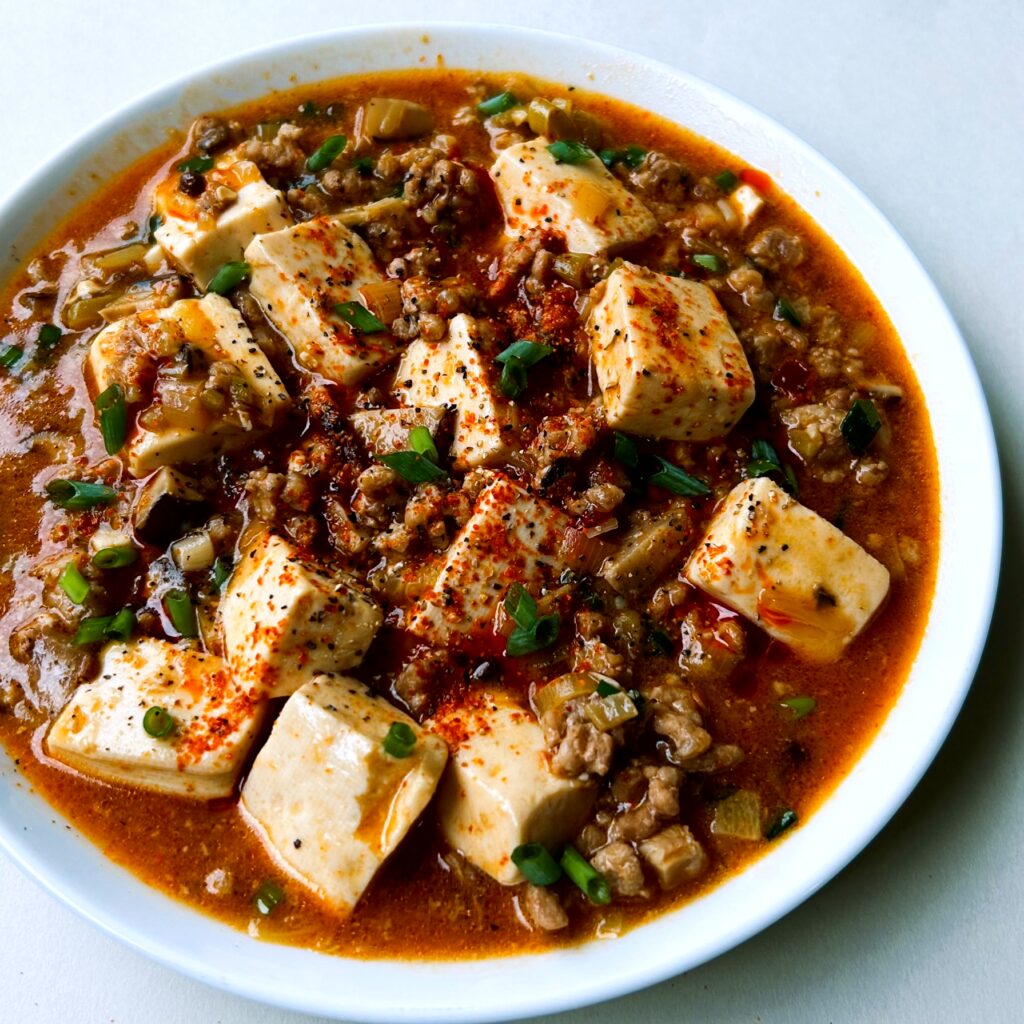
🏮 Explore the “Sichuan-Inspired Japanese Style” Series
If you enjoyed this Juicy Hoikoro, you’ll love the other stars of Japanese-Chinese cuisine! In Japan, we’ve uniquely adapted bold Sichuan flavors to be milder and more family-friendly.
Like Twice-cooked pork, mapo tofu is a masterpiece that made its way from faraway Sichuan to Japan and is now a beloved staple of home cooking.
It’s not just spicy; once you’ve tried it, you’ll never forget the profound umami flavor that comes from the combination of numbing (麻: ma) and spicy (辣: la).
Mapo tofu combines the complex spices of authentic Sichuan with the ease of eating that has been developed in Japan. Discover the secret to its popularity with this recipe.
Enjoy your dinner table with the aromas of Sichuan and the familiarity of Japanese cuisine—check it out now! 👉 Easy Sichuan style Mapo Tofu
NUTRITION FACTS : Juicy Hoikoro (Twice Cooked Pork)
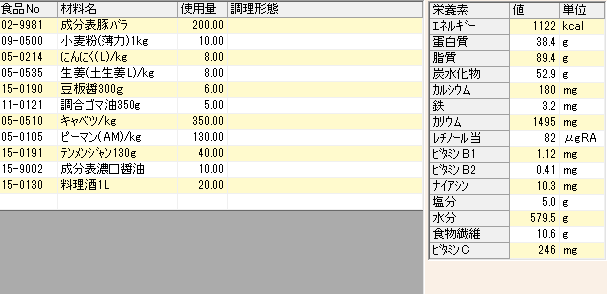
NUTRITION FACTS
| Item | Total (4 Servings) | Per Serving |
| Calories | 1,122 kcal | 280 kcal |
| Protein | 38.4 g | 9.6 g |
| Total Fat | 89.4 g | 22.4 g |
| Total Carbohydrates | 52.9 g | 13.2 g |
| Sodium (Salt Equivalents) | 5.0 g | 1.25 g |
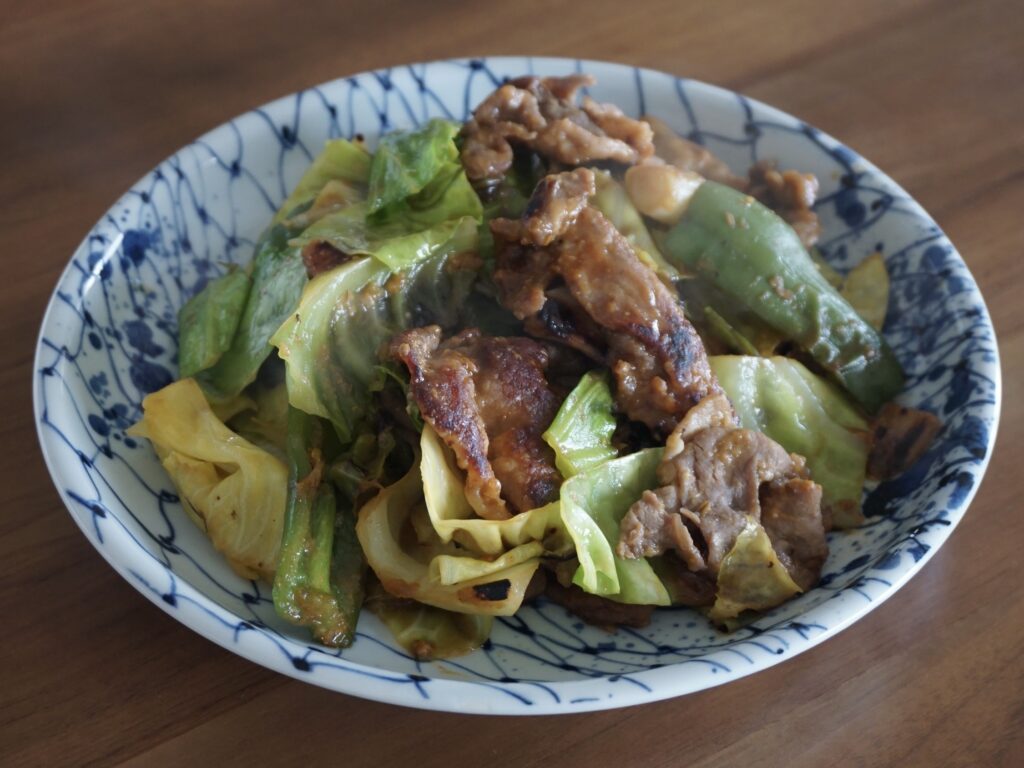
INGREDIENTS (4 Servings) : Juicy Hoikoro (Twice Cooked Pork)
Main Ingredients
- Pork belly: 200g (Sliced into 3cm wide x 5cm long x 3mm thick)
- Flour: 10g (For coating the pork)
- Cabbage: 350g (Approx. 1/4 piece)
- Green pepper: 130g (Approx. 4 pieces)
Aromatics & Oil
- Sesame oil: 5g
- Garlic: 8g (Finely chopped)
- Ginger: 8g (Finely chopped)
- Doubanjiang (Chili bean sauce): 6g
☆ The Sauce (Premix these)
- Tianmian sauce (Sweet flour sauce): 40g
- Soy sauce: 10g
- Sake (Japanese rice wine): 20g
How to make Juicy Hoikoro (Twice Cooked Pork)
Preparation
- Cut the cabbage into 5 cm cubes.
- Remove the stem and seeds from the bell pepper and cut it into quarters.
- Peel and finely chop the garlic and ginger.
- Lightly dust both sides of the pork belly with flour.
Cooking Process
- Heat sesame oil in a frying pan and fry the pork belly. Once nicely browned, remove it and set it aside on a plate.
- In the same pan, stir-fry the chopped garlic, ginger, and chili bean paste (Doubanjiang) until fragrant.
- Add the cabbage.
- When the cabbage has softened, add the bell peppers. Stir-fry the bell peppers briefly as they tend to lose their color quickly.
- Return the fried pork belly to the frying pan. Mix well.
Tip: Stir-frying the cabbage first, separately from the pork, prevents the pork from becoming soggy due to the moisture released by the cabbage.
Seasoning and Finishing
- Add the sweet flour sauce (Tianmian sauce).
- Sprinkle sake (Japanese rice wine) and mix to dissolve the Tianmian sauce and coat the ingredients.
- Add soy sauce and mix well.
- Stir-fry everything over high heat until the seasoning is evenly distributed and the sauce thickens slightly.
📖Related Link: Read the Japanese version of this article here! [ジューシー回鍋肉]

コメント