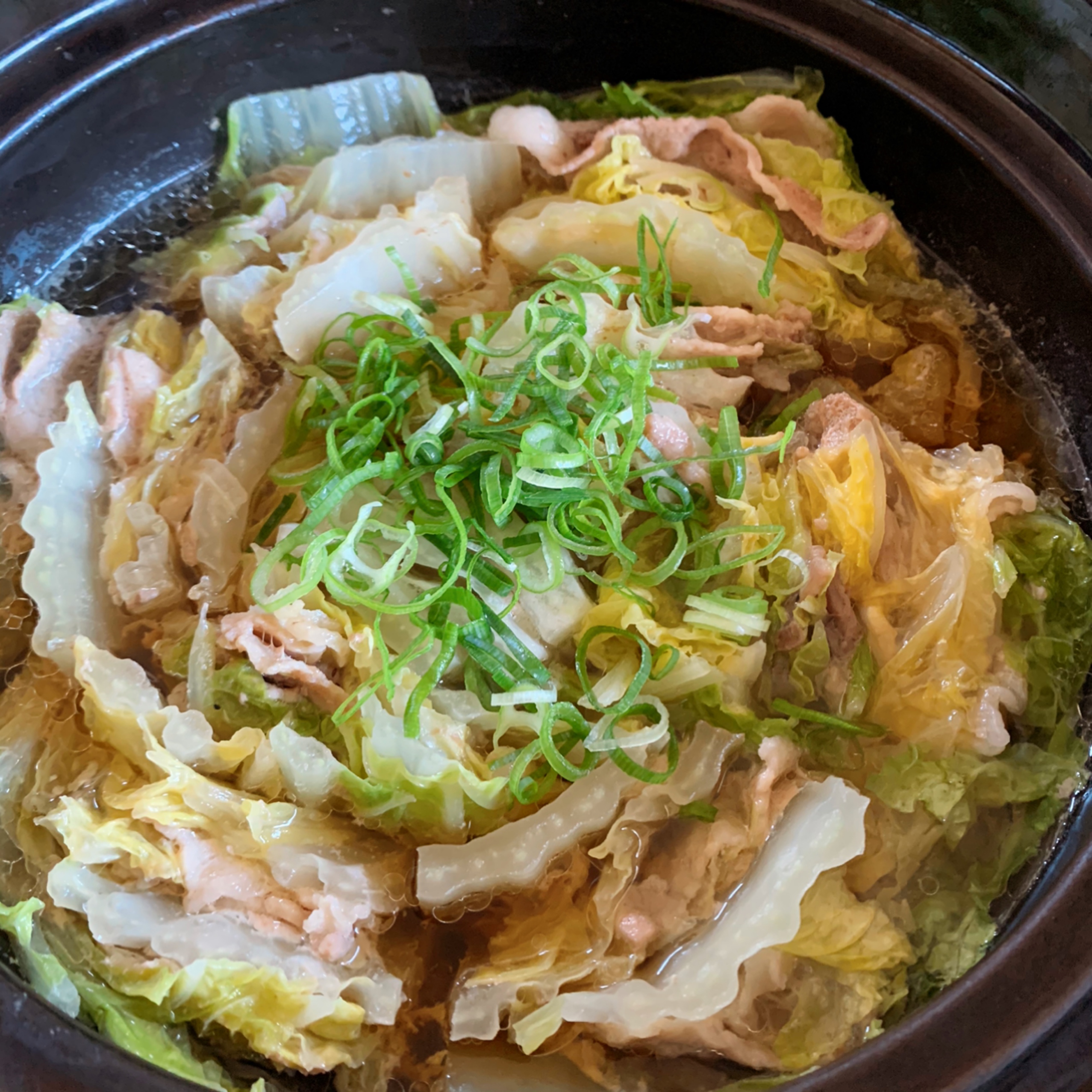
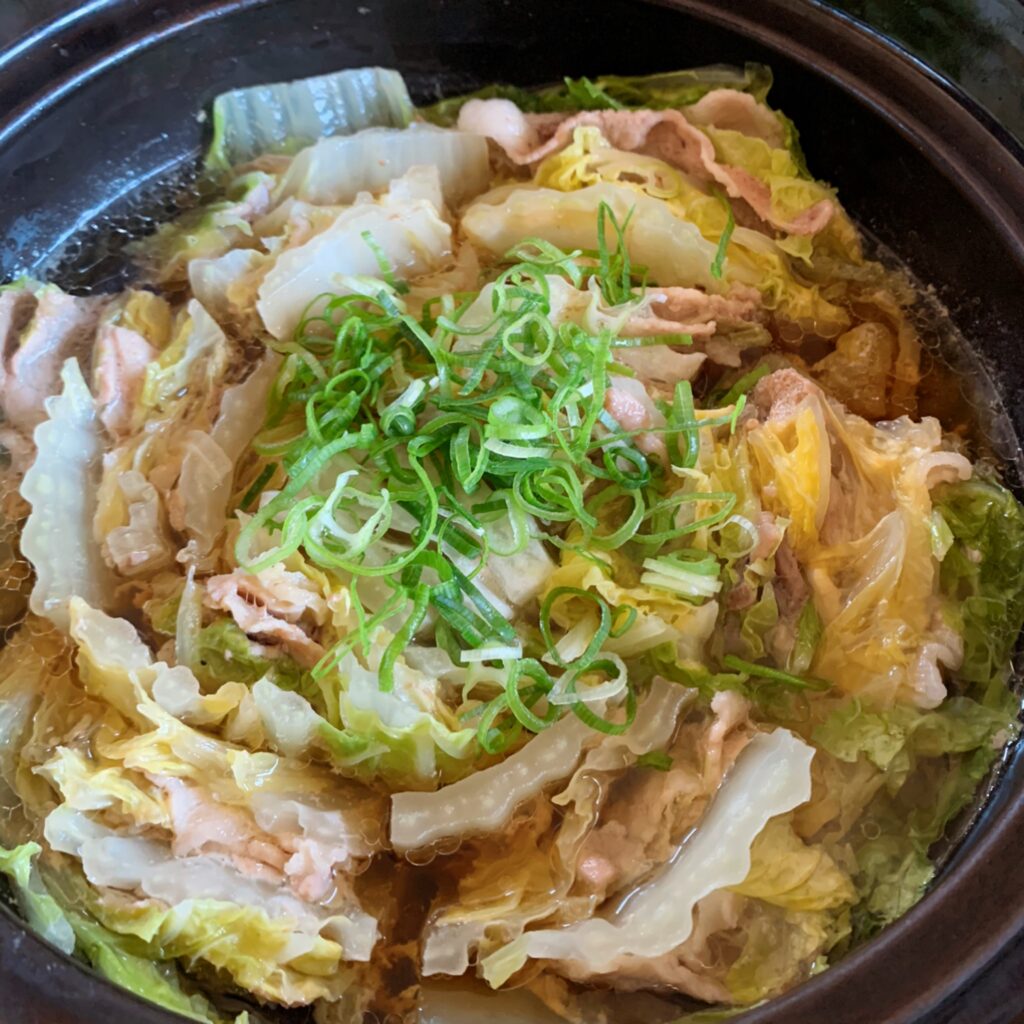
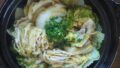
- Hakusai no mille-feuille nabe(白菜のミルフィーユ鍋)
- NUTRITION FACTS : Pork Belly Napa Cabbage Mille-Feuille Nabe
- INGREDIENTS ( 3 Servings) : Pork Belly And Napa Cabbage Mille-Feuille Nabe
- Pork Belly And Napa Cabbage Mille-Feuille Nabe INSTRUCTIONS
Hakusai no mille-feuille nabe(白菜のミルフィーユ鍋)
🍲What kind of dish is Hakusai no mille-feuille nabe??
Napa cabbage mille-feuille nabe is a hot pot dish made by layering napa cabbage and pork belly in a clay pot, arranging them in beautiful concentric circles, and simmering them slowly.
A beloved winter staple, it’s appealing not only for its vibrant appearance but also for its surprisingly simple preparation—it only requires two ingredients. It’s the ultimate affordable luxury dish that warms you from the inside out.
The rich, savory flavor of the pork belly slowly infuses, simmering the napa cabbage until it’s tender and naturally sweet. Every bite offers a delightful contrast between the juicy meat and the cabbage, which has absorbed every last bit of the flavorful broth.
To balance the richness of the pork, this dish is always served with ponzu (citrus soy sauce). The refreshing acidity of ponzu coats the fat and brings out the sweetness of the vegetables, creating a perfect harmony. (If you can’t find ponzu sauce, mix soy sauce with citrus juice. Sesame dressing also works well.)
Pork contains Vitamin B1 (which helps relieve fatigue) and Chinese cabbage contains Vitamin C. This combination is “perfect for preventing colds and maintaining good health in the winter.”
Be sure to include this in your winter meals!
💪The Nutritional Synergy of Pork Belly and Napa Cabbage
While pork belly is loved for its tender texture and rich flavor, its high fat content can be a concern. However, in this recipe, we balance it out by using three times as much Napa cabbage as pork.
From a nutritional standpoint, pork belly is an excellent source of Vitamin B1, containing 0.51mg per 100g. According to the Dietary Reference Intakes for Japanese (2025), the recommended daily intake for Vitamin B1 is approximately 1.1mg, meaning this dish provides a significant portion of your daily needs.
On the other hand, Napa cabbage is not only low in calories and fat, but it is also rich in Vitamin C—a nutrient that pork belly lacks. While many other vegetables also offer fiber and Vitamin C, when we look at the “total package”—including the harmony of flavors, the contrast in textures, the ease of preparation, and the overall balance—the combination of pork belly and Napa cabbage is truly the most ideal and unbeatable duo. I highly recommend this pair for a nutritious and satisfying meal.
■ Recommended Dietary Allowance (For Japanese)
(For individuals with a “Normal” physical activity level)
| Age Group | Gender | Vitamin B1 (RDA) | Vitamin B2 (RDA) |
| 18–29 years | Male | 1.1 mg | 1.6 mg |
| Female | 0.8 mg | 1.2 mg | |
| 30–49 years | Male | 1.2 mg | 1.7 mg |
| Female | 0.9 mg | 1.2 mg | |
| 50–64 years | Male | 1.1 mg | 1.6 mg |
| Female | 0.8 mg | 1.2 mg |
■ Nutritional Content of Pork Belly (per 100g)
Nutritional Content of Pork Belly (per 100g)
- Calories: 366 kcal
- Protein: 14.4 g
- Fat: 35.4 g
- Carbohydrates: 0.1 g
- Vitamin B1 (Thiamine): 0.51 mg
- Vitamin B2 (Riboflavin): 0.13 mg
- Vitamin C: 1 mg
■ Nutritional Content of Napa Cabbage (per 100g)
- Calories: 12 kcal
- Protein: 1.3 g
- Fat: 0.1 g
- Carbohydrates: 2.6 g
- Dietary Fiber: 2.2 g
- Vitamin B1 (Thiamine): 0.05 mg
- Vitamin B2 (Riboflavin): 0.13 mg
- Vitamin C: 88 mg
💎Two-stage enjoyment of hot pot dishes
In Japan, we don’t just stop when the main ingredients of the hot pot are gone. “Shime” (pronounced shime) literally means “the end” or “closing.”
It refers to a final dish made using the leftover broth at the bottom of the pot. Because the broth has been simmering with meat, seafood, and vegetables all night, it is packed with an incredible depth of flavor (umami).
In Japan, finishing a hot pot with rice or noodles isn’t just a tradition—it’s a sustainable and healthy practice.
- Zero Waste: It’s an eco-friendly concept that ensures nothing goes to waste. Every bit of the “Umami” created by the ingredients is consumed.
- Nutrient-Rich: Many vitamins from the Napa cabbage are water-soluble, meaning they leak into the soup during cooking. The “Shime” allows you to drink up all those healthy nutrients instead of pouring them down the drain.
🥢Common Types of Shime
Depending on the type of soup, we usually choose one of these three “closers”:
- Zosui (Rice Porridge): We add cooked rice into the boiling broth, let it absorb the soup, and then pour in a beaten egg. It’s comforting and savory.
- Udon or Ramen: Thick udon noodles or thin ramen noodles are added to soak up the remaining liquid.
- Cheese Risotto: For modern or creamy hot pots (like tomato or soy milk nabe), we add rice and plenty of cheese for a Western-style finish.
😊The “Solo-Size” Mille-Feuille Nabe Hack
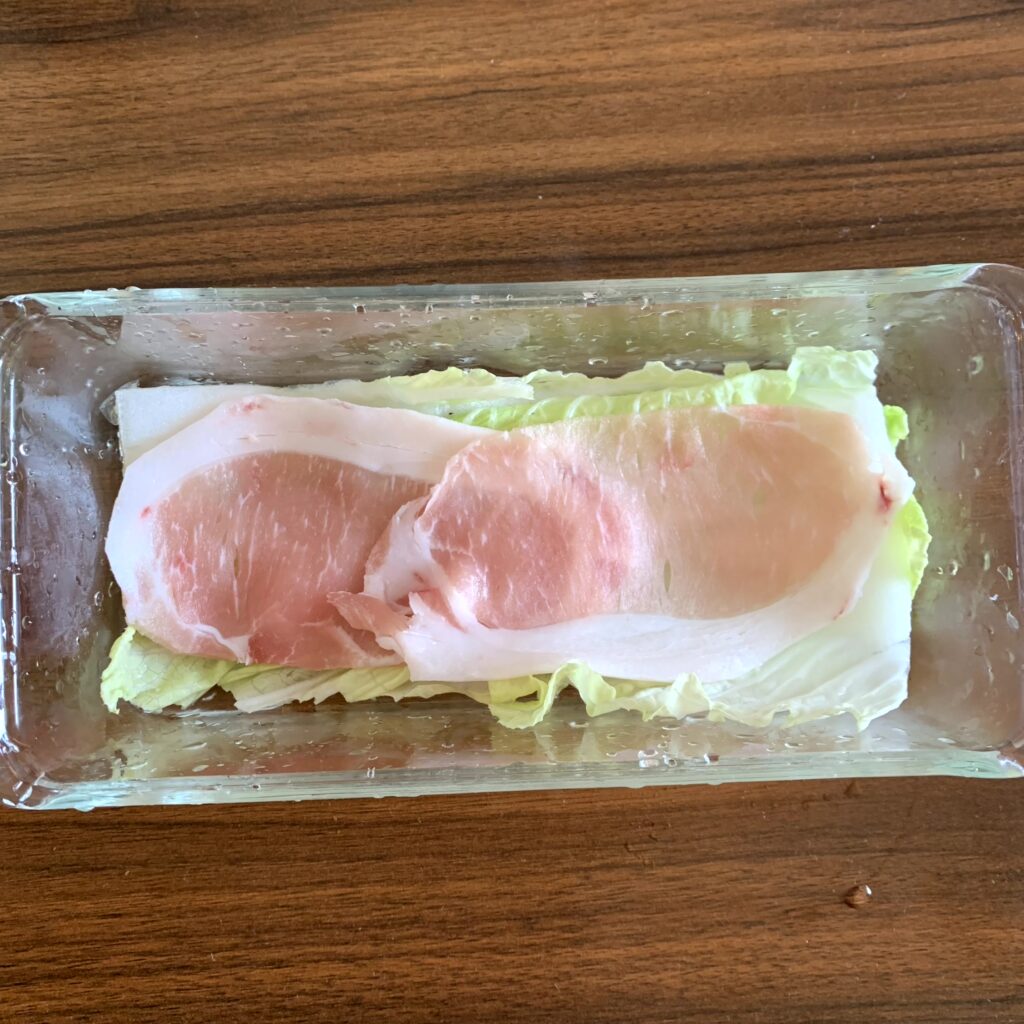
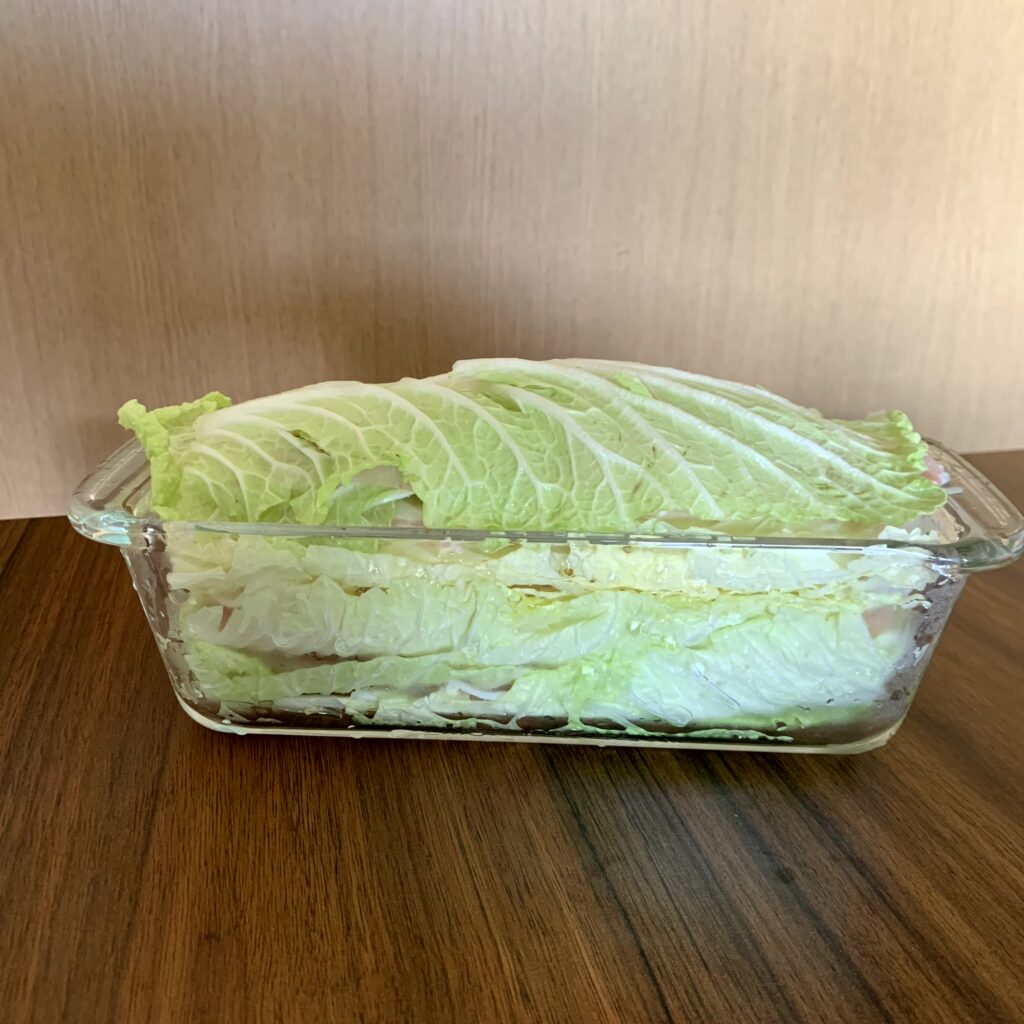
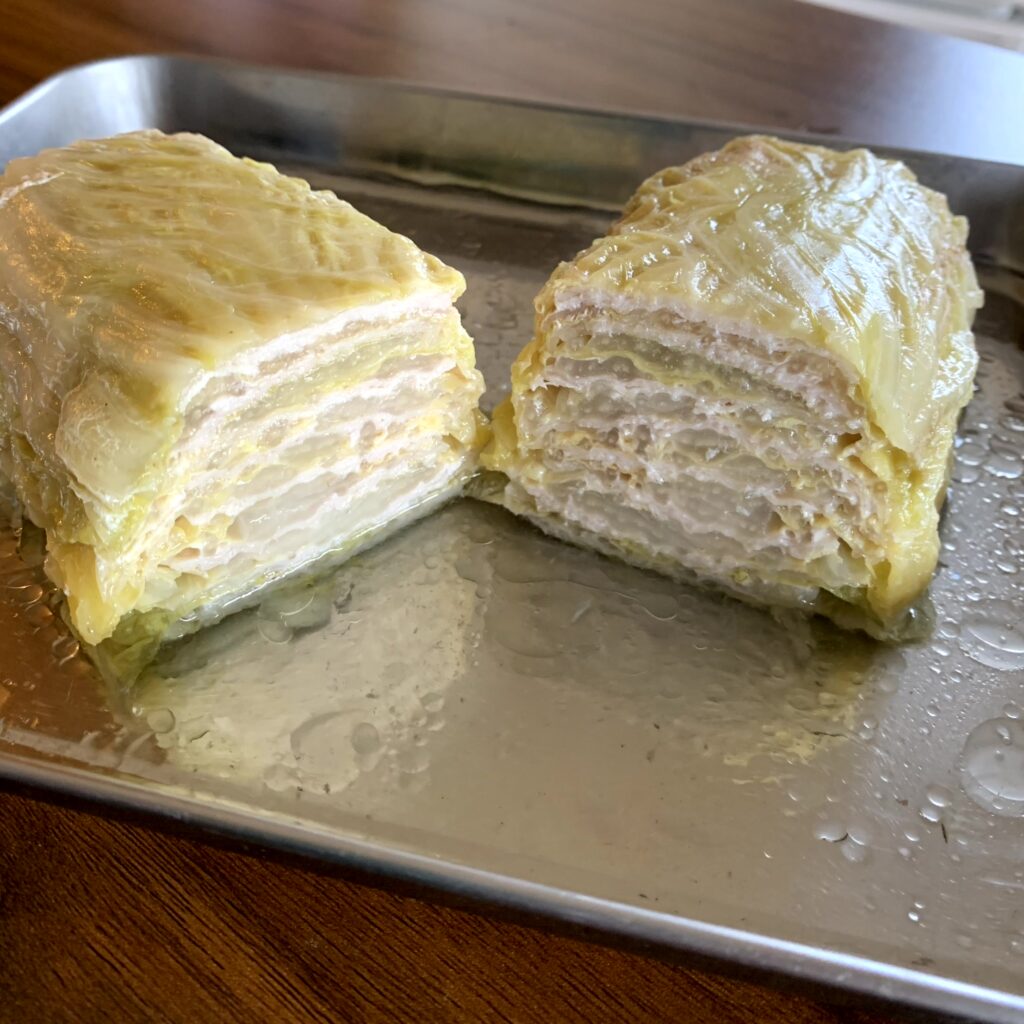
Traditional Japanese hot pot (nabe) can be a bit intimidating because it usually requires a large clay pot (donabe) and making a huge batch of food. If you live alone or don’t want to deal with heavy cookware, here is a modern, easy twist!
The Method: Use a Glass Cake Mold
Instead of a big pot, use a heat-resistant glass cake mold (like Pyrex).
- Layer your Chinese cabbage and pork slices directly into the mold.
- Microwave it! No stove or heavy pot required.
- The glass looks beautiful on the table, and it’s much easier to store and wash.
Pro Tip: While many recipes call for pork belly, you can use thinly sliced pork loin for a leaner, healthier version that is just as delicious!
What is “Kasanemushi”?
You might hear this cooking style called Kasanemushi (重ね蒸し).
- Kasane = Layering / Stacking
- Mushi = Steaming
In English, the best way to explain this is “Layered Steaming.” It is a highly respected technique in Japanese home cooking because it allows the ingredients to cook in their own juices. By “stacking” the vegetables and meat tightly, the moisture from the cabbage steams the pork perfectly, keeping it tender while the meat juices season the vegetables. It’s simple, healthy, and captures the “umami” without needing much added oil or heavy sauces.
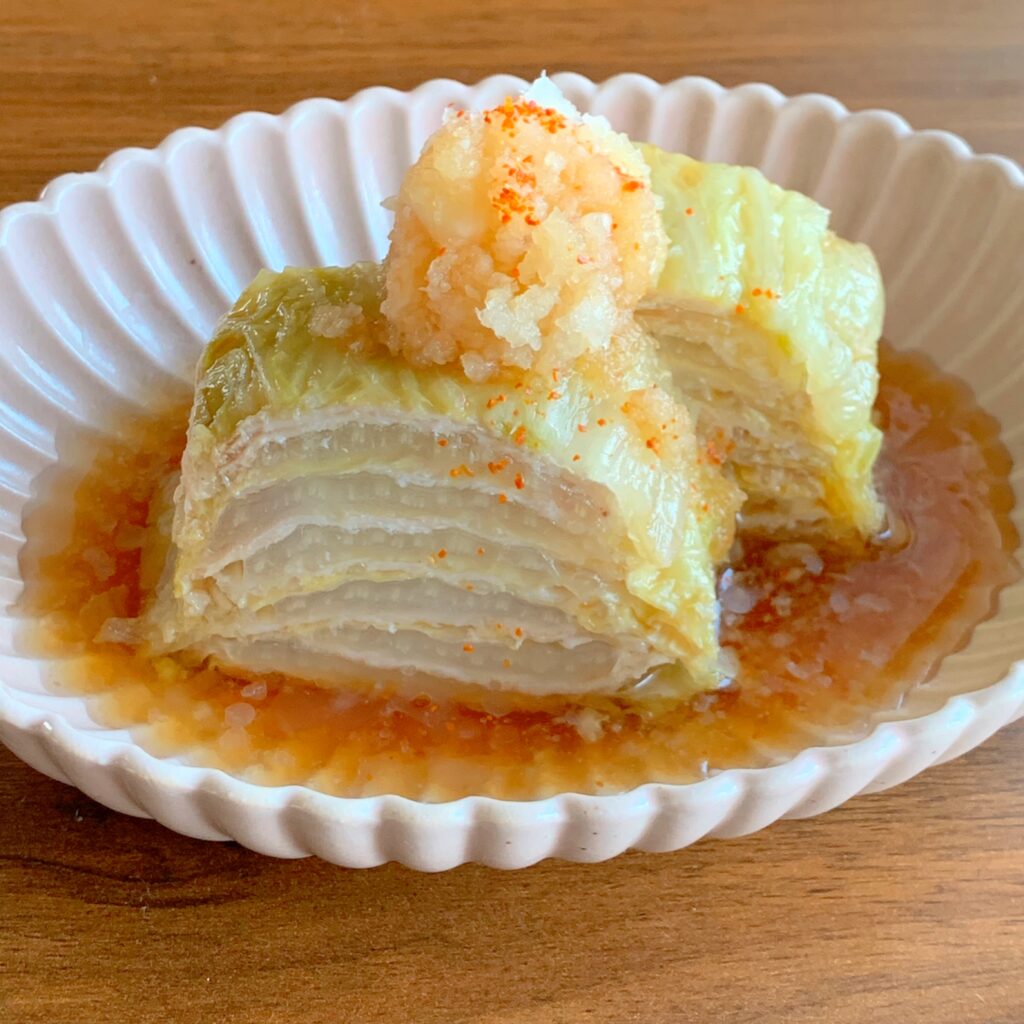
🥬What kind of food is napa cabbage??
Napa cabbage (Chinese cabbage) is called “白菜 = hakusai” in Japan.
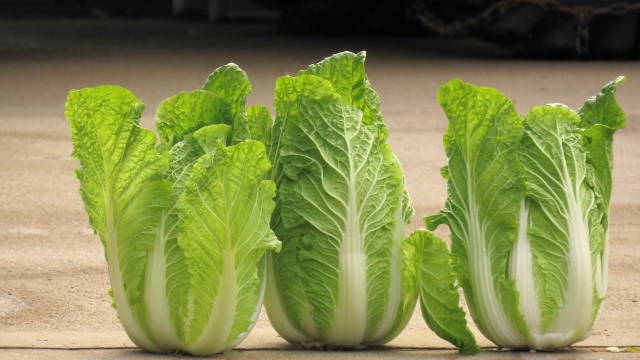
It is light green and cylindrical in shape. It has a lot of water, and the stems and leaves are soft and slightly sweet without bitterness.
Napa cabbage itself doesn’t have much of a distinctive taste, but it absorbs a lot of the flavor of the food it is cooked with, such as meat or fish, making it very delicious.
Napa cabbage originates from China. It spread in Japan in the Meiji period.
It used to be a typical winter vegetable, but now the demand is high throughout the year. When cooking, cut off a few centimeters from the base of the napa cabbage and wash it well.
The main cooking method is steaming or boiling, but it can also be used in salads and pickles, so it can be used for a wide variety of purposes.
NUTRITION FACTS : Pork Belly Napa Cabbage Mille-Feuille Nabe
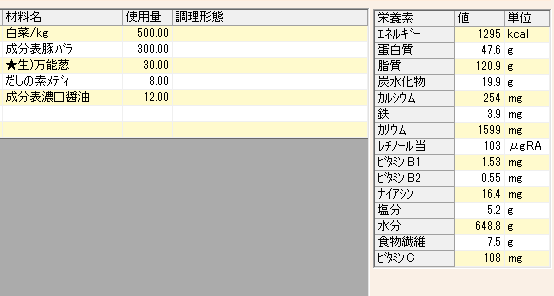
| Nutrient | Total (3 Servings) | Per Serving (1 Person) |
| Calories | 1295 kcal | 432 kcal |
| Protein | 47.6 g | 15.9 g |
| Total Fat | 120.9 g | 40.3 g |
| Total Carbohydrates | 19.9 g | 6.6 g |
| Salt Equivalent | 5.2 g | 1.7 g |
Note: The “Salt Equivalent” does not include the ponzu sauce used for dipping.
INGREDIENTS ( 3 Servings) : Pork Belly And Napa Cabbage Mille-Feuille Nabe
★ Main Ingredients
- Napa Cabbage: 500g (approx. 1/2 medium head)
- Pork Belly: 300g (thinly sliced)
- Note: You can substitute with pork loin for a leaner option.
- Green Onions: For garnish (chopped)
- Ponzu Sauce: For dipping
☆ Soup Base:
- Water: 300ml
- Dashi Stock Granules (hondashi): 1.5 tsp (approx. 8g)
- Soy Sauce: 2 tsp (approx. 12g)
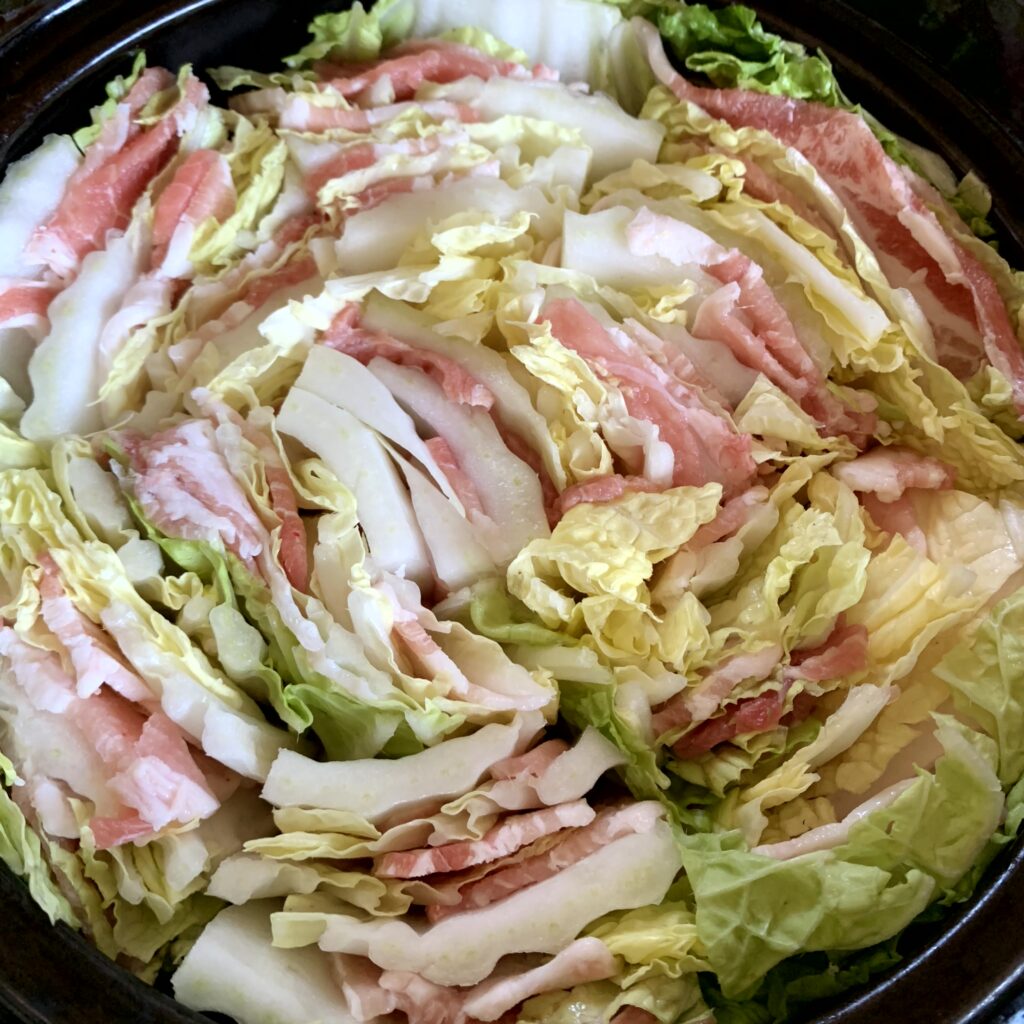
Pork Belly And Napa Cabbage Mille-Feuille Nabe INSTRUCTIONS
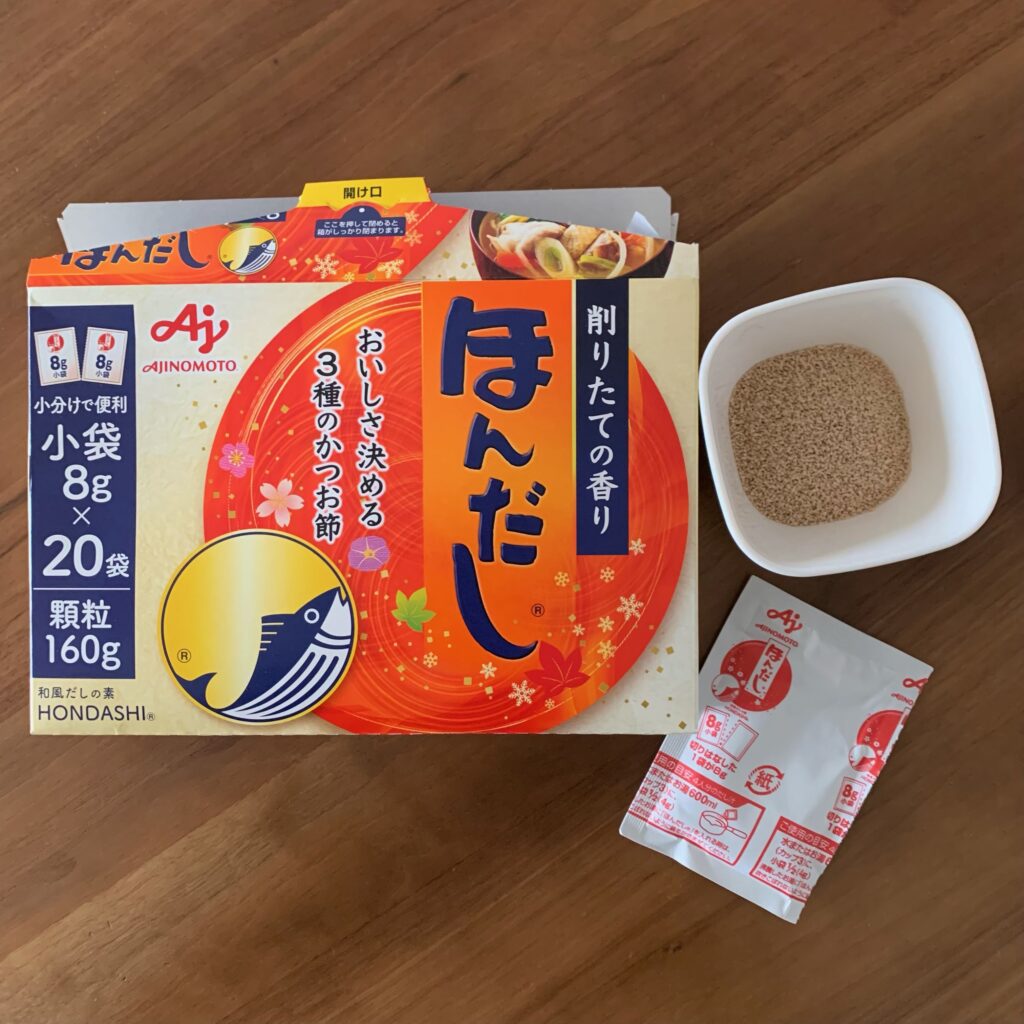
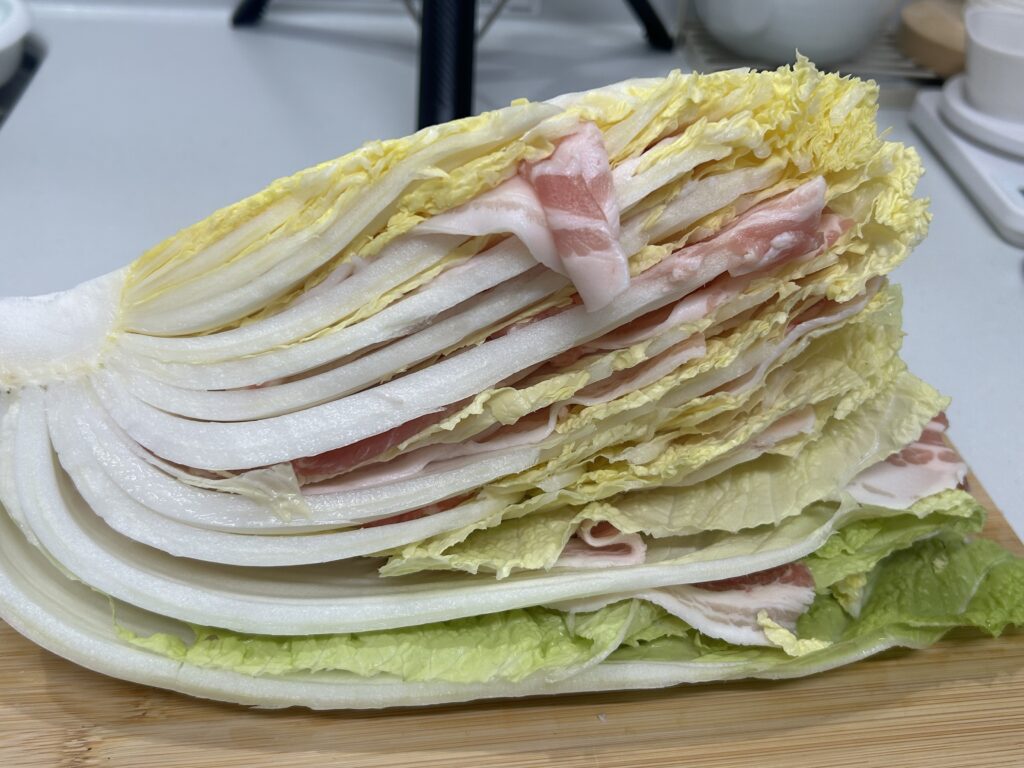
- Prepare the Napa cabbage: Wash the napa cabbage thoroughly. Cut the head into 8 long wedges. Keep the root end intact for now; this prevents the leaves from falling apart while you are layering.
- Layer the Pork: Gently tuck the pork belly slices between the napa cabbage leaves. Aim for an even distribution so every bite has both meat and vegetable.
- Cut and Arrange: Cut the stuffed napacabbage wedges into 3–5cm (approx. 1.5-inch) wide sections. At this point, trim off and discard the tough root end. Pack the pieces tightly into your pot with the cut sides facing up to show off the beautiful layers.
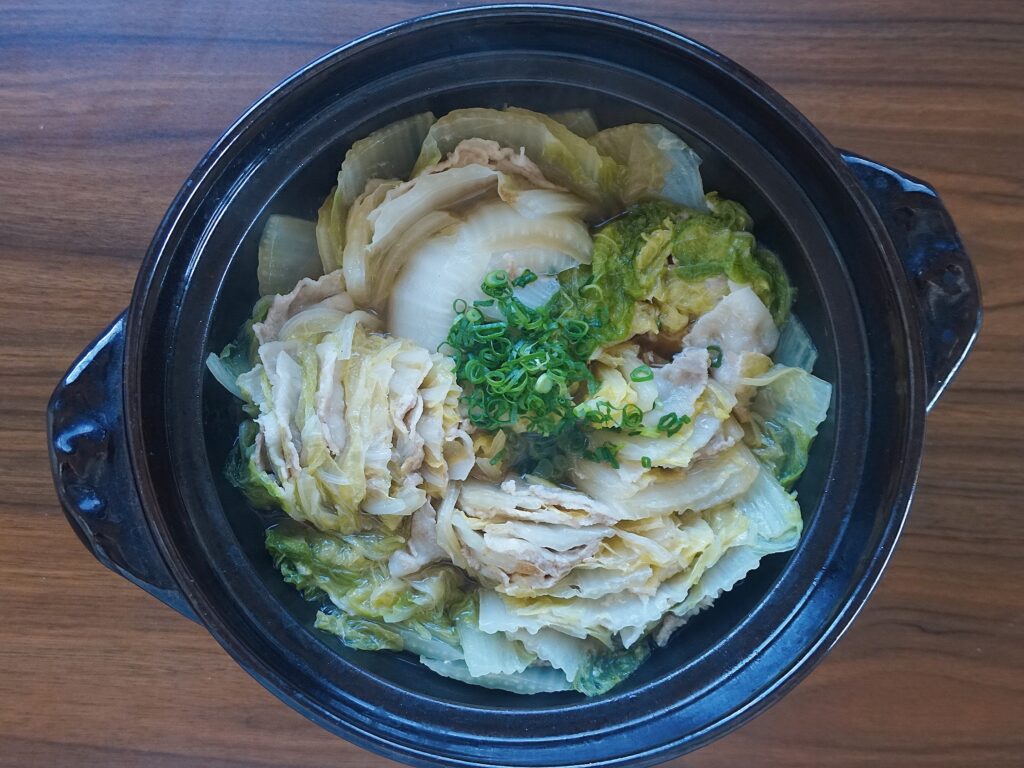
- Simmer: Mix the water, dashi granules, and soy sauce, then pour the mixture over the napa cabbage. Cover and bring to a boil over medium heat. Once boiling, reduce the heat and simmer until the cabbage is tender and the pork is fully cooked.
- Serve: Garnish with chopped green onions. Serve hot with a small side bowl of Ponzu for dipping.
📖Related Link: Read the Japanese version of this article here! [豚バラ白菜のミルフィーユ鍋]


コメント