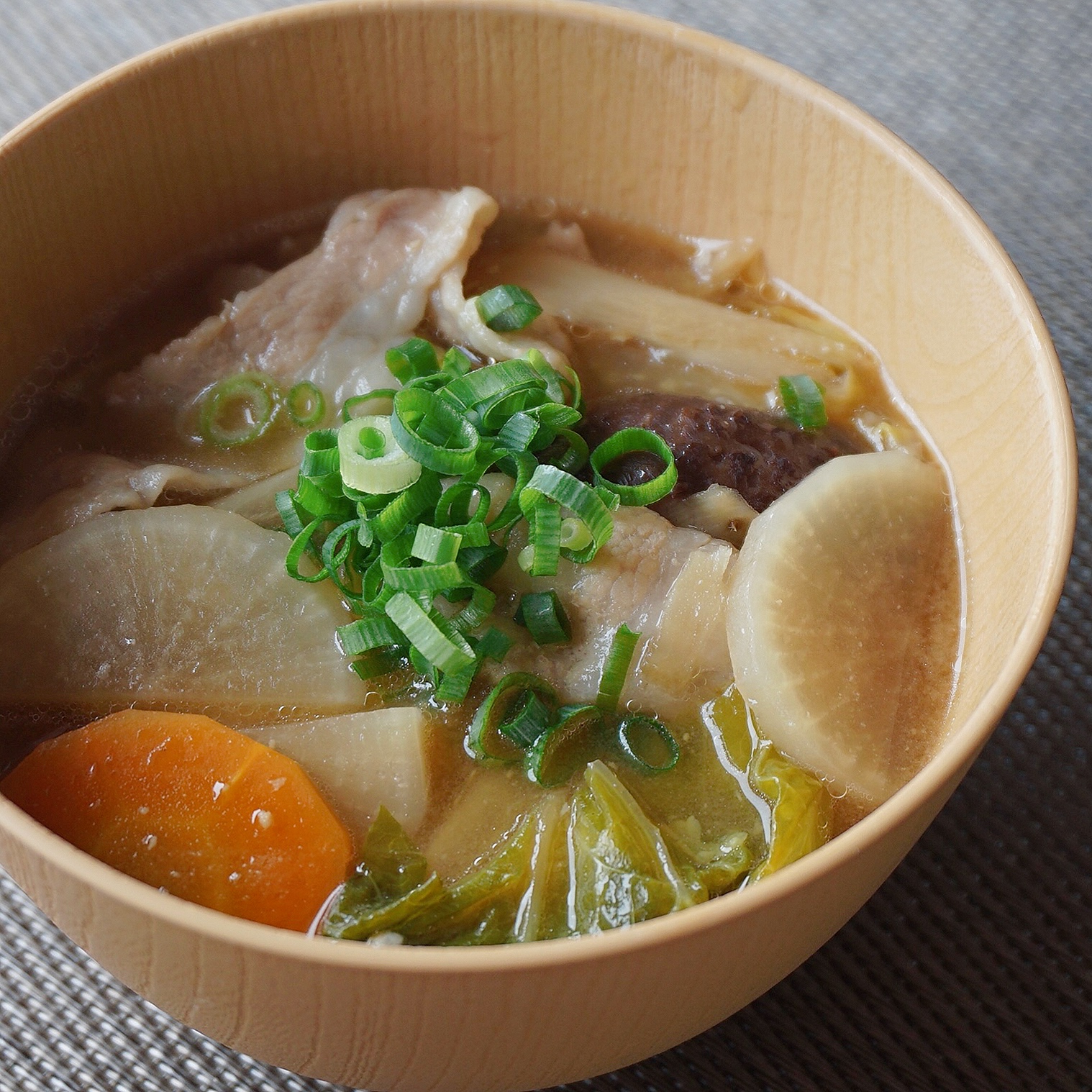
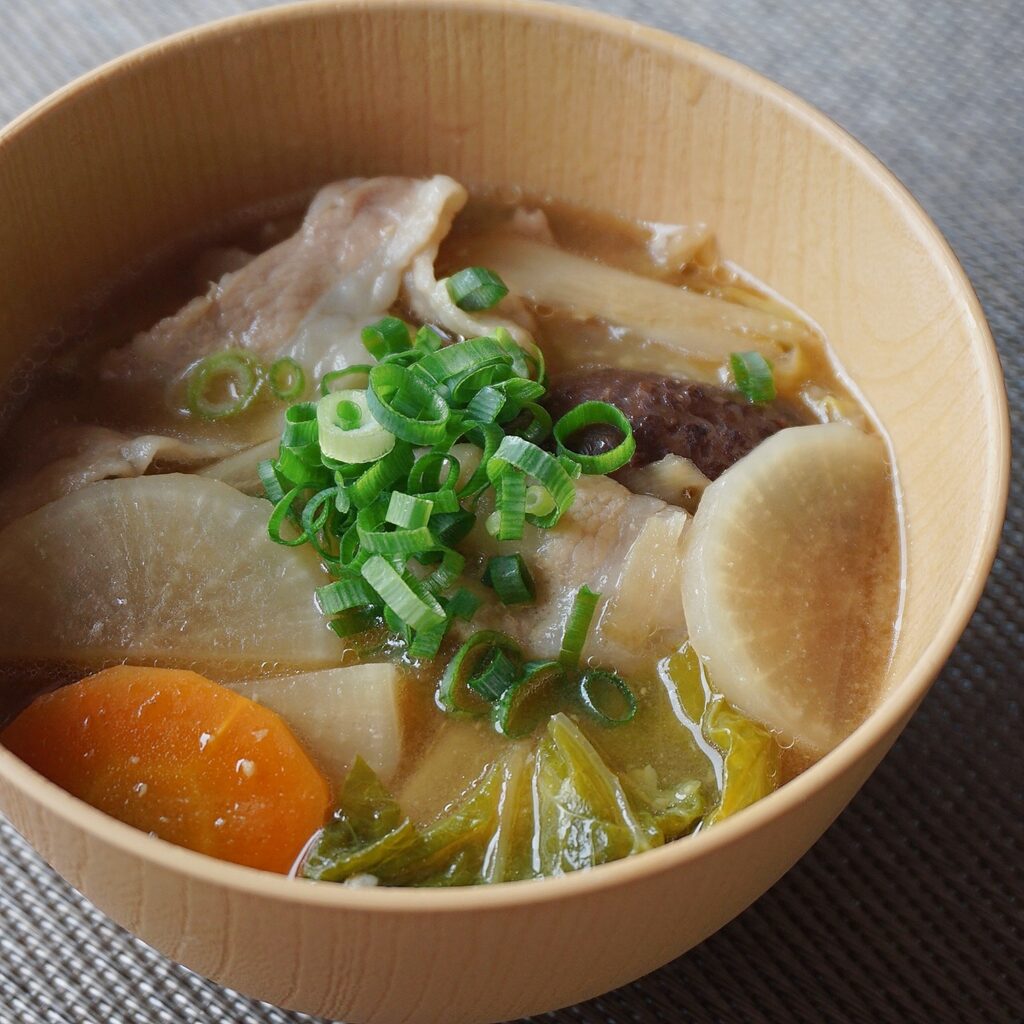
Butajiru (豚汁): The Ultimate Japanese Comfort in a Bowl
While standard miso soup is a side dish, Butajiru is the star of the show. This hearty, rustic soup is packed with pork belly and earthy root vegetables, creating a savory depth that warms you from the inside out. Popularized globally by the series Midnight Diner, it represents the pinnacle of Japanese home cooking.
What Makes Butajiru Special?
- “Eating” vs. “Drinking”: Unlike light miso soups, Butajiru is thick with ingredients.
- The Sauté Factor: Sautéing the pork and vegetables in sesame oil before simmering unlocks a smoky, nutty aroma.
- Texture Heaven: You get the crunch of burdock, the melt-in-your-mouth daikon, and the chew of konnyaku.
🍲 How It Compares
| Feature | Butajiru | Standard Miso Soup | Kenchinjiru |
|---|---|---|---|
| Protein | Pork Belly (Rich/Fatty) | Tofu or Seaweed | Tofu (Vegan-friendly) |
| Base | Miso + Pork Dashi | Dashi + Miso | Soy Sauce + Veggie Dashi |
| Vibe | Hearty Main Dish | Light Side Dish | Clean & Zen (Buddhist) |
🛒 Ingredients
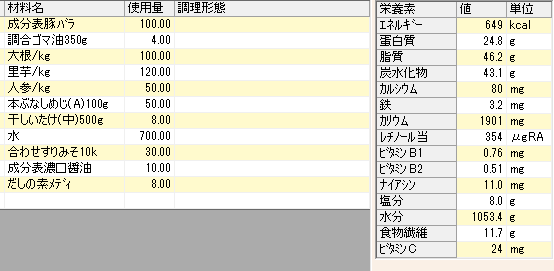
- Meat: 100g Pork belly (thinly sliced)
- Vegetables: 120g Taro (Satoimo), 100g Daikon radish, 50g Carrot, 50g Shimeji mushrooms
- Umami Boosters: 2 Dried shiitake mushrooms, 2 Kayanoya Dashi Packs (or 8g Hondashi granules)
- Seasoning: 30g Miso paste, 10g Dark soy sauce, 4g Sesame oil
- Liquid: 700ml Total (Combine water + mushroom soaking liquid)
🥕For this recipe, I’ve selected ingredients that are relatively easy to find anywhere. For an even better aroma and texture, I highly recommend adding burdock root (gobo) or konnyaku.
There are no strict rules when it comes to Butajiru! Feel free to get creative and use whatever you have in your fridge.
👨🍳 Step-by-Step Instructions
1. Prep the Umami Base
The night before, soak your dried shiitake mushrooms in water. When ready to cook, squeeze them dry and quarter the caps. Pro Tip: Keep that soaking liquid—it’s liquid gold!
2. Prepare the Root Veggies
- Peel the taro (keep it dry while peeling to avoid slipperiness, then rinse).
- Slice the daikon and carrots. For a fancy look, use a “chrysanthemum” cut.
- Separate the shimeji into small bite-sized bunches.
3. The Sauté (The Secret Step)
Heat sesame oil in a deep pot over medium heat. Fry the pork belly until browned. This renders the fat and creates the base for the soup’s rich flavor. Add the rest of the vegetables and stir-fry for 2–3 minutes to coat them in the flavored oil.
4. Simmer
Pour in the 700ml of liquid (water + strained shiitake water). Add your dashi packs. Bring to a boil, then lower the heat and simmer until the root vegetables are fork-tender.
5. The Finishing Touch
Whisk in the miso and soy sauce. Let it simmer for just 2 more minutes to meld the flavors without boiling away the miso’s delicate aroma.
🌶️ Pro Serving Suggestions
To take your bowl to the next level, try these traditional Japanese accents:
- Shichimi Togarashi: A 7-spice chili blend for a spicy kick.
- Yuzu Kosho: A fermented paste of green chili and yuzu peel for a citrusy, salty zing.
- Green Onions: Freshly chopped for a crisp contrast to the rich broth.
Enjoy the harmony of juicy pork, earthy roots, and soul-warming miso!
Does this flow better for your readers? I made sure to emphasize the “sautéing” step, as that’s usually the part that surprises people who are only used to basic miso soup!
📊 Nutrition Facts (Per Recipe)
“A Nutritious Powerhouse:” > This recipe is a great source of energy thanks to the healthy fats in the pork belly and the fiber from the root vegetables. If you’re watching your sodium intake, feel free to adjust the amount of miso to your preference!
| Item | Amount |
|---|---|
| Calories | 649 kcal |
| Protein | 24.8 g |
| Fat | 46.2 g |
| Total Carbohydrates | 43.1 g |
| Salt Equivalent | 8.0 g |
📖Read the Japanese version of this article here! [豚汁 (Butajiru):一杯で主役になる、究極の日本風コンフォートフード]

コメント