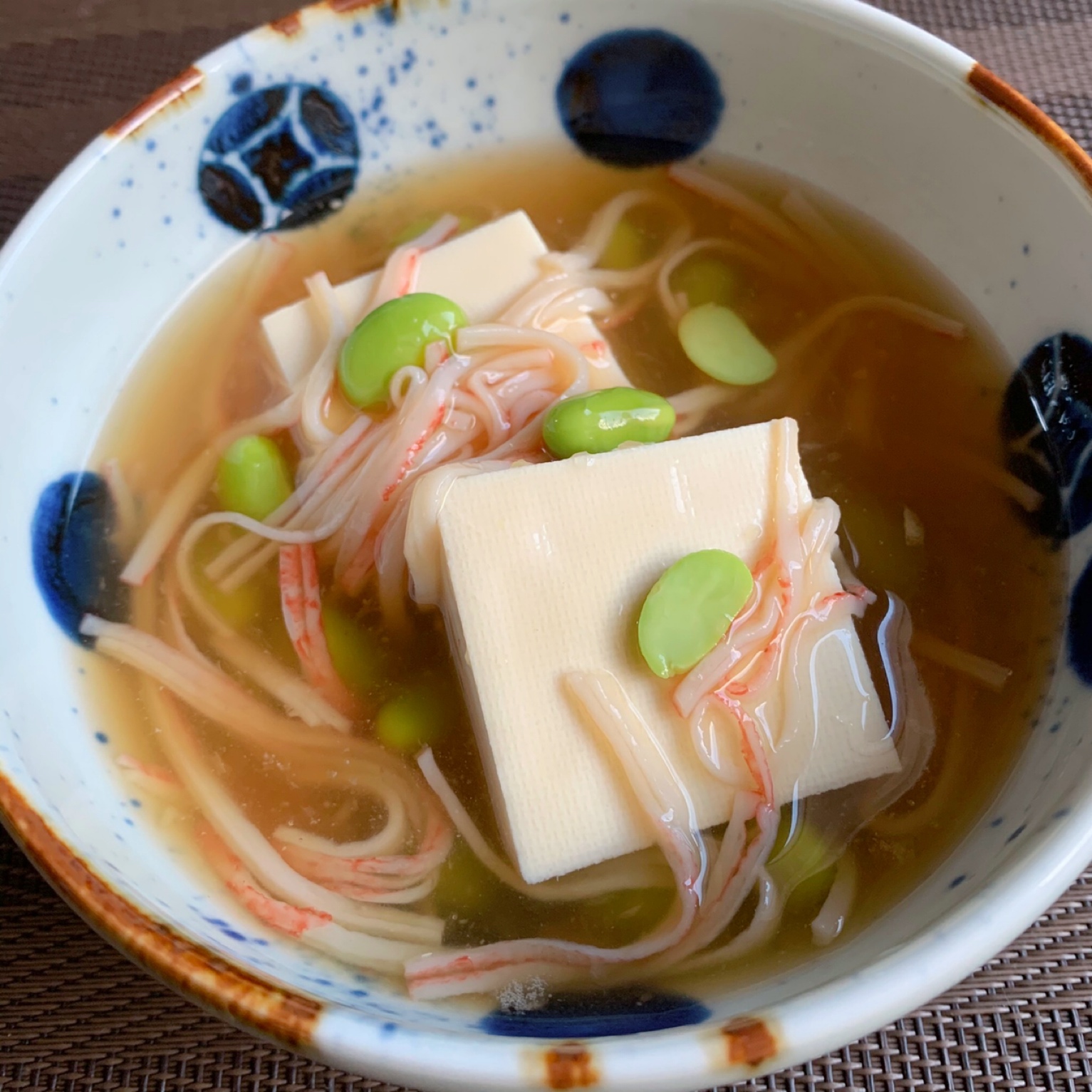
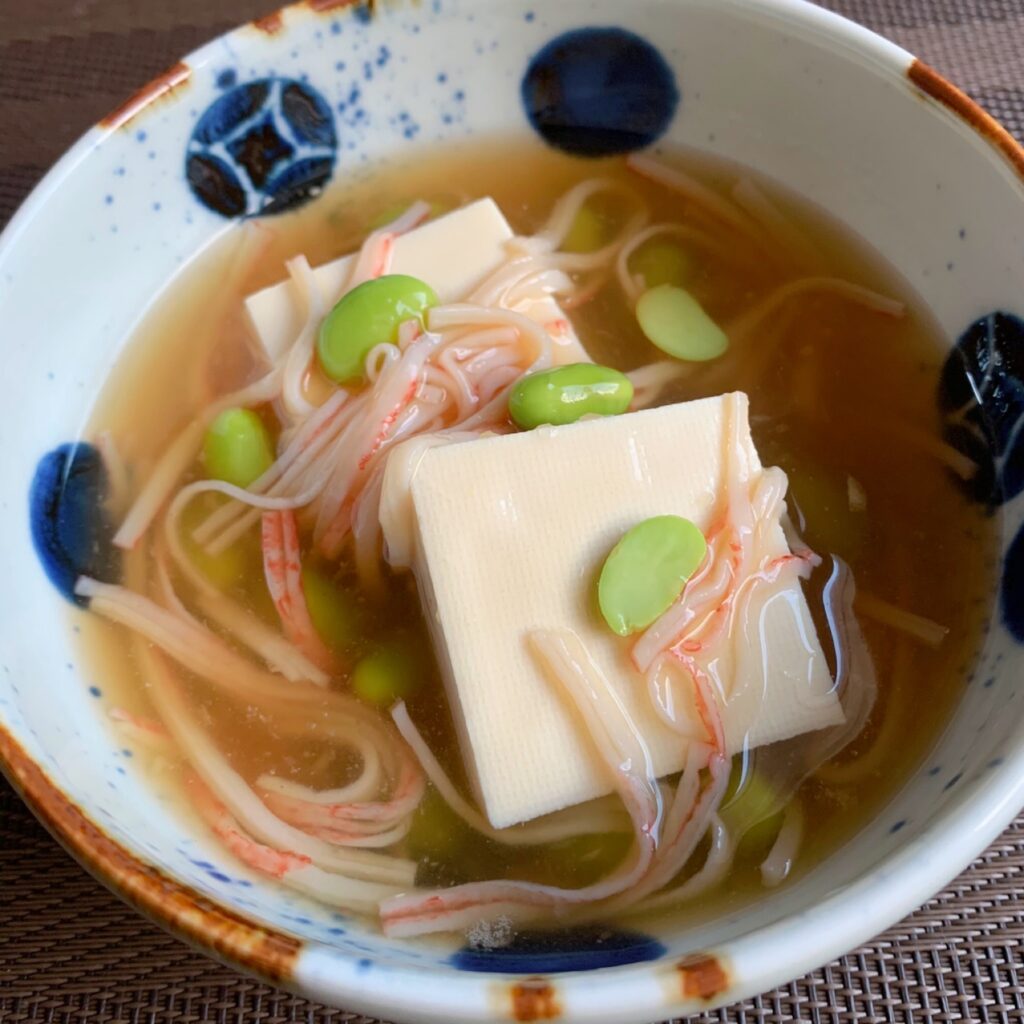
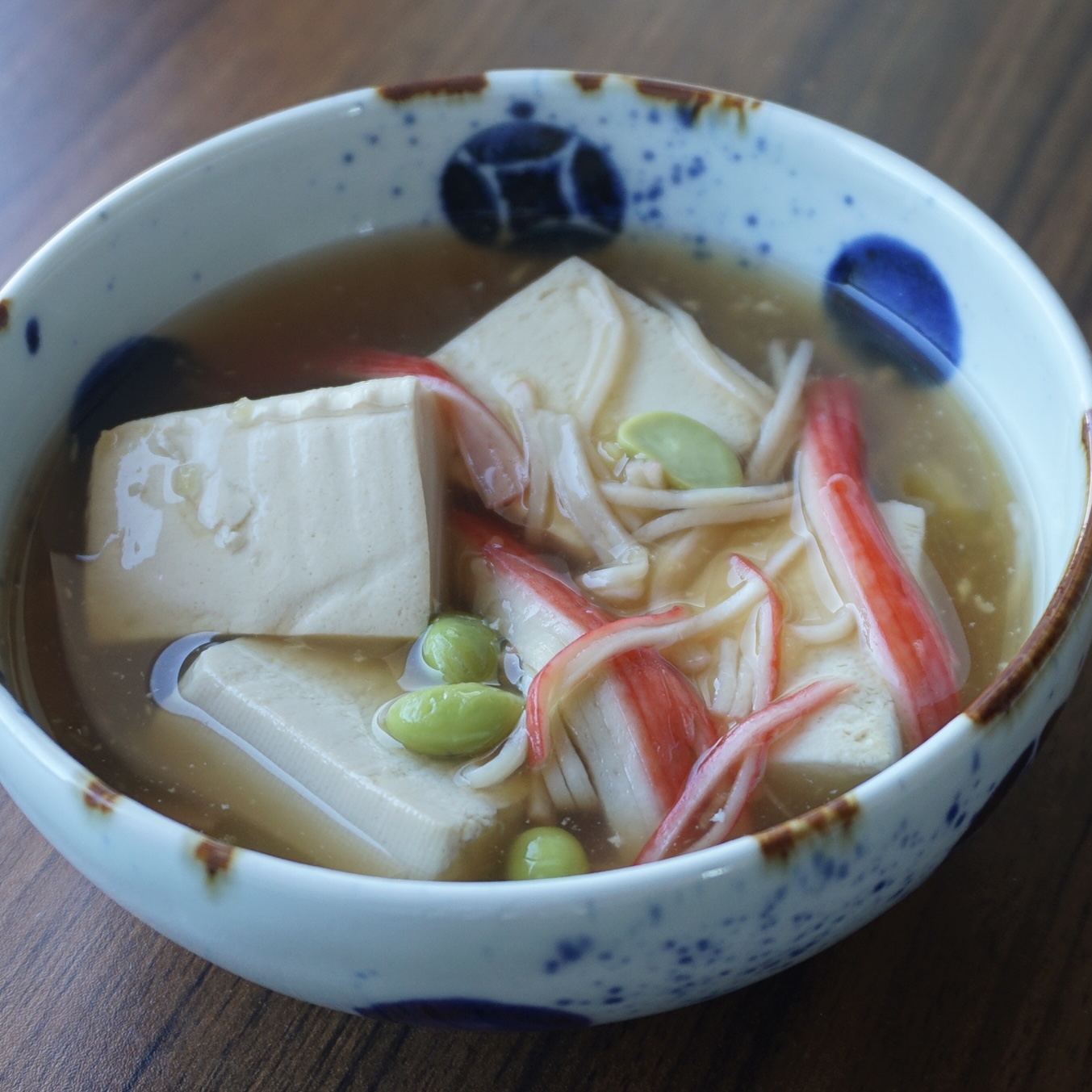
Yudofu (Tofu with Edamame Kani Ankake)(豆腐の枝豆あんかけ)
🍙What kind of dish is Tofu edamame kani ankake ??
This warming dish is a modern, creative twist on the traditional Japanese Yudofu. While many Japanese food enthusiasts correctly point out that classic Yudofu is simply tofu simmered in a kombu (kelp) dashi and dipped in ponzu, this recipe evolves that concept into a complete, nutrient-dense meal.
By adding a vibrant Ankake sauce—a flavorful, slightly viscous soup made with crab sticks and edamame—we transform the humble simmered tofu into a “filling side dish” (Oka-zu) that stays hot until the very last bite.
📋 Understanding the Tradition & The Evolution
- Traditional Yudofu (The Roots): Originating in the temples of Kyoto as Buddhist vegetarian cuisine (Shojin Ryori), the traditional style focuses on the purity of the tofu. It is gently warmed in water with a piece of kombu and served with simple condiments. It’s an art of minimalism.
- This Creative Version (The Evolution): In modern Japanese home cooking and professional nutrition (like the hospital meals I prepare), we often “evolve” Yudofu to boost its nutritional profile.
- The “An” (Sauce) Benefit: Unlike the thin dipping sauce of traditional Yudofu, the thickened Ankake coats the tofu, locking in heat and ensuring you consume every bit of the protein-rich broth.
- A Balanced Meal: By incorporating Kanikama (fish protein) and Edamame (vitamins and fiber), this dish moves beyond a simple appetizer to become a functional, healthy main or side dish perfect for busy, health-conscious lives.
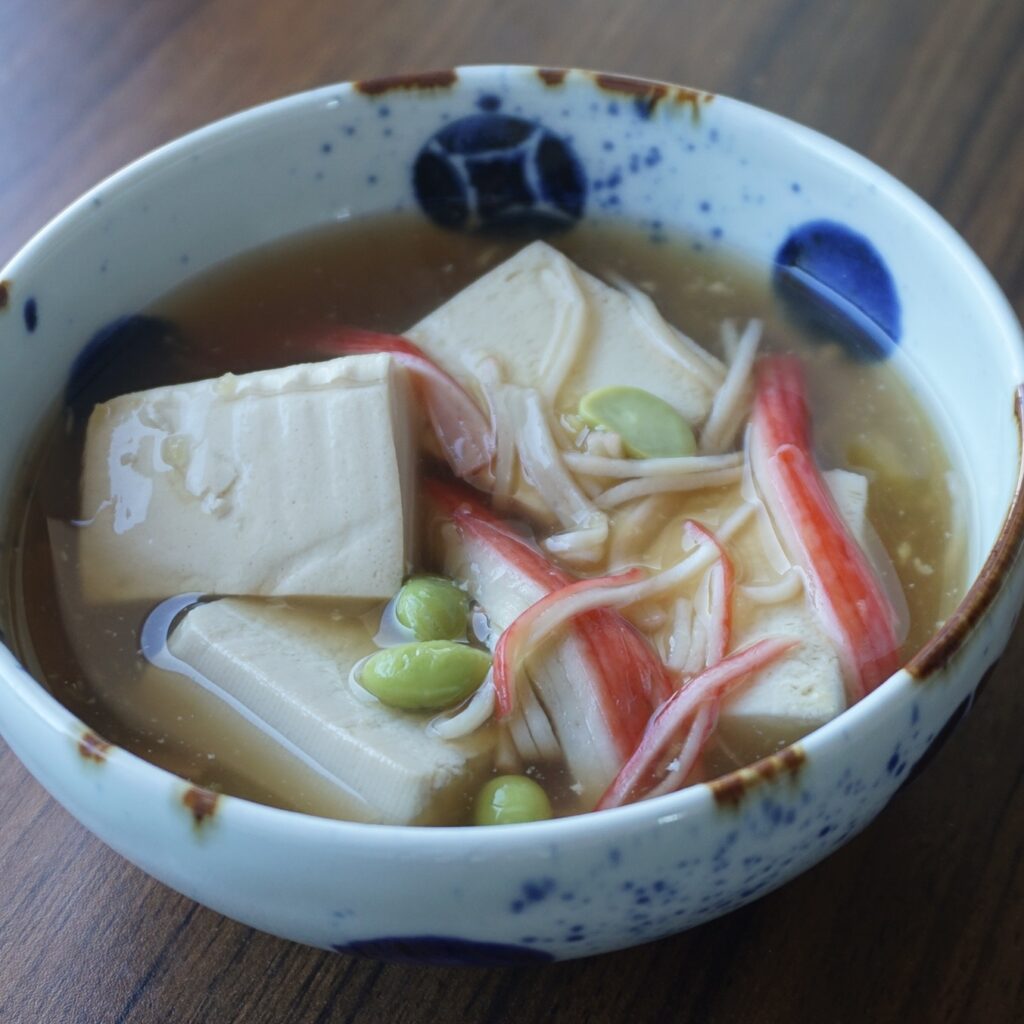
💡 Tips for the Purists
If you want to experience the “Old School” Kyoto style, feel free to simmer the tofu in plain water with a strip of dried kombu first. Then, pour this colorful Edamame Kani Ankake over it to experience the best of both worlds—the soul of tradition meeting the creativity of modern Japanese wellness!
🌿Health & Nutritional Benefits
Beyond its simple appearance and light flavor, this dish is surprisingly high in nutritional value:
- The Power of Tofu: Tofu is low in fat, high in protein, and rich in calcium. For those seeking a more filling meal, firm tofu (momen) is recommended. For those with a smaller appetite or looking for something lighter, soft/silken tofu is the perfect choice.
- Liver Support: Edamame contains ornithine, which is known to have beneficial effects on liver function.
- Professional Recommendation: Because it is easy to digest and has a smooth texture, this dish is frequently served in hospital meals (where I currently work).
📋What is Yudofu & Ankake?
- Yudofu: The Traditional Soul A healthy traditional Japanese dish made by simmering tofu in a kelp-based dashi soup. It originated in Kyoto and has long been a popular vegetarian dish among Buddhist monks.
- The Evolution (This Recipe): Traditionally, Yudofu is dipped in ponzu or sesame paste. However, there are no strict rules! In this modern, creative version, we’ve evolved the simple simmered tofu into a nutrient-dense meal by topping it with a vibrant “Ankake” sauce.
- Ankake: The Warming Secret This term refers to dishes topped with a thickened soup. The “An” (sauce) keeps the food warm—crucial for chilled tofu—and helps the flavors of the ingredients and soup blend together perfectly. While Western stews use flour, potato starch is the standard for Japanese Ankake to achieve a silky, glossy finish.
- Easy Cooking: This recipe uses dashi granules and potato starch to make a professional-tasting meal without the hassle of making stock from scratch. It’s the perfect bridge between ancient Kyoto tradition and busy modern wellness!
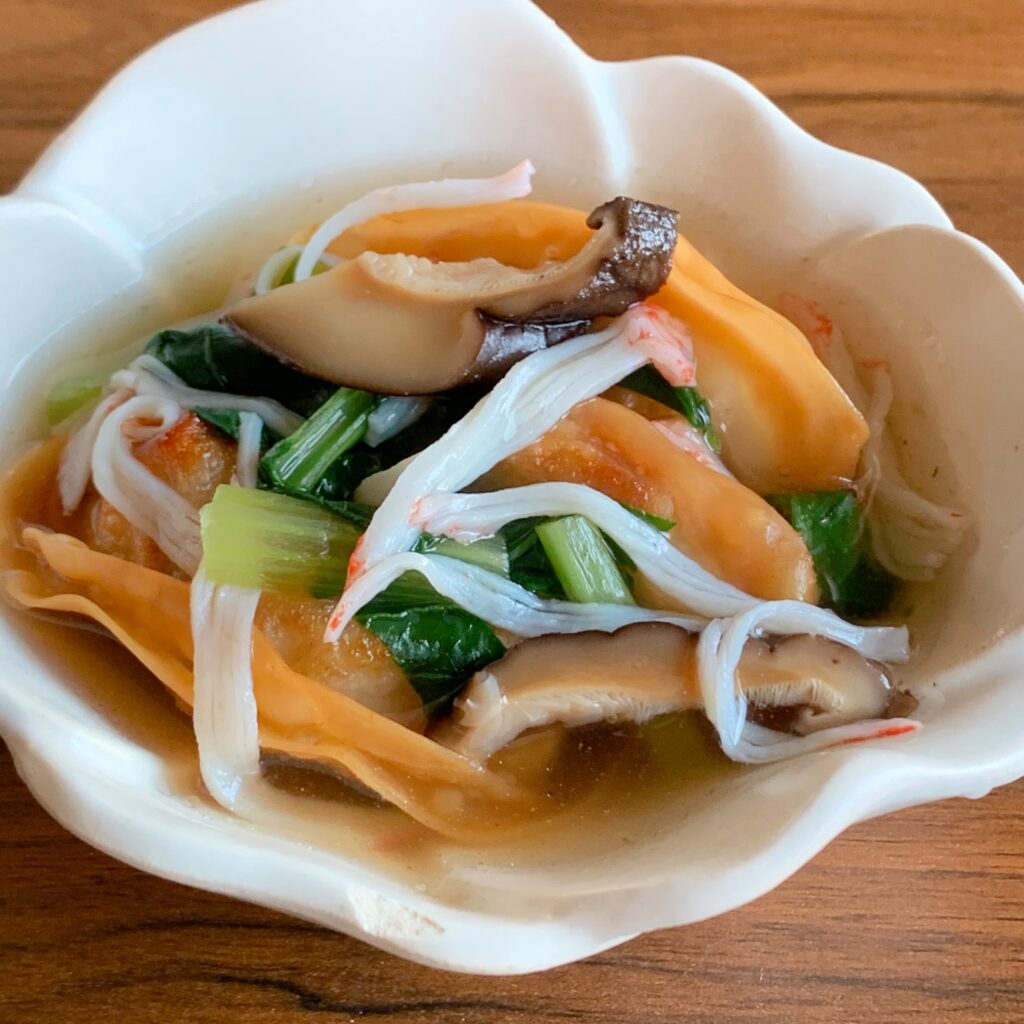
💡 Fun fact: What exactly is imitation crab meat?
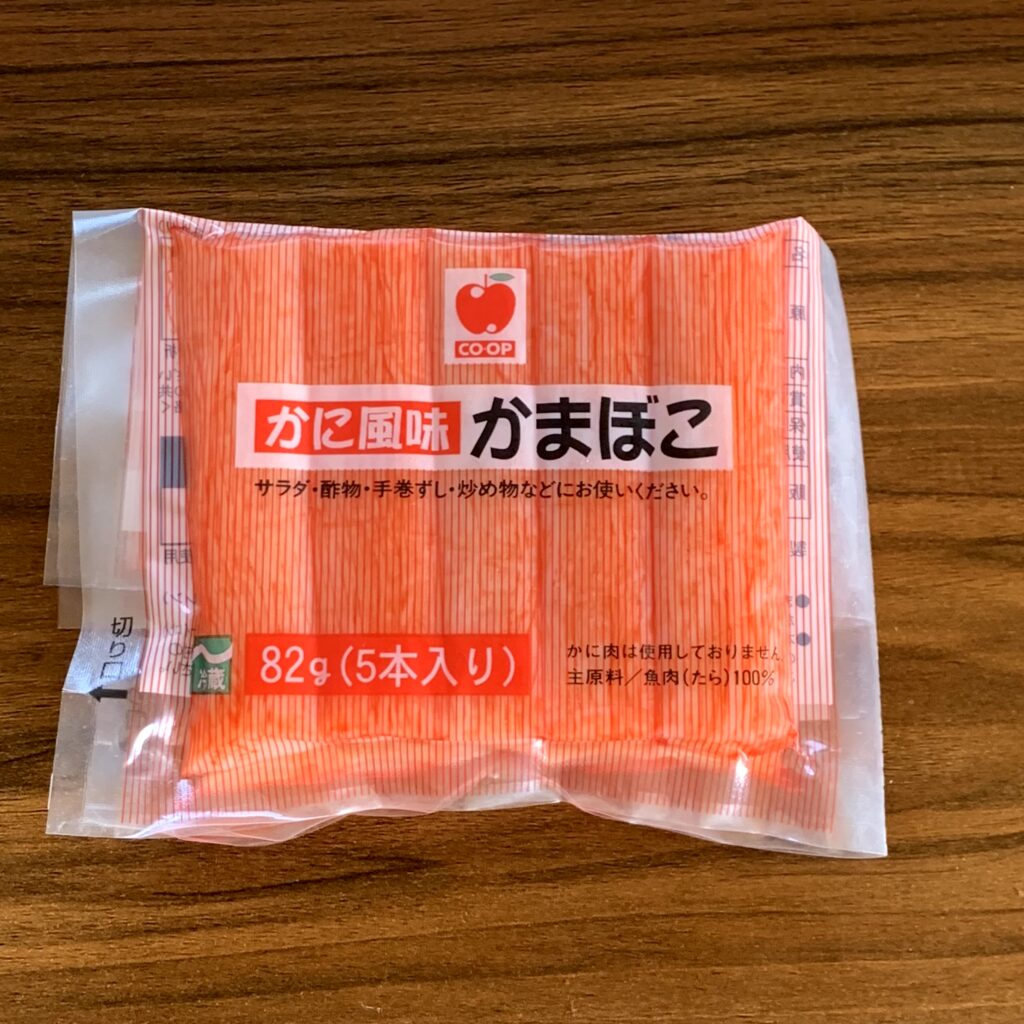
In Japan, crab sticks are known as “Kanikama.” Despite the name, they aren’t actually made of crab! Most Kanikama is crafted from walleye pollock (white fish) to perfectly mimic the texture and flavor of real crab.
Want to dive deeper into the world of this Japanese kitchen staple? Check out my other recipe: 👉 [Deep-fried dumplings with crab ankake]
💹NUTRITION FACTS : Yudofu (Tofu with Edamame Kani Ankake)
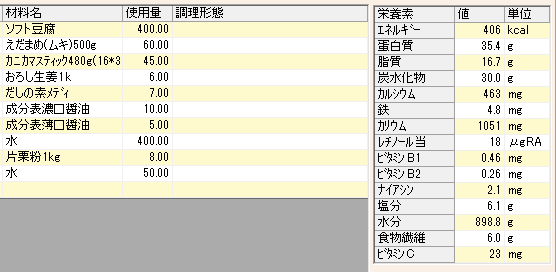
| (Total / 4 Servings) | (Per Serving) | |
| Calories | 406 kcal | 101.5 kcal |
| Protein | 35.4 g | 8.85 g |
| Total Fat | 16.7 g | 4.18 g |
| Total Carb | 30.0 g | 7.50 g |
| Salt Equivalents | 6.1 g | 1.53 g |
🧳INGREDIENTS (4 Servings) : Yudofu (Tofu with Edamame Kani Ankake)
- Tofu (Your choice of Soft or Firm) (400g)
- Frozen peeled edamame (60g)
- Crab sticks (45g)
☆ Flavor Base:
- Grated ginger (6g)
- Dashi stock granules (7g)
- Dark soy sauce (10g)
- Light soy sauce (5g)
- Water (400g)
★ Thickener:
- Potato starch (8g)
- Water (50g)
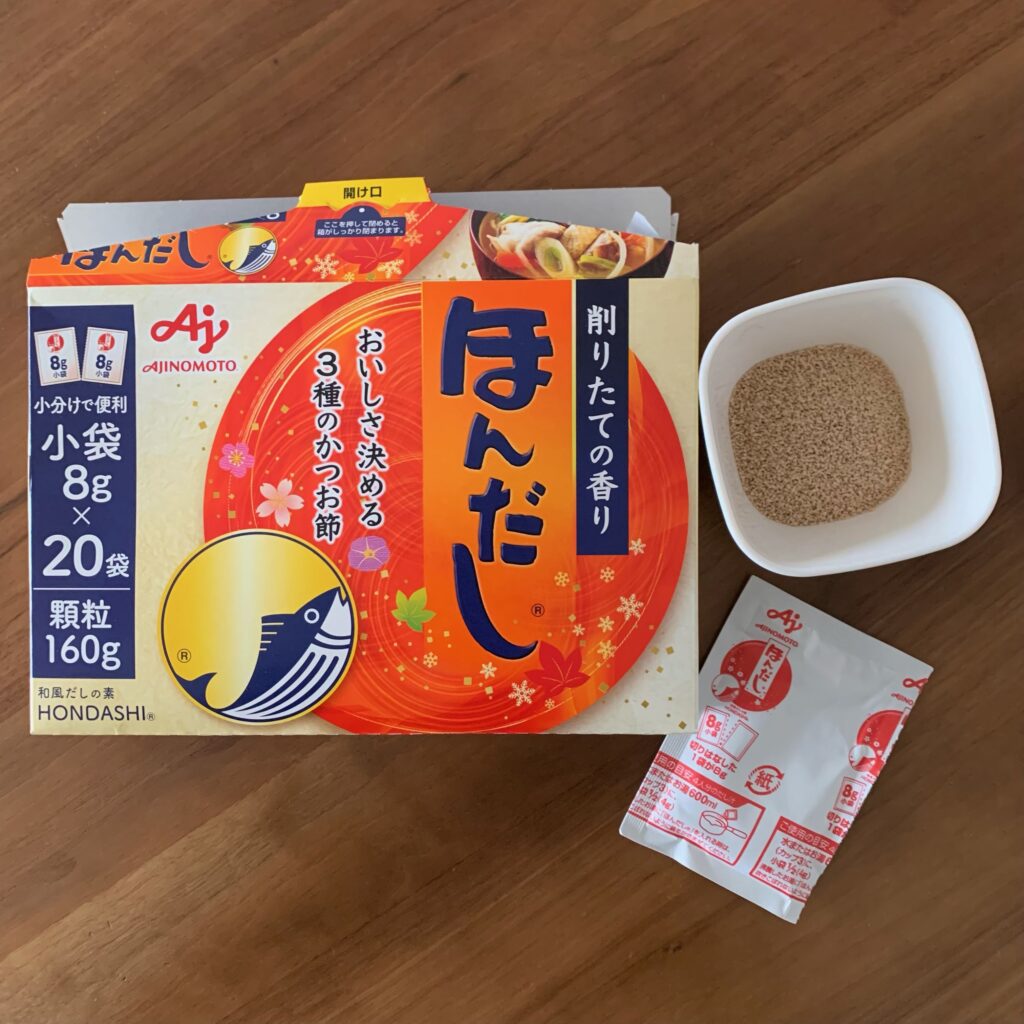
🍲How to make Yudofu (Tofu with Edamame Kani Ankake)
- Prep: Cut the tofu into bite-sized pieces. Tear the crab sticks into thin shreds.
- Boil: Put the tofu, edamame, crab sticks, grated ginger, dashi stock granules, soy sauces, and water (400g) into a pot and bring to a boil.
- Thicken: Turn off the heat. Add the potato starch (dissolved in 50g water) and stir gently.
- Simmer: Turn the heat back on and simmer over medium heat.
- Tip: Be careful not to use too much heat, as excessive boiling will cause the delicate tofu to crumble.
- Finish: Once the soup has thickened and becomes glossy, it is ready to serve.
📖Related Link: Read the Japanese version of this article here! [京都の伝統×現代の知恵。心まで温まる「彩りあんかけ湯豆腐」]

コメント