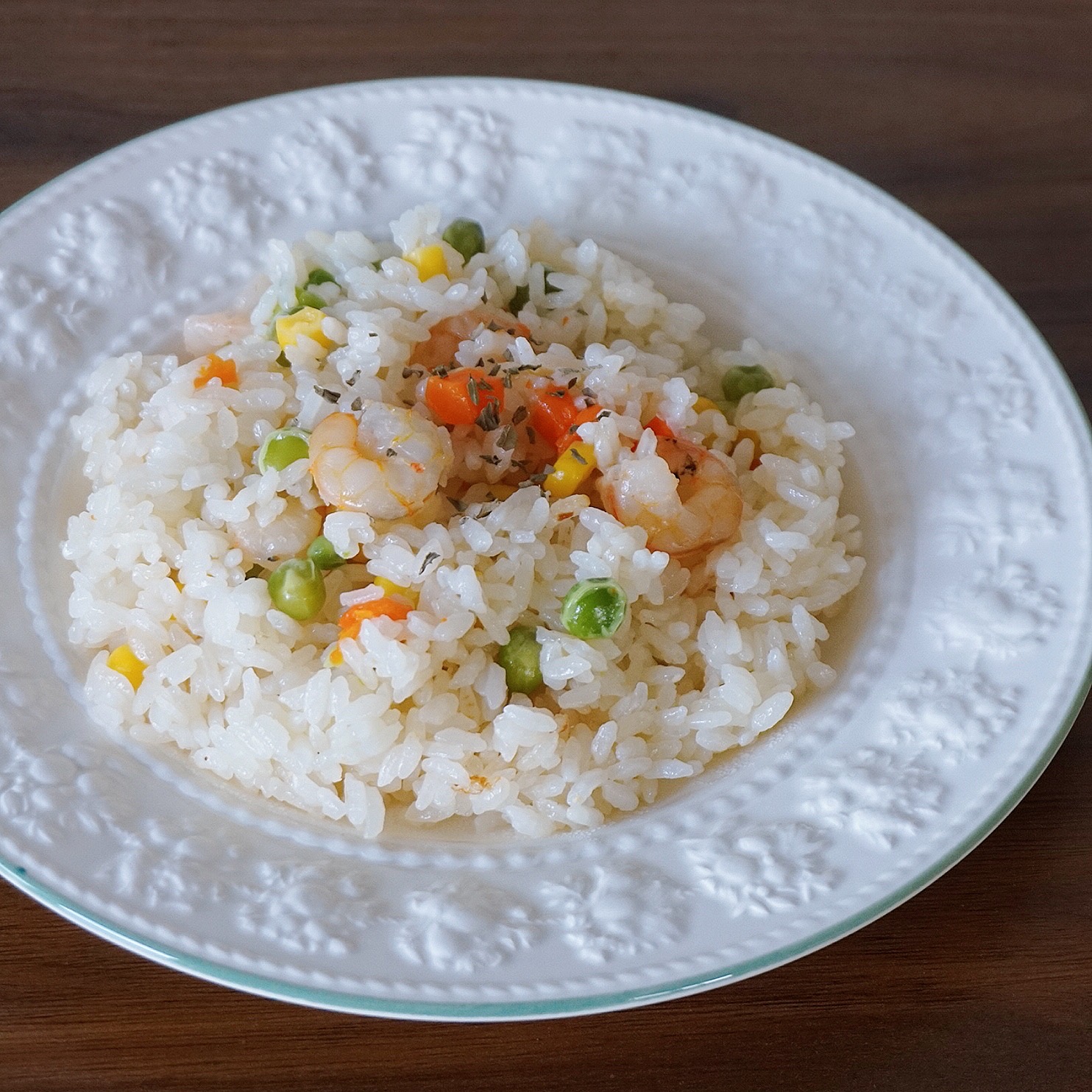
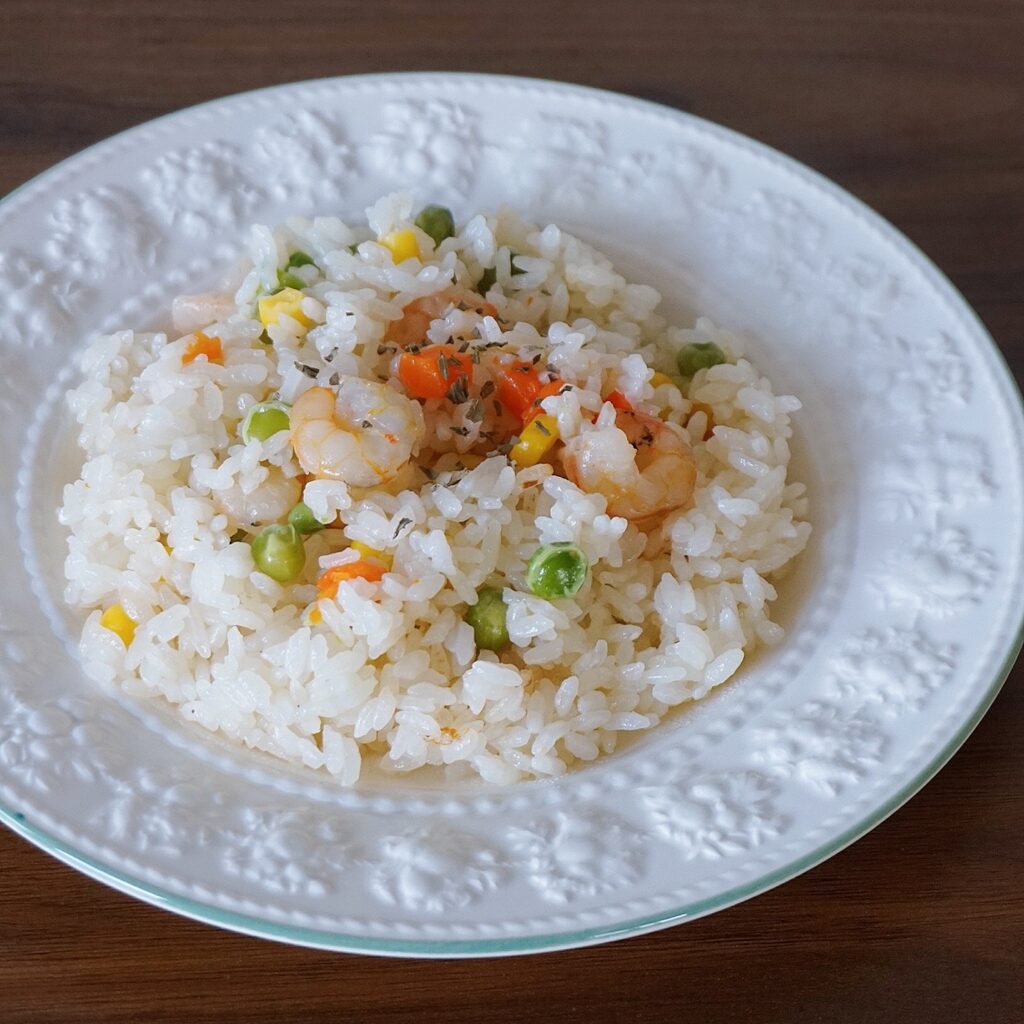
Here is a clear, English summary of your guide on making easy shrimp pilaf in a rice cooker:
1. What is Pilaf & Its History?
- Definition: A Western-style seasoned rice dish where raw rice is traditionally sautéed in butter or oil, then simmered or cooked with broth, meat, seafood, and vegetables. (Unlike fried rice, which uses pre-cooked rice stir-fried quickly over high heat).
- Origins: Traces back to ancient Persia (Middle East). The Turkish pilau spread to Europe, becoming the French pilaf (riz pilaf)—one of the world’s top three rice dishes alongside paella and risotto.
- Global Spread: Evolved into Middle Eastern plov and polow, Indian pulao and biryani, Spanish paella, and French pilaf.
2. Rice Cooker Method: Pros, Cons & Tips
Skipping the traditional frying step makes cooking much easier, but it comes with a few trade-offs:
- Pros:
- Minimal effort and cleanup: Everything is done in one rice cooker pot, eliminating the need to wash a frying pan.
- Shorter preparation time: Just chop, put ingredients in, and press start.
- Lower fat content: Skipping the heavy oil/butter coating keeps it healthier.
- Cons:
- Less distinct “fluffy” texture: Without oil-coating the raw grains, it tends to be slightly softer or closer to a risotto or Japanese seasoned rice (takikomi gohan).
- Weaker flavor penetration: Aromatics aren’t sautéed into the rice core, leading to a slightly milder depth of flavor.
- Less natural gloss: Lacks the shiny finish of pan-fried pilaf.
- How to Elevate It:
- Add a pat of butter or a teaspoon of olive oil right into the cooker to boost richness and gloss.
- Reduce the water level slightly to prevent a mushy texture.
3. Key Tips for Success
- Soaking: Regular rice doesn’t strictly need soaking here, but rinse-free rice (mushimai) should be soaked for about 30 minutes.
- Layer, Don’t Mix: Place ingredients on top of the rice and water mixture without stirring to prevent uneven cooking (takimura).
- Cook Immediately: Seasoned water left sitting can prevent the rice from absorbing water properly, making the grains hard. Start cooking right away.
- Ingredient Quantity: Keep ingredients to about half the volume of the rice. Frozen shrimp shrinks significantly during cooking, so you can add a little extra.
- Cooking Mode: Normal, quick, or seasoned rice (takikomi) modes all work fine.
4. Ingredients (Serves 3–4)
- Rice: 2 go (approx. 300g, yields ~700g cooked)
- Water: 420g
- Consommé powder: 15g
- Frozen peeled shrimp: 70g
- Mixed vegetables: 100g
- Butter: 14g
- Dried parsley: As needed
5. Step-by-Step Instructions
- Wash the rice (if using rinse-free rice, soak for about 30 minutes).
- Mix the water and consommé thoroughly with the rice.
- Place the peeled shrimp, mixed vegetables, and butter on top without stirring.
- Cook immediately without waiting. Use any standard cooking mode (Normal, Quick, or Seasoned Rice).
- Once cooked, mix everything together well and garnish with dried parsley.
6. Variations & Ideas
- Protein Swaps: Substitute shrimp with ham, bacon, chicken, sausages, or Spam.
- Flavor Twists:
- Use Weipa or chicken bouillon powder instead of consommé for an Asian-fried-rice twist.
- Add ketchup to turn it into chicken rice (for omurice).
- Mix in curry powder for a flavorful curry pilaf.
7. Nutritional Information
- Total Batch (15g Consommé version):
- Energy: 1,344 kcal | Protein: 29.1g | Fat: 13.2g | Carbs: 265.6g | Salt: 7.8g
- Per Serving (3 servings):
- Energy: 448 kcal | Protein: 9.7g | Fat: 4.4g | Carbs: 88.5g | Salt: 2.6g
- Per Serving (4 servings):
- Energy: 336 kcal | Protein: 7.3g | Fat: 3.3g | Carbs: 66.4g | Salt: 2.0g
コメント