The Magic of Gyu-suji: Japan’s Meltingly Tender Delicacy
Gyu-suji, or beef tendon, is a traditional Japanese favorite. While it is naturally a very tough cut of meat, slow-cooking it for several hours transforms it into something incredibly tender, with a texture that literally melts in your mouth.
The true appeal lies in its rich, savory “umami” and abundance of natural collagen. As it simmers, it releases a deep richness that elevates stews and curries into extraordinary dishes. Once you experience its unique texture and profound flavor, you will surely be hooked.
💡 Why Gyu-suji is Perfect for You
High Protein & Low Fat! With a massive 31g of protein and only 5g of fat, it’s an ideal choice for weight loss or muscle building. Since it’s practically carb-free, it’s also a perfect fit for a Ketogenic (Keto) diet.
The Power of Collagen (4,980mg per 100g) Gyu-suji is incredibly rich in collagen, containing approximately 4,980mg per 100g.
- What is Collagen? It is a type of protein that accounts for about 30% of the total protein in the human body. Often called the “foundation of the body,” it is essential for your skin, blood vessels, joints, and teeth.
- Why You Need It: Unfortunately, as we age, our body’s ability to produce collagen naturally decreases. The amount being broken down begins to exceed the amount being made.
- The Bottom Line: To maintain a healthy and youthful body, it is important to consciously replenish collagen through your diet as you get older.
📋 Nutritional Facts (Per 100g, Boiled)
| Nutrient | Amount |
| Calories | 157 kcal |
| Protein | 31.0 g |
| Fat | 5.1 g |
| Carbohydrates | Trace (Nearly Zero) |
| Salt Equivalent | 0.2 g |
| Iron | 0.4 mg |
| Zinc | 1.0 mg |
| Vitamin B12 | 0.5 μg |
📸 Choosing the Best Beef Tendon (Gyusuji Guide)
Not sure which one to buy? Here is a quick guide to what you’ll see at the market:
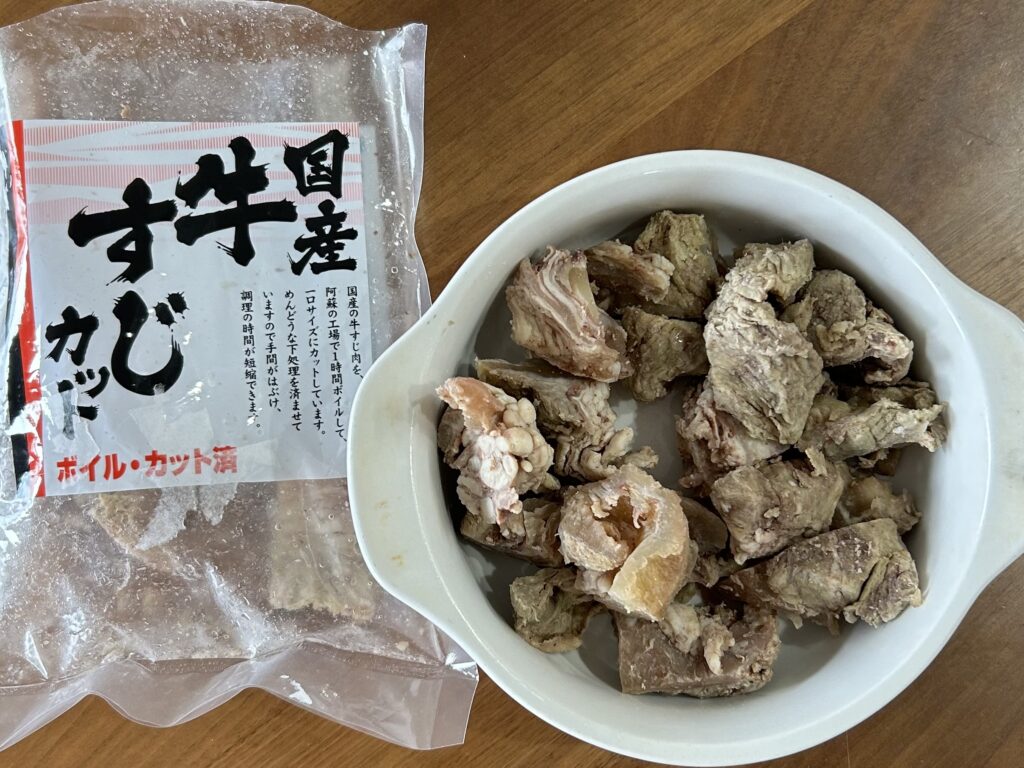
Understanding Different Cuts (Achilles, Membrane, and Lean Meat)
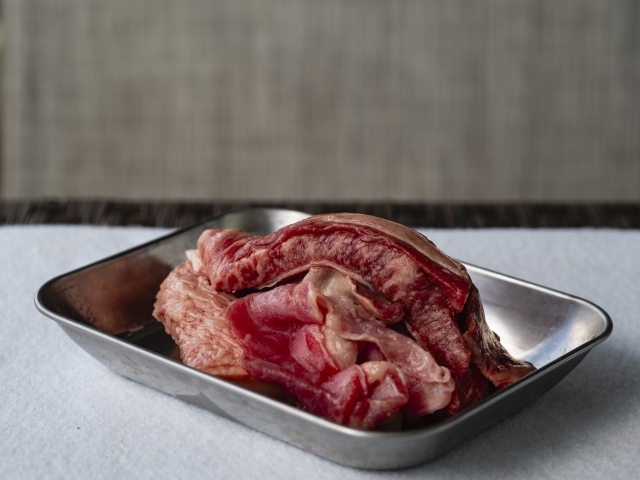
- Left Photo: Raw Akami (Lean Meat) 🥩 The photo on the left shows raw akami (lean beef tendon). Most beef tendons sold in their raw state are this lean type. This provides a deep, beefy flavor.
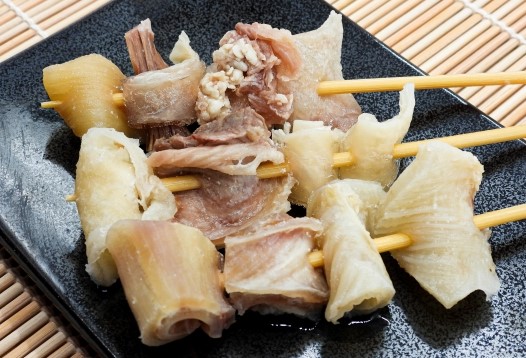
- Middle Photo: Skewered for Oden 🍢 The middle photo shows gyusuji prepared for Oden. In Japanese supermarkets, these are usually sold on skewers for convenience.
- Right Photo: For Stews (Unskewered) 🥘 The photo on the right shows gyusuji for stews (nimono), which are not skewered. Most packs are a mix of Achilles tendon (jelly-like), Membrane (chewy), and Lean meat.
💡 Note: The tendons in the middle and right photos have been pre-boiled and semi-dried. Because raw beef tendon requires a lot of time and effort to prepare, most Japanese households prefer these processed versions to save time! ⏳✨
🍲How to prep beef tendon
- Wash the beef tendon and parboil it first.
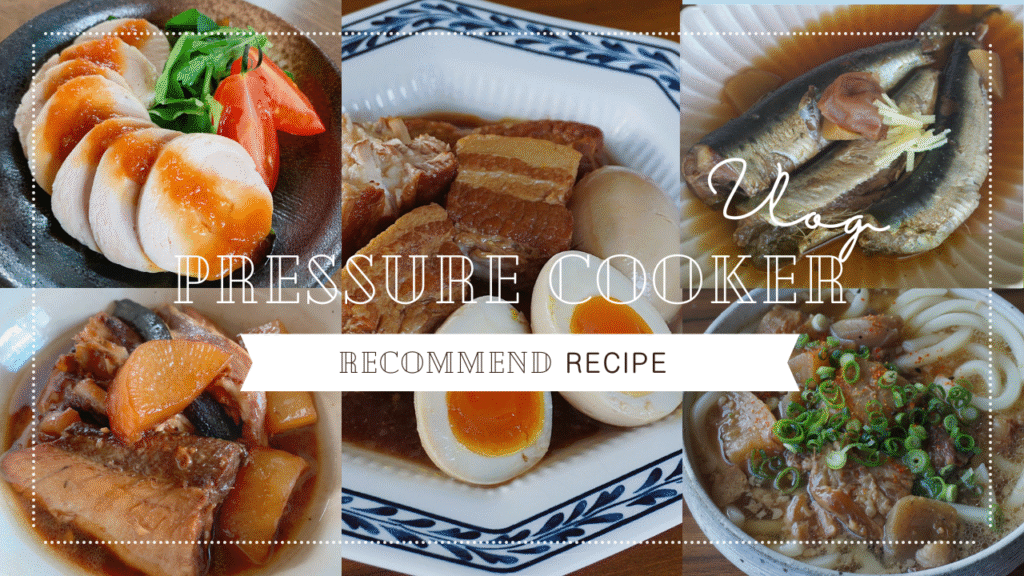
- Then, place it in a pressure cooker with green onions, ginger, and chili peppers. Cook until it becomes melt-in-the-mouth tender.
💡 Why Use a Pressure Cooker? Achieving that irresistible, melt-in-your-mouth texture with beef tendon requires a long simmering process. Similarly, making sure the daikon is tender and flavorful all the way to the center can be very time-consuming.
For these reasons, using a pressure cooker is truly the best method for this dish! It drastically cuts down the cooking time while ensuring both the beef and the radish reach the perfect consistency.
For more information on the best pressure cookers and how to use them safely, check out the article. 👉 Pressure Cooker (Atsuryoku nabe) Cooking
⚠️ Important: Removing Scum
1. What is the “Scum” on the surface? When you boil Gyu-suji, you’ll see some white foam or “scum” floating on the surface. These are impurities from the meat. To achieve a clean, deep, and professional flavor, it’s important to skim them off diligently.
2. Use a “Scum-Absorbing Sheet” Beef tendon produces a lot of scum, so using a scum-absorbing sheet (drop lid/落とし蓋 style) is highly recommended. It helps to:
- Ensure all the impurities are trapped efficiently.Beef tendon produces a lot of lye (scum), so using a lye-absorbing sheet is highly recommended to keep the broth clean.
- Keep the broth crystal clean.
- Save you the time and effort of constant skimming.
Important note when using a pressure cooker: The scum removal sheet may clog the steam vent of the pressure cooker, so be sure to choose one that is “pressure cooker compatible.”
🍽️ More Ways to Enjoy Beef Tendon
🍽️ Discover the Best Gyu-suji Recipes: Japan’s Melt-in-Your-Mouth Secret
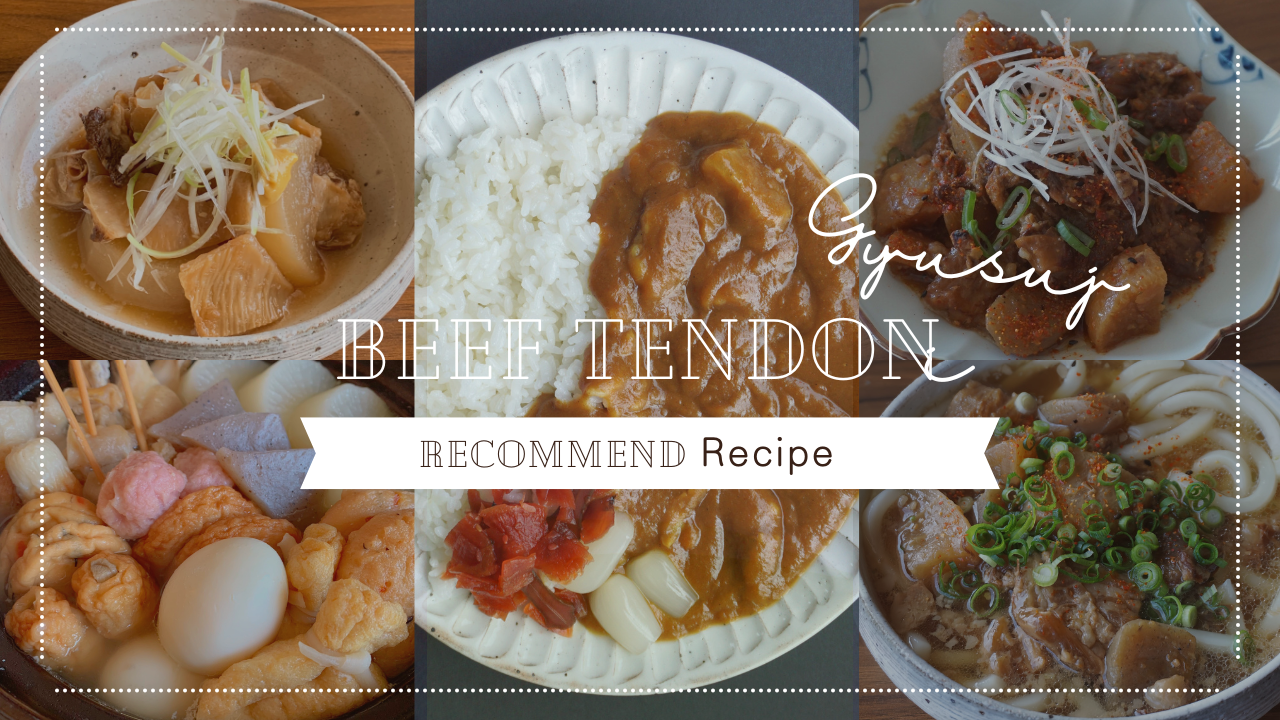
Gyu-suji (beef tendon) is a “star-quality” ingredient that releases incredible umami when slow-cooked, while simultaneously soaking up all the rich flavors of the broth. Here are our top-tier, hand-picked recipes. You definitely need to try these!
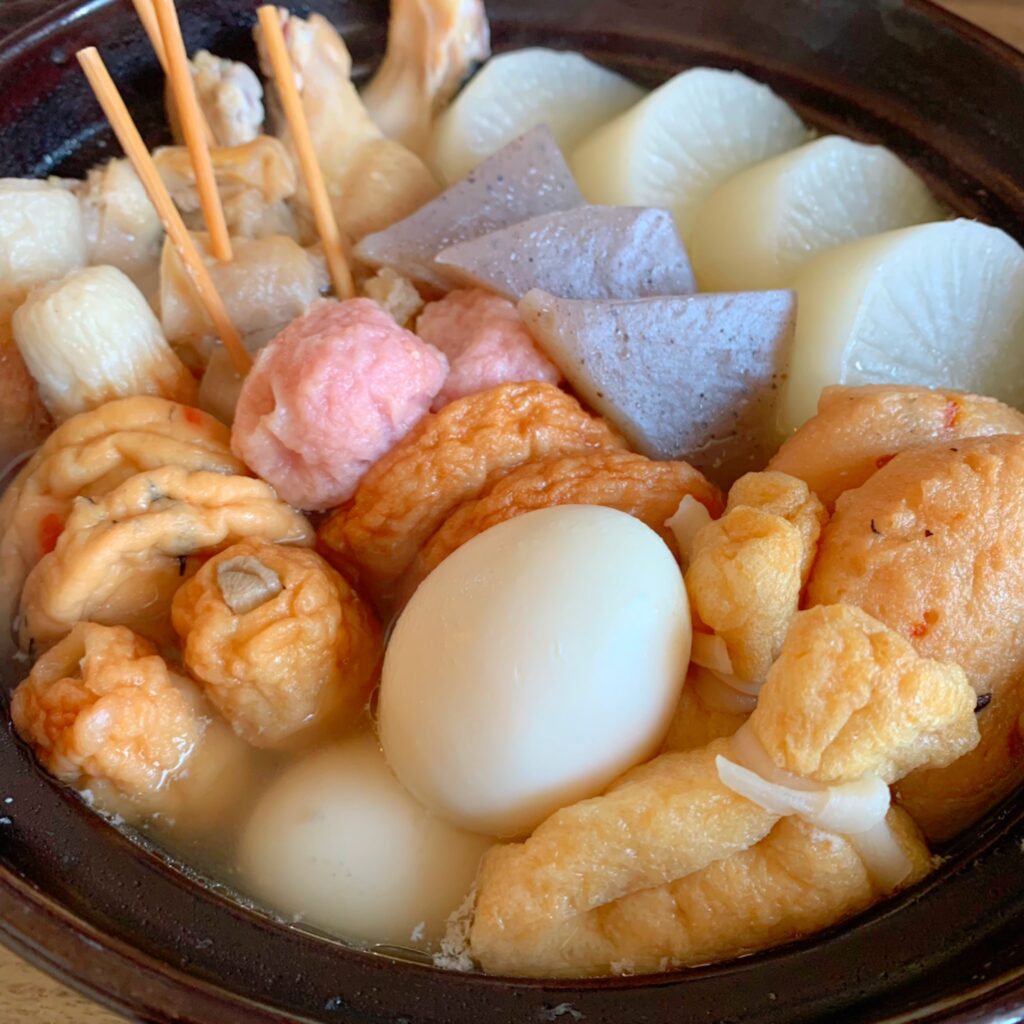
Oden 🍢: The Ultimate Winter Comfort Food
A must-have Japanese hot pot dish! In Western Japan, Gyu-suji is the “MVP” ingredient of Oden. The beef fat melts into the broth, creating a savory depth that is simply irresistible. This recipe even features a completely homemade dashi soup. 👉 [View Recipe: A surprisingly easy oden soup recipe with only 4 ingredients]
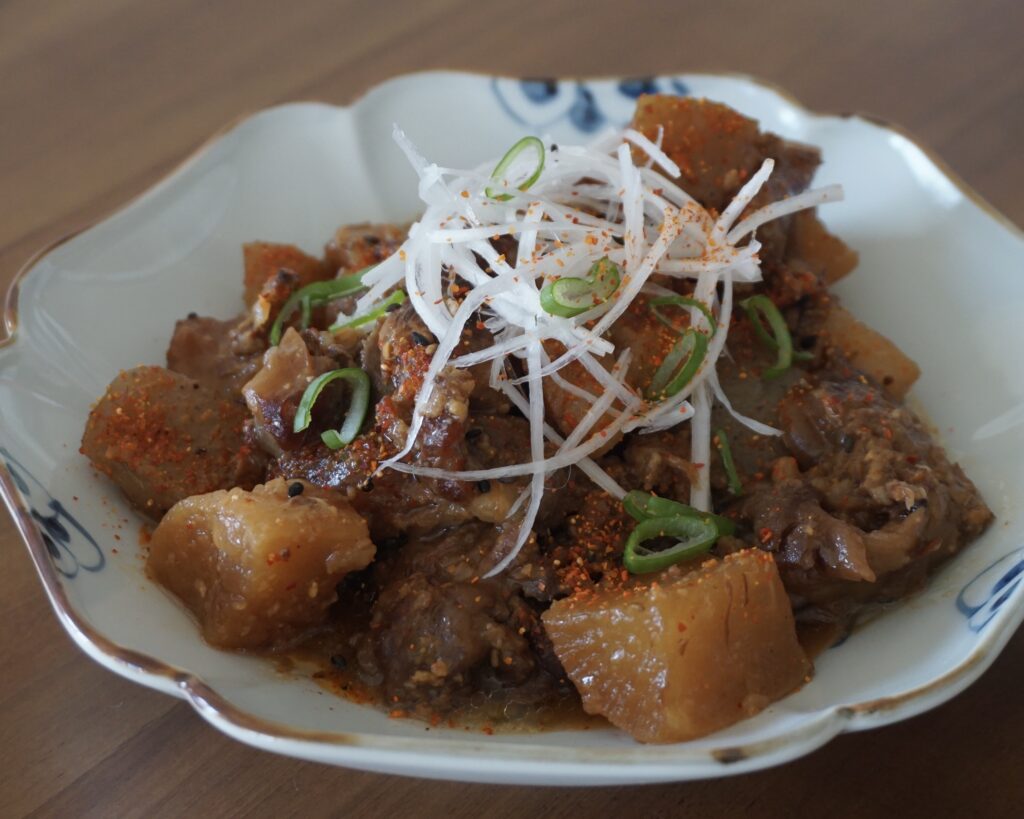
Doteni 🥣: Savory Beef Simmered in Rich Miso
This hearty dish features Gyu-suji, daikon radish, and konnyaku simmered in a thick, dark miso sauce. The combo of sweet-and-savory miso with tender beef is a match made in heaven—perfect with a bowl of steamed rice or your favorite drink. 👉 [View Recipe: Gyusuji Doteni (Beef Tendon Miso Stew)]
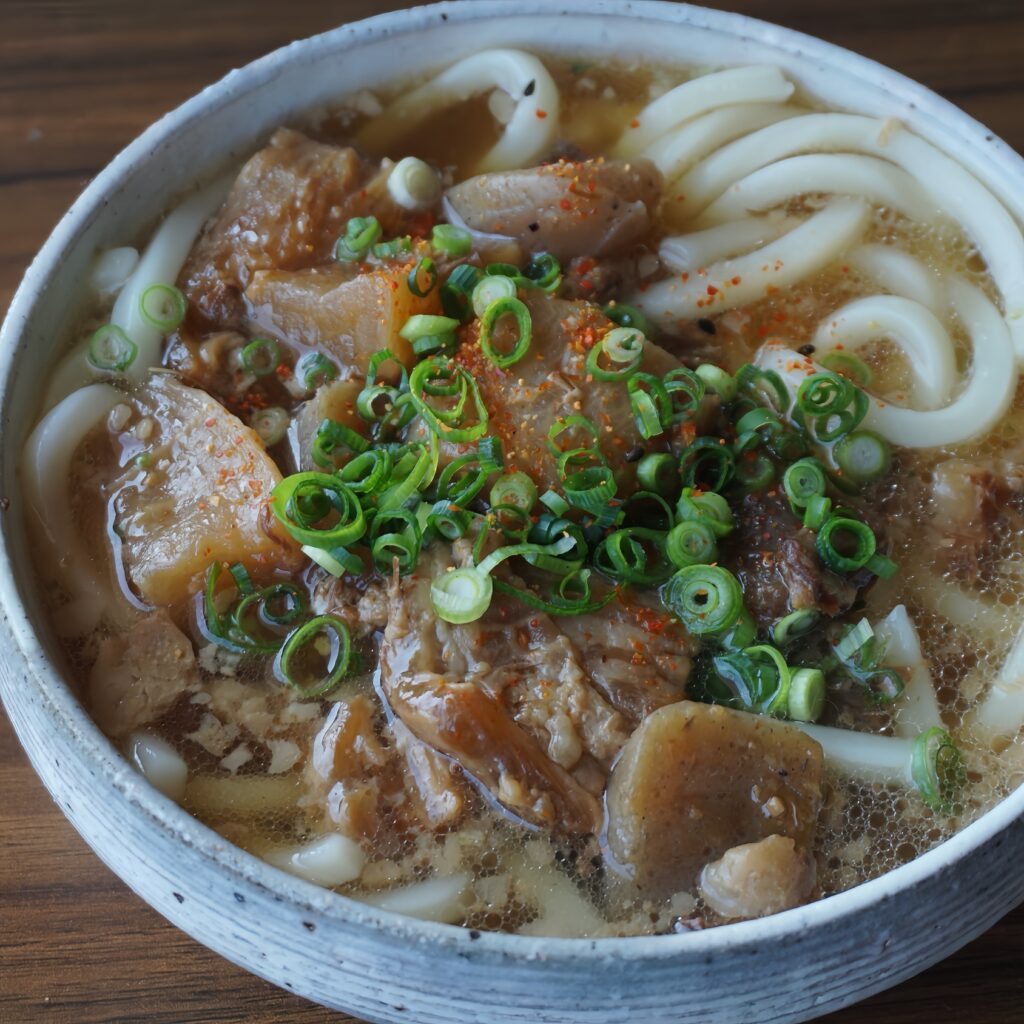
Suji-kon (Bokkage) 🍜: The Versatile Topping King
A Kobe specialty! Gyu-suji and konnyaku are simmered simply in a soy-based sauce. It’s delicious on its own, but it truly shines as a topping for Udon or Soba, transforming a simple noodle bowl into a gourmet meal. 👉 [View Recipe: Savory Suji-kon / Bokkage]
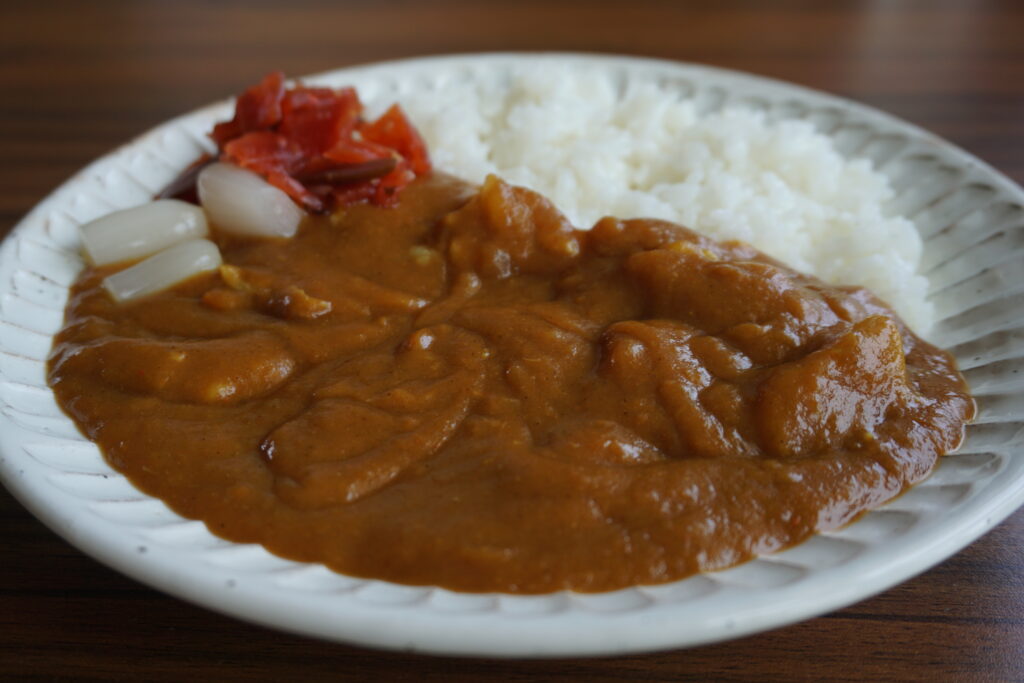
Gyu-suji Curry 🍛: A Luxury Twist on a Classic
Beef tendon and spices are a match made in heaven. As the tendon breaks down, it adds an incredible richness and a “velvety” texture to the curry. One bite and you’ll feel like you’re dining at a high-end restaurant! 👉 [View Recipe: Gyusuji Curry (Beef Tendon Curry)]
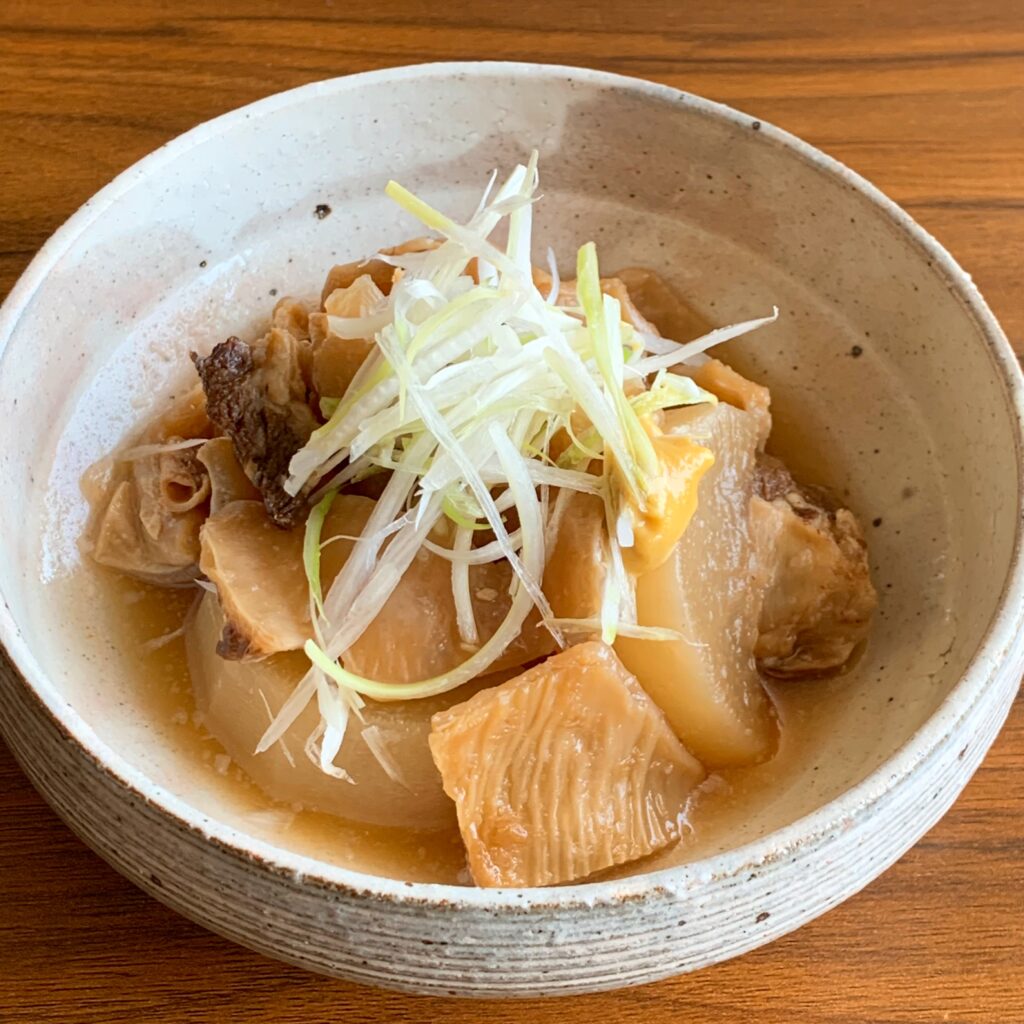
Gyu-suji Daikon 🫕: Savory Simmered Beef and Radish
In this comforting dish, the daikon radish acts as a sponge, soaking up every drop of the rich beef broth. The radish becomes so tender that it practically falls apart with your chopsticks. It’s a simple yet profound harmony of sweet beef fat and juicy radish that warms you from the inside out. 👉 [View Recipe: Gyusuji Daikon: Tender Japanese Beef Tendon & Radish Stew Recipe]
📖Related Link: Read the Japanese version of this article here! [牛すじを使ったレシピ]
牛すじ #牛すじ煮込み #コラーゲン #おつまみ #圧力鍋 #BeefTendon #SlowCooked #JapaneseFood #Umami
コメント