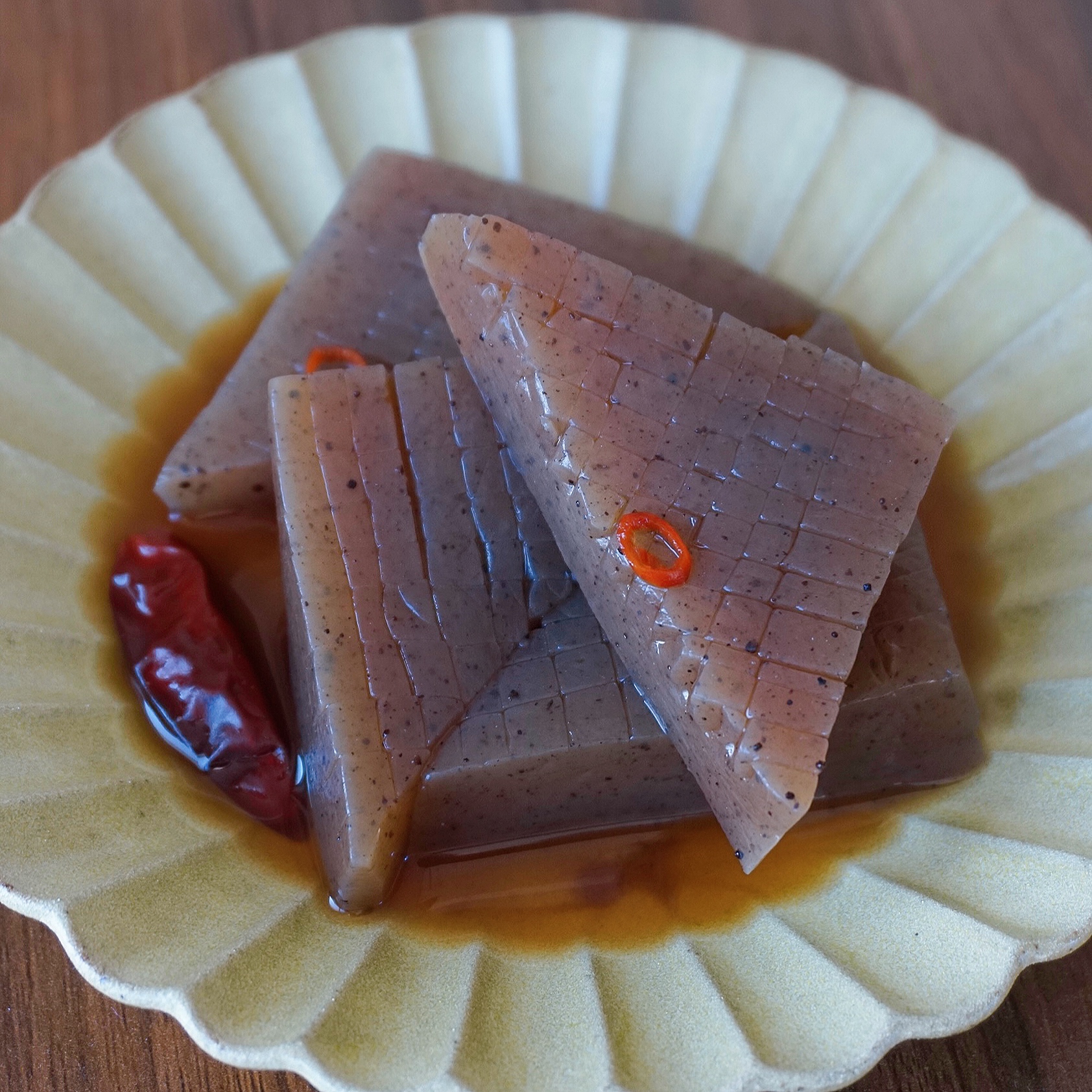
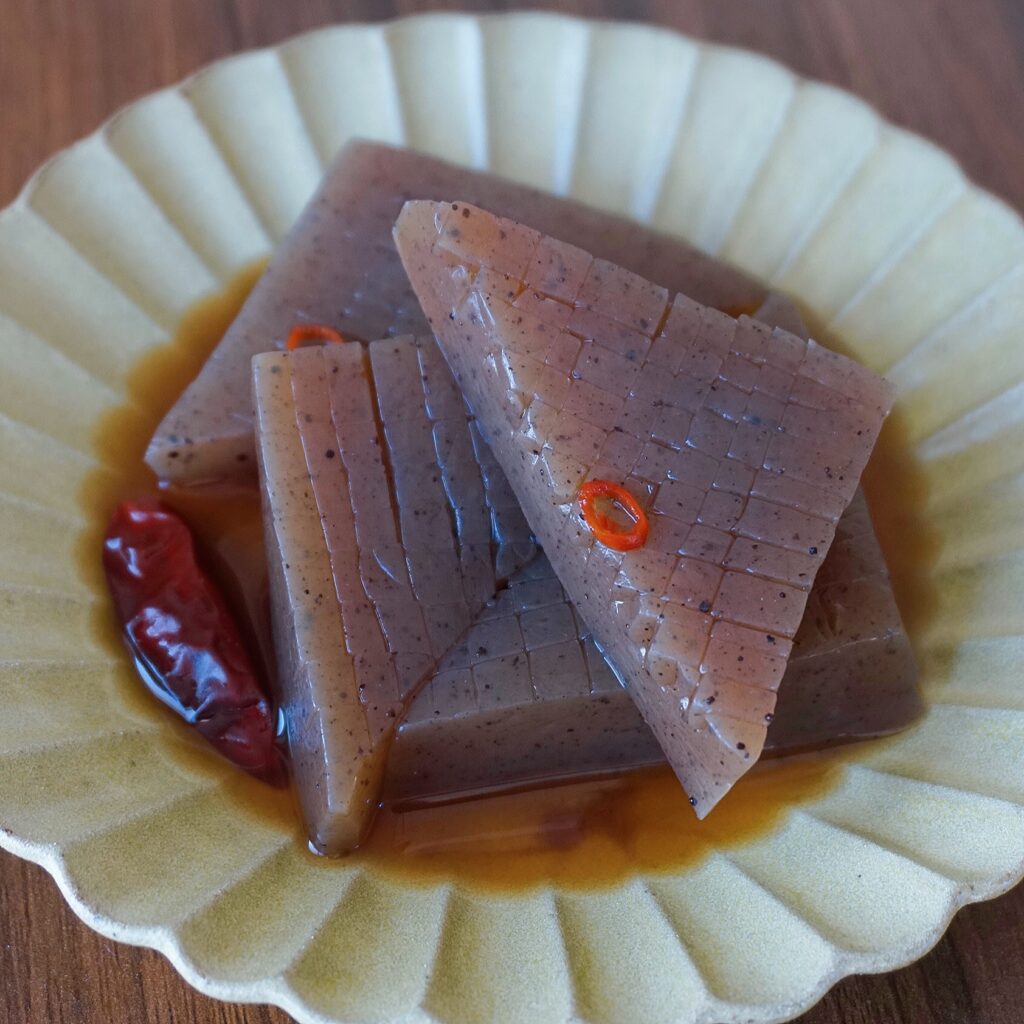
Konnyaku Nimono: Healthy Simmered Japanese Konjac Recipe
📋 What is Konnyaku Nimono?
Konnyaku Nimono is a classic Japanese side dish made by simmering konjac in a savory-sweet glaze.
- Flavor Profile: A comforting balance of salty soy sauce and sweet sugar, accented with a spicy kick from chili peppers.
- Health Benefits: Extremely low in calories but very high in dietary fiber, making it a “guilt-free” dish that is incredibly satisfying due to its chewy texture.
- Storage Tip: It keeps well in the refrigerator for about a week. However, do not freeze it, as freezing turns the texture into a dry, spongy mass.
🥔 What is Konjac (Konnyaku)?
Konjac is a traditional processed food made from the konjac potato (konnyaku-imo), a tuber that has been a staple ingredient in Japanese cooking for centuries.
1. Traditional vs. Modern Production
1. Traditional vs. Modern Production In the past, many rural households grew their own konjac potatoes and processed them by hand. I remember the konjac my grandmother used to make from scratch in the countryside; its flavor and texture were exceptionally delicious, far better than anything store-bought. Today, because raw potatoes are difficult to cultivate and store, most commercial konjac is made from konjac potato powder.
2. The Science of the “Tingle”
Raw konjac potatoes contain calcium oxalate, which causes a sharp, painful stinging sensation if eaten raw. To neutralize this and solidify the potato into a jelly-like form, an alkaline “coagulant” (like calcium hydroxide) is added.
🔮Interestingly, Japanese people refer to both the irritating substance in the potato and the coagulant as “Aku” (Lye). Our ancestors used one type of lye to remove another—a true mark of ancient culinary wisdom!
3. Texture and Color
- The “Jiggly” Texture: This comes from glucomannan, a unique dietary fiber that gels when mixed with an alkaline agent.
- The Color: Traditional konjac made from fresh potatoes is gray, while modern konjac made from refined powder is naturally white (though seaweed powder is often added to the white version to give it the traditional gray look).
♨️ Why is “Akunuki” (Pre-boiling) Necessary?
Pre-boiling konjac is essential to remove the “harshness” (Aku) from both the raw material and the hardening agent.
- The Reason: While not harmful, the “harshness” has a bitter, unpleasantly earthy smell that can mask the flavor of your seasonings.
- How to do it: Simply boil the konjac in water for 1–3 minutes, or heat it in the microwave with water for a few minutes. (Look for “Akunuki-fuyo” or “No Pre-boiling Required” labels on modern packaging to skip this step!)
📊 Nutrition Facts (Estimated) : Konnyaku Nimono
Calculated for the total recipe (4 servings). Please note that since the simmering liquid is not usually fully consumed, the actual intake of sodium and sugar may be slightly lower.
| Item | Total (All Ingredients) | Per Serving (1/4) |
| Calories | 178 kcal | 45 kcal |
| Protein | 3.5 g | 0.9 g |
| Fat | 0.2 g | 0.1 g |
| Total Carbs | 22.8 g | 5.7 g |
| — Net Carbs | 16.2 g | 4.1 g |
| — Dietary Fiber | 6.6 g | 1.7 g |
| Sodium (Salt) | 6.6 g | 1.6 g |
🍳 Recipe: Konnyaku Nimono (Serves 4)
Ingredients
- Ita Konnyaku (Block type): 300g
- ☆ Dashi stock granules: 3g
- ☆ Dark soy sauce: 30g
- ☆ Sugar: 5g
- ☆ Mirin (Sweet rice wine): 15g
- ☆ Sake: 30g
- ☆ Chili pepper: 1 (sliced)
- ☆ Water: 200ml
Instructions
- Prep the Konjac: Score the surface of the konjac in a grid pattern (this helps it soak up the sauce). Cut it into bite-sized pieces.
- Akunuki (Pre-boil): Add the konjac to a pot of boiling water and boil for 2 minute. Drain.
- Simmer: Place the konjac and all ☆ ingredients into a pot. Bring to a simmer over medium heat.
- Finish: Simmer until most of the liquid has evaporated, but turn off the heat while a little moisture still remains at the bottom of the pot.
📖Related Link: Read the Japanese version of this article here! [こんにゃく煮物]

コメント