Japanese Walnut Bread (Kurumi Pan) – Super Soft & Fluffy!

staple food
Advertisements
Fluffy Kurumi Pan (Japanese Hand-Kneaded Walnut Bread)
Fluffy Kurumi pan (Easy to make Hand-kneaded walnut bread)

Dreamy Fluffy Texture! A Recipe for “Heavenly Walnut Bread” (Kurumi Pan)

“Hard, crusty bread is great, but sometimes you just want something as soft as a baby’s cheek.”

Would you like to recreate that fluffy, cloud-like walnut bread found in Japanese cafes right in your own kitchen? Today, I’m sharing my favorite recipe, packed with “hand-kneading” tips that ensure even beginners won’t fail.

🍞 My Journey to the “Golden Dough”

To be honest, I wasn’t naturally gifted at bread making. I’ve piled up my fair share of “rock-hard” loaves and baking disasters.

However, through all that trial and error, I managed to create a “fail-proof recipe for those who think they’re clumsy!” Once you master this “Golden Dough,” the possibilities for variations are endless.

Why Hand-Kneading is So Much Fun!

  • A Sensory Experience: Watching the dough transform in your hands and grow plump is incredibly therapeutic.
  • Total Freedom: You can customize the amount and type of ingredients exactly to your liking.
  • Bake in Bulk: Unlike a bread machine, you have the flexibility to bake a large batch all at once.

✨ 3 Pro Tips for Success

There are a few secrets to achieving that signature Japanese “fluffy” texture.

1. The Magic Temperature: ^{\circ}\text{C}$

Yeast is a living organism. Cold ingredients can shock the yeast and prevent the dough from rising properly.

  • Eggs: Always bring them to room temperature.
  • Milk: Warm it in the microwave to about $40^{\circ}\text{C}$ (roughly the temperature of a warm bath).

2. My Secret Weapon: Snug Rubber Gloves

If you hate dough getting under your fingernails or sticking to your hands, try using nitrile gloves!

  • It’s hygienic and makes cleanup a breeze. They are an essential item for stress-free kneading.

3. When to Add “Fats”

If you add butter or other fats too early, they can interfere with gluten formation.

  • The Golden Rule: First, mix the flour and liquids. Only add the butter once the dough is smooth and stretchy. This results in a soft bread with a great “pull.”

📋 Heavenly Walnut Bread: Ingredients

(Yield: One 21cm loaf pan. Precision weighing is recommended!)

CategoryIngredientsAmount
Dry IngredientsBread Flour180g
Cake Flour (The secret to softness!)20g
Sugar15g
Salt3g
Instant Dry Yeast2g
Liquids & FatsMilk (Warmed to $40^{\circ}\text{C}$)150g
Unsalted Butter (Room Temp)15g
Neutral Oil5g
Mix-insWalnuts (Roasted)60g

👩‍🍳 Step-by-Step Instructions

① Preparation & Mixing

  1. Combine the dry ingredients in a bowl. (Tip: Place the salt and yeast on opposite sides!)
  2. Pour the warm milk directly onto the yeast and mix until the flouriness disappears.

② Kneading

  1. Add the oil, put on your rubber gloves, and begin kneading.
  2. Once the dough is smooth, add the butter. Continue kneading until the dough is elastic and passes the “windowpane test” (you can stretch it into a thin, translucent membrane).

③ Proofing (1st & 2nd)

  1. First Proof: Shape into a ball and let rise at $35^{\circ}\text{C}$ for 40 minutes.
  2. Bench Time: Gently degas the dough, reshape it into a ball, and let it rest for 10 minutes.
  3. Shaping: Roll the dough out into a 21cm square, scatter the walnuts, and roll it up tightly from the front.
  4. Second Proof: Place in the pan and let rise at $35^{\circ}\text{C}$ for 40 minutes.

④ Baking

  1. Bake in a preheated oven at $170^{\circ}\text{C}$ for 25 minutes.
  2. Crucial Step! Immediately after baking, drop the pan from a height of a few centimeters onto the counter (“Tonton!”). This shock prevents the bread from collapsing (waist-folding).

💡 Endless Variations!

If you don’t have walnuts, try these alternatives:

  • Mix-ins: Raisins or black sesame seeds.
  • Fillings: Chocolate chips, custard cream, or sausages.
  • Toppings: The “Golden Trio” of mayonnaise, ketchup, and cheese.

Nutrition Facts (Per Loaf)

Calories: 1414 kcal | Protein: 37.4g | Fat: 67.6g | Carbohydrates: 174.3g

The scent of freshly baked bread makes you feel happier than any air freshener ever could. Please try this “fluffy experience” in your own home!

Soft & Airy Japanese Walnut Bread (くるみパン)

Forget the tough, crusty loaves you might be used to. Japanese bread is famous for being incredibly soft, fluffy, and cloud-like in texture. With this simple hand-kneading method, even beginners can recreate that cozy Japanese cafe experience right in their own kitchen.

These rustic walnut buns have a gentle, earthy sweetness that pairs perfectly with your morning coffee, a thick spread of cream cheese, or a dollop of orange marmalade.

My Journey to the Perfect Dough

There was a time when I was completely obsessed with baking. Honestly, I wasn’t naturally gifted at it—I made countless mistakes and faced my fair share of “bread disasters.” But through that trial and error, I developed this fail-proof recipe.

Even if you think you’re clumsy or “not a baker,” you can master this! With just a few simple tips, you’ll be creating bakery-quality bread in no time.

The Joys of Hand-Kneading

  • The Experience: There’s something deeply satisfying about watching the dough rise and feeling the texture change under your palms.
  • Total Creative Freedom: You have endless options for ingredient ratios and mix-ins.
  • Bake in Bulk: Unlike a bread machine, which limits you to one small loaf, hand-kneading allows you to bake a large batch all at once.

Once you master this “Golden Dough,” the possibilities are endless!


Endless Variations: Beyond Walnuts

This dough is incredibly versatile. If you don’t have walnuts on hand, or if you want to switch things up, try these delicious alternatives:

1. The Mix-ins

Fold these directly into the dough for a classic treat:

  • Raisins: For a sweet, juicy pop.
  • Black Sesame Seeds: For a nutty, aromatic Japanese twist.

2. The Fillings (Stuffed Buns)

Keep the dough plain and wrap it around your favorite fillings:

  • Sweet: Chocolate chunks or silky custard cream.
  • Savory: Whole sausages for a classic “Sausage Roll.”

3. The Toppings

Transform your buns into a savory meal by topping them with:

  • The Golden Trio: A swirl of mayonnaise, a drizzle of ketchup, and a generous sprinkle of cheese before baking.

Pro Tips for the Ultimate Fluffy Texture

The secret to cloud-like bread lies in one thing: creating a dough that rises perfectly. To achieve this, you need to master temperature and timing.

1. The Magic Temperature: 37∘C (98∘F)

Yeast is a living organism, and it loves warmth! Cold ingredients can shock the yeast and result in a dense, hard loaf.

  • Prep your eggs: Take them out of the fridge early so they reach room temperature.
  • Warm the milk: Heat your milk in the microwave until it’s around 40∘C (104∘F). It should feel like a warm bath—not hot!

2. My Secret Weapon: Tight Rubber Gloves

If you hate the feeling of dough sticking to your fingers and getting under your nails, this tip is for you! Wearing snug-fitting rubber or nitrile gloves was a game-changer for me.

  • It keeps the process hygienic.
  • It prevents the dough from sticking to your skin, making the cleanup a breeze.
  • This is my number one secret for stress-free kneading!

3. Timing is Everything: The Fat Rule

Adding butter and eggs at the wrong time can ruin your texture. Fat inhibits gluten formation by coating the flour particles. If you add them too early, your bread won’t get that bouncy, elastic structure.

  • The Golden Rule: Start by mixing your flour and warm liquids. Only add your butter and eggs once the dough has become smooth and can stretch without tearing.
  • Stick to this timing! It’s the difference between a heavy biscuit and a heavenly bun.

The Secret Behind the Softness: Japan vs. The West

The fundamental difference lies in the ingredients. While traditional European breads are typically crafted from a simple base of flour, water, and salt, Japanese bread takes a more indulgent approach.

The hallmark of Japanese dough is the addition of fats and dairy, such as milk, butter, or shortening. Incorporating these ingredients coats the flour’s proteins, weakening the gluten network just enough to transform the texture. The result is a loaf that isn’t just bread—it’s a moist, chewy, and tender masterpiece with a melt-in-your-mouth quality.

Comparison at a Glance

FeatureWestern Style (Traditional)Japanese Style (Shokupan/Cafe-style)
Core IngredientsFlour, Water, Salt, YeastFlour, Milk, Butter, Sugar, Yeast
TextureCrusty, airy, and chewyVelvety, soft, and “mochi-mochi”
Flavor ProfileSavory and wheatyRich, milky, and subtly sweet

The Ultimate Homemade Walnut Bread

(Yield: One 21cm loaf pan. For best results, please use a kitchen scale!)

Ingredients

☆ The Dry Mix:

  • Bread Flour: 180g
  • Cake Flour: 20g (The secret to extra softness!)
  • Sugar: 15g
  • Salt: 3g
  • Instant Dry Yeast: 2g

Liquids & Fats:

  • Milk: 150g (Warmed to 40∘C / 104∘F)
  • Neutral Oil: 5g (Room temperature)
  • Unsalted Butter: 15g (Room temperature)

The Mix-in:

  • Walnuts: 60g (Roasted for deeper aroma)

Step-by-Step Instructions

1. Preparation

Warm the milk to 40∘C. Line your 21cm loaf pan with parchment paper.

2. Mixing the Dry Base

In a large bowl, combine the bread flour, cake flour, sugar, salt, and yeast.

Pro Tip: Place the salt and yeast on opposite sides of the bowl. Direct contact with salt can hinder the yeast’s activity.

3. Hydration

Pour half of the warm milk directly onto the yeast. Let it sit for a few minutes, then stir with chopsticks. Add the remaining milk and continue mixing until a shaggy dough forms.

4. First Kneading

Once the dough comes together, put on your tight rubber gloves and add the oil. Begin kneading the dough.

5. Incorporating Butter

When the dough becomes elastic, add the unsalted butter. Continue kneading until the dough is smooth and passes the “windowpane test” (you can stretch it into a thin, translucent membrane without it tearing).

6. First Proofing

Shape the dough into a ball. Cover and let it rise at 35∘C (95∘F) for 40 minutes.

7. Degassing & Bench Time

Gently press down on the dough to release the gas. Re-shape into a ball and let it rest for 10 minutes.

8. Shaping & Filling

Roll the dough out into a 21cm square. Evenly scatter the roasted walnuts over the surface.

9. Rolling

Roll the dough tightly from the edge closest to you. Pinch the seam firmly to seal it.

10. Second Proofing

Place the dough into the loaf pan. Let it rise again at 35∘C (95∘F) for 40 minutes.

11. Baking

Bake in the center of a preheated oven at 170∘C (338∘F) for 25 minutes.

12. The Finish

Immediately after baking, drop the pan once from a height of about 20cm onto the counter—this prevents the bread from shrinking. Remove from the pan and let it cool on a wire rack.


Nutrition Facts (Per Loaf)

  • Calories: 1414 kcal
  • Protein: 37.4g
  • Fat: 67.6g
  • Carbohydrates: 174.3g
  • Salt Equivalent: 1.2g

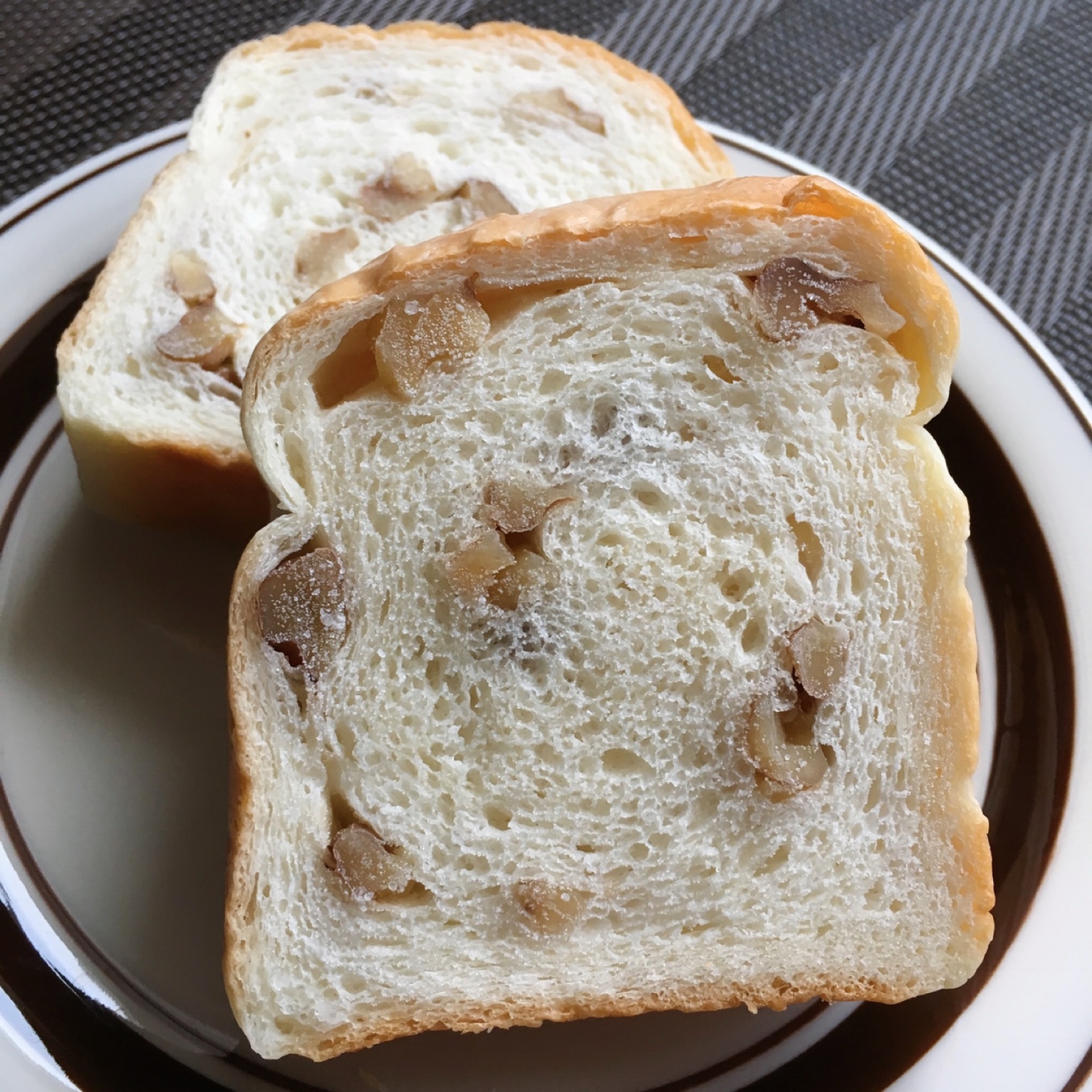
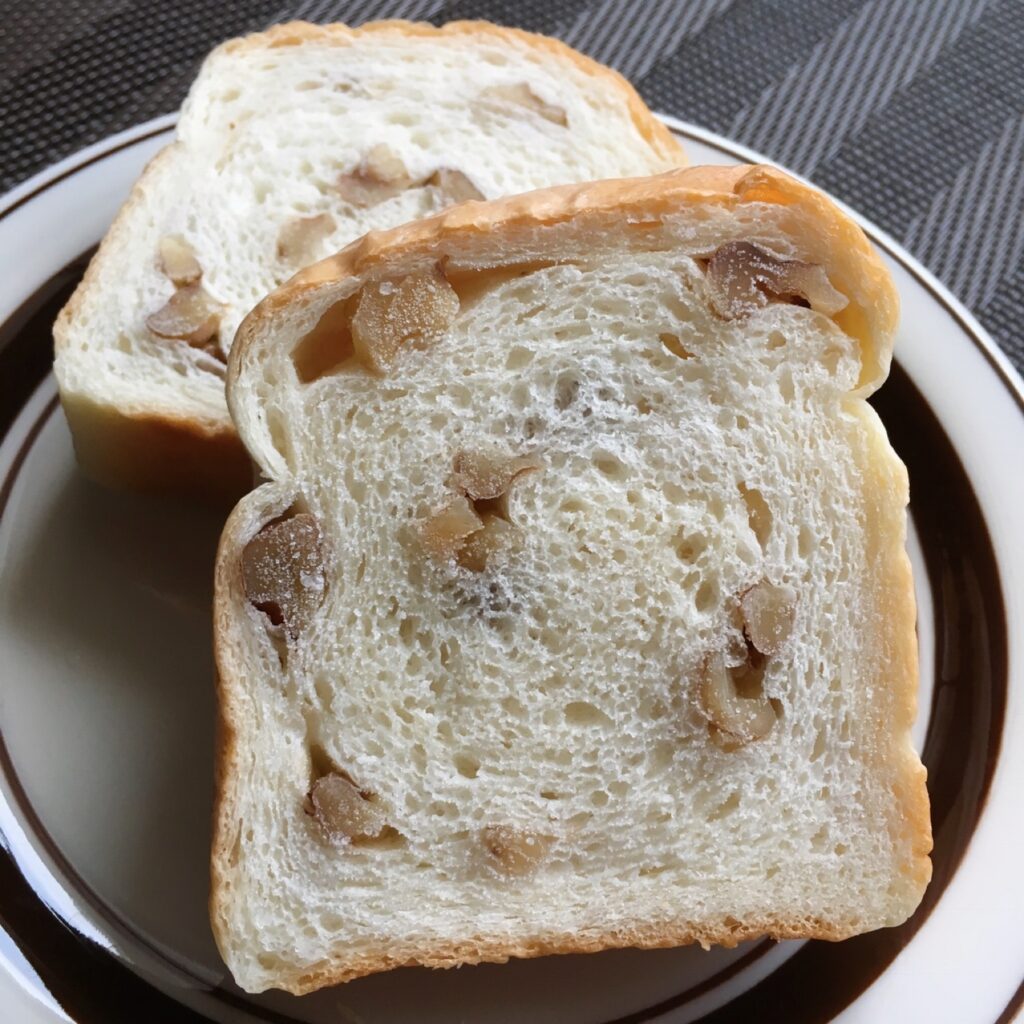
This rustic-tasting Kurumi pan (walnut bread) is perfect for breakfast.This is a bread recipe that is easy to make even if you don’t have a home bakery.

kurumi = walnuts pan = bread

It goes well with ham or egg as a side dish, or with cream cheese or marmalade jam. You can also use raisins or black sesame seeds instead of walnuts to make it delicious.

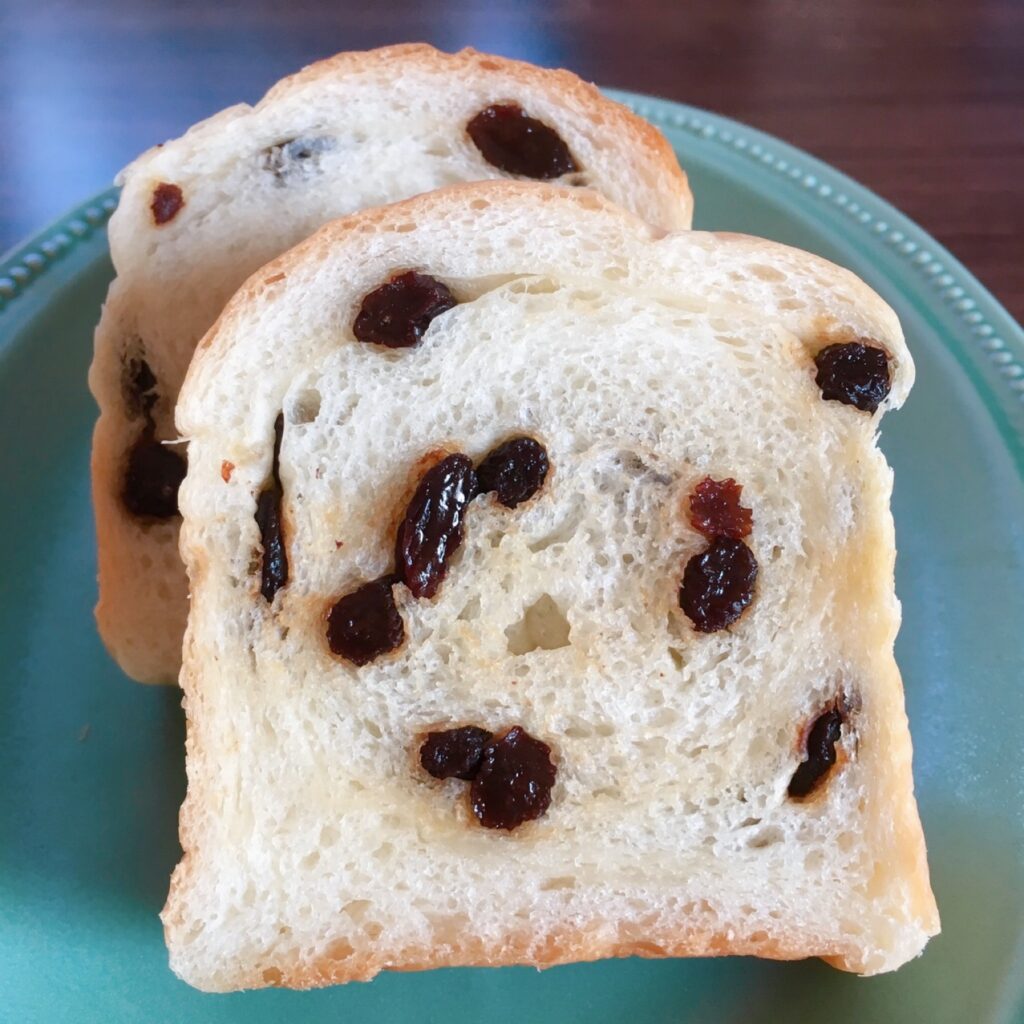
Raisin bread
Raisin bread

I was addicted to baking bread for a while. I was clumsy and failed many times. Through trial and error, I was able to create this bread dough recipe. Even if you’re a clumsy person like me, you can easily make this bread with a few tricks.

This is a standard Japanese fluffy bread dough that is different from hard breads made overseas.

It can be used in a wide range of applications, including breads that use sausages and mayonnaise, as well as breads that use chocolate or custard cream.

Hand-kneading bread takes time, but you can enjoy the fermentation process and feel satisfied when it’s finished.

In recent years, home bakeries have become popular and it has become easy to enjoy bread making at home. Considering time performance, that is also a good choice.

Either way, I think it’s healthier if you make it at home because you can avoid additives and fats.

Please enjoy freshly baked bread at home(*´ᵕ`*)ノ❀

Tips for making fluffy bread

The most important thing when making fluffy bread is to make a dough that rises well.

Bread in European countries is generally made using flour, water, and salt. Unlike that, Japanese bread is characterized by being flavored with fats and oils such as milk, butter, and shortening.

Adding oil or fat to bread dough creates a soft and chewy texture.

The key to making delicious bread dough is temperature control. If the milk or eggs are cold, the dough will become hard. Keep the temperature of the dough around 37 degrees.

If you need to make complex shapes, it may be best to chill the finished dough. I plan to write about this recipe at a later date.

Another problem I had when making the dough was that the flour would stick to my hands. This can be solved by wearing tight-fitting rubber gloves.

Finally, add eggs and butter only after the dough has been somewhat formed.

Fats and oils have the ability to inhibit the formation of gluten. Therefore, if you add it from the beginning, the flour will be coated with fat and oil, making it difficult for gluten to form.

The best timing to add oil is when the surface becomes smooth and when the dough stretches without tearing.

NUTRITION FACTS of Fluffy Kurumi Pan (Japanese Hand-Kneaded Walnut Bread)

  • 1414kcal
  • Protein 37.4g
  • Fat 67.6g
  • Carbs 174.3g
  • Salt Equivalent 1.2g

INGREDIENTS for Fluffy Kurumi Pan (Japanese Hand-Kneaded Walnut Bread)

Use a pound cake mold with a length of 21 cm.

  • ☆Bread flour 180g
  • ☆Cake flour 20g
  • ☆Sugar 15g
  • ☆Salt 3g
  • ☆Dry yeast 2g
  • Milk 150g
  • oOil 5g
  • Unsalted butter 15g
  • Walnut 60g

I recommend the dry yeast called saf-instant manufactured by LESAFFRE! I love this. Please take a look at the site. 👉 https://lesaffre.jp/products/10001700/

How to make Fluffy Kurumi Pan (Japanese Hand-Kneaded Walnut Bread)

It’s easier to knead if you wear rubber gloves when kneading! Must try this!
  • Warm the milk to about 40 degrees.
  • Place Parchment Paper on the mold.
  • Put strong flour, soft flour, sugar, salt, and dry yeast into a bowl. At this time, leave some space between the salt and yeast. If these are mixed together, fermentation will be difficult.
  • Pour half of the milk over the yeast.
  • After a few minutes, stir the whole thing around with chopsticks.
  • Add the remaining milk and mix even more.
  • When it comes together, add oil and knead.
  • When the dough becomes elastic, add oil and unsalted butter and knead it further.
  • When the dough is soft enough to be made into a thin sheet without tearing, roll it up.
  • Perform the first fermentation of the bread dough. The recommended time is 40 minutes at 35 degrees.
  • Press down on the dough to release the gas, roll it up again and wait 10 minutes.
  • Roll out into a 21cm square and sprinkle with walnuts.
  • Roll it up from the front and pinch it tightly at the end to close it.
  • Put in a mold and let it ferment for 2nd time. The recommended time is 40 minutes at 35 degrees.
  • Bake for 25 minutes on the middle rack of the oven preheated to 170 degrees.
  • Once baked, drop the mold from a height of about 20cm. This will prevent it from shrinking.
  • Remove the bread from the mold and place on a wire rack to cool.

コメント

Copied title and URL