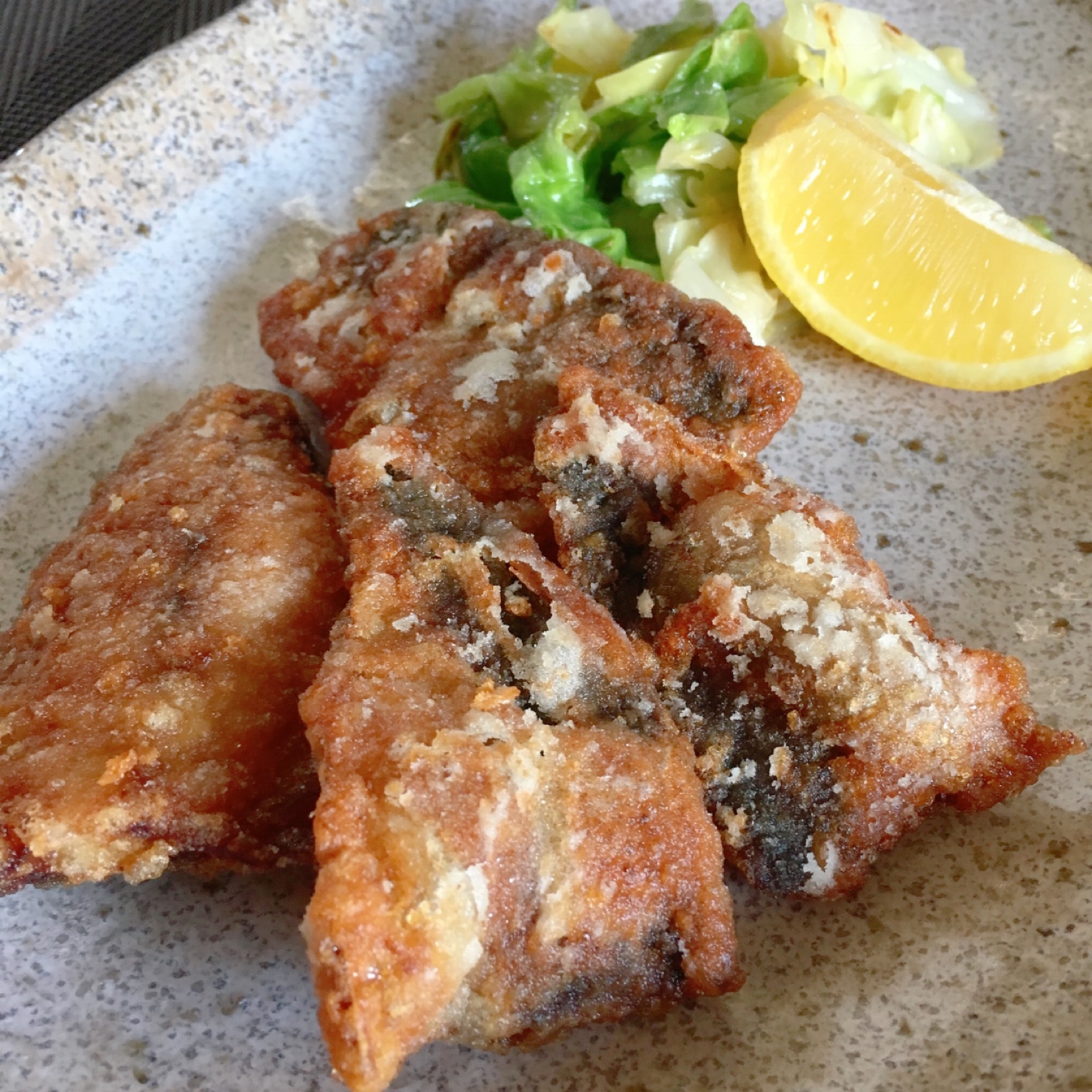
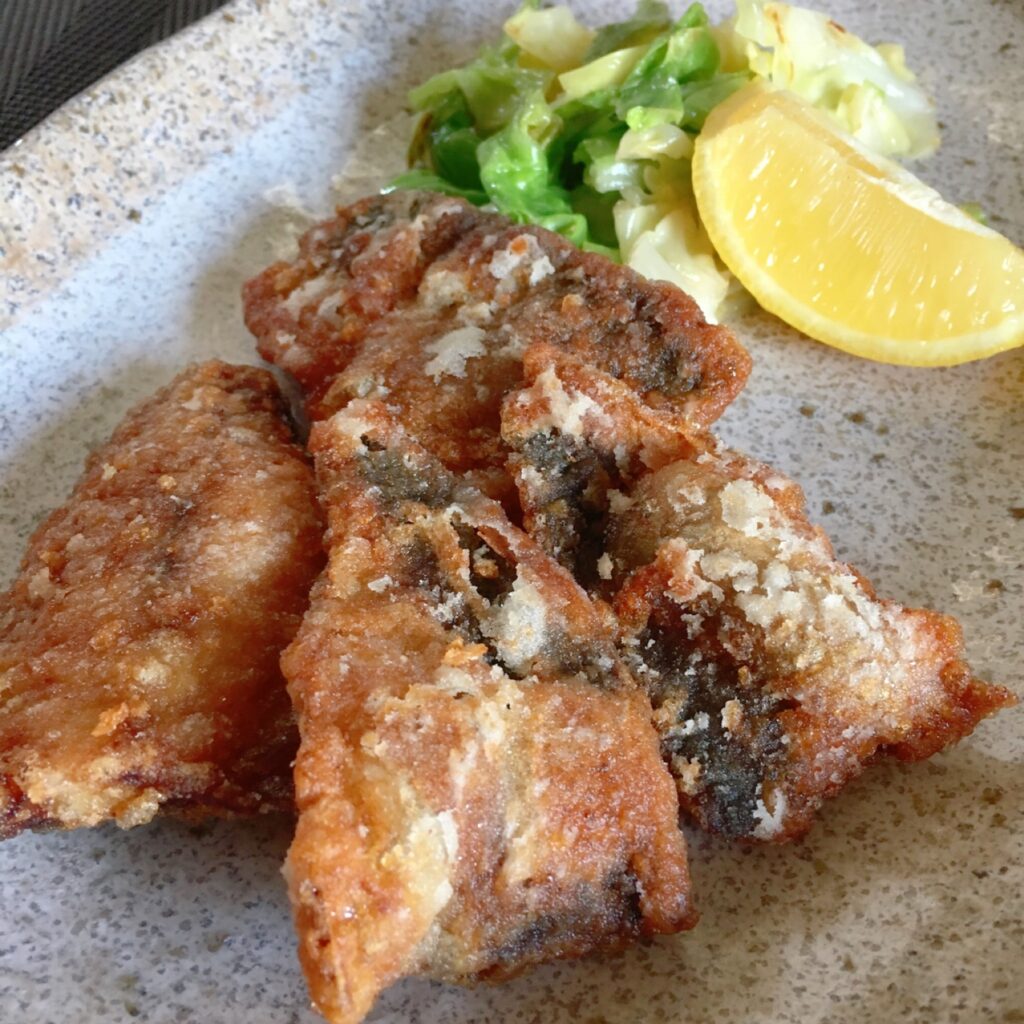
Tatsuta-age
Tatsuta-age is a beloved Japanese classic. Named after the Tatsuta River, the dish is a poetic representation of autumn: the deep reddish-brown of the soy sauce mimics autumn leaves, while the white potato starch represents the foaming surface of the river.
For this recipe, we used horse mackerel (aji) for the Tatsuta-age, but you can also substitute it with mackerel, tuna, swordfish, or chicken.

💡 The Real Difference: Karaage vs. Tatsuta-age
While they may look similar, the two have distinct roots and techniques. Here’s how to tell them apart:
1. The Magic of “Potato Starch”
- Tatsuta-age (Potato Starch is Essential): The defining feature of Tatsuta-age is the powdery white clumps on the surface. While some modern recipes might mix in a little wheat flour, potato starch is the indispensable ingredient. It’s this starch that creates the iconic “river foam” look and a superior, long-lasting crunch.Fun Fact: What is Katakuriko? Originally, potato starch was made from the roots of the Katakuri (trout lily) plant. However, due to low production, most “Katakuriko” found today is made from potato starch.
- Karaage (The Hybrid Mix): Traditionally, Karaage was made using wheat flour. Today, it’s common to use a 50/50 mix of wheat flour and potato starch to balance the texture.
2. Seasoning and Ingredients
- The Traditional Way: * Karaage: Originally, the ingredients were fried without pre-seasoning. Because of this, white fish with less odor or vegetables were preferred.
- Tatsuta-age: Always marinated in a mixture of soy sauce and ginger. This deep-red base contrasted with the white starch is what gives the dish its name (resembling autumn leaves on a river).
- The Modern Twist: Nowadays, Karaage is also frequently marinated in soy sauce before frying, making the line between the two much thinner.
3. Summary: Are there strict rules?
While there are no rigid legal definitions for either, the soul of Tatsuta-age lies in the soy sauce marinade and the mandatory use of potato starch. If it doesn’t have those white, crispy starch patches, it’s probably just Karaage!
🐟 Fascinating Facts About Horse Mackerel (Aji)
The name “Aji” in Japanese is said to come from the word for “taste” (aji), because it simply tastes that good! Here is everything you need to know about this versatile fish.
1. The Global Travelers: Migration Patterns
Horse mackerel are “global” fish that travel across the world’s warm currents. In the waters around Japan, they follow a seasonal rhythm:
- Spring to Summer (Northward): They swim north toward Hokkaido to feast and build up nutrients for spawning.
- Autumn to Winter (Southward): They return to the warmer southern waters to spawn.
- The “Premium” Brand – Seki-Aji: Unlike migratory fish, the famous Seki-aji from Oita Prefecture are “resident” fish that stay in the rapid currents of the Hoyo Strait, resulting in exceptionally firm and flavorful meat.
2. Peak Season & Health Benefits
The best time to enjoy Aji is from June to August, when they are most nutritious and fatty.
- Rich in EPA: Helps thin the blood and maintains cardiovascular health.
- Packed with DHA: Activates brain function and supports cognitive health.
3. A Culinary “Multi-Player”
With over 150 species worldwide, Aji is a versatile ingredient that fits almost any cooking style:
- Raw: Sashimi, Sushi, or Namero (tartare).
- Cooked: Salt-grilled, Meunière, and of course, Tatsuta-age!
- Processed: Often enjoyed as Himono (dried fish) or convenient frozen fillets.
🏮 Key Takeaway
Whether you are eating it fresh or fried, Horse Mackerel is a nutritional powerhouse that represents the best of Japanese home cooking.
🥗 Nutrition Facts (Per Serving); Aji no Tatsuta-age
Based on 100g Horse Mackerel with a 7% oil absorption rate.
| Nutrient | Amount |
| Calories | 216 kcal |
| Protein | 20.0 g |
| Fat | 11.4 g |
| Carbs | 10.1 g |
| Salt | 2.3 g |
🛒 Ingredients; Aji no Tatsuta-age
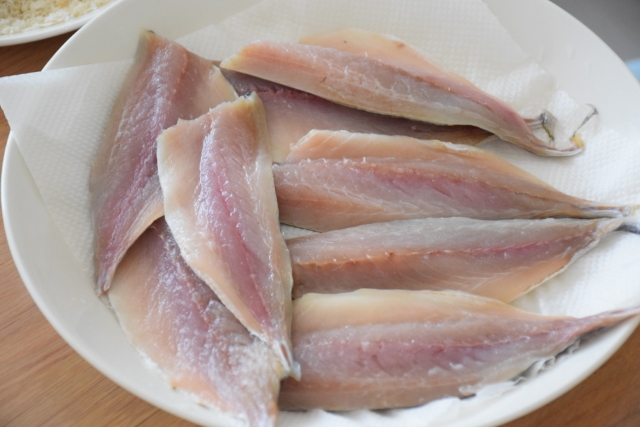
- Fish: 100g Horse Mackerel (Aji), preferably sanmai oroshi (filleted/deboned)
- The Marinade:
- 10g Soy Sauce
- 5g Grated Ginger (masks the fishy odor)
- Optional: A splash of Mirin (for sweetness)
- The Coating: 10g Potato Starch (Katakuriko)
- Frying: Frying oil (moderate amount)
- Garnish: Lemon wedges
🍳 Aji no Tatsuta-age Cooking Instructions
- Prep the Marinade: Grate the ginger and combine it with the soy sauce in a small bowl.
- Marinate: Soak the horse mackerel in the mixture for about 5 minutes.
- The Pro-Tip: Remove the fish and gently wipe off excess moisture with a paper towel. This is the secret to getting those beautiful white starch clumps!
- Coat: Sprinkle a generous amount of potato starch over the fish.
- Fry: Heat oil to 170°C. Carefully place the fish in the oil.
- Note: Ensure the oil is hot enough before starting, or the batter will become sticky.
- Tip: Resist the urge to touch the fish too much while it fries!
- Drain: Fry for 5–10 minutes until crispy. Place on a wire rack to drain any excess oil.
- Serve: Enjoy immediately with a squeeze of fresh lemon!
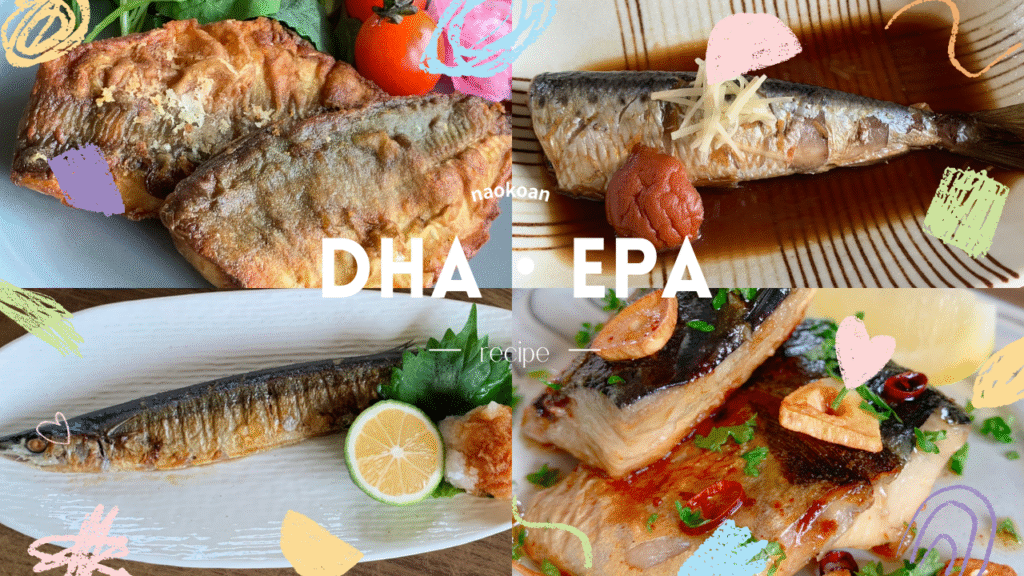
Check out our collection of recipes using Blue-backed Fish (Aji, Mackerel, etc.) rich in EPA and DHA! Try to include these healthy fats in your diet a few times a week for a boost in wellness! 👉 [Blue fish recipes rich in DHA and EPA]
📖Read the Japanese version of this article here! [アジの竜田揚げの作り方]

コメント