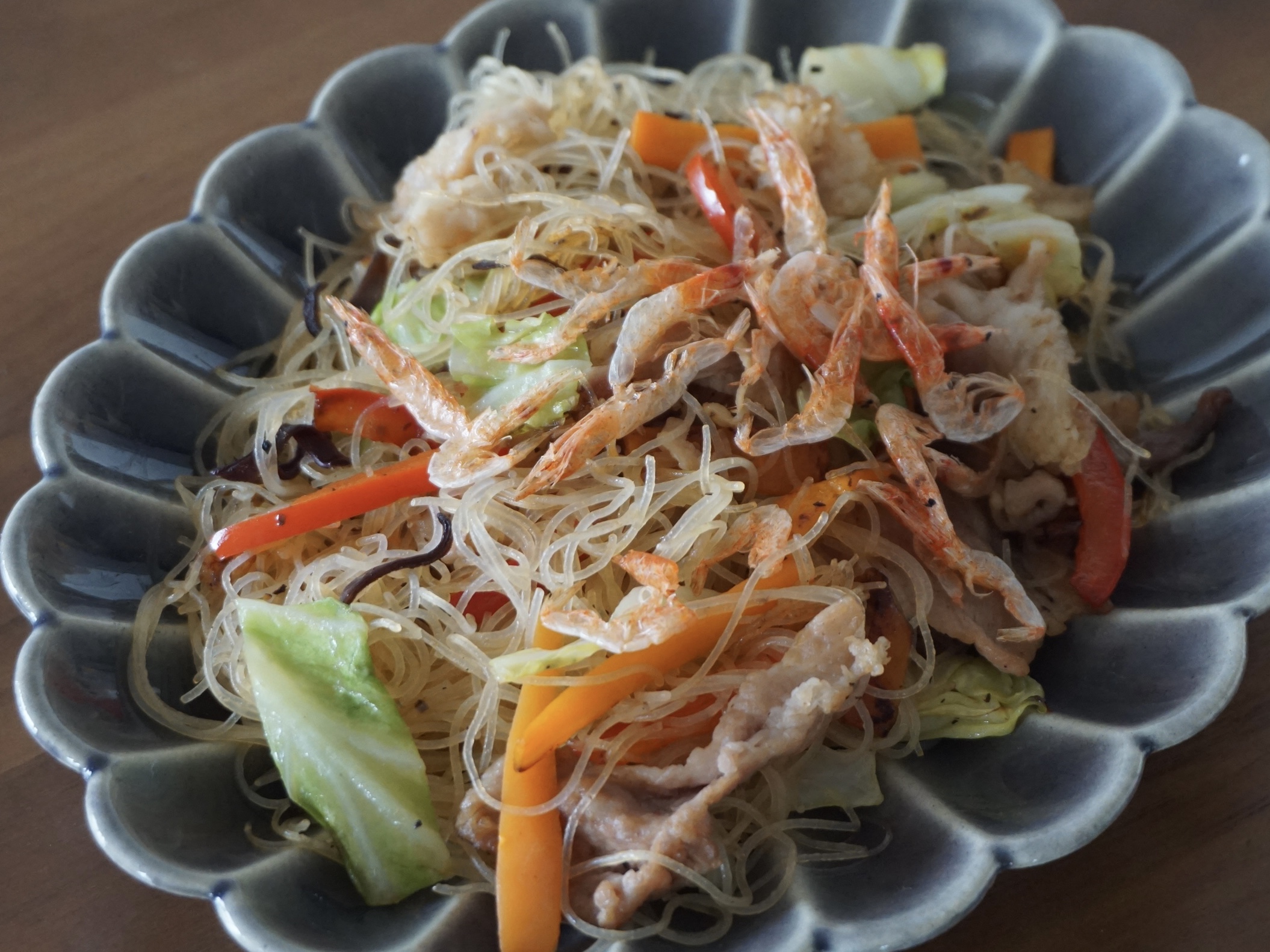
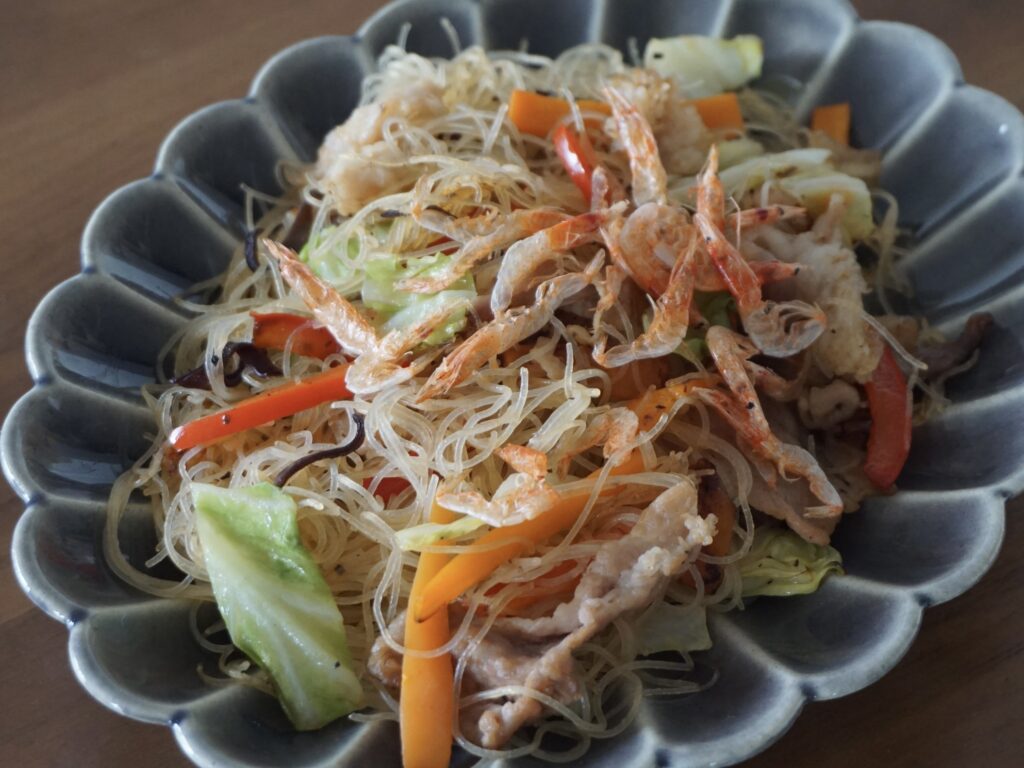
Yaki Bifun (焼きビーフン)
🍜What is Yaki Bifun? (Japanese Stir-Fried Rice Noodles)
Yaki bifun is a flavorful stir-fry made with rice noodles, pork, and a variety of crunchy vegetables.
While modern variations on this dish include curry, gochujang, and coriander, the most traditional and beloved style is seasoned with a rich, umami-packed oyster sauce.
Low GI and Gluten-Free Benefits
Thanks to the resistant starch created during the manufacturing process, rice noodles have a low GI of around 52. Compared to rice (GI 88) and udon (GI 62), their carbohydrate absorption is moderate, making them filling and suitable for dieting. It’s also a recommended ingredient for those on a gluten-free diet.
Nutritionist Perspective: Why it’s Perfect for Dieting
Also, compared to other noodles such as udon and soba, rice vermicelli tends to use a lot of vegetables, as shown in a survey by Kenmin (the largest rice vermicelli manufacturer).
Like my other recipes, this one is a precision recipe, measured to the gram, ensuring perfect salt balance and consistent flavor.
Delicious and healthy! This menu is perfect for those who are health conscious. Be sure to give this recipe a try!
Understanding Rice Noodles (Bifun)
- Definition: In English, bifun is commonly called “rice vermicelli” or “rice noodles.”
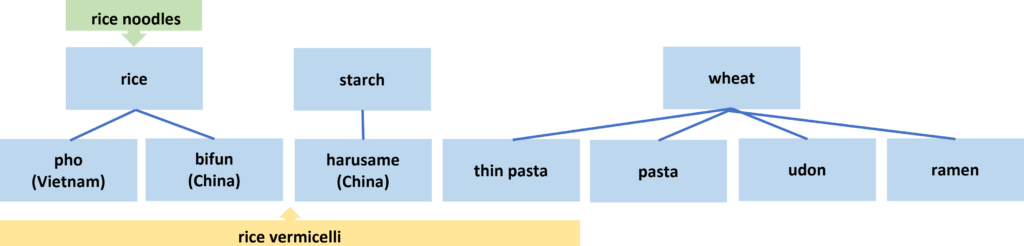
- Terminology: While “vermicelli” originally referred to thin Italian pasta, it is now a broad term that includes bifun, somen (wheat), and harusame (starch).
- Production: The process is remarkably similar to pasta: After kneading rice flour with water, it is extruded through a finely perforated plate and dried.
- Origin & History: Bifun is believed to have originated in southern China around the era when Qin Shi Huang unified the country. Nowadays, bifun is enjoyed as a staple food not only in China but also in Southeast Asia, where the indica rice (a less sticky variety) used in bifun is widely cultivated.
- Versatility: Beyond stir-fries, it is perfect for soups and vinegared salads. Recently, its popularity has surged globally as a healthy, gluten-free substitute for udon or pasta.
Quick Comparison: Bifun vs. Other Noodles
- Bifun (Rice Vermicelli): Made from rice, milky white, originated in China.
- Pho: Made from rice (usually flat), milky white, originated in Vietnam.
- Harusame: Made from starch (mung bean/potato), transparent, originated in China.
- Thin Pasta: Made from wheat, light yellow, originated in Italy.
- Somen: Made from wheat, milky white, originated in Japan.
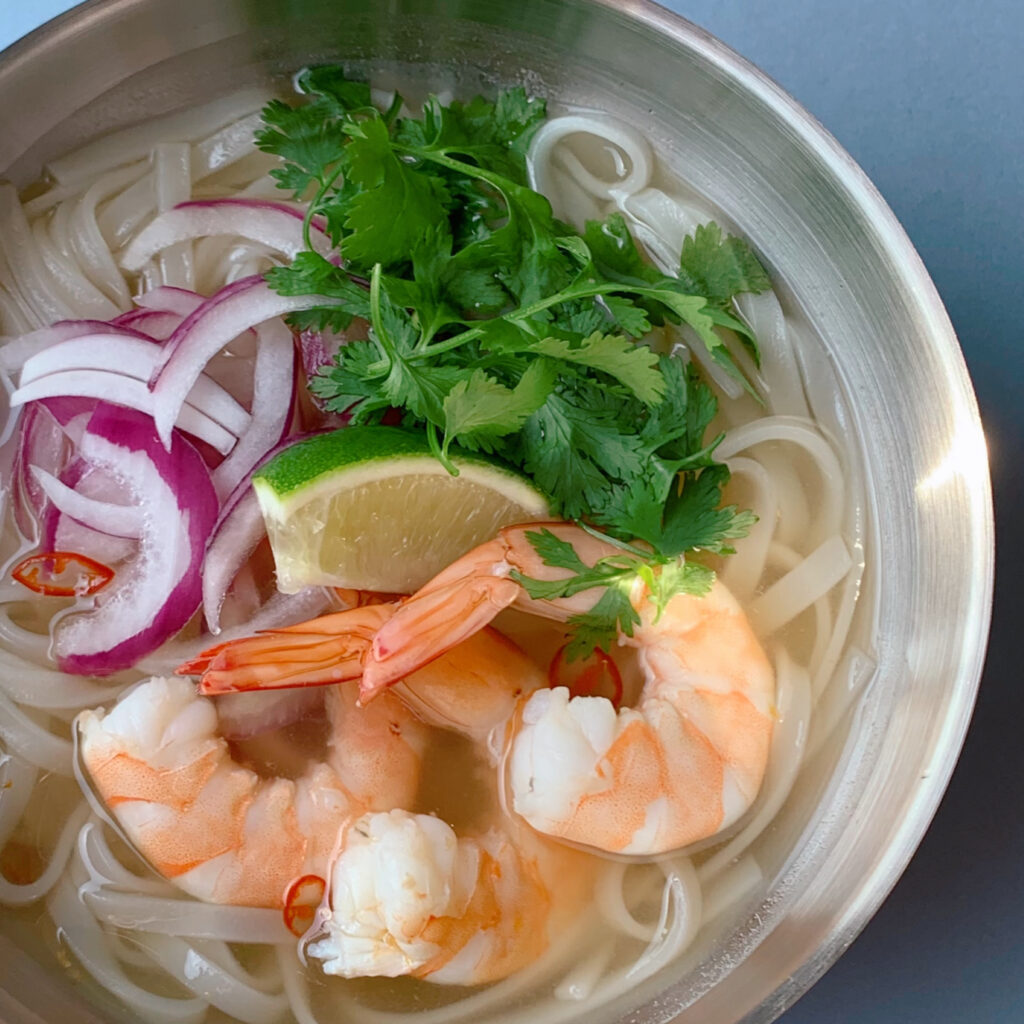
Love gluten-free noodles? Then Pho is your next favorite! Click here for my easy and healthy Pho recipe! [Vietnamese specialty chicken pho]
NUTRITION FACTS (Serves 3)
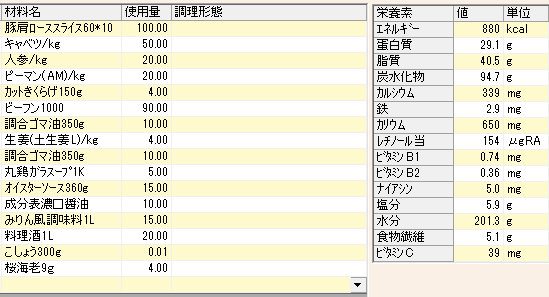
Per Serving
- Calories: 293 kcal
- Protein: 9.7 g
- Total Fat: 13.5 g
- Total Carbohydrate: 31.6 g
- Sodium: 2.0 g
Total for 3 Servings
- Calories: 880 kcal
- Protein: 29.1 g
- Total Fat: 40.5 g
- Total Carbohydrate: 94.7 g
- Sodium: 5.9 g
Ingredients for Flavorful Yaki Bifun
- Rice Vermicelli (Bifun): 90g
- Pork Shoulder Loin: 100g
- Cloud Ear Mushrooms: 4g (Soak in 100g water)
- Vegetables: Cabbage (50g), Carrots (20g), Bell Peppers (20g—red adds great color)
- Aromatics: Ginger (4g)
- Garnish: Dried Sakura Ebi (Small red shrimp) (4g)
- Frying & Prepping: Sesame Oil (20g total—10g for noodles, 10g for frying)
The Seasoning :
- ☆Chicken Broth Granules: 5g
- ☆Oyster Sauce: 15g
- ☆Soy Sauce: 10g
- ☆Mirin: 15g
- ☆Sake: 20g
- ☆Pepper: To taste
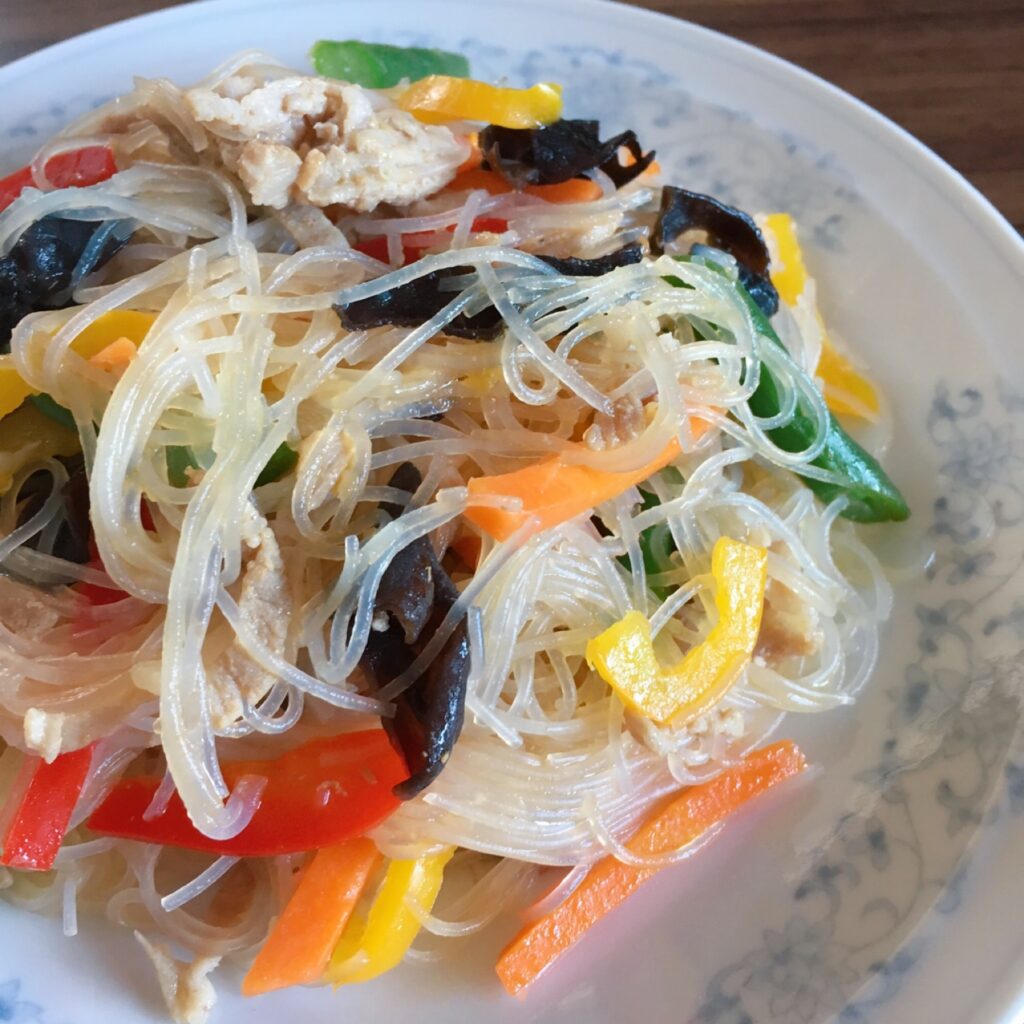
Instructions
- Hydrate Mushrooms: Soak the wood ear mushrooms in water for 10–15 minutes. Once soft, squeeze out the excess water.
- Prep Ingredients: Cut the pork into bite-sized pieces. Slice the ginger, cabbage, carrots, and bell peppers into thin strips.
- Prepare Noodles: Place noodles in boiling water and cook for 2 minutes, then drain. (Some noodles require soaking before use instead of boiling; follow product instructions.)
- The “Anti-Stick” Secret: Toss the drained noodles with 10g of sesame oil. Then, cut the noodles into thirds with a knife. This crucial step prevents the noodles from clumping together during stir-frying.
- Sear the Protein: Heat the remaining 10g of sesame oil in a pan. Fry the pork and ginger until the meat changes color.
- Stir-Fry Vegetables: Add the cabbage, carrots, and bell peppers. Sauté until slightly tender.
- Combine: Add the wood ear mushrooms and the prepared noodles. Use chopsticks to loosen and integrate the noodles with the vegetables.
- Season Quickly: Add the sake, oyster sauce, chicken stock, soy sauce, pepper, and mirin. Stir-fry rapidly until evenly distributed.
- Tip: Work quickly to prevent the noodles from drying out!
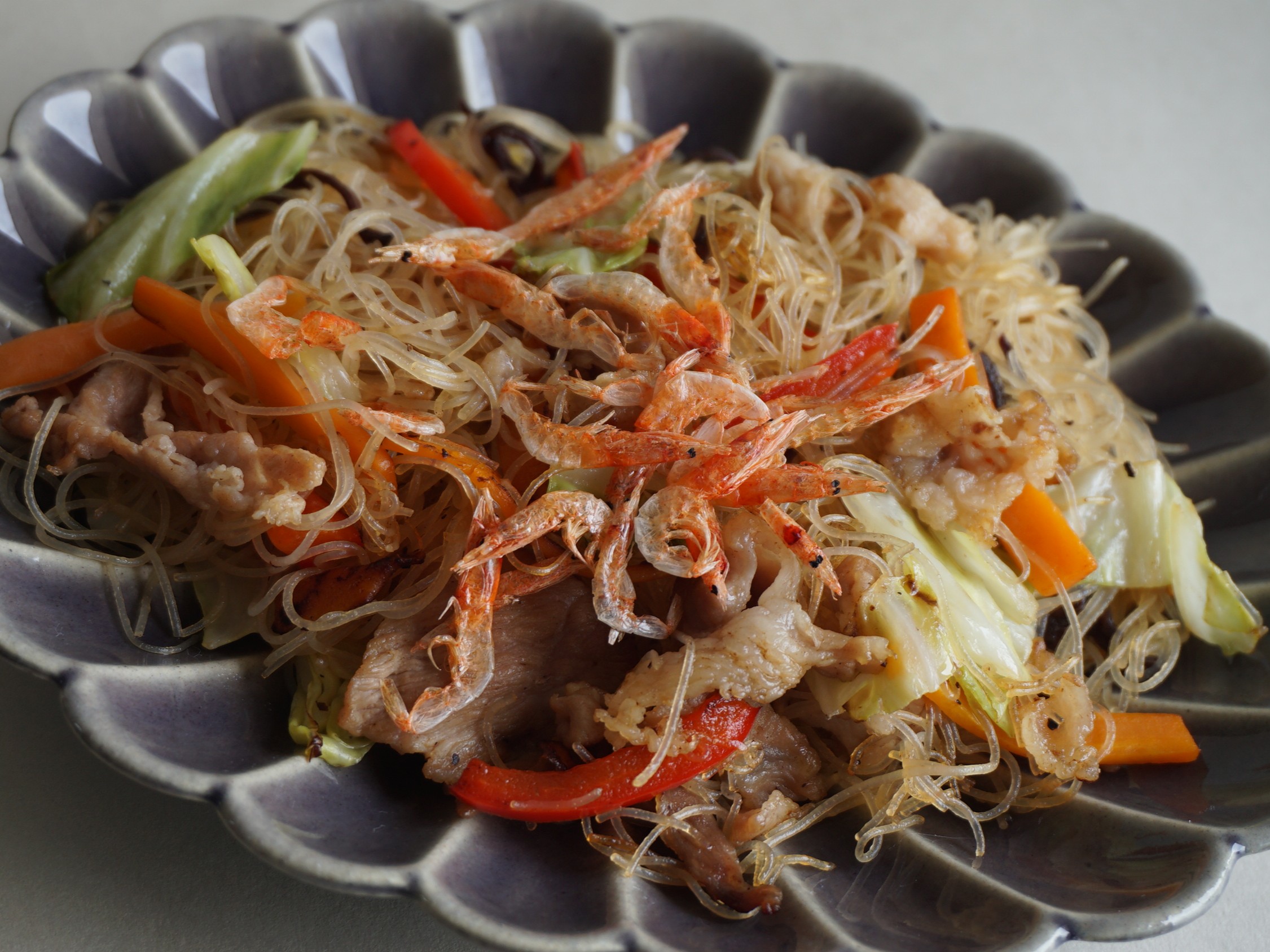
- Finish: Serve on a plate and scatter the Sakura Ebi on top for a fragrant, crispy finish. Sakura Ebi is not just for aroma; it’s a great source of calcium and astaxanthin, adding a nutritional boost to your meal.
📖Read the Japanese version of this article here! [焼きビーフンオイスターソース]

コメント