
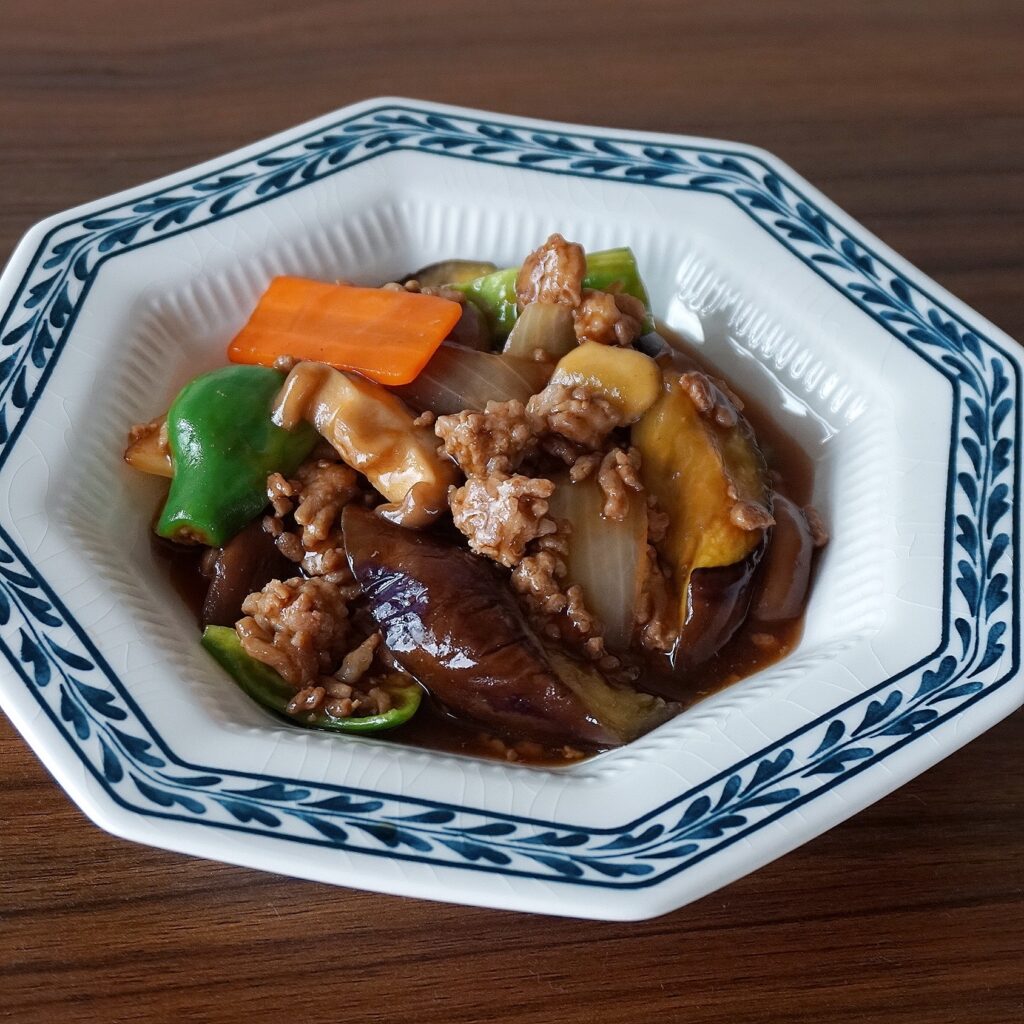
Quick Minced Pork “Subuta” (Sweet & Sour Stir-Fry)
While traditional Subuta (Japanese-style Sweet and Sour Pork) is famous for its crispy deep-fried pork cubes, it can be quite a project to make at home. This version uses minced pork to cut down on prep time and cost without sacrificing that iconic, tangy “Amazu” (sweet vinegar) glaze.
The addition of ketchup makes the sauce mellow and kid-friendly, while the eggplant soaks up the flavors perfectly.
What is Subuta?
Subuta is one of the most beloved Chinese-style dishes in Japan. It consists of bite-sized pieces of pork—traditionally deep-fried in batter—stir-fried with various vegetables in a glossy, vibrant sweet and sour glaze known as “Amazu-an.”
Origins and Etymology
The dish is rooted in the Cantonese classic, Gu Lao Rou (Sweet and Sour Pork). As it made its way to Japan, it evolved to suit local palates, becoming more mellow and savory. The name Subuta literally translates to “Vinegar Pork” (Su = Vinegar, Buta = Pork), highlighting its primary seasoning.
Flavor Profile
The defining characteristic of Subuta is the perfect harmony between sweetness and acidity. While the base is made from rice vinegar, sugar, and soy sauce, many Japanese home recipes include a touch of tomato ketchup. This adds a fruity depth and a mild sweetness that makes the dish particularly popular among children.
Traditional Ingredients
Beyond the pork, a standard Subuta features a colorful array of vegetables such as onions, bell peppers, carrots, shiitake mushrooms, and bamboo shoots. It is a well-balanced meal, offering a variety of textures in every bite. (And just like in many other parts of the world, whether or not to include pineapple is a lighthearted but heated debate in Japan!)
Global Recognition
In Western countries, Subuta is most commonly recognized as “Sweet and Sour Pork.” —
A Modern Twist
While the traditional method involves the labor-intensive step of deep-frying pork chunks, this recipe reimagines the dish using minced pork. This allows you to capture that iconic, condensed flavor and glossy texture in a fraction of the time, making it accessible for a busy weeknight dinner without losing the soul of the dish.
Nutrition Facts (Per Recipe)
- Calories: 832 kcal
- Protein: 48.4 g
- Total Fat: 45.9 g
- Total Carbohydrates: 59.6 g
- Net Carbs: 53.6 g
- Dietary Fiber: 6.0 g
- Sodium (Salt Equivalent): 8.5 g
Ingredients (Serves 2)
- 225g ground pork (pork mince)
- 2g salt
- 30g carrot (finely diced)
- 75g onion (finely diced)
- 90g eggplant (Japanese eggplant, diced)
- 45g green bell pepper (diced)
- 30g shiitake mushrooms (diced)
- 6g garlic (minced)
- 3g ginger (minced)
- 8g sesame oil
- ☆40g vinegar
- ☆40g soy sauce
- ☆20g sugar
- ☆15g mirin (Japanese sweet rice wine)
- ☆15g sake (Japanese cooking sake)
- ☆20g ketchup
- ☆6g potato starch (for thickening)
- ☆150g–200g water
Cooking Instructions
- Prep the vegetables:Remove the stem and seeds from the green bell pepper, then cut into 1–2 cm strips. Trim the stem ends of the shiitake mushrooms and cut them into thirds. Remove the stem of the eggplant, cut it in half lengthwise, and slice into 2 cm pieces. Peel the carrot and onion, then cut them into bite-sized rectangular slices (tanzaku-giri). Peel and thinly slice the garlic and ginger.
- Sauté the meat and vegetables:Heat the sesame oil in a skillet over medium heat, then sauté the garlic, ginger, and ground pork. Once the pork changes color, add the eggplant, carrot, onion, and shiitake mushrooms, and continue sautéing.
- Add remaining veggies and sauce:When the eggplant becomes tender, add the green bell pepper. (Adding the bell pepper near the end helps preserve its vibrant color.) Add all the sweet and sour sauce ingredients marked with (☆)—vinegar, soy sauce, sugar, mirin, sake, and ketchup—and stir well to combine all the flavors.
- Thicken and finish:Turn off the heat briefly. Mix the potato starch and water together to make a slurry, then pour it evenly into the skillet. Turn the heat back on and stir constantly until the sauce thickens and becomes glossy. Serve piping hot with warm rice!
Read the Japanese version of this article here! [【時短・節約】揚げない「ひき肉酢豚」のレシピ。ナスと甘酢でご飯が止まらない!]


コメント