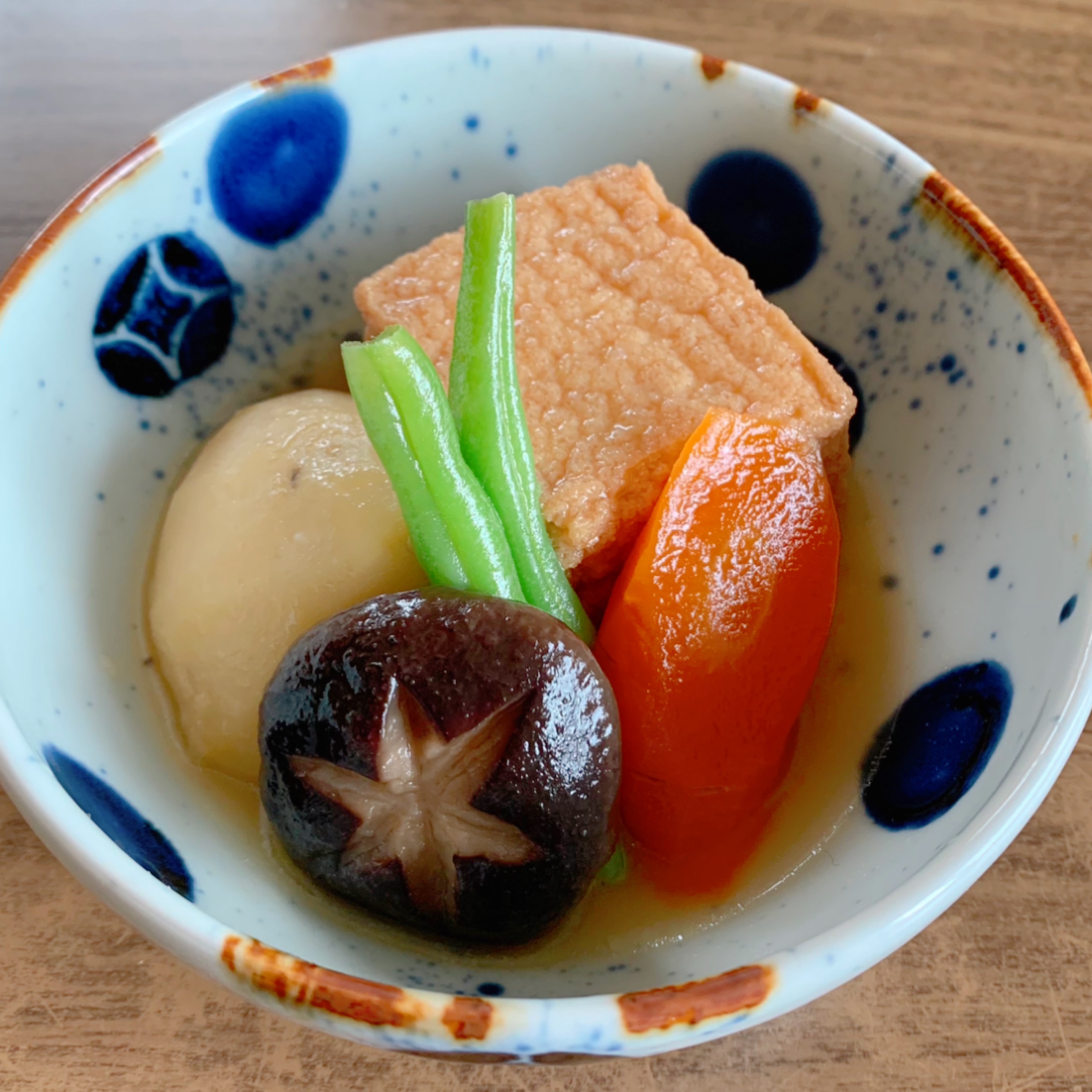
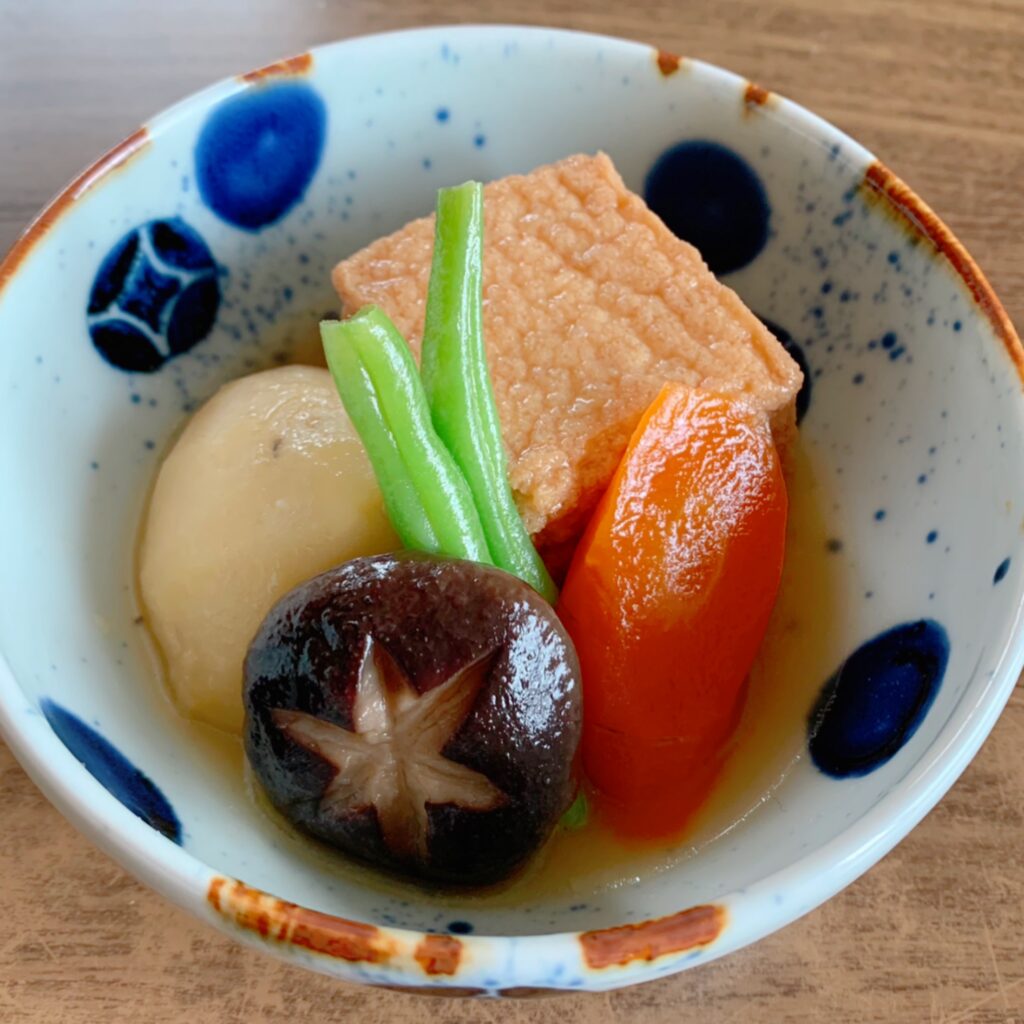
Atsuage Takiawase: Japanese Simmered Fried Tofu & Veggies(厚揚げの炊き合わせ)
What is Takiawase?
- Definition: A traditional Japanese dish consisting of various ingredients such as soy products and vegetables, which are simmered together and beautifully arranged on a plate.
- The Method: While traditional chefs season ingredients separately to preserve distinct flavors, home cooks often simmer them together. The key is to add tougher ingredients first.
- Visual Appeal: The dish is known for its beauty, combining different shapes and vibrant colors.
- Cultural Background: It originated from Shojin Ryori (Buddhist vegetarian cuisine). Since animal products were forbidden, soy products like atsuage provided essential protein.
- Flavor Synergy: This recipe uses atsuage, which is fried tofu. The oil and umami from the fried tofu help mask the bitterness or “grassy” smell of certain vegetables.
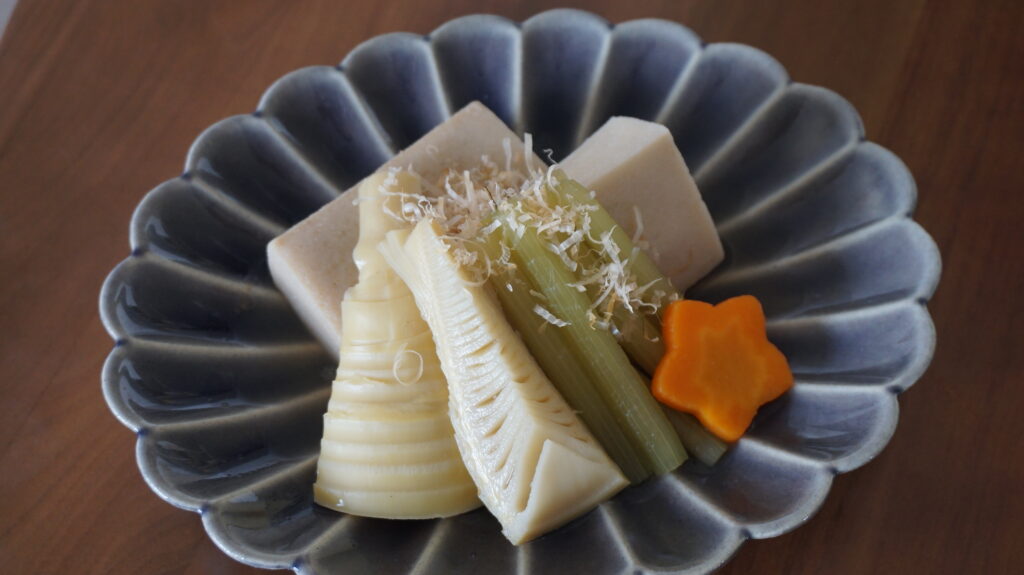
If you enjoy Takiawase, you should also try “Fukumeni,” another classic Japanese simmering technique. Here is my recipe for Koya-dofu Fukumeni, a dish that perfectly absorbs the delicate dashi flavor. 👉 [Koya dofu fukumeni (Simmered freeze dried tofu)]
Seasonal Vegetable List
- Spring: Bamboo shoots, rape blossoms, butterbur, potatoes
- Summer: Winter melon, pumpkin, eggplant, okra
- Autumn: Mushrooms, taro, sweet potato
- Winter: Daikon radish, spinach, lotus root
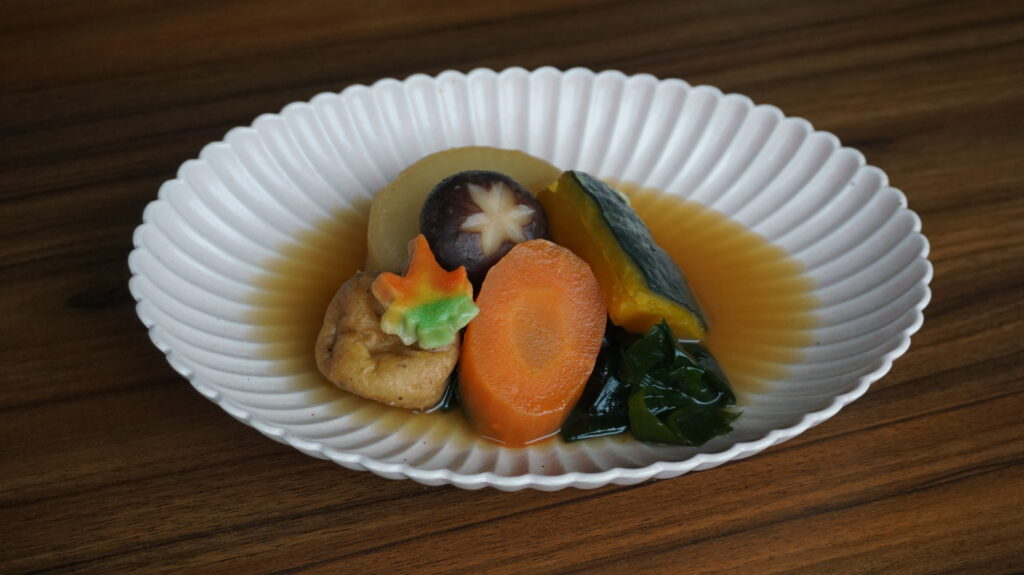
Tips for making takiawase
- Bring Out Vibrant Colors: Use light soy sauce (Usukuchi) instead of regular soy sauce. This is essential for preserving the natural, beautiful colors of green beans, komatsuna, pumpkin, and butterbur.
- The “Happo-dashi” Golden Ratio: For a perfectly balanced flavor, mix your seasonings in a ratio of 1 part soy sauce, 1 part mirin, and 8 parts dashi stock. This versatile mixture is famously called Happo-dashi.
- Timing is Key: Always wait to add the seasonings after the vegetables have softened. If you add salt or soy sauce too early, it can make the vegetables tough and prevent them from cooking through to the center.
📈Nutrition Facts (Total for 4 Servings) : Atsuage Takiawase (Simmered fried-tofu and vegetables)
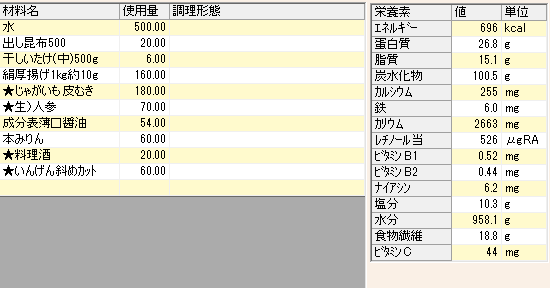
TOTAL (For 4 Servings)
- Calories: 696 kcal
- Protein: 26.8 g
- Total Fat: 15.1 g
- Total Carbohydrates: 100.5 g
- Salt Content: 10.3 g
PER SERVING (1/4 of total)
- Calories: 174 kcal
- Protein: 6.7 g
- Total Fat: 3.8 g
- Total Carbohydrates: 25.1 g
- Salt Content: 2.6 g
*Salt content is calculated assuming all seasonings and broth are consumed. The amount of seasoning is generous because the ingredients will be soaked in the soup to allow the flavors to permeate.
Ingredients : Atsuage Takiawase (Simmered fried-tofu and vegetables)
- For the Dashi Stock
- Water: 500g
- Kombu (Dried Kelp): 15-20g
- Dried Shiitake Mushrooms: 4 pieces (approx. 5-6g)
- Tip: The “Donko” variety is highly recommended for its thick, meaty texture!
- Main Ingredients
- Rehydrated Shiitake Mushrooms: approx. 30g (from the dashi stock above)
- Kinu Atsuage (Soft Thick Fried Tofu): 160g
- Choose this type for a softer, smoother texture.
- Potatoes: 2 pieces (180g)
- Carrots: 70g
- Green Beans: 4 pieces (60g)
- Seasonings (☆)
- Light Soy Sauce (Usukuchi): 54g
- Mirin (Sweet Rice Wine): 60g
- Sake (Cooking Rice Wine): 20g
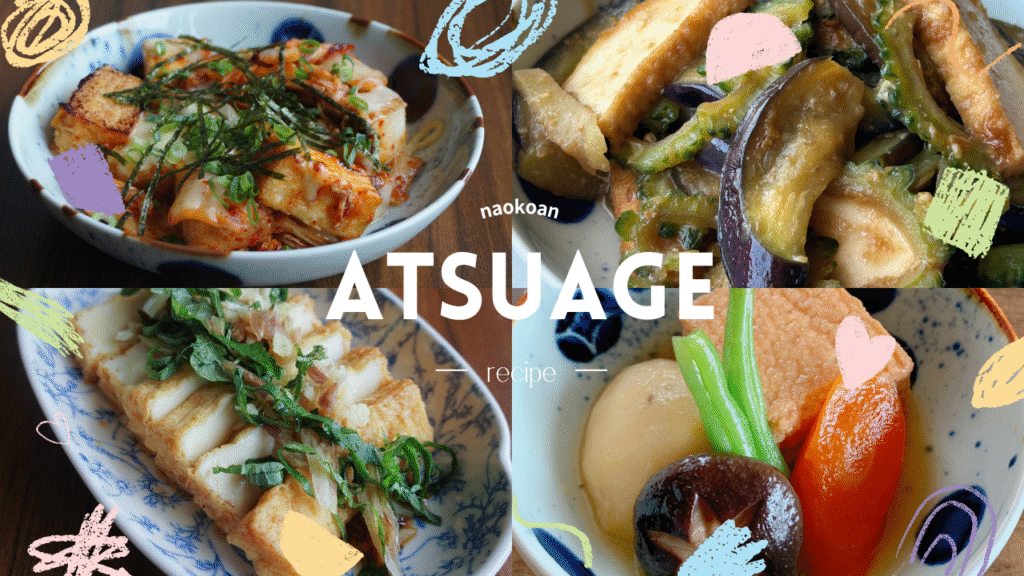
Your Ultimate Guide to Quick & Hearty Atsuage Meals 🥢 Looking for a protein-packed dish that’s both easy and delicious? Each article features detailed steps to help you master the art of cooking with fried tofu. Don’t miss out! 👉 [Recommended recipes using Atsuage]
Cooking Instructions : Atsuage Takiawase (Simmered fried-tofu and vegetables)
- Prepare the Stock: Soak the kombu and dried shiitake in water for a few hours or overnight. Remove them from the water, keeping the liquid as your dashi.
- Mushroom Prep: You can cut flower-shaped slits into the soaked shiitake caps for decoration.
- Prepare the Atsuage (Important Note on Oil Removal):
- Previously, it was common practice to soak atsuage in boiling water to remove excess oil.
- However, many modern culinary experts now recommend using it as is without removing the oil, as the oil adds a rich depth of flavor and “umami” to the dish. Following this modern style, you can simply cut it into bite-sized pieces and add it directly to the pot.
- Vegetable Prep: Peel and cut potatoes into halves or quarters. Peel carrots and cut into bite-sized pieces. Cut off both ends of the green beans and cut them into 5cm lengths.
- Boil Vegetables: Place the potatoes in the dashi stock and heat until they begin to soften.
- Add Flavor: Once the potatoes are soft, add the atsuage, carrots, shiitake, and all seasonings (☆).
- Final Touch: When the broth has reduced by half, add the green beans and turn off the heat.
- Resting: Leave the dish for a few hours to let the flavors soak in, then reheat when you are ready to eat.
📖Read the Japanese version of this article here! [厚揚げたきあわせ]
#厚揚げ #厚揚げレシピ #節約レシピ #おうちごはん #Atsuage #DeepFriedTofu #JapaneseFood #TofuRecipe

コメント