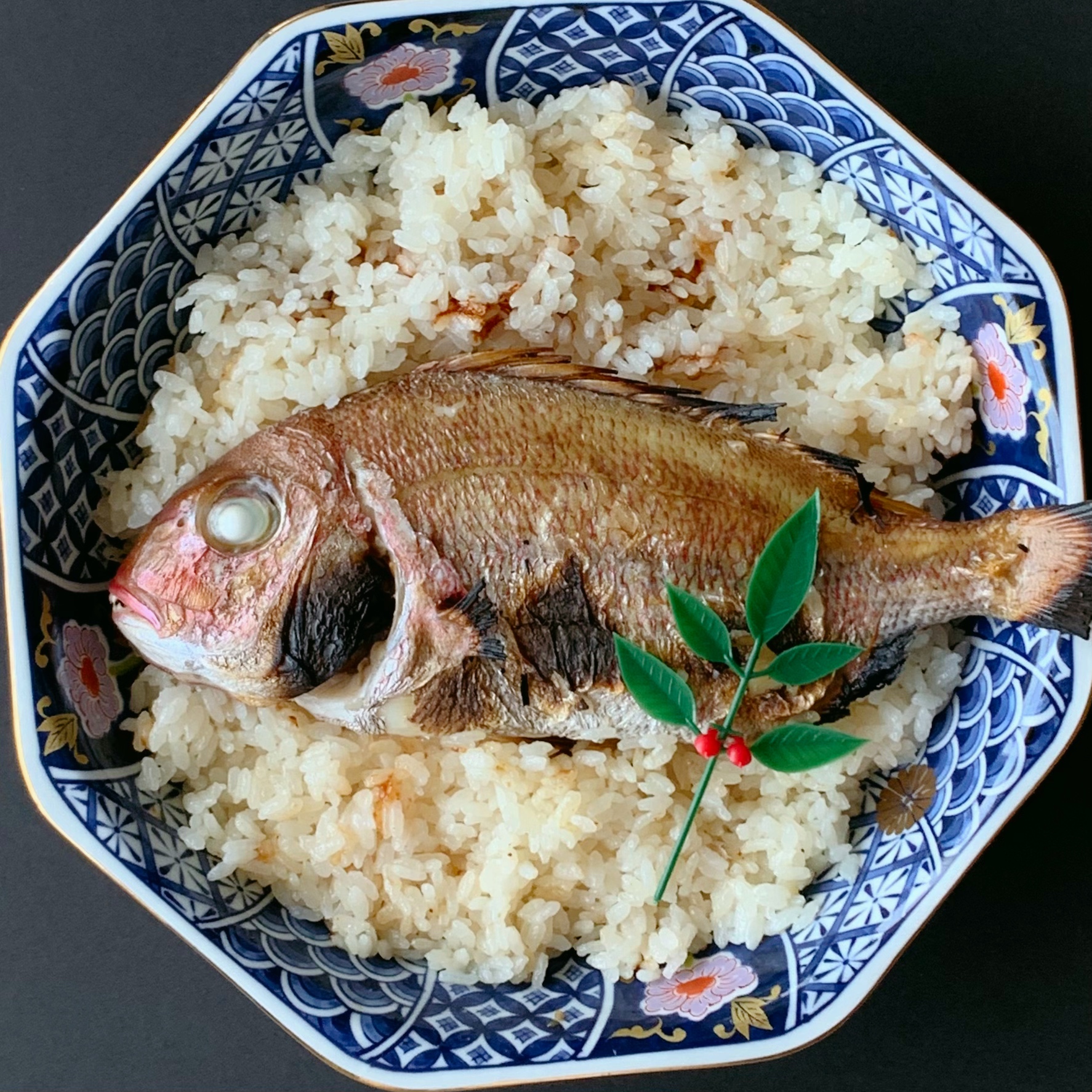
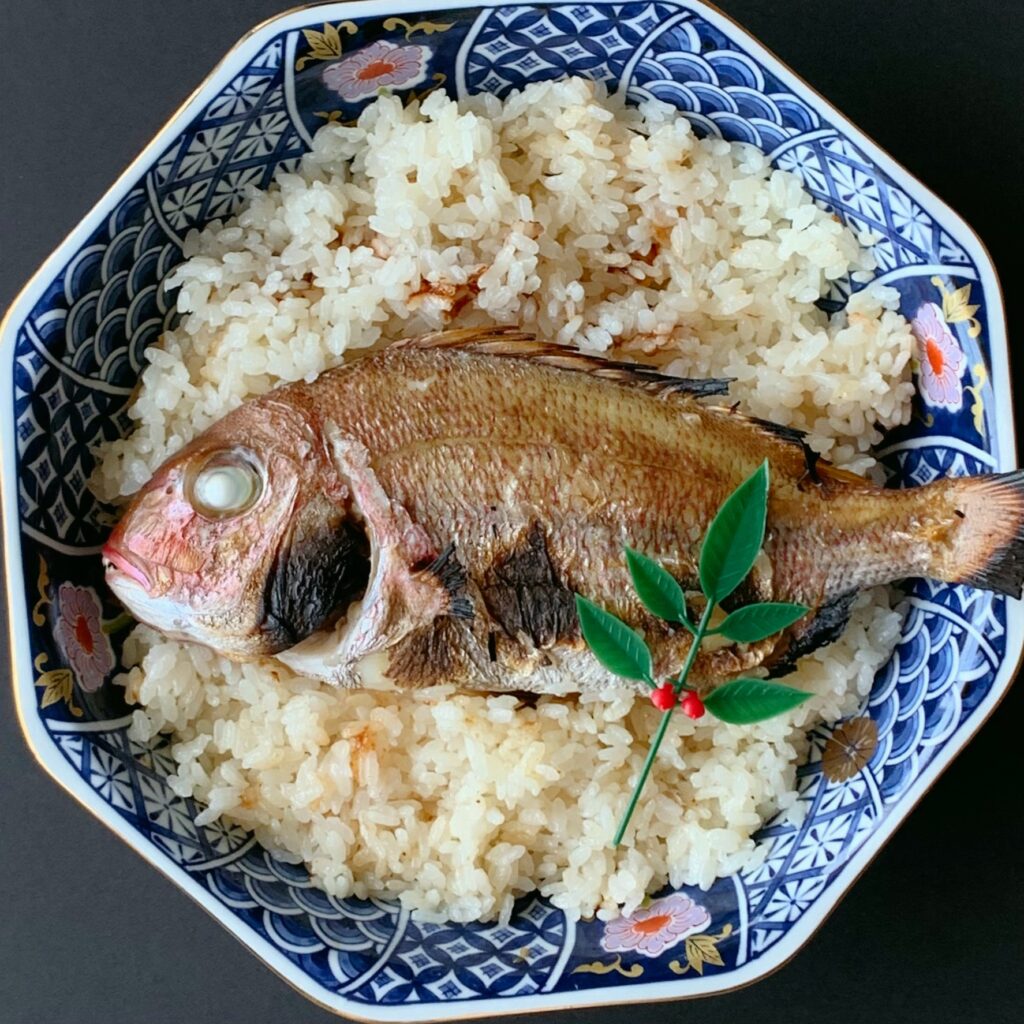
Taimeshi: Japanese Sea Bream Rice (鯛飯) 🐟✨
Taimeshi is a traditional Japanese dish where a whole sea bream is grilled to fragrant perfection and then steamed together with seasoned rice.
In Japan, sea bream (Tai) is much more than just a delicious fish; it is considered a symbol of good fortune. Because the word “Tai” sounds like the end of the word “Medetai” (celebratory/auspicious), it has been a centerpiece of celebrations since ancient times. While you can enjoy it year-round, it is particularly special for milestones and New Year’s festivities.
Regional Styles: Cooked vs. Raw
- The Classic Style (Iyo/General): As featured in this recipe, the fish is grilled first to remove any “fishy” odor and lock in the umami, then cooked with the rice.
- The Uwajima Style (Ehime): In the southern part of Ehime Prefecture, Taimeshi is served as a sashimi bowl! Raw fillets are marinated in a rich sauce of soy sauce, mirin, egg yolk, and dashi, then poured over steaming hot rice.
What exactly is “Tai” (Sea Bream)?
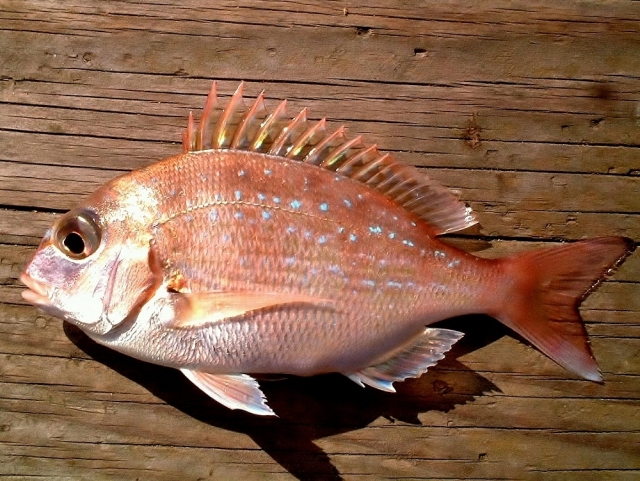
In Japan, Madai (True Red Sea Bream) is the king of white-fleshed fish. It is prized for its firm texture, elegant sweetness, and low fat content.
- Varieties: While Madai is the most famous, this recipe uses Chidai (Crimson Sea Bream), which is slightly smaller and perfect for fitting into a home rice cooker or clay pot.
- Terminology: In English, you might see it called “Red Snapper,” but biologically, Japanese Tai belongs to the Sparidae family, making it a true sea bream.
- A Note on Bones: Sea bream bones are notoriously hard and sharp. While cooking the fish whole provides the best flavor, please be careful to remove all bones before serving, especially for children and the elderly.
Recipe: Whole Grilled Sea Bream Rice
Using a dashi pack for an authentic, professional flavor at home!
Nutrition Facts (Per Serving)
Calories: 267 kcal | Protein: 9.4g | Fat: 2.8g | Carbs: 51.5g | Salt: 2.0g
Ingredients (Serves 5)
- Sea Bream (Chidai): 1 whole fish (approx. 220g)
- Rice: 320g (approx. 2 Japanese rice cups)
- Salt: 4g (for seasoning the fish)
- Dashi Base: * Water: 420ml
- Kayanoya Dashi Pack: 1 pack (or your favorite high-quality dashi)
- Seasonings:
- Light Soy Sauce (Usukuchi): 30g
- Mirin: 10g
Cooking Instructions 👨🍳
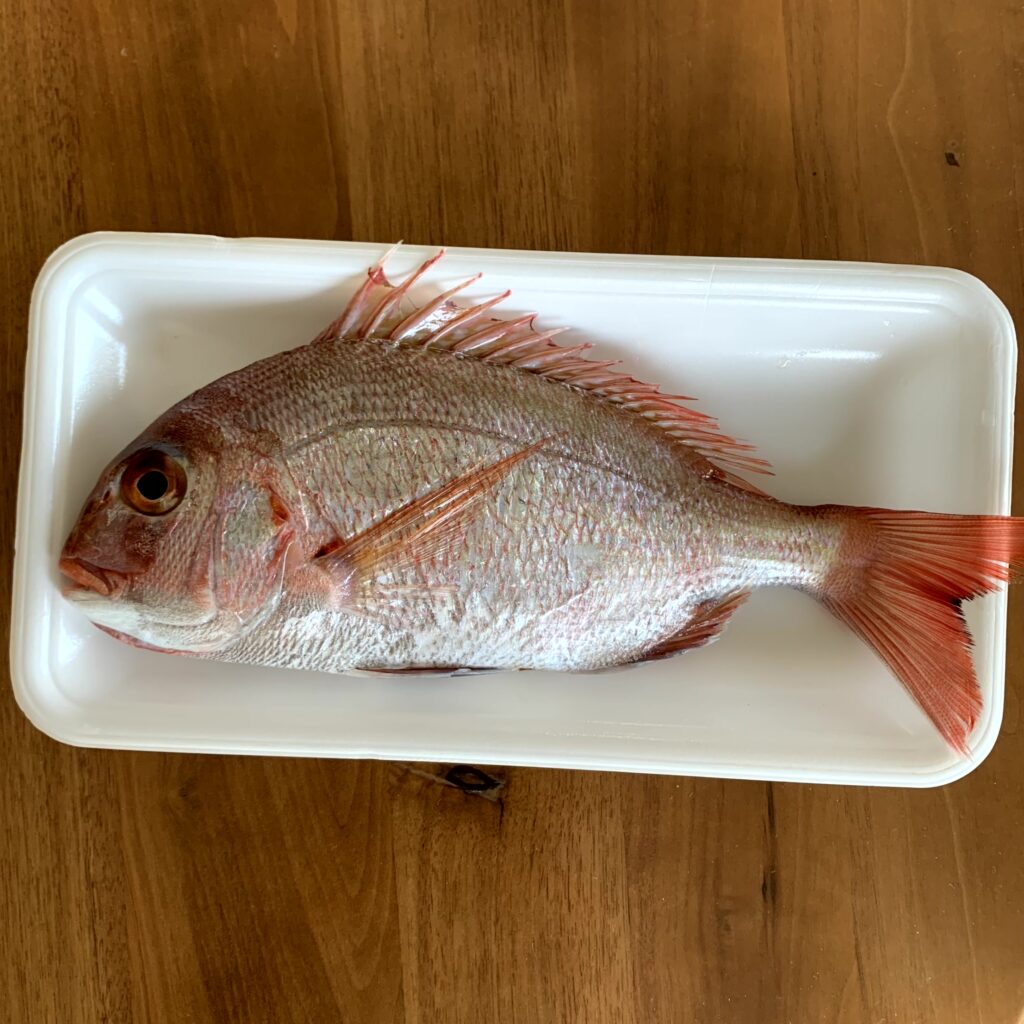
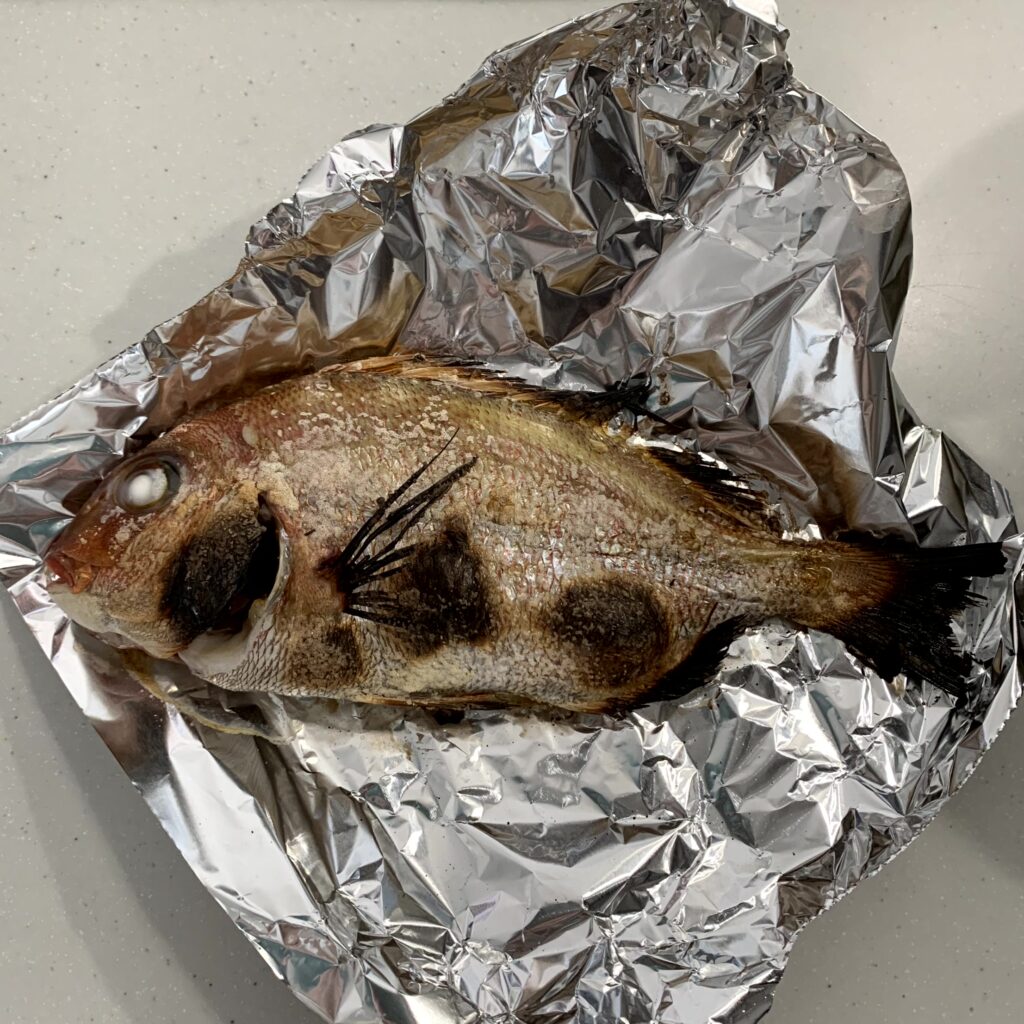
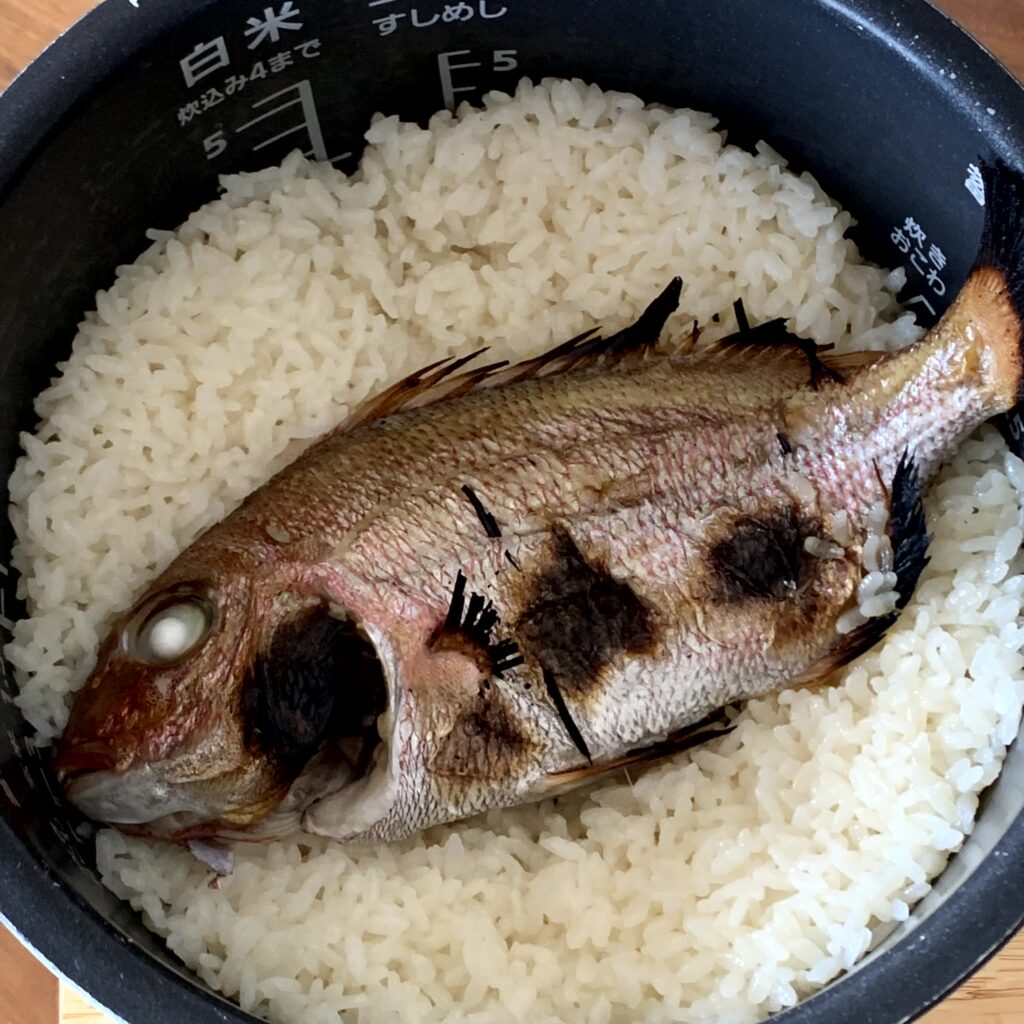
- Prep the Fish: Most Japanese supermarkets will scale and gut the fish for you for free! Just ask at the fish counter.
- Make the Dashi: Place 420ml of water and the dashi pack in a small pot. Bring to a simmer over low heat, then let it cool completely. Once cool, discard the pack.
- Prepare the Rice: Wash the rice and let it soak in water for 30 minutes (or 1 hour if using pre-rinsed rice). Drain well in a colander.
- Salt the Sea Bream: Sprinkle 4g of salt over both sides of the fish and let it sit for 20 minutes.
- Remove Odors: Wipe the surface of the fish thoroughly with a paper towel. This step is crucial for a clean, elegant flavor!
- Grill for Fragrance: Lightly oil your grill rack to prevent sticking. Grill the sea bream for about 6 minutes until the skin is fragrant and slightly charred.
- The Rice Cooker: Place the drained rice, cooled dashi, light soy sauce, and mirin into the rice cooker. Mix gently.
- Cook: Place the grilled sea bream on top of the rice and start the “Normal” cooking mode.
- The Finishing Touch: Once cooked, carefully remove the fish to a plate. Debone it thoroughly, then return the succulent flakes to the rice and toss gently to combine.
Quick Refinement Suggestions:
- Serve in a beautiful bowl, garnished with thinly sliced ginger or a kinome leaf for a refreshing aroma! ٩(ˊᗜˋ*)و
- The “Ochazuke” Tip: Mentioning the “Ochazuke” finish (pouring tea/dashi over the remaining rice) is a wonderful touch—it really elevates the post to a “pro” level!
Nutrition Facts
| Total | Per Serving | |
|---|---|---|
| Calories | 1,335 kcal | 267 kcal |
| Protein | 46.8 g | 9.4 g |
| Fat | 14.2 g | 2.8 g |
| arbs) | 257.6 g | 51.5 g |
| Salt Equivalents | 10.0 g | 2.0 g |
Nutritional Insights: Crimson Sea Bream (Kidai/Renkodai) 📋
When preparing Taimeshi, understanding the nutritional profile of your fish helps in creating a balanced meal. For this recipe, we used Crimson Sea Bream (Kidai).
Standard Nutritional Value (per 100g of Edible Portion)
- Calories: 109 kcal
- Protein: 20.3 g
- Fat: 3.1 g
- Carbohydrates: 0.1 g
- Salt Equivalent: 0.3 g
Dietitian’s Pro-Tip: Crimson vs. True Red Sea Bream 💡
Compared to the common True Red Sea Bream (Madai)—which contains approx. 142 kcal and 5.8g of fat per 100g—the Crimson Sea Bream (Kidai) is even lower in calories and fat. It offers a light, elegant flavor that is perfect for health-conscious diners or a light late-night dinner.
Understanding “Waste Rate” and Edible Portions 🐟
When buying a whole fish, it’s important to remember that not everything is edible. In the world of Japanese clinical nutrition, we use a “Waste Rate” (廃棄率) to calculate the actual amount of meat you consume.
- Waste Rate for Sea Bream: Approx. 50% (This includes the head, bones, internal organs, and scales.)
Quick Calculation for This Recipe:
Since we are using a whole sea bream weighing 220g:
- Whole Fish Weight: 220g
- Edible Portion (The Meat): Approx. 110g
- Non-Edible Parts (Head/Bones/etc.): Approx. 110g
Note on Varieties: While both Crimson and True Red Sea Bream have a waste rate of about 50%, Crimson Sea Bream tends to have a slightly larger head relative to its body. If you use a very small fish, the edible portion might feel a bit smaller, but the deep umami released from those bones during cooking is what makes the rice so delicious!
📖Read the Japanese version of this article here! [本格的な鯛飯(たいめし)の作り方|香ばしく仕上げるプロのコツ]

コメント