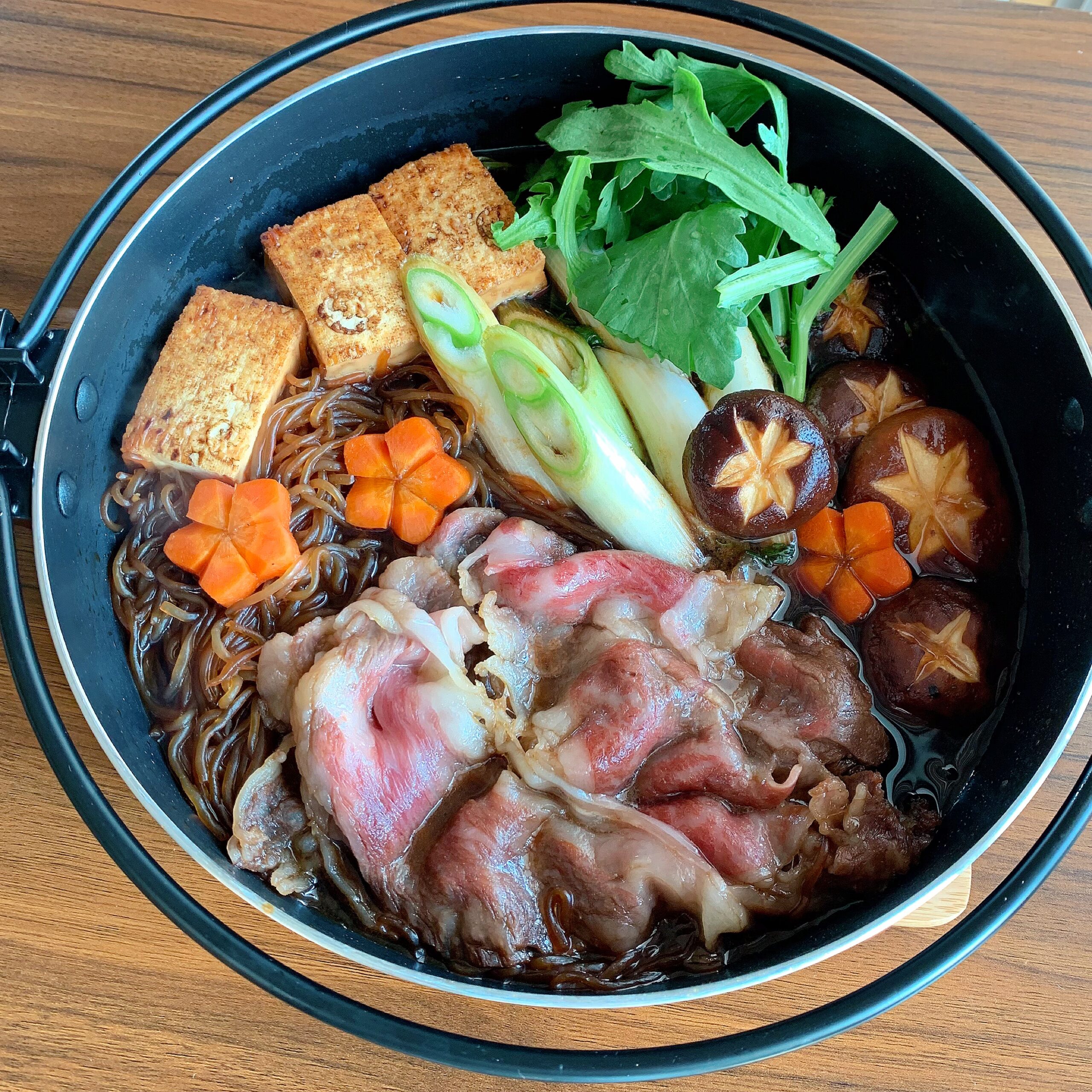
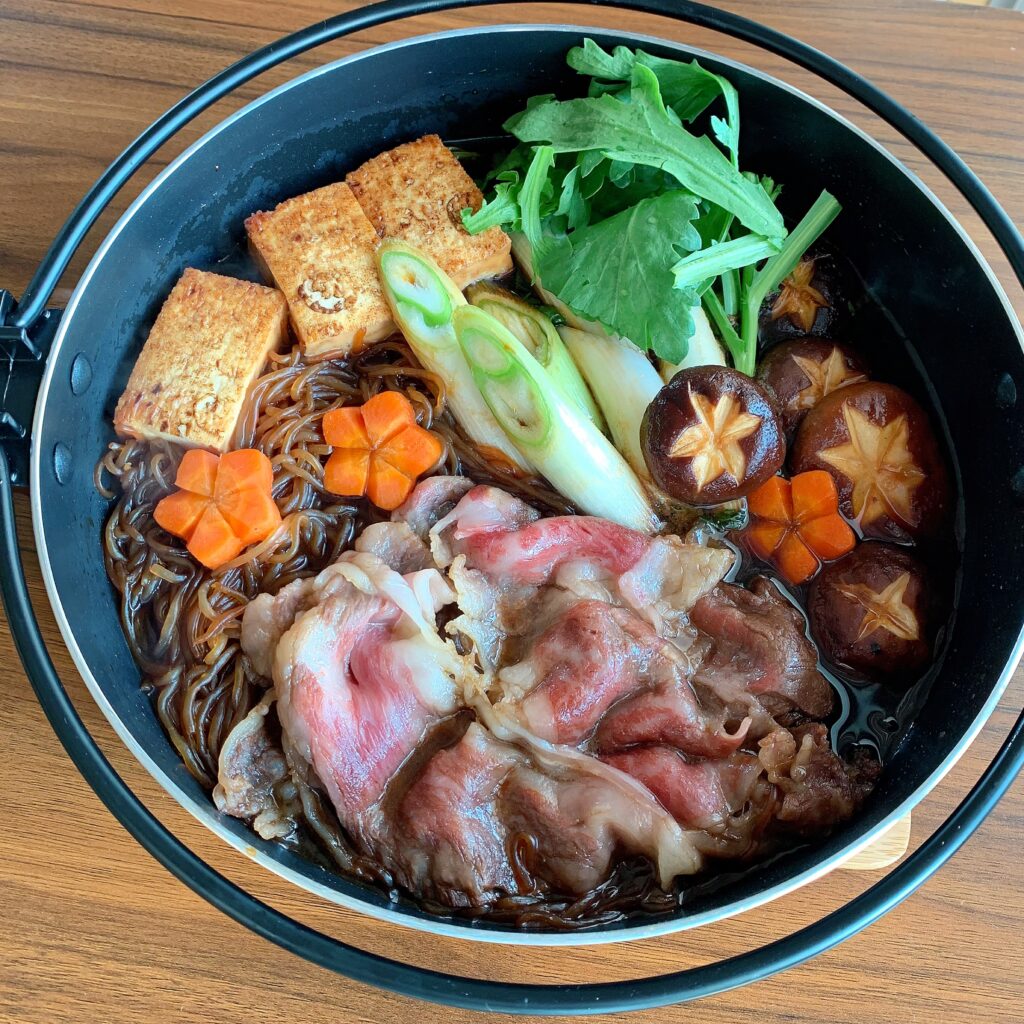
The Ultimate Wagyu Sukiyaki Recipe with Sendai Beef
~Exploring Wagyu vs. Domestic Beef & The Golden Ratio Warishita Sauce~
■ Introduction
When you think of a celebratory meal in Japan, what comes to mind? For many, it is Wagyu Sukiyaki—the pinnacle of Japanese luxury soul food. The savory-sweet aroma of “Warishita” sauce wafting through the air and the moment the premium beef melts on your tongue is pure bliss.
Recently, my younger brother sent me a wonderful gift: Sendai Beef, which boasts some of the highest quality standards in Japan. While I usually keep an eye on my calorie and fat intake, Wagyu Sukiyaki is a special exception! I decided to fully indulge in this exquisite Wagyu experience. (˘︶˘♡)。.:☆
■ Interesting Facts About Sukiyaki
To truly appreciate Wagyu Sukiyaki, let’s look at some basic knowledge you might not know!
- The Secret Sauce: “Warishita”
- The heart of Sukiyaki’s flavor is the sauce, a blend of soy sauce, sugar, sake, and mirin. This is called “Warishita.” While every household has its own “golden ratio,” I will share the perfect blend that complements the richness of Sendai Beef.
- To Sear or Not to Sear?: There are two main styles of Sukiyaki in Japan:
- Western Japan (Kansai style): It is common to sear the beef in the pot first before adding other ingredients.
- Eastern Japan (Kanto style): The ingredients are typically simmered together in the Warishita sauce from the start. In the Kansai region, the version where the meat is not seared is often specifically called “Suki-nabe.”
■ Wagyu vs. Domestic Beef: What’s the Difference?
Do you know the distinction between “Wagyu” and “Domestic Japanese Beef”? It’s a common point of confusion!
The Definition of Wagyu
“Wagyu” refers exclusively to four specific breeds of elite Japanese cattle:
- Japanese Black (Kuroge Washu): Accounts for over 90% of Wagyu in circulation!
- Japanese Brown (Akage Washu)
- Japanese Shorthorn (Nihon Tankaku Shu)
- Japanese Polled (Mukaku Washu) Famous brands like Tajima Beef (Kobe Beef), Matsusaka Beef, Yonezawa Beef, and Omi Beef all belong to the Japanese Black breed.
What is Domestic Beef (Kokusan-gyu)?
This refers to any cattle that has been raised in Japan for the longest period of its life. Even if a cow was born abroad, it can be classified as “Domestic Japanese Beef” if it was raised primarily in Japan.
- Dairy breeds: Mostly Holsteins.
- Beef breeds: Includes Angus, Hereford, and Brahman.
- Crossbreeds: Hybrids of Wagyu and Holstein, bred to combine the best traits of both for better production efficiency.
📊Nutrition Facts Per 2 Servings (Total)
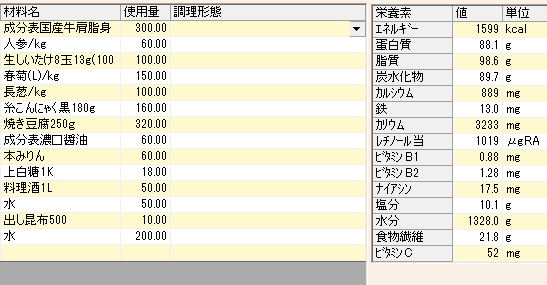
- 1599 Calories
- Protein: 88.1 g
- Total Fat: 98.6 g
- Total Carbohydrates: 89.7 g
- Sodium: 10.1 g
💼 Ingredients for Wagyu Sukiyaki (2 Servings)
Wagyu Beef Shoulder Loin: 300g
Vegetables & Tofu:
- Carrots: 60g
- Shiitake mushrooms: 100g
- Shungiku (Garland chrysanthemum): 150g
- Japanese white leek (Negi): 100g
- Ito konnyaku (Thread konjac): 160g
- Yaki dofu (Grilled tofu): 320g
Warishita Sauce:
- Soy sauce: 60g
- Mirin: 60g
- Sugar: 18g
- Sake: 50g
- Water: 50g
Kombu Dashi:
- Kombu kelp: 5cm × 5cm
- Water: 200ml
❀ About the Beef Used in This Recipe ❀ The Sendai Beef I used today was a gift from my brother, purchased from the online shop below. It was A5-rank quality and incredibly delicious! Perfect for special occasions or a well-deserved treat for yourself. 👉 Premium Wagyu Specialty Shop: Niku-no-Ito (Official Store)
🍳 Wagyu Sukiyaki Cooking Instructions
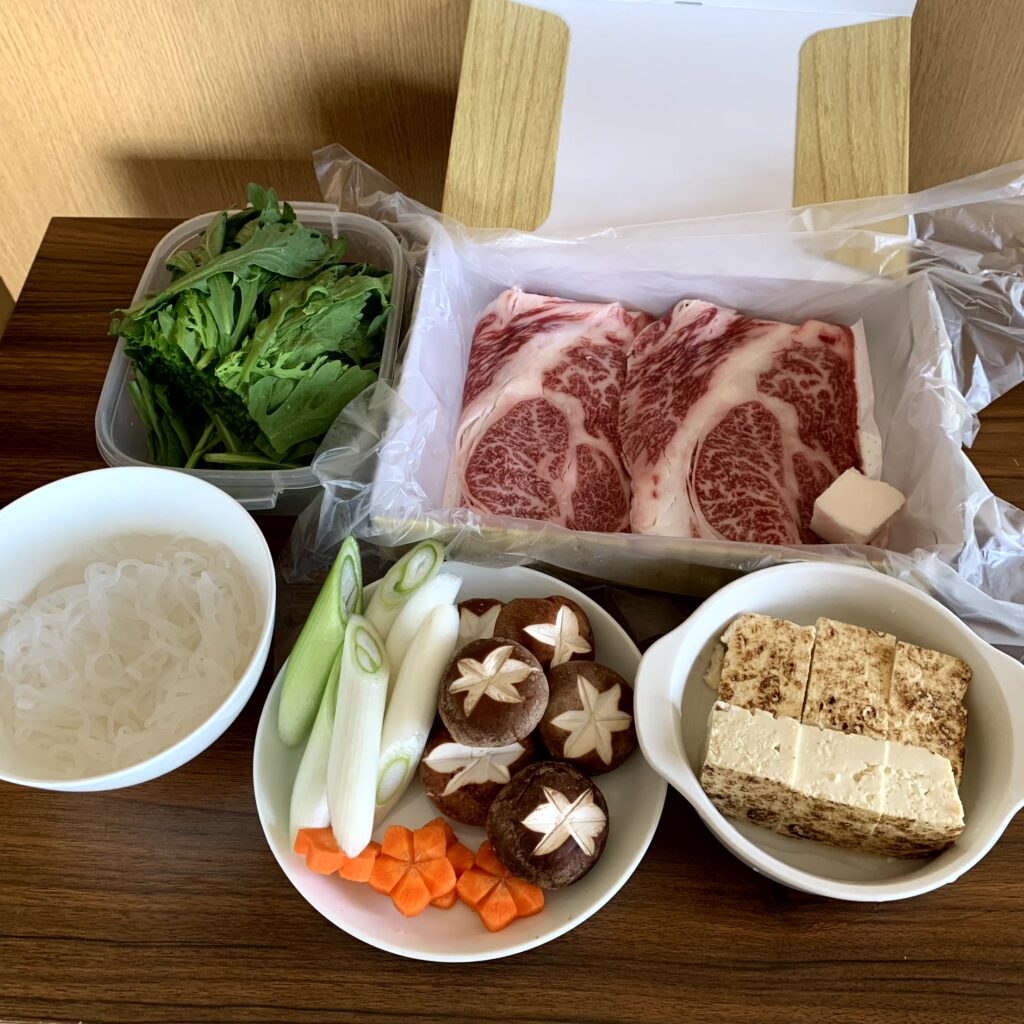
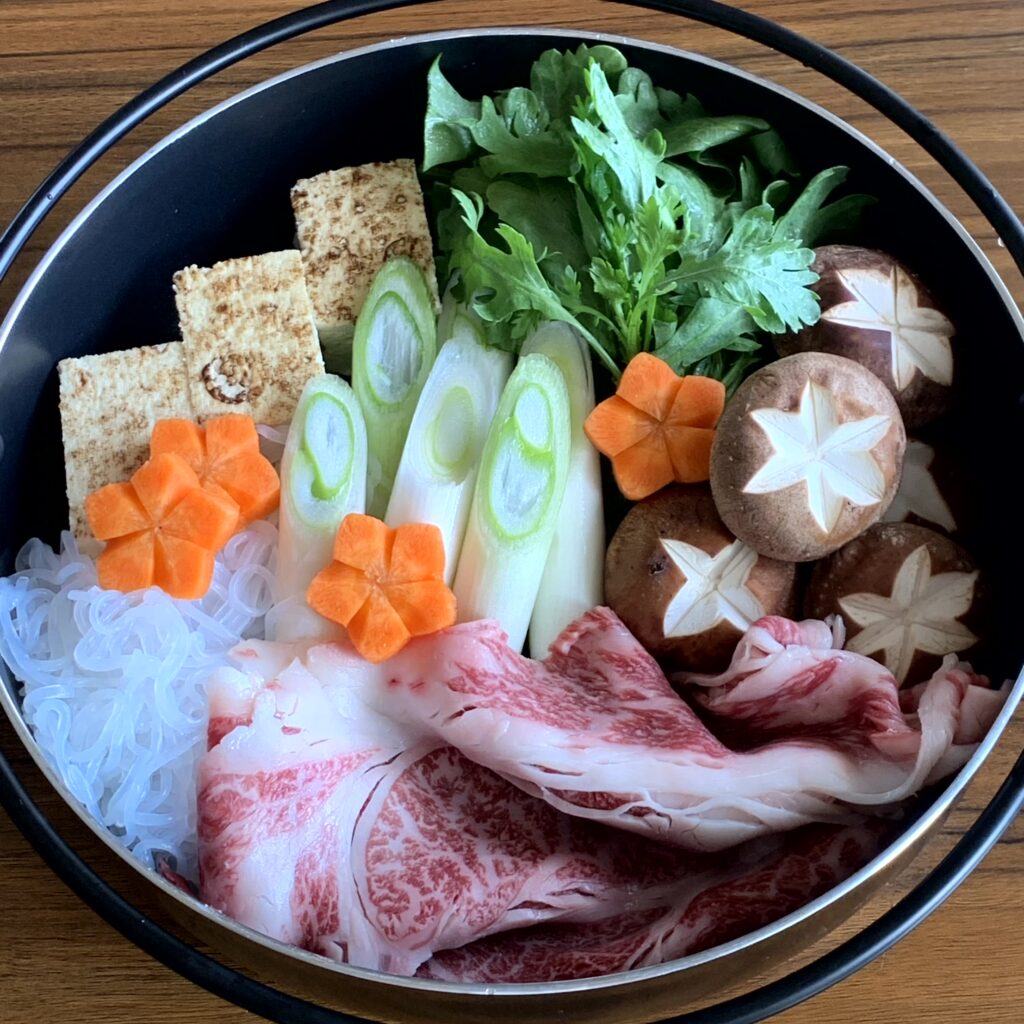
1. Preparation
- Kombu Dashi: If possible, soak the kelp in water the day before to extract the best flavor.
- Carrots: Wash, peel, and cut into 8mm thick slices.
- Shiitake Mushrooms: Remove the tough ends of the stems. For a professional look, make a flower-shaped decorative cut on the surface.
- Greens: Wash the shungiku and white leeks. Remove the roots and cut them into approximately 7cm lengths.
- Ito Konnyaku: Boil briefly, then drain in a colander to remove any earthy odor.
- Tofu: Cut the grilled tofu into 6 equal pieces.
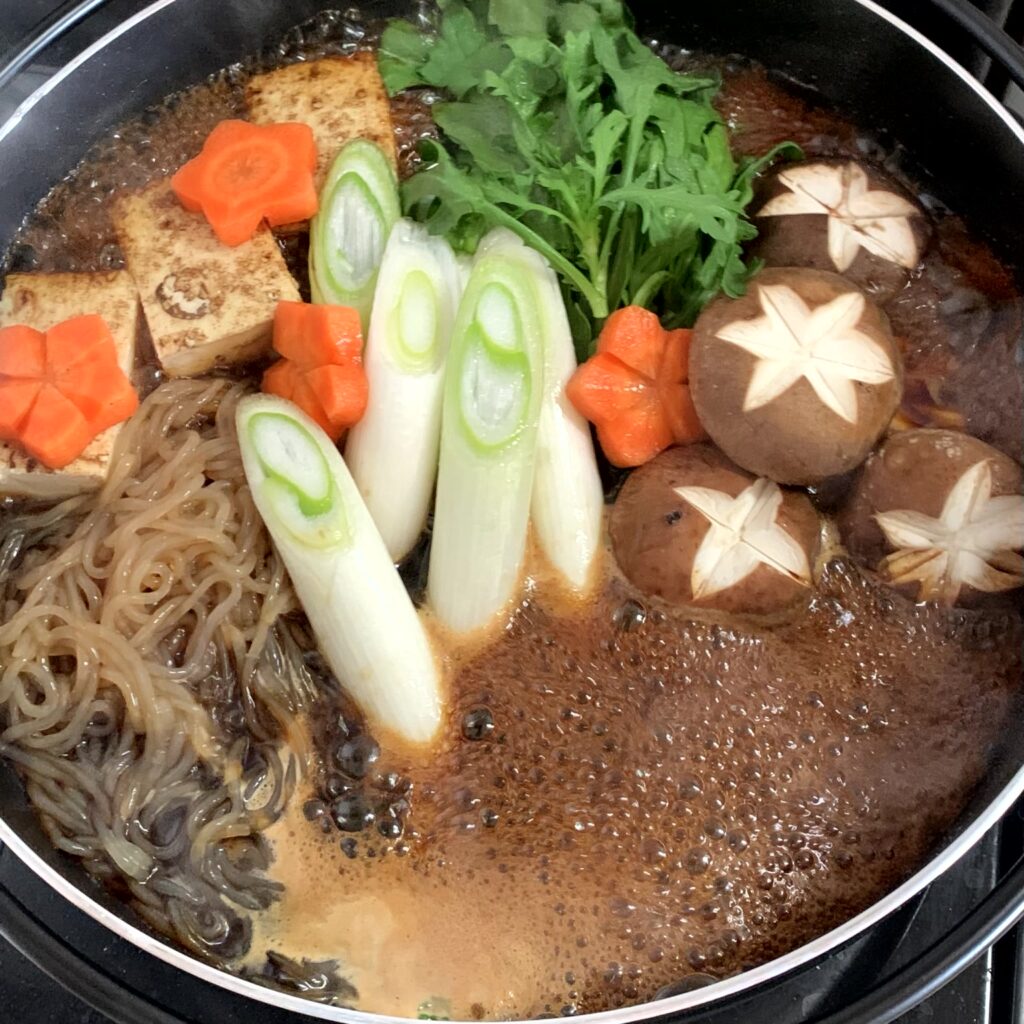
2. Simmering
- In a shallow pot, combine the Warishita ingredients (soy sauce, mirin, sugar, sake, and water) and bring to a simmer.
- Add everything except for the beef and shungiku. Simmer until the carrots and white leeks have softened.
3. Finishing the Wagyu Sukiyaki
- Once the vegetables are tender, add the thinly sliced Wagyu beef and shungiku. Simmer for just a little longer until the beef is cooked to your liking.
- Tip: If the flavor becomes too strong as the liquid reduces, add the prepared kombu dashi or a little water to adjust the taste.
4. How to Enjoy
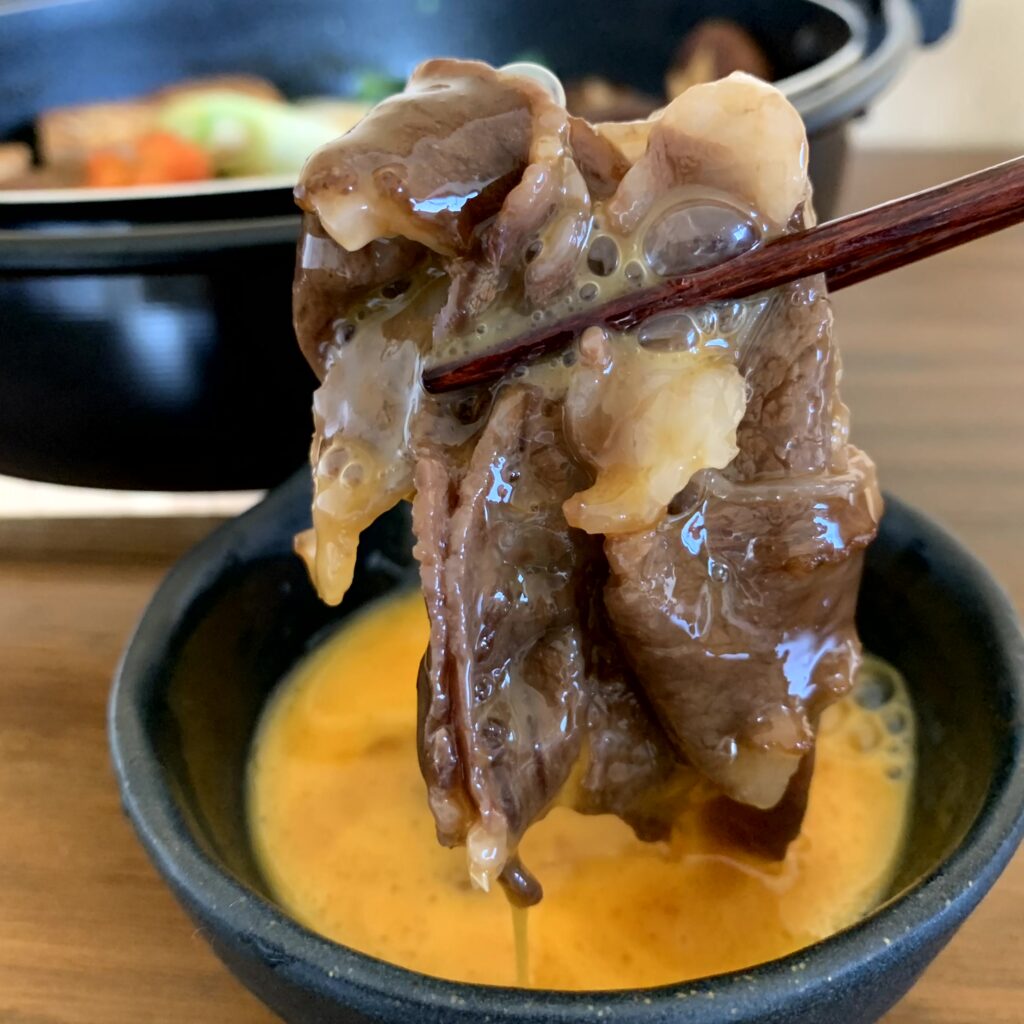
- Dip the hot ingredients into a bowl of beaten raw egg for the most authentic and delicious experience.
■ The Finishing Touch: Zousui
When you have finished the main ingredients, Zousui (rice porridge) is indispensable.
- Add a little water and cooked rice to the remaining warishita sauce in the pot.
- Simmer for a few minutes until the rice absorbs the rich flavors of the Wagyu and vegetables.
- Pour a beaten egg over the top, cover for a moment until set, and enjoy! ♡
■ Summary
Wagyu Sukiyaki is the perfect dish for happy or auspicious days. I hope you find your favorite brand of Wagyu and enjoy a truly luxurious dining experience at home!
📖Related Link: Read the Japanese version of this article here! [仙台牛を使った究極の和牛すき焼きレシピ]

コメント