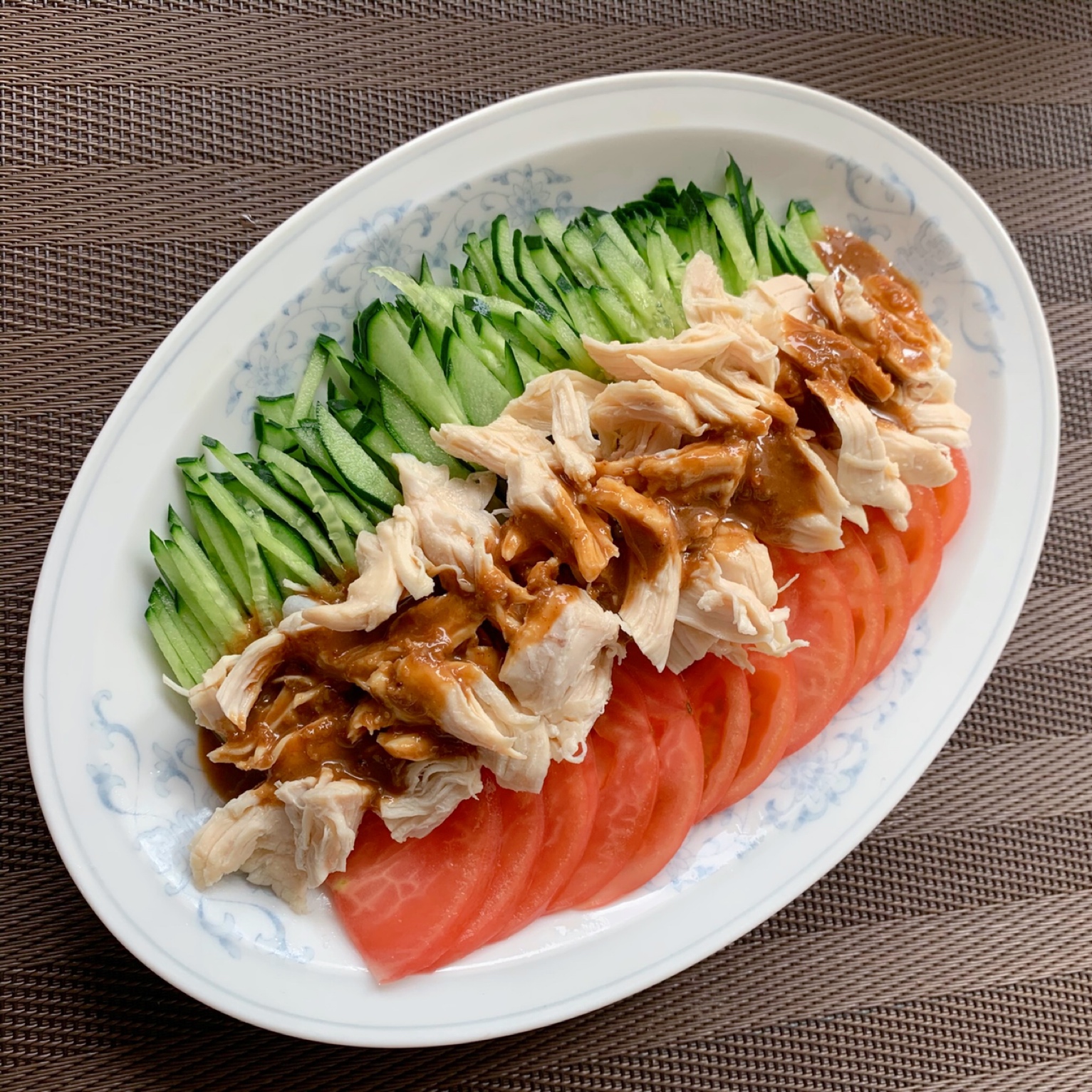
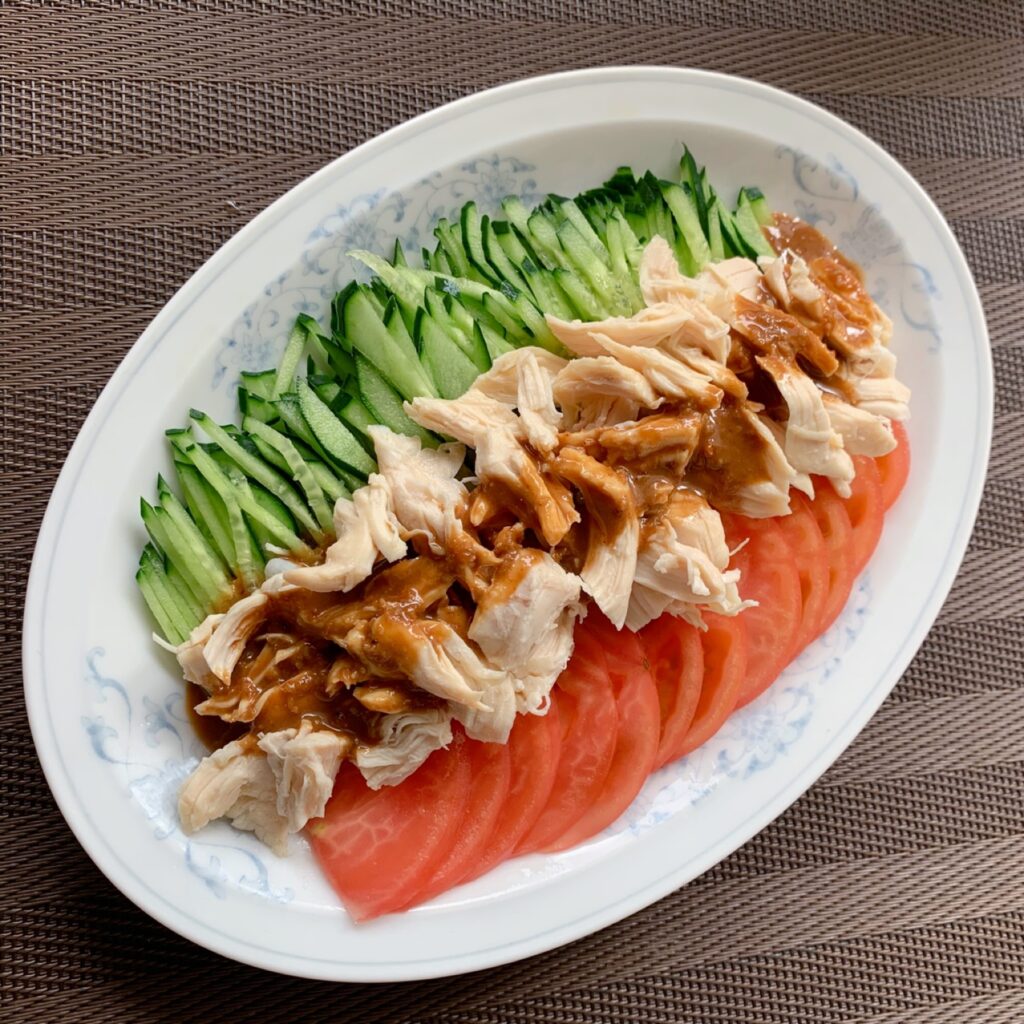
Healthy Banbanji: Japanese Ban Ban Chicken Salad Recipe
What is Banbanji?
Banbanji is a refreshing salad made with tender steamed chicken, tomatoes, and crisp cucumber strips, all tossed in a rich, savory sesame dressing.
The name comes from the Chinese characters for “ban” (stick) and “ji” (chicken), reflecting how the ingredients—typically chicken tenderloin (sasami) and cucumbers—are shredded or sliced into thin strips.
The star of the dish is the creamy sesame dressing, which combines a smooth sesame paste with a mild kick of spice. It strikes a wonderful balance of sweet and tangy flavors that will keep you coming back for more. For an extra layer of flavor, adding a pinch of Sichuan pepper or crushed peanuts is always a great idea!
It’s a high-protein, exotic, and healthy dish that’s perfect for anyone looking to eat well.
The Global Evolution of Banbanji
- Japan: Developed uniquely from its Sichuan origins. The Japanese version is characterized by being very healthy, incorporating plenty of vegetables like cucumber and tomato.
- China (Origin): Traditionally consists of chicken alone without extra vegetables. The seasoning is intensely spicy, featuring the bold heat of Sichuan chili peppers.
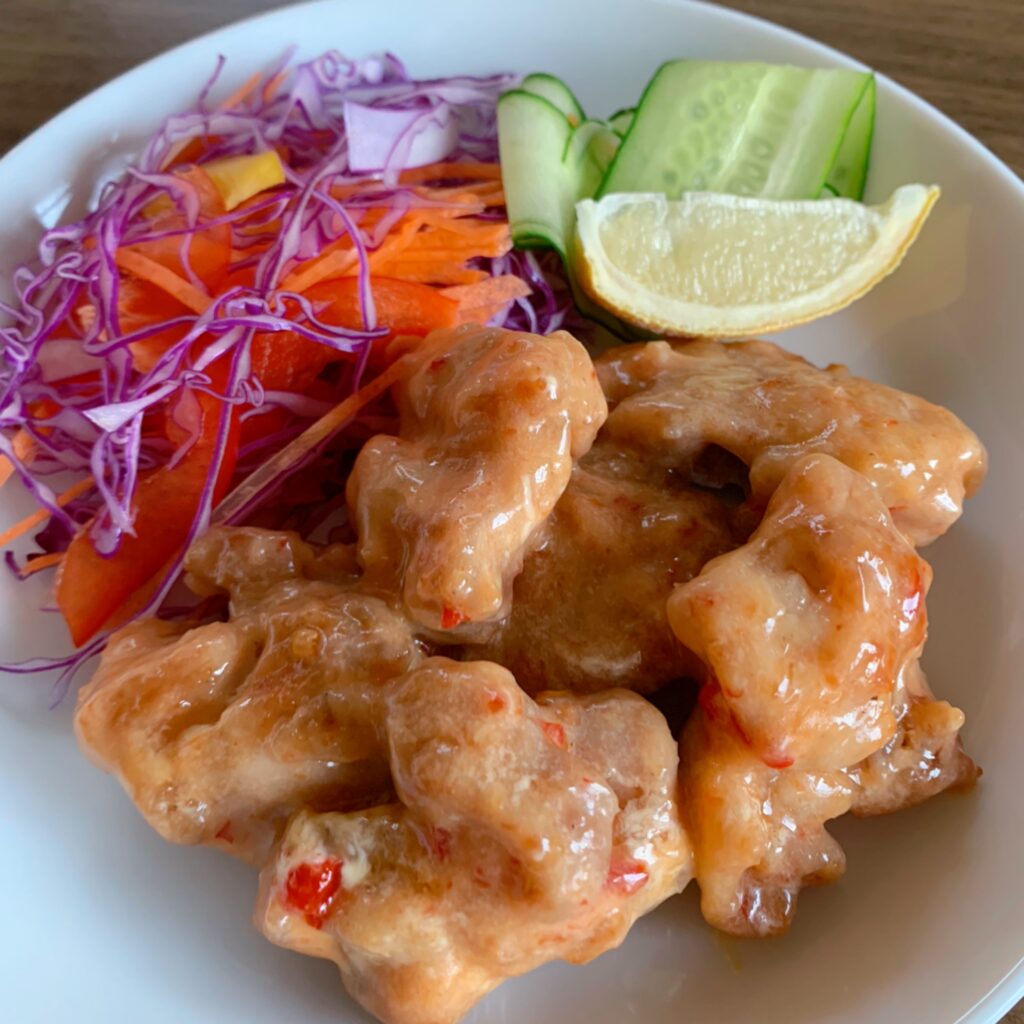
- USA: Known as “Bang Bang Chicken.” However, it has evolved differently there, often featuring fried chicken tossed in a sauce made of mayonnaise, sweet chili sauce, and Sriracha. Check out this recipe too! 【Bang Bang Chicken (Frie Chicken With Sweet Chili Mayonnaise)】
Secrets to High-Protein & Low-Calorie
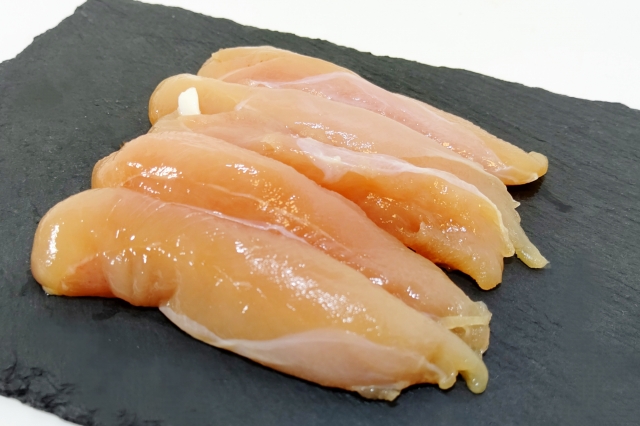
The appeal of this salad lies in the use of Sasami (Chicken Tenderloin). If unavailable, skinless chicken breast is an excellent substitute.
Memo: Overseas, “Sasami” is typically labeled as “Chicken Breast Fillet” or “Chicken Tenderloin.”
Sasami is the highest-protein and lowest-fat part of the chicken, making it the ultimate ingredient for body-building. (See the comparison table below for nutritional values).
Nutritional Comparison of Chicken Cuts (per 100g, raw)
| 100g(Raw, Skinless) | Energy (kcal) | Protein (g) | Fat (g) | Carbohydrates (g) | Salt Equivalent (g) |
| Breast | 105 | 23.3 | 1.9 | 0.1 | 0.1 |
| Thigh | 113 | 19.0 | 5.0 | 0 | 0.2 |
| Sasami | 98 | 23.9 | 0.8 | 0.1 | 0.1 |
Cooking Tips for Delicious Sasami
- Retain Moisture: Sasami can become dry when heated. Soaking it in sake (rice wine) before steaming or microwaving ensures a moist, tender finish.
- Texture: If using Sasami in soups, coating it in potato starch (katakuriko) creates a uniquely smooth and pleasant texture.
- Prep: It is recommended to remove the white tendon (suji) so it doesn’t interfere with the fluffy texture of the meat.
- Variety: Grilled Sasami served with pickled plum (Umeboshi), Wasabi, or rock salt is a popular menu item at Japanese Yakitori restaurants.
Health and Beauty Benefits of Sesame Dressing
1. Ideal Lipid Balance Over 80% of the fats in sesame are “unsaturated fatty acids,” which are beneficial for health.
- Linoleic Acid (40–45%): An “essential fatty acid” that the body cannot produce. It helps lower blood cholesterol levels.
- Oleic Acid (approx. 40%): Also famous as the main component of olive oil. It is resistant to oxidation and helps suppress LDL (bad) cholesterol.
2. Resistance to Oxidation While polyunsaturated fats like linoleic acid are usually prone to oxidation (deterioration), sesame contains powerful antioxidants called “Sesame Lignans” (such as Sesamin). These protect the fats from oxidizing inside the body, allowing for efficient nutrient absorption.
3. Health & Beauty Benefits
- Vascular Health: The synergy of Oleic and Linoleic acids helps prevent arteriosclerosis.
- Anti-Aging: The combination of Sesamin, Vitamin E, and healthy fats helps prevent skin dryness and slows cellular aging.
4. Extraordinary Calcium Content Just 5g of toasted sesame seeds (approx. 1 tsp) contains about 60mg of calcium. Per 100g, this is 1,200mg—roughly 10 times the amount found in milk (110mg).
Pro-Tip for Absorption: Sesame paste or ground sesame is more effective than whole toasted seeds. Breaking the hard outer shell allows your body to more smoothly absorb the healthy fats and acids inside.
Nutritional Facts for Sesame (per 5g)
| Food Item | Energy (kcal) | Protein (g) | Fat (g) | Carbs (g) | Salt Eq. (g) | Calcium (mg) | Iron (mg) | Zinc (mg) | Oleic Acid (mg) | Linoleic Acid (mg) |
| Toasted Sesame | 30 | 1.0 | 2.7 | 0.9 | 0 | 60 | 0.5 | 0.3 | 950 | 1100 |
| Sesame Paste | 32 | 1.0 | 3.1 | 0.8 | 0 | 30 | 0.3 | 0.3 | 1050 | 1250 |
Nutrition Facts
Calories: 327 kcal Protein: 29.3g Fat: 11.3g Carbs: 19.7g Salt Equivalents: 2.5g
Ingredients (Serves 3)
- Main Protein
- Chicken Tenderloin (Sasami): 2 pieces (100g)
- Poaching Aromatics
- Green Onion (White Leek): 1 stalk
- Ginger: 3g
- Sake: 40g
- Vegetables
- Cucumber: 100g
- Tomato: 100g
- ☆ Dressing Base
- Soy sauce: 15g
- Black vinegar: 10g
- Sugar: 3g
- Mirin: 5g
- Ground sesame: 3g
- Sesame oil: 3g
- Grated garlic: 2g
- Grated ginger: 2g
- Toban-djan (Chili bean paste): 2g
- ★ Finishing Touch
- Sesame paste (Neri-goma): 10g
How to Make Banbanji Salad
- Prep: Separate the green and white parts of the leek. Scrape ginger skin with a spoon and slice thinly.
- Chicken: Make small incisions in the Sasami to prevent bursting in the microwave.
- Steam: Place chicken, leek greens, and ginger in a heat-resistant container. Drizzle with sake. Cover with wrap and microwave at 600W for 3 minutes. (Leek and ginger remove odor; sake keeps the meat tender).
- Shred: Once cooled, shred the chicken by hand and remove tendons.
- Sauce: Mix all ☆ ingredients in a bowl. Microwave for 1 minute. Add the ★ sesame paste, mix well, and chill in the fridge.
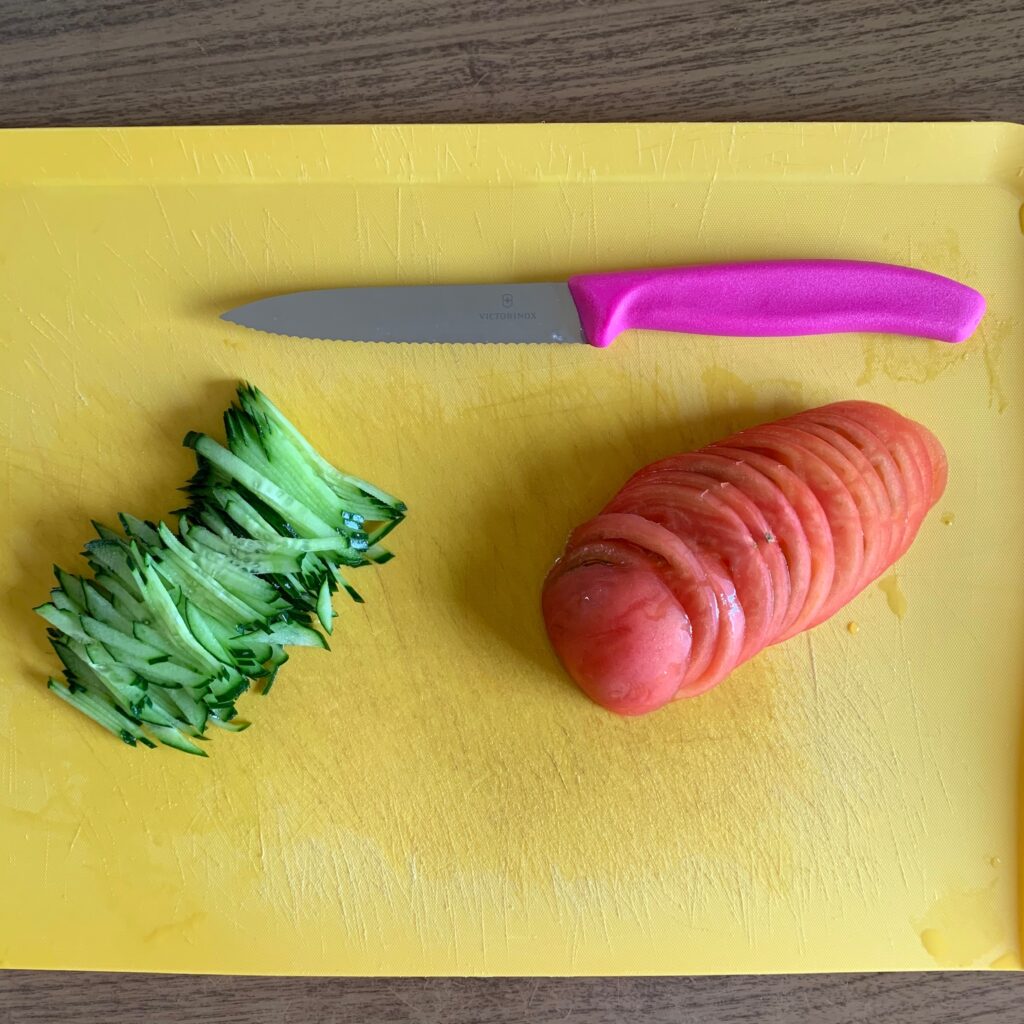
- Vegetables: Thinly slice cucumbers, then cut into matchsticks. Slice tomatoes.
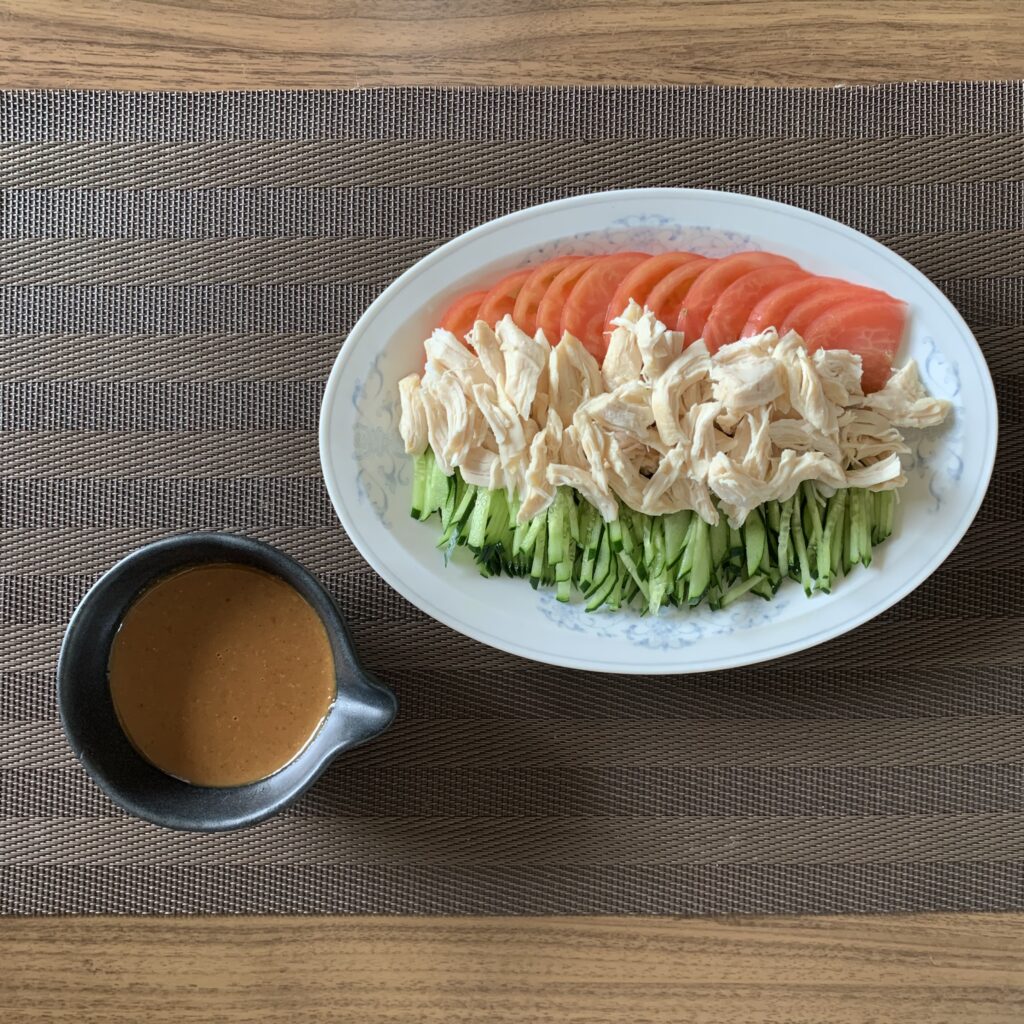
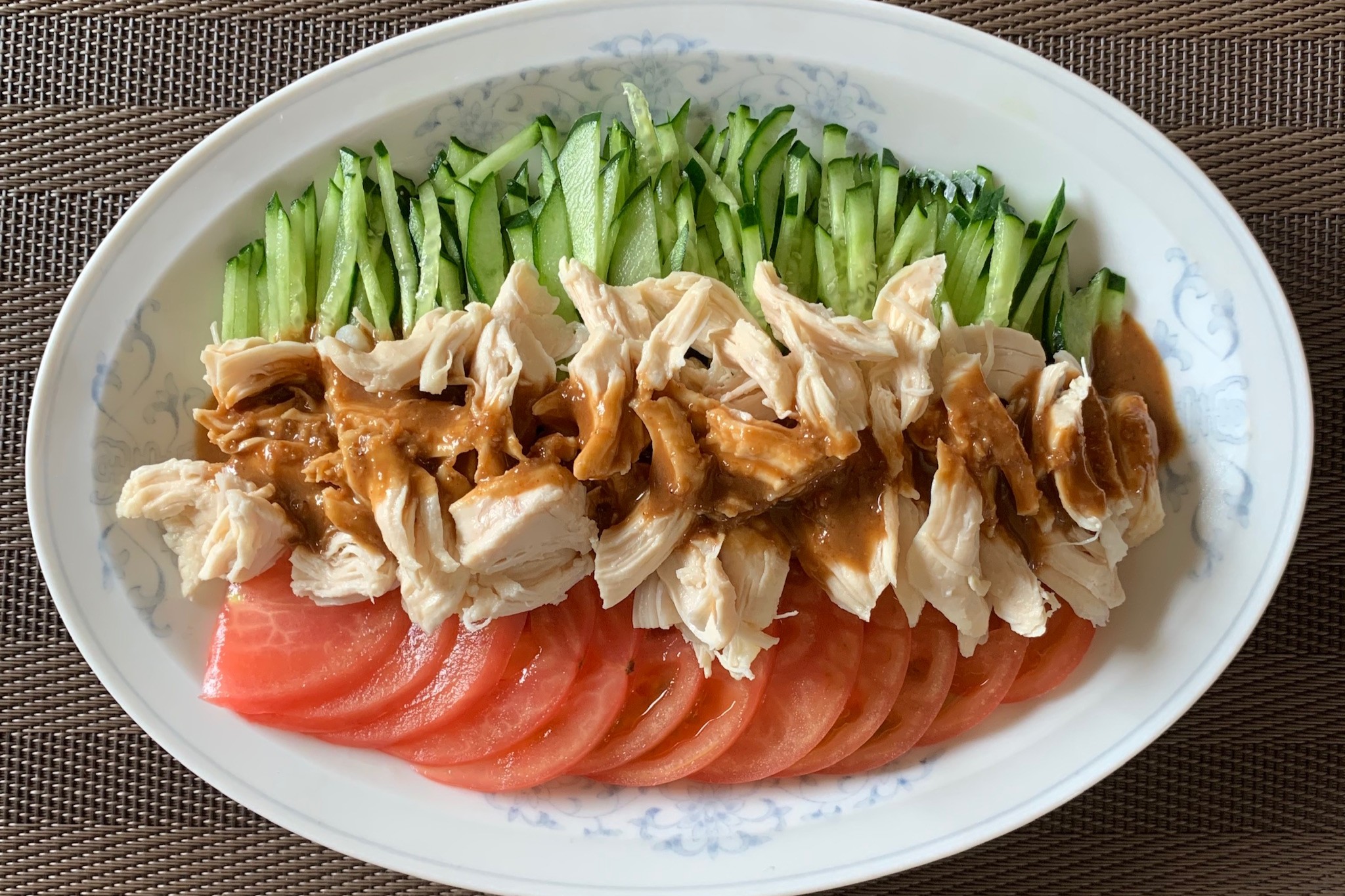
- Plate: Arrange tomatoes and cucumbers, top with chicken, and pour the sauce generously.
Kitchen Tool Tip: A Victorinox Serrated Petty Knife (10cm) is highly recommended for perfectly clean slices of tomatoes!

コメント