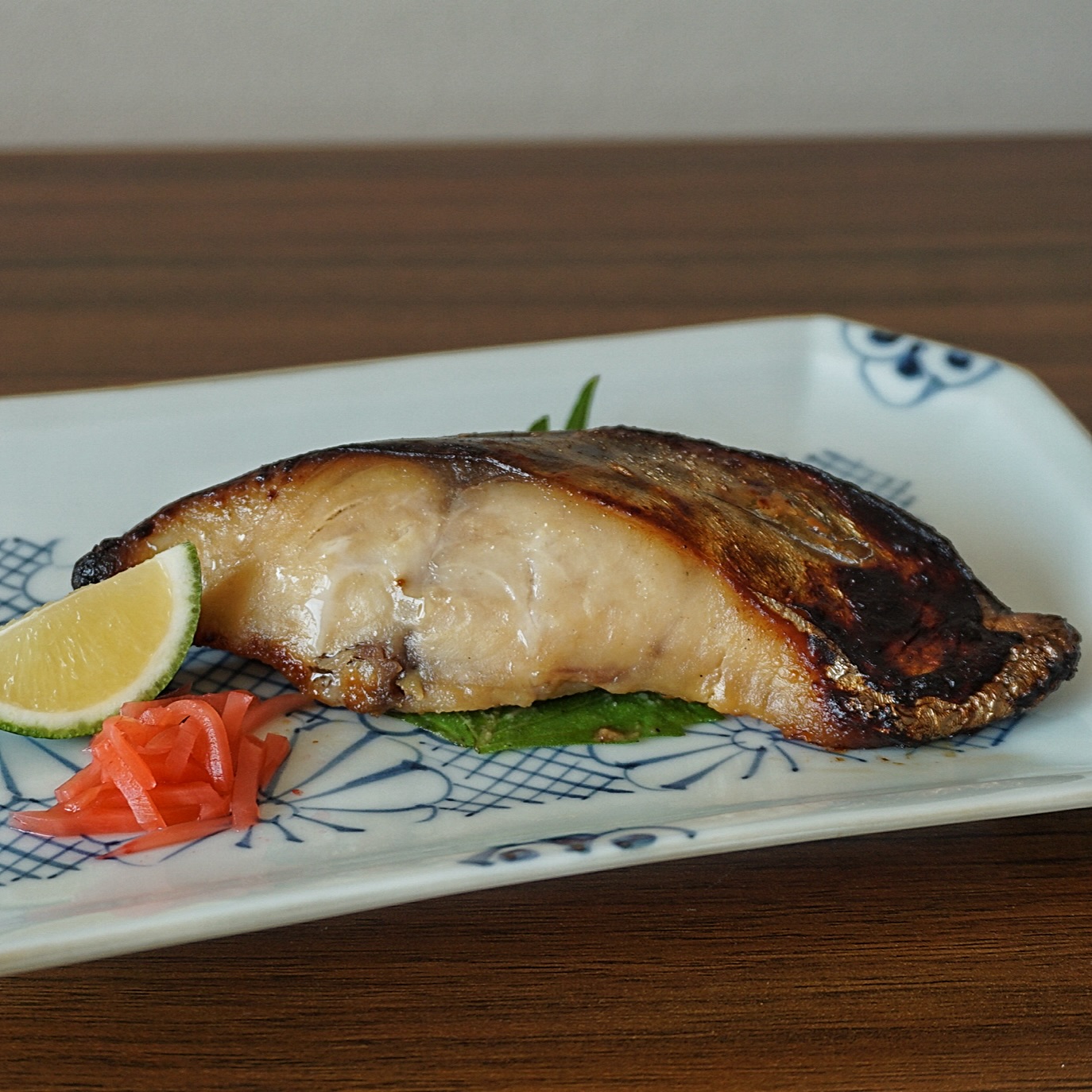

What is Sawara Saikyoyaki (Miso-Marinated Spanish Mackerel)?
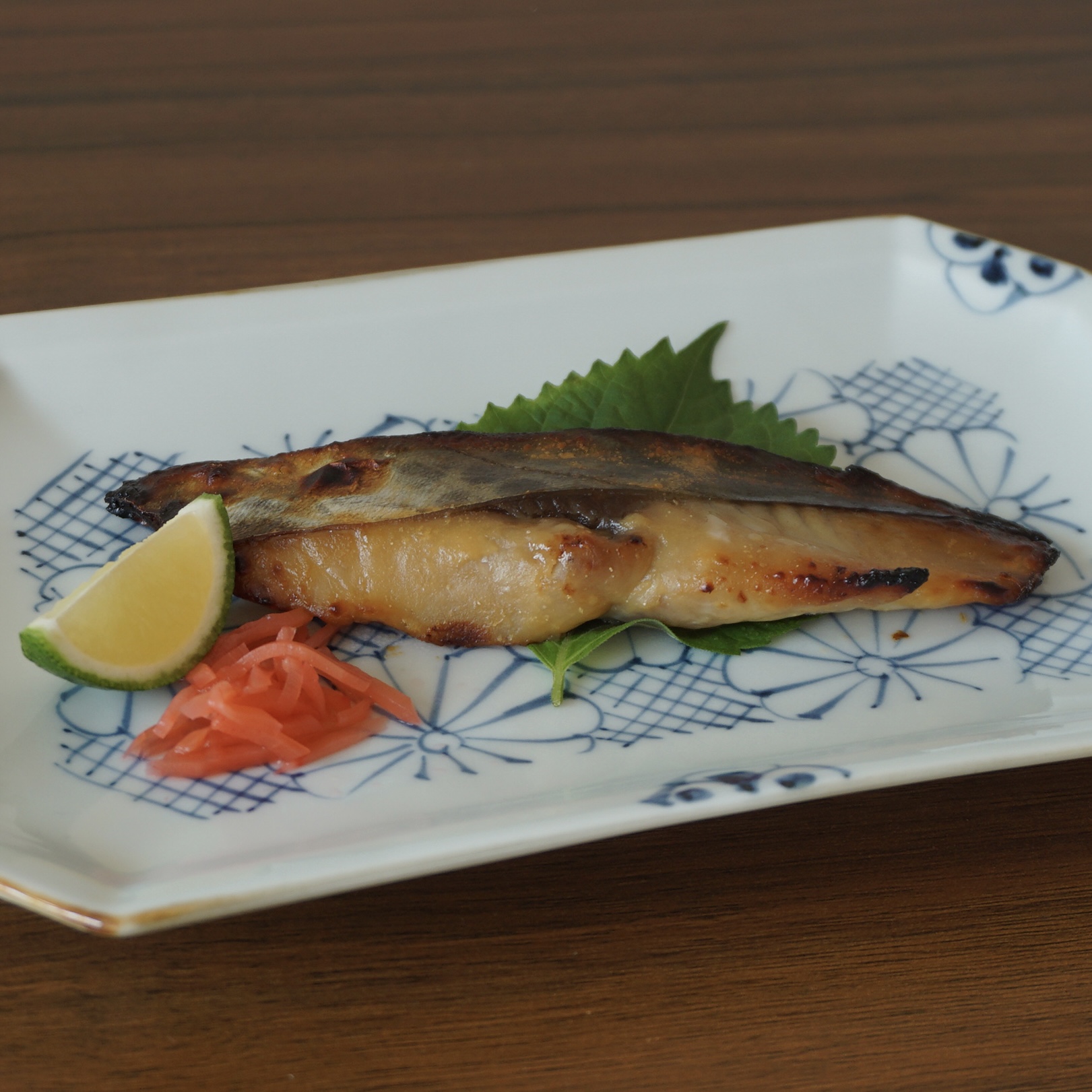
Sawara Saikyoyaki is a quintessential Japanese dish featuring Spanish mackerel marinated in a sweet, creamy white miso sauce and grilled to perfection.
The Story Behind the Name: The star ingredient is “Saikyo Miso,” a specialty white miso from Kyoto. The name Saikyo translates to “Western Capital,” reflecting the time when the capital of Japan moved from Kyoto to Edo (modern-day Tokyo). Since old Kyoto was located inland, marinating fish in miso was a brilliant preservation technique that created an irresistibly deep, sophisticated umami flavor.
Why You’ll Love This Recipe
- Rich Umami: The fermentation of the miso deeply seasons the fish, making it flavorful even when served cold (perfect for Bento!).
- The Golden Ratio of Miso Marinade: Using a specific golden ratio of miso, mirin, and sake ensures a perfectly balanced, non-salty sweetness.
- Foolproof Grilling: While traditional fish grills can easily burn the miso, using an oven or a parchment-lined frying pan ensures even cooking and a beautiful sear.
INGREDIENTS (4 Servings)
- Spanish Mackerel (Sawara): 280g (approx. 4 fillets)
- Salt: 2g (for prep)
- ☆ Saikyo Miso (White Miso): 100g
- ☆ Sugar: 5g
- ☆ Sake: 10g
- ☆ Mirin: 15g
How to Make Sawara Saikyoyaki (Step-by-Step)
- Prep the Fish: Rub salt evenly over the mackerel and let it sit for 10 minutes. Why? This draws out excess moisture and removes any fishy odor. Pat completely dry with a paper towel.
- Prepare the Marinade: Combine the white miso, sugar, sake, and mirin in a small bowl until completely smooth.
- The “Wrap” Technique: Spread a thin layer of the miso mixture on plastic wrap. Place the mackerel on top, cover with more miso, and wrap tightly. This ensures the fish is fully submerged in flavor even with a smaller amount of miso.
- How Long to Marinate?:
- Best / Sweet Spot (24 Hours): Marinating for 24 hours is ideal. The miso enzymes break down the proteins just enough to make the fish meltingly tender while absorbing the perfect amount of umami and sweetness.
- Minimum Time (12 Hours): If you’re pressed for time, at least 12 hours will still yield delicious results.
- Maximum Time (48 Hours): Try not to exceed 2 days, as the fish can become too salty due to the miso drawing out moisture.
- Grilling Prep (Crucial Step!): Remove the fish from the fridge and wipe off the excess miso with a paper towel. Pro-tip: Miso burns extremely quickly due to its sugar content; removing the surface layer is essential for a golden-brown finish.
- Choose Your Cooking Method:
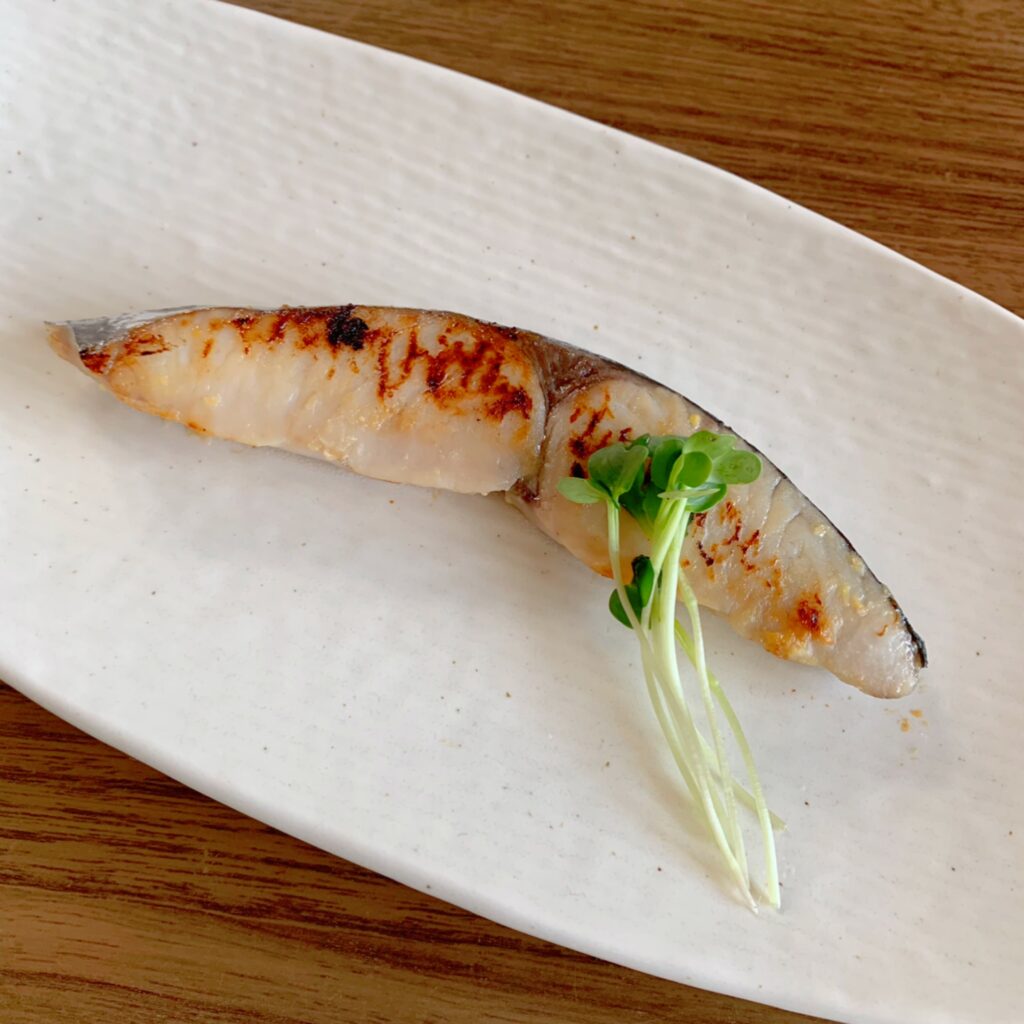
- The Best All-Rounder (Oven): Preheat to 230°C. Line a tray with oiled foil and bake on the middle rack for 8–12 minutes. By lightly oiling the foil, you can prevent the fish from sticking.
- For the Best Aroma (Fish Grill): Use low heat and watch closely to prevent charring. If it starts to burn, loosely cover it with aluminum foil.
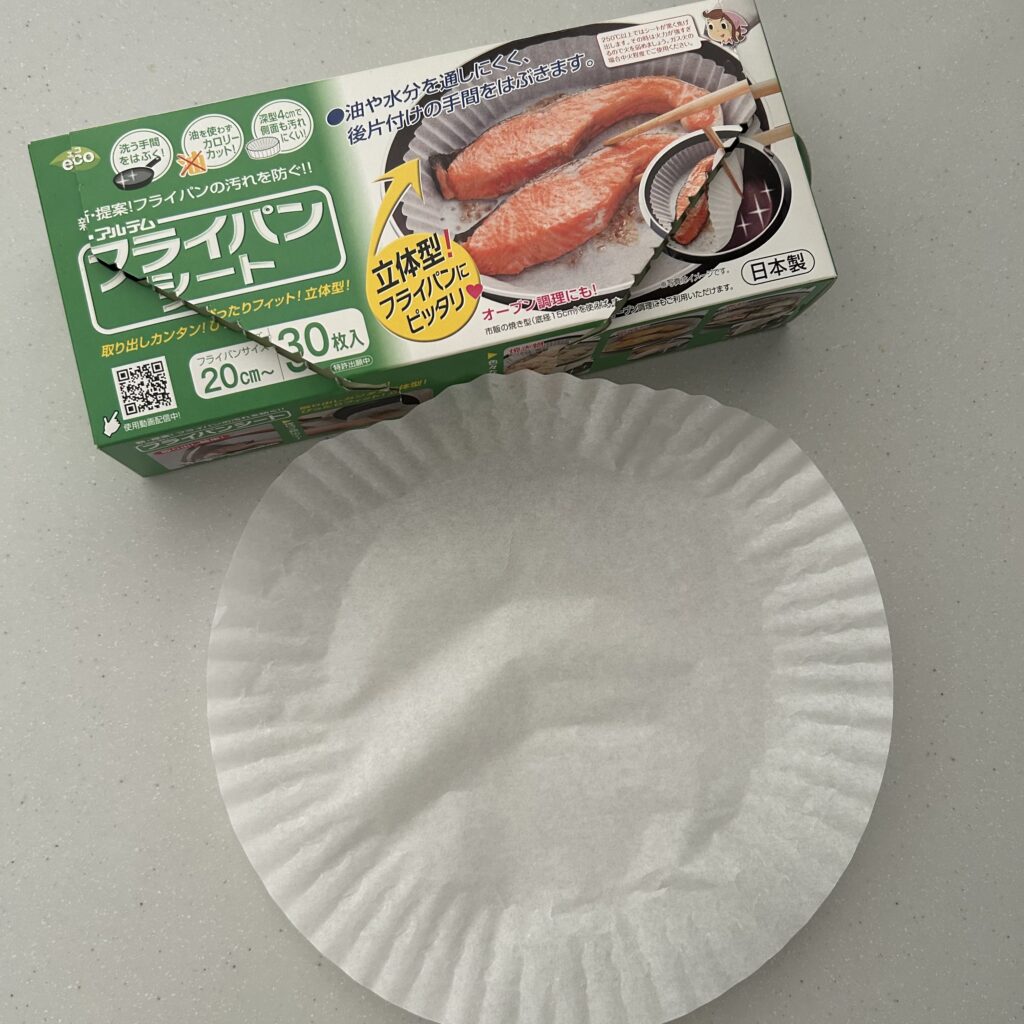
- The Easiest Clean-up (Frying Pan): Use a specialized silicone-coated parchment sheet (frying pan foil). This gives a beautiful sear without the fish sticking.
Storage & Meal Prep Tips
- You can store the miso-marinated fish in the refrigerator for up to 2days.
- Freezing tip: You can also freeze the fish with the marinade (just wipe off the excess before grilling later) for up to 1 month! It makes a fantastic quick dinner on busy weeknights.
Nutrition Note
NUTRITION FACTS (Per Serving)
The calculations assume that approximately 30% of the marinade is absorbed.
- Calories: 132 kcal
- Protein: 14.9 g
- Total Fat: 7.2 g
- Total Carbohydrates: 2.8 g
- Sodium: 1.5 g
(Note: Total values for 4 servings: 529 kcal / 59.5g Protein / 29.0g Fat / 11.3g Carbs / 6.1g Sodium)
Spanish mackerel is a fantastic source of high-quality protein and healthy fats. By marinating it overnight, the miso enzymes partially break down the proteins, making the fish incredibly tender and enhancing its natural sweetness.
Can’t find Spanish Mackerel?
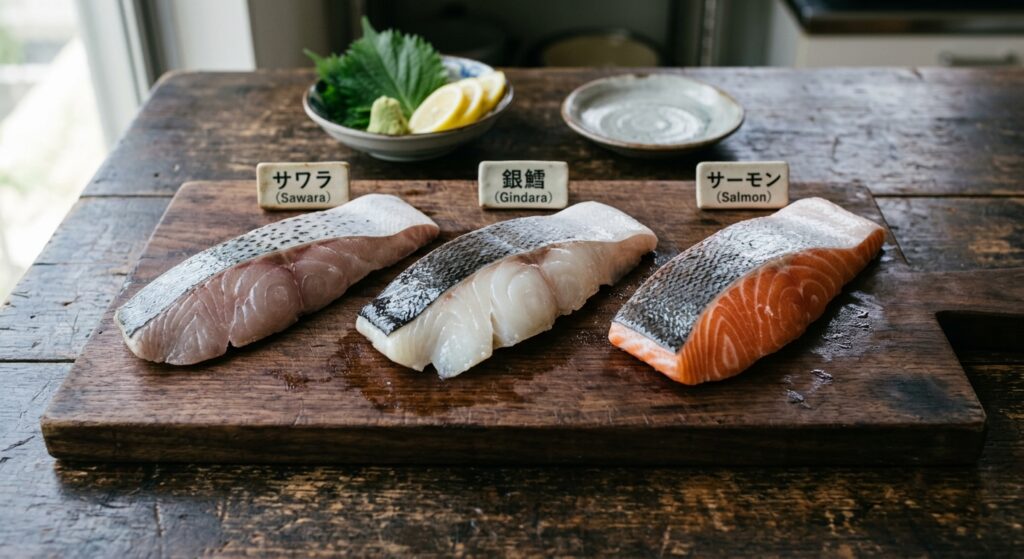
Don’t worry! You can use the exact same marinade and measurements for these wonderful alternatives:
- 1. Silver Cod (Gindara)
- The Appeal: Incredibly tender with a rich, melt-in-your-mouth layer of fat and packed with refined umami.
- Why it fits Saikyoyaki: The intense, luxurious fat of silver cod synergizes brilliantly with the sweet white miso marinade. The miso enzymes further tenderize the flesh, creating a wonderfully rich and velvety texture.
- Best for: A luxurious, decadent flavor experience.
- 2. Salmon
- The Appeal: Universally loved with a strong umami profile and juicy, rich fats.
- Why it fits Saikyoyaki: Easily accessible worldwide, salmon pairs exceptionally well with the mellow sweetness of white miso. It stays wonderfully moist even after grilling and remains tender when cold—making it perfect for Bento!
- Best for: A juicy, crowd-pleasing option that’s easy to find anywhere.
(Note: Traditional Sawara (Spanish Mackerel) remains the classic, authentic choice for Saikyoyaki, prized for its delicate flavor and firm, elegant white flesh that absorbs the miso deep into every bite without drying out.)
Pro-Tip for Choosing Your Fish:
- Choose Silver Cod if you crave a rich, melt-in-your-mouth texture.
- Choose Sawara if you want a traditional, delicate, and moist classic taste.
- Choose Salmon for a juicy, universally loved flavor that is easy to source globally.
Frequently Asked Questions (FAQ)
- Q: Do I need to wash off the miso before cooking?
- A: There is no need to wash it with water. Gently wiping off the excess with a paper towel prevents the sugar in the miso from burning too quickly while still leaving a delicious flavor!
- Q: Can I use regular miso instead of Saikyo miso?
- A: Saikyo miso is much sweeter and lower in sodium. If using regular miso, we recommend adding a bit more sugar or mirin to match the authentic flavor profile.
Serving Suggestions
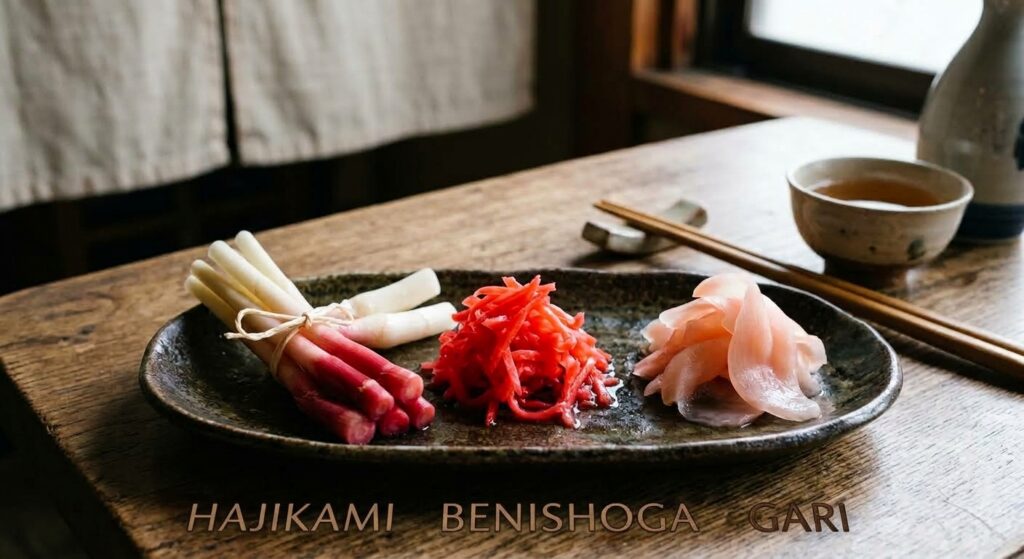
Traditionally, this dish is served with Hajikami (pickled ginger sprouts) to add a pop of pink color and a refreshing palate cleanser.
However, since Hajikami can be difficult to find for home cooking, I recommend using Beni-shoga (red pickled ginger) or Gari (sushi ginger) instead. They provide the same bright acidity and vibrant color, making your plate look professional and appetizing!
Read the Japanese version of this article here! [管理栄養士が教える「サワラの西京焼き」黄金比レシピ!失敗しない焼き方のコツ]

コメント